MowProHQ Blog/Pricing
How to Bid an HOA or Common-Area Lawn
How to bid HOA and common-area lawn care using a scope map, zone list, measured time, access constraints, and clear payment terms.
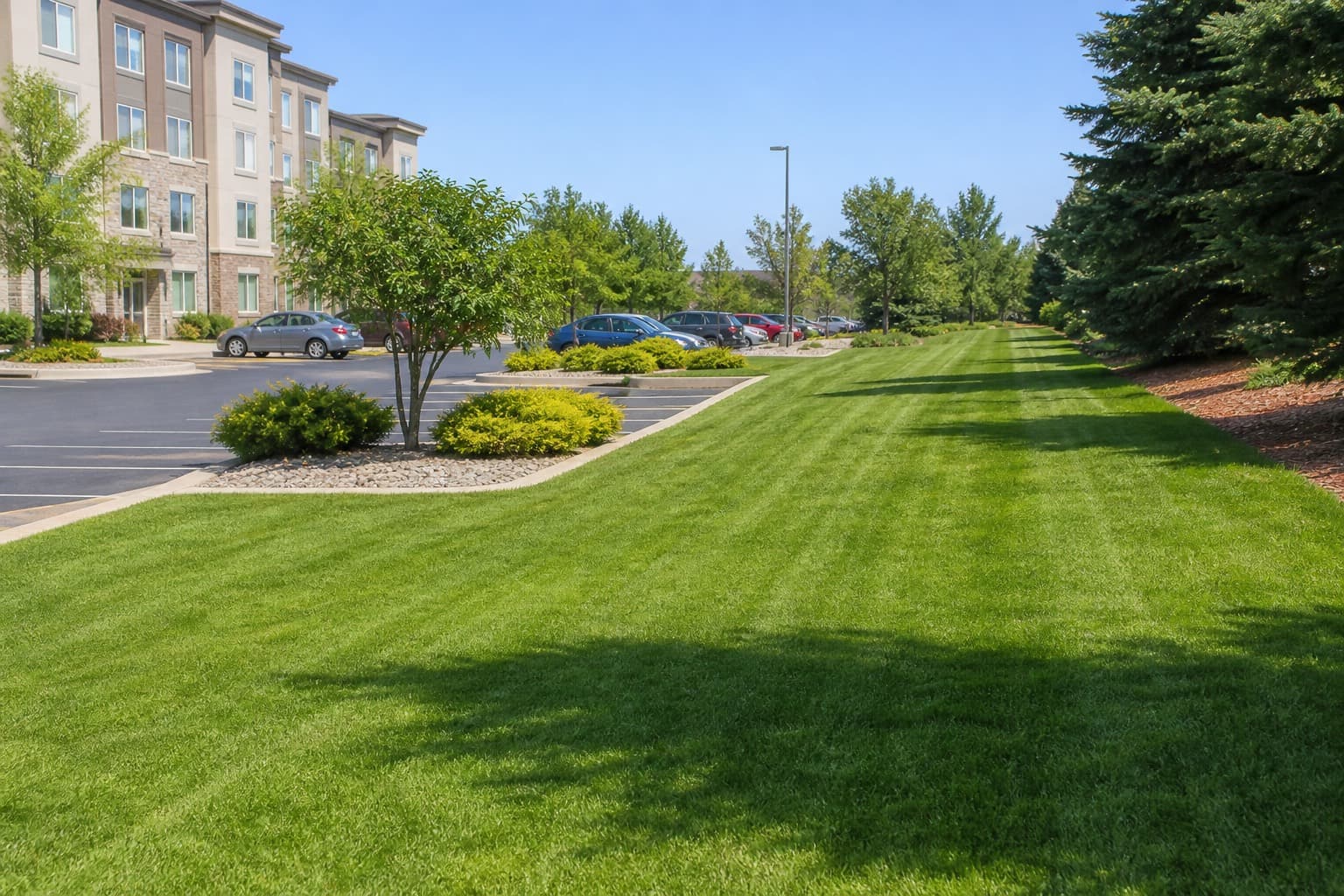
An HOA proposal needs more detail than “mow the commons.” Parking islands, playground buffers, amenity areas, pond edges, and storm cleanup can have different equipment, timing, and labor requirements.
This is an operational checklist, not legal or insurance advice. Have qualified professionals review the contract, indemnity, insurance, licensing, and local requirements. Pair the estimate with how to price lawn care jobs and commercial versus residential operations.
Walk the site before pricing
Do not rely only on a plat or the prior contractor’s price. Walk the site with the manager or board representative, then review it independently against the documents.
Bring:
- A printed map or phone satellite you can mark
- A list of named areas (front entry, amenity, pond, islands, mail kiosk)
- Photos of fences, slopes, irrigation heads, and debris restrictions
- Approved trailer parking and loading areas
If site access is unavailable, state that any preliminary range is subject to an inspection and final scope.
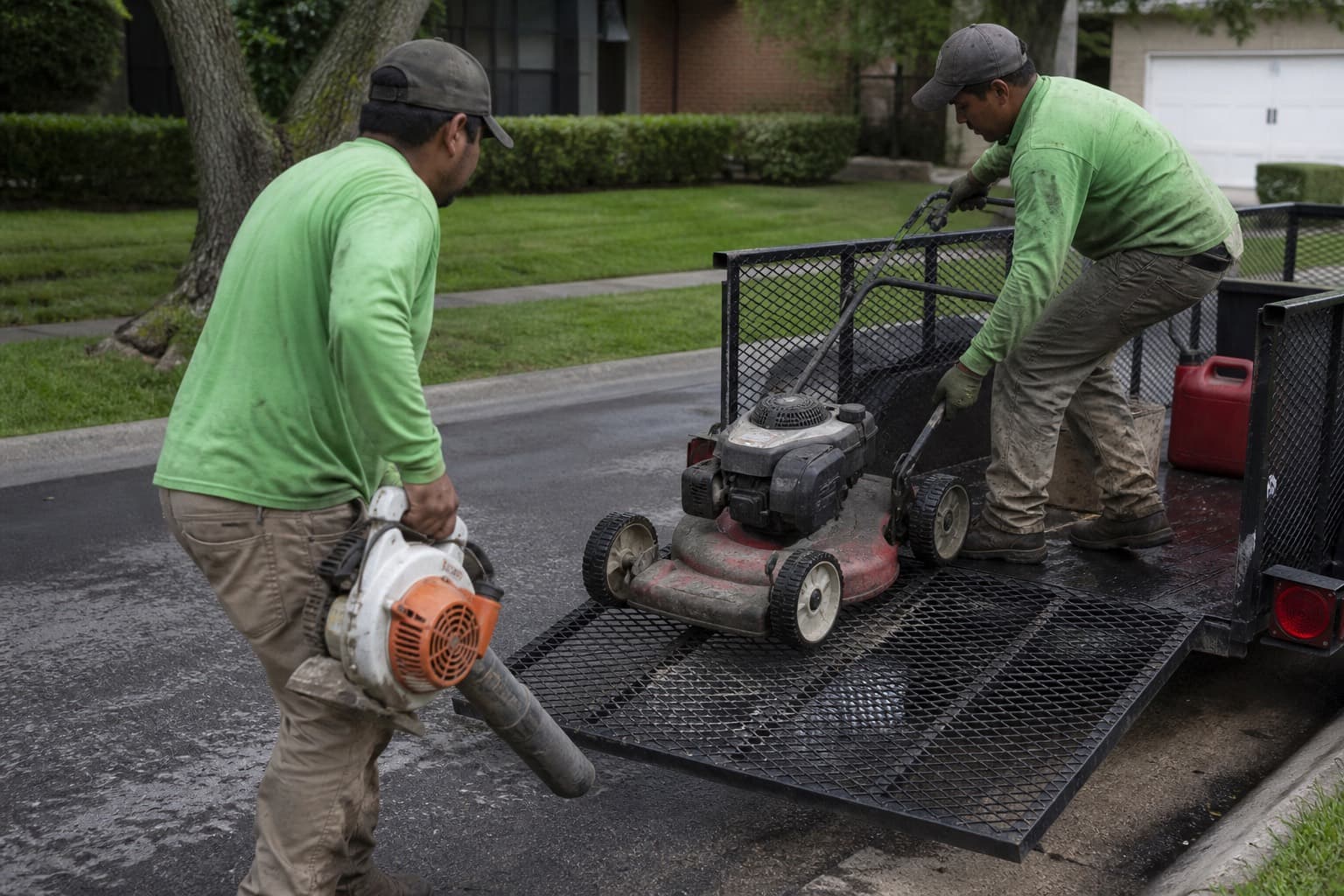
Convert the walk into a scope map
A scope map is a central part of the proposal. Label each zone, distinguish included and excluded areas, and describe mowing, edging, trimming, cleanup, and haul-away requirements.
Mark conservation strips, homeowner-owned buffers, pond banks, and other excluded areas in writing. Verbal boundaries are difficult to preserve when managers or board members change.
Pads, islands, and commons are different products
Price the list, not the community name.
| Zone type | Why it eats time | Bid as |
|---|---|---|
| Continuous common | Longer uninterrupted runs | Area band + conditions |
| Parking-lot islands | Carries, curbs, blow-down, traffic | Per island or per pass |
| Amenity / pool pad | Pedestrians, furniture, quiet rules | Window + premium |
| Playground / court buffer | Obstacles, safety, string work | Separate line |
| Entry monument | Detail, blow direction, complaints | Detail rate |
| Pond / conservation edge | Soft ground and habitat restrictions | Explicit inclusion or exclusion |
A site with continuous turf and many separated islands should not be priced from total acreage alone. It operates more like several small stops sharing one invoice.
Use the lawn care hourly rate calculator to turn loaded labor, fuel, and overhead into a floor, then multiply by the minutes you actually measured on the walk. If you have never timed an island pass, time one before you send the PDF.
Quiet hours, access, and the equipment you are allowed to use
HOA and common-area requests often contain operational constraints that materially affect the price.
Capture before you price:
- Earliest start and quiet hours
- Where the trailer may sit and how long
- Walk-behind-only courtyards or decks
- Irrigation lockouts and who turns water off
- Pedestrian and school-bus windows
- Gate codes, after-hours contacts, and who is actually on site
- Insurance, additional insured wording, and certificate timing
A property that can only be serviced after 9 a.m. may not fit an otherwise early route in the same neighborhood. Account for the separate window or decline the work.
Store access and operating restrictions on the property record as well as the proposal. The crew needs those details during every visit. Commercial versus residential operations covers the broader differences.
Price from measured time and constraints
Recurring commercial work is not automatically profitable. Include payment timing, administration, travel, and extra-work rules in the evaluation.
Build the bid like a residential formula, then add commercial friction:
- Estimate on-site minutes per zone at the sold frequency
- Add allocated travel and dump if you haul
- Multiply by target revenue per hour from your rate card
- Apply condition multipliers (slope, islands, access, first-cut)
- Add a quiet-hour / split-day premium if the window is real
- List extras as extras: storm debris, irrigation flags, furniture moves
- Convert the result into a clear per-visit or monthly price
Weekly and biweekly service should not automatically use proportional prices. Growth, clipping volume, and site expectations change. See how to price lawn care jobs.
Worked sketch (replace with your numbers)
| Line | Example |
|---|---|
| Continuous commons | 90 min, easy access |
| Islands (14) | 70 min |
| Amenity pad | 25 min, after 9 a.m. |
| Travel / setup | 20 min |
| Visit economic time | ~205 min |
| Target ~$110/hour | ~$376 before extras |
| Monthly weekly (4.3) | ~$1,620 plus tax/fees policy |
If the incumbent’s price is much lower, compare scope, frequency, exclusions, staffing, and service windows before matching it.
In MowProHQ
AP terms, POs, and the invoice they will actually pay
The site contact and accounts-payable contact are often different people.
Write these on the proposal before the first cut:
- Billing entity name (HOA, management company, or owner)
- Billing contact and AP email, not the on-site porter
- Invoice cadence (monthly in advance, monthly in arrears, per visit)
- Purchase-order requirement and who issues it
- Net days and what happens when they miss (pause, late fee, both)
- Accepted payment methods and any properly disclosed price differences
- Certificates, W-9, and portal setup as conditions of start, not afterthoughts
Net terms affect working capital. Confirm typical payment timing and price the account accordingly. If deposits or shorter terms are needed, state them in the proposal and confirm they are allowed under the procurement process.
What the written proposal must carry
A commercial lawn proposal is a scope document with a price attached.
Minimum packet:
- Scope map and zone table
- Frequency and seasonal notes (first-cut / growth weeks)
- Quiet hours and access
- Equipment and safety constraints
- Exclusions (homeowner lots, conservation, pond banks, flower beds unless listed)
- Extras menu with rates or “time and materials after written approval”
- Insurance you will provide
- Start date and end date or renewal window
- How to accept (signed proposal, PO, or both)
Keep the proposal readable and use the same service lines in scheduling and invoicing so field work matches the accepted scope.
When to decline or requote
Decline or requote when:
- They want “all green areas” with no map
- Storm cleanup is “included in full service”
- The required work window disrupts a dense existing route
- They will not name an AP contact
- The rate is below floor after you add islands and travel
- They want you to take homeowner lots at the common rate “while you’re here”
If the full scope does not fit, propose a smaller mapped section such as the entry and amenity area at a sustainable price.
How MowProHQ helps you bid commons without losing the map
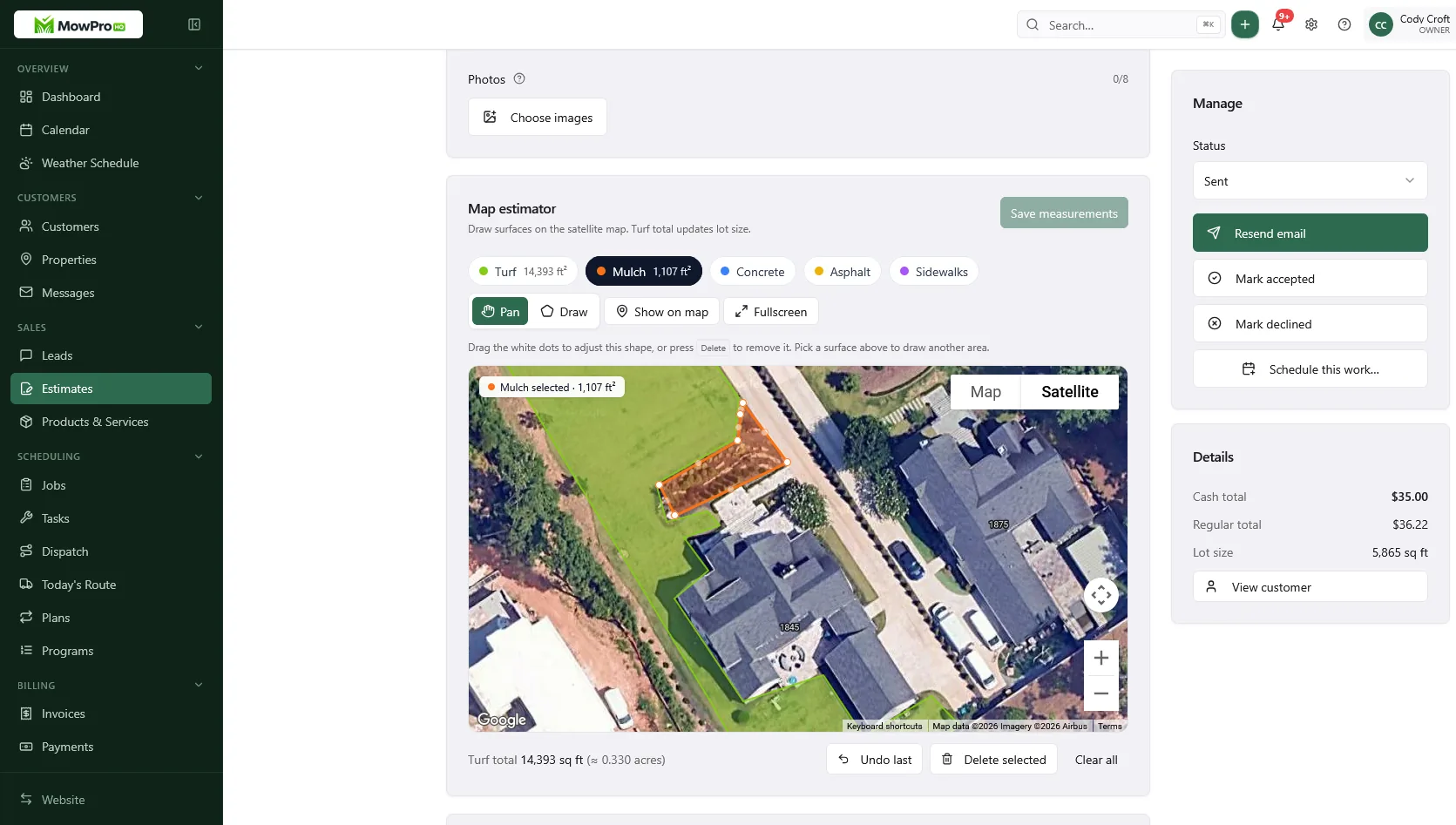
MowProHQ can keep the HOA customer, service properties, schedules, quote lines, and invoices connected. Use the accepted proposal and map as the source for property notes and recurring work.
Review current plans and pricing, then create an account and test the proposal workflow before the first service date.
Frequently asked questions
- How do I bid HOA or common-area lawn care?
- Walk the site with a map, identify every maintained zone, write the included and excluded work, estimate labor and travel time, and account for access and quiet-hour constraints. Have qualified legal and insurance professionals review contract requirements.
- What should an HOA lawn care proposal include?
- Include a labeled scope map, zone list, frequency, seasonal changes, access windows, equipment restrictions, extra-work authorization, insurance requirements, invoice terms, and relevant site photos.
- How is an HOA bid different from a residential quote?
- HOA work often involves multiple stakeholders, formal approvals, insurance documents, purchase orders, slower payment, and restricted work windows. Include those administrative and scheduling costs instead of pricing only the turf.
- Should I bid HOA commons by acre?
- Acreage is only a starting point. Islands, courtyards, slopes, obstacles, equipment restrictions, and long carries can change labor significantly. Convert measured area and conditions into estimated crew time, then apply your cost and margin targets.
- What payment terms should I put on an HOA lawn bid?
- State the legal billing entity, accounts-payable contact, invoice cadence, purchase-order rules, required tax and insurance documents, due date, late-payment terms, and any service-suspension process. Have counsel review enforceability.
- When should I walk away from an HOA lawn bid?
- Decline or requote when the scope is undefined, required extras are unpaid, the work window breaks route capacity, insurance requirements cannot be met, or the price falls below the cost floor after travel and administration.
- How do quiet hours change an HOA mowing bid?
- Quiet hours reduce scheduling flexibility and may require a dedicated route block, different equipment, or a different crew. Put every permitted work window in the proposal and property notes before pricing.