MowProHQ Blog/Pricing
How to Price Lawn Care Jobs: Lot Size, Frequency, and Add-Ons
Learn how to price lawn care jobs using real costs, crew time, lot conditions, travel, frequency, and add-ons—without relying on guesswork.

A full schedule does not guarantee a healthy lawn care business. If each stop fails to cover labor, equipment, travel, overhead, and profit, adding more work can make the cash problem worse.
The practical way to price lawn care is to start with your costs, turn them into a target revenue rate, estimate the time and scope, and then check the result against your local market. Competitor prices are useful context, but they cannot tell you what your crew, route, and equipment cost.
Start with a fully loaded cost per crew hour
Build the cost of operating one crew for one working hour. Include more than hourly wages:
- Labor: wages plus employer payroll taxes, workers' compensation, unemployment insurance, benefits, paid nonproductive time, and expected overtime
- Truck and travel: fuel, maintenance, repairs, registration, insurance, and depreciation or lease cost
- Equipment: mowers, trimmers, blowers, blades, repairs, replacement reserves, and small tools
- Job costs: bags, disposal, materials, subcontractors, and permits when applicable
- Overhead: office labor, general liability insurance, phones, software, marketing, accounting, rent, and other business expenses
Labor burden varies substantially by location, payroll structure, insurance classification, and employee benefits. Do not use a generic percentage without checking payroll reports, insurance bills, and an accountant or payroll professional. Likewise, sales tax rules for lawn services differ by state and locality; confirm whether tax applies and whether your advertised price includes it.
Use realistic billable hours when spreading overhead. A crew paid for eight hours rarely produces eight billable on-site hours after loading, fueling, travel, breaks, weather, training, and callbacks.
The free lawn care hourly rate calculator can help organize these inputs.
Cost, revenue, and profit are different numbers
Your cost per hour is the break-even floor before profit. Your revenue target is the amount you need to charge. Profit is what remains after the costs assigned to the work.
For a target profit margin:
Target revenue per crew hour = Cost per crew hour ÷ (1 − target profit margin)
Do not simply add the margin percentage to cost. If cost is $75 and you add 30%, the $97.50 price produces a 23.1% margin, not 30%.
Illustrative crew-hour calculation
The figures below are examples only. Replace every line with your own records.
| Cost component | Example per crew hour |
|---|---|
| Loaded labor for the crew | $48 |
| Truck and route expense | $10 |
| Equipment reserve | $8 |
| Allocated overhead | $9 |
| Estimated cost | $75 |
| Desired profit margin | 30% |
| Target revenue: $75 ÷ 0.70 | $107.14 |
That $107.14 is a revenue target, not hourly profit. At the assumed cost and if the estimate is accurate, the expected profit is $32.14 per crew hour before income tax. Owner compensation also needs deliberate treatment: pay for the owner's field or management labor belongs in cost; return on ownership belongs in profit. Ask a tax professional how your entity structure affects payroll, estimated taxes, and owner draws.
Estimate economic time, not just mower time
A quote should account for all time caused by the stop:
Estimated job price = total job hours × target revenue per crew hour + materials + disposal + special charges
Total job hours may include:
- Allocated drive time
- Unloading and loading
- Mowing, trimming, edging, and blowing
- Gate access and moving through the property
- Required documentation or customer communication
- Disposal time
Suppose a stop is expected to require 35 minutes on site and 10 minutes of allocated route travel. At the illustrative $107.14 revenue target:
45 ÷ 60 × $107.14 = $80.36
That is a planning estimate based on assumed costs and time—not a recommended market price. Round only after checking the full scope, local demand, applicable tax, and how consistently the route can deliver the estimated time.
Use lot size to estimate time
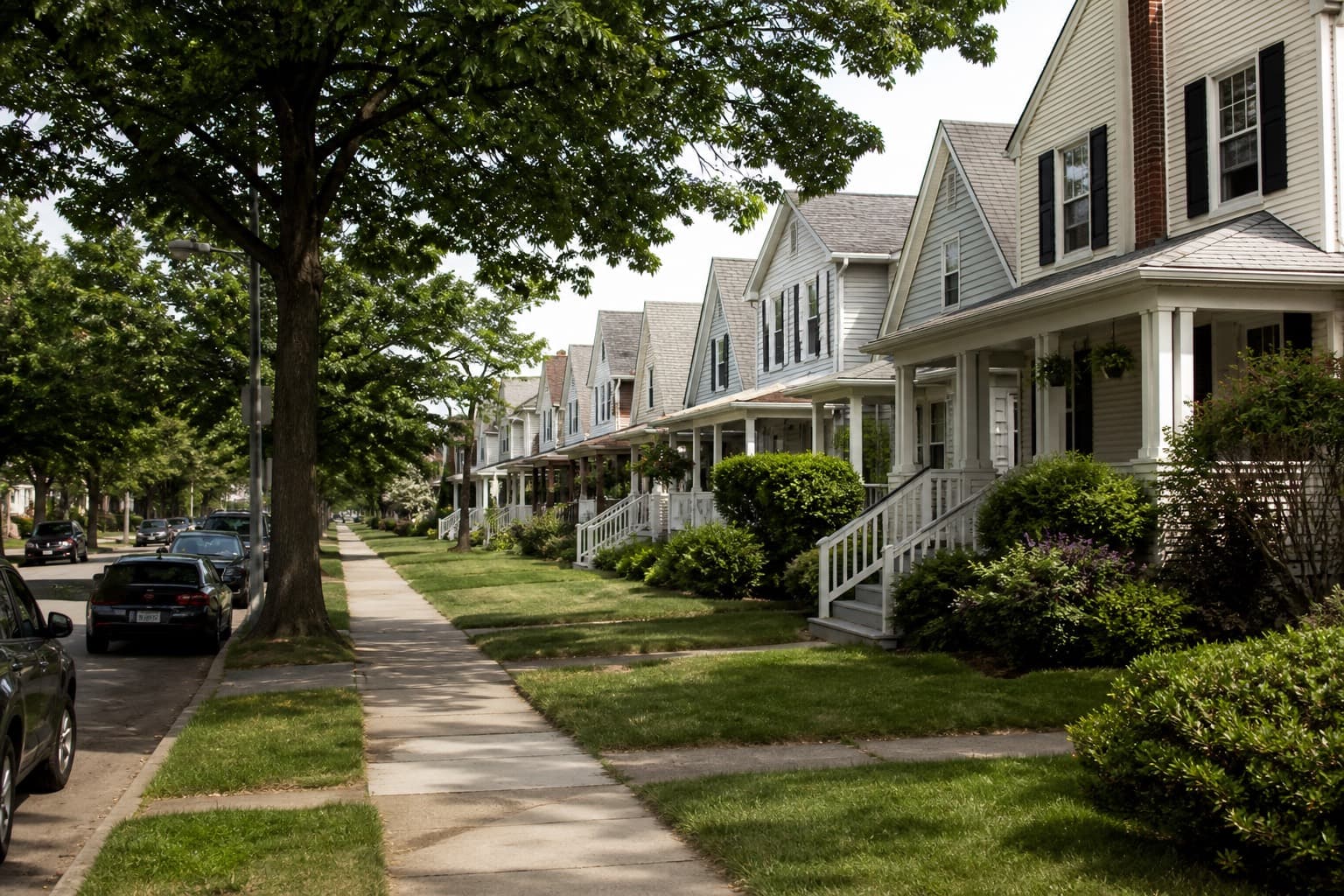
Mowable square footage is more useful than total parcel size, but neither tells the whole story. Two 8,000-square-foot lawns can require very different amounts of work.
Record the factors that change production:
- Slope, ditches, retaining walls, and unsafe terrain
- Gate width and whether your normal mower fits
- Trees, beds, fences, play equipment, and other obstacles
- Amount of string trimming and hard-surface edging
- Long carries from the trailer
- Drainage, soft ground, and irrigation hazards
- Grass height, thickness, moisture, and seasonal growth
- Pet waste, debris, parked vehicles, and access delays
- Bagging, hauling, or special finish requirements
Aerial measurements and photos are helpful, but inspect uncertain properties before guaranteeing a price. See lot-size quoting for lawn care for a deeper process.
Build time bands from completed jobs
These bands are a worksheet structure, not universal production standards:
| Property band | Your measured mowable area | Baseline crew minutes | Common adjustment |
|---|---|---|---|
| Small | Define from your route data | Enter median | Minimum-stop economics |
| Medium | Define from your route data | Enter median | Gates and trimming |
| Large | Define from your route data | Enter median | Equipment choice |
| Custom | Outside normal range | Site estimate | Written scope and assumptions |
Review completed-job times by crew, equipment, season, and service level. Use the median of comparable, correctly scoped jobs as a baseline, then add minutes for known conditions. A blanket multiplier can be convenient, but measured minutes are easier to audit and improve.
Frequency changes the workload
Weekly and biweekly mowing are different service plans, not the same visit divided by two.
- Weekly service may produce shorter, more predictable visits during active growth.
- Biweekly service may mean taller grass, slower travel speed, heavier trimming, clippings, and more cleanup.
- On-demand or monthly service is often better estimated as a cleanup with a condition-based range or site inspection.
Climate, turf type, irrigation, fertilizer, and season all affect growth. Do not promise that every biweekly lawn can be brought to the same finish in one normal pass. State what happens when excessive growth, weather delays, or a customer-requested skip pushes the property outside normal scope.
| Service plan | Define in the estimate | Pricing approach |
|---|---|---|
| Weekly | Visit cadence and standard scope | Expected weekly crew time |
| Biweekly | Cadence plus tall-grass policy | Expected biweekly crew time |
| On demand | Scheduling and condition limits | Current-condition estimate |
| Seasonal package | Number or cadence of visits | Total expected annual work and payment schedule |
For plan design, see recurring mowing plans.
Define the base scope and every add-on
"Lawn service" is too vague for a reliable estimate. State whether the base visit includes mowing, string trimming, mechanical edging, blowing hard surfaces, clipping dispersal, bagging, and disposal.
Price extras by the unit that best predicts their cost:
- Labor time for bed weeding or shrub trimming
- Linear feet for edging where production is consistent
- Volume, weight, or load for debris hauling
- Material quantity plus delivery and handling
- A project estimate for restorations and neglected properties
Sample add-on menu
Fill in your dollars. The unit is what keeps two estimators close.

Bed weeding
Per visit or monthly
Cap time or price by bed count.
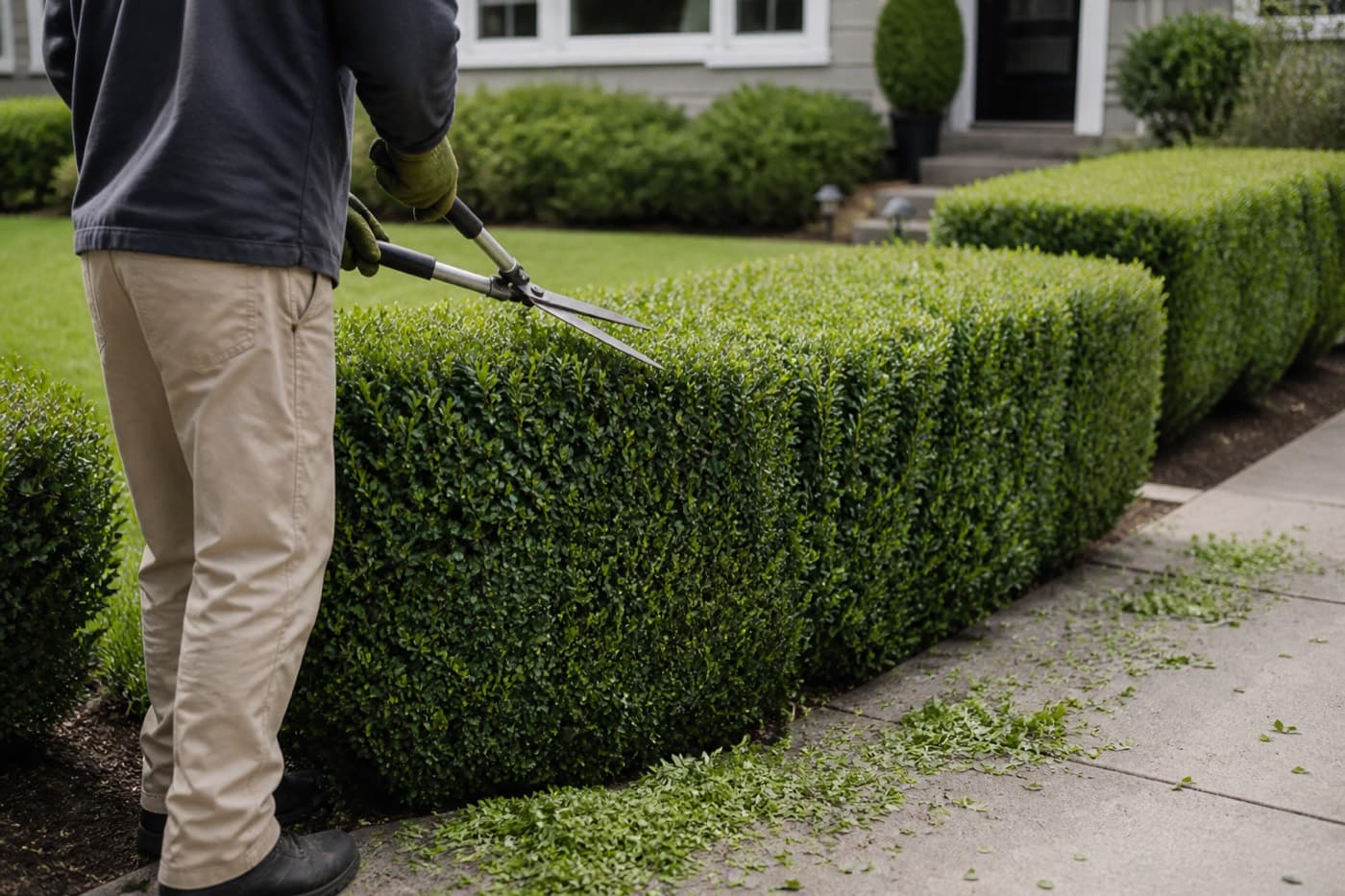
Shrub trim
Seasonal
Keep it off the mow package. Maintenance trim is not a restore.
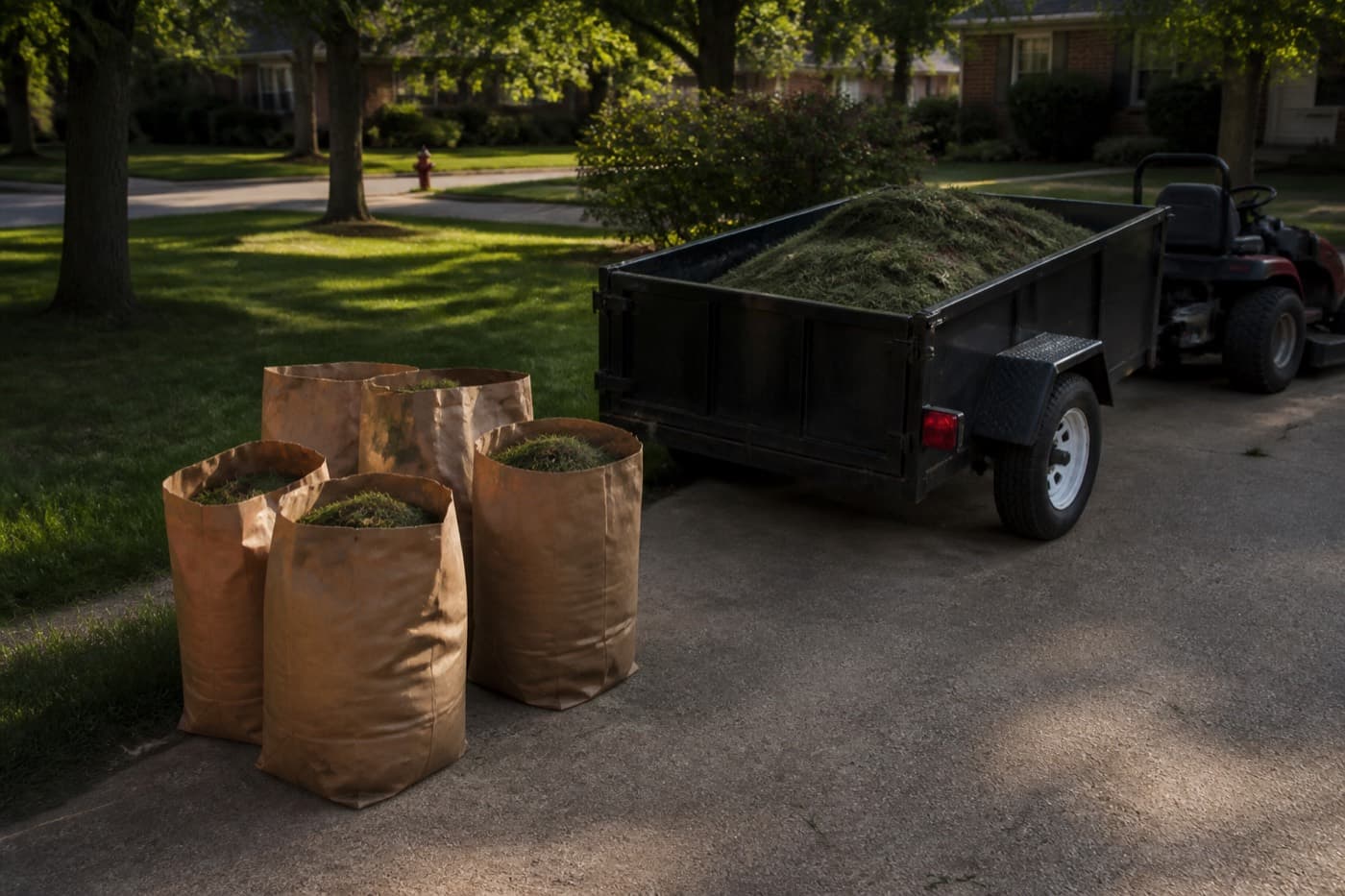
Bagging / haul-away
HOA or customer request
Include the dump fee. Mulch-and-blow is a different product.
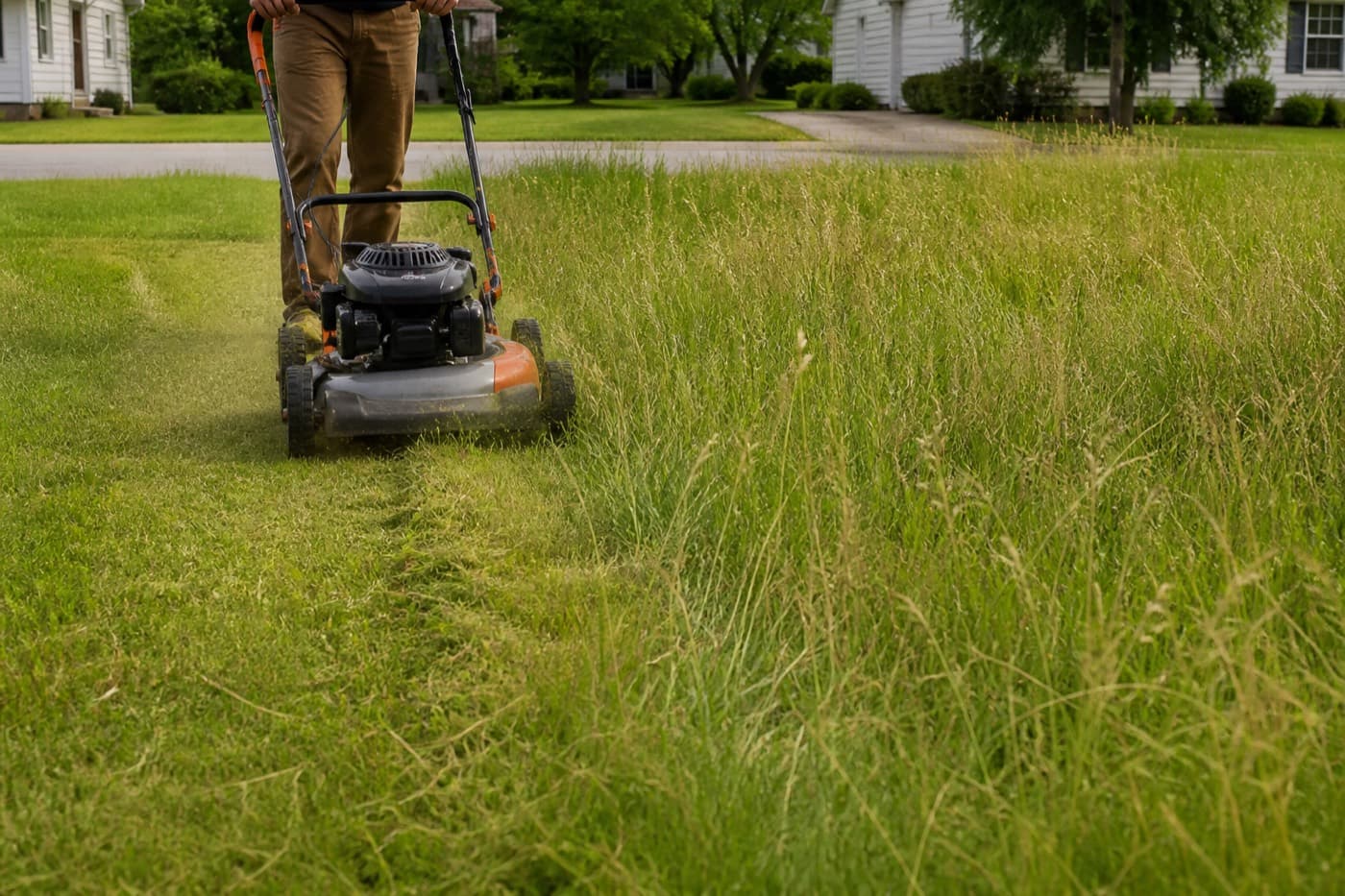
Initial cleanup
First visit on a neglected lawn
Never the first-mow price. Quote it as a project.
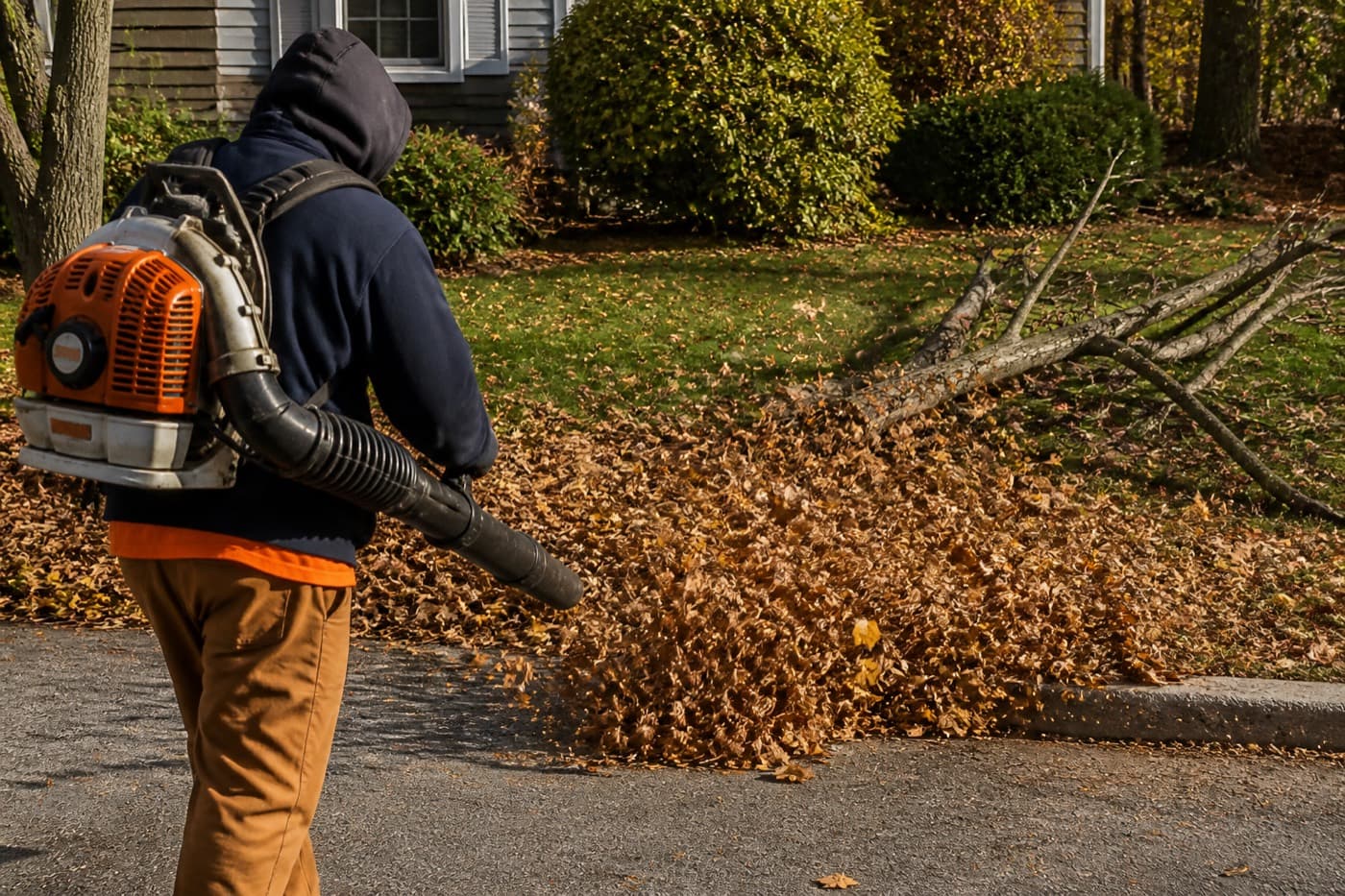
Leaf / storm debris
Seasonal events
Minimum plus volume tiers. Photo the pile before you start.
Avoid promising an exact quantity when conditions are hidden. Mulch depth, buried debris, access, and disposal volume can change the job. Use allowances, unit prices, or written change-order approval where appropriate. More examples are in how to price lawn care add-ons.
Account for travel and route density
Travel is paid time even when it is not visible on the lawn. Allocate routine route time across nearby stops instead of pretending it costs nothing.
| Lead location | Practical response |
|---|---|
| Fits an established route | Use normal allocated travel time |
| Near the route but adds a detour | Add the expected minutes |
| Isolated from other work | Higher minimum or disclosed trip charge |
| Outside the service area | Waitlist, refer, or decline |
Do not assume a fixed distance or drive time is always acceptable. Congestion, trailers, road type, crew size, and the likelihood of adding nearby customers all matter. Use route planning and dispatch and lawn care scheduling software to compare planned routes with actual results.
Write an estimate that prevents scope disputes
A useful lawn care estimate should identify:
- Property and service area
- Included work and finish standard
- Exclusions and customer responsibilities
- Frequency and expected service window
- Price, applicable tax, and add-on rates
- Start date, estimate expiration, and cancellation terms
- Weather, access, excessive-growth, and skip policies
- Payment timing, accepted methods, and late-payment terms
- How changed conditions or extra work will be approved
Photos can document pre-existing damage, gate access, fragile items, and the quoted condition. Never perform a material extra and assume the customer will pay; obtain written approval first. Use plain language and follow local requirements for estimates, contracts, renewals, deposits, and cancellation rights. See how to write lawn care quotes.
A qualified worked quote
Assume your own records support all of the following:
- Expected biweekly service time: 50 crew minutes
- Your target revenue rate: $1.80 per crew minute
- Access adds an estimated 10 crew minutes
- Bed weeding is expected to take 20 crew minutes on one visit each month
The mowing estimate is 60 × $1.80 = $108 per visit. If you round it to $110, make sure the written scope and local market support that result. The bed visit would add 20 × $1.80 = $36, before any materials, disposal, or applicable tax.
The estimate should say that the assumptions apply to normal growth and clear access, that the initial overgrown cut is quoted separately, and that bed work occurs only on the stated cadence. These are sample calculations, not universal lawn care prices.
Protect safety instead of pricing around it
Some conditions should change the work method; others should stop the job. Train crews to identify steep or unstable slopes, hidden objects, traffic exposure, heat, lightning, chemical hazards, aggressive animals, and equipment-clearance problems. Follow equipment manuals and applicable workplace, pesticide, and transportation rules.
Do not use a surcharge to justify work your crew cannot perform safely or legally. Change the equipment or scope, postpone the visit, use a qualified subcontractor where appropriate, or decline the work. Include expected personal protective equipment, training, insurance, and compliance time in your costs.
Set payment terms before work begins
State when payment is due and how customers can pay. For recurring residential work, a card on file or scheduled invoice may reduce collection time. Larger projects may justify a deposit or progress billing where local law permits. Commercial work should identify the purchase-order process, invoice contact, payment terms, and who may authorize extras.
If you offer different cash and card totals, verify current state law and card-network rules first. Surcharges, cash discounts, debit cards, notice, and receipt requirements are not interchangeable. Alternatively, include expected processing expense in all prices. Never add an undisclosed fee at checkout.
Your lawn care invoicing process should match the signed estimate. Read cash vs card pricing for lawn care before choosing a policy.
Check margin after the job
Estimating improves when you compare the quote with actual results:
- Actual crew and travel time
- Loaded labor cost
- Fuel, material, disposal, and processing costs
- Revenue before sales tax
- Callbacks, damage, discounts, and unpaid invoices
Use:
Gross profit dollars = job revenue − direct and allocated job costs
Gross profit margin = gross profit dollars ÷ job revenue
Be consistent about which overhead costs are included before comparing jobs. Gross profit is not the same as net business profit, and neither is the same as cash in the bank. Debt payments, equipment purchases, owner draws, and income taxes can create different cash timing.
If a recurring stop misses its estimate, find the reason before raising the price: bad time assumptions, added scope, inefficient routing, crew training, unsuitable equipment, or changed property conditions may require different fixes.
Raise prices deliberately
Review prices on a regular schedule and when a material input changes. Common triggers include:
- Higher wages, labor burden, insurance, fuel, or equipment cost
- Repeated visits taking longer than estimated
- Added landscaping, obstacles, gates, or finish expectations
- A route change that adds travel
- An old agreement no longer covering its scope
Give clear notice, explain the new price and effective date, and update the estimate, recurring plan, and invoice together. Avoid guaranteeing that most customers will stay; retention depends on the size of the change, alternatives, communication, and service quality.
Discounts also need math. A route-density discount is sensible only if the saved time or acquisition cost covers it. Put an end date and eligibility rule on promotions, and measure their results.
Commercial work needs additional review
Commercial pricing uses the same cost-and-time foundation, but the estimate may need site maps, service calendars, insurance requirements, prevailing-wage review, reporting, purchase orders, longer payment terms, and documented approval for extras. Walk each property and price each scope instead of accepting a single informal number for multiple sites.
For a broader comparison, read commercial vs residential lawn care ops.
Keep the system simple enough to repeat
A good process lets two trained estimators reach similar results:
- Confirm mowable area and conditions.
- Define service scope and frequency.
- Estimate on-site, travel, loading, and disposal time.
- Multiply total hours by the target revenue rate.
- Add materials, disposal, tax, and approved special charges.
- Compare with similar completed jobs and current market context.
- Send a written estimate with assumptions and payment terms.
- Compare estimated and actual results after service.
Software can keep property notes, quotes, recurring jobs, and invoices aligned, but it cannot choose a profitable rate without accurate inputs. A lawn care business software checklist can help you evaluate the workflow.
Put your pricing process into practice
MowProHQ can help carry an approved quote into scheduling and invoicing. Review current options on pricing, or sign up when you are ready to set up your workflow.
Price from evidence, document the scope, and revisit the assumptions. That is more durable than copying a competitor's number or guessing from the driveway.
Frequently asked questions
- How do I price lawn care jobs correctly?
- Calculate your fully loaded cost per crew hour, choose a target profit margin, estimate the total time required, and adjust for property conditions, travel, frequency, and add-ons. The written estimate should define exactly what is included.
- Should I price lawn care by lot size or by time?
- Use mowable area as a starting point, then convert the property's size and conditions into expected crew time. Lot size alone misses slopes, gates, obstacles, trimming, loading, and travel.
- What is the formula for a lawn care price?
- A useful starting formula is total job hours multiplied by target revenue per crew hour, plus separately priced materials, disposal, and unusual risk. Target revenue per hour equals cost per hour divided by one minus the desired profit margin.
- Is biweekly mowing half the price of weekly mowing?
- Usually not. Each biweekly visit may involve taller grass, slower mowing, more trimming or cleanup, and a greater chance that conditions exceed the normal scope. Estimate the time for each frequency instead of simply dividing a weekly plan.
- How should travel affect a lawn care quote?
- Allocate normal route travel across stops and include it in your required revenue. For isolated properties, use a higher minimum, a clearly disclosed trip charge, or decline the work if it cannot support the extra time.
- Should I charge more for card payments?
- You may include processing costs in every price or offer a compliant cash discount or card surcharge where permitted. Card-surcharge and disclosure rules vary by location and card network, so verify current requirements before publishing a policy.
- When should I raise lawn care prices?
- Review prices when wages, payroll burden, fuel, equipment, insurance, overhead, scope, or service time changes. Compare actual job time and cost with the estimate, give reasonable notice, and update the quote or service agreement.