MowProHQ Blog/Pricing
Lawn Care and Landscaping Startup Costs: What to Buy First
A practical guide to first-season lawn care and landscaping startup costs, including equipment, insurance, marketing, and purchases that can wait.
There is no single answer to what it costs to start a lawn care or landscaping business. Someone who already owns a truck and buys a used mower has a very different budget from someone launching an installation company with a dump trailer and material expenses.
A useful startup budget separates three things: what you need before the first job, what you can buy when demand appears, and what looks professional but does not help you complete paid work.
This guide gives you an order for those decisions rather than a universal shopping list. If mowing will be your main service, pair it with the lawn care startup checklist. If you plan to focus on beds and small installations, read how to start a landscaping business. If you are still choosing, compare lawn care and landscaping in year one.
Sort purchases by when you actually need them
Before browsing equipment listings, divide possible purchases into three groups:
| Spend now | Spend when a job requires it | Skip in year one |
|---|---|---|
| Equipment for your primary service | Second mower, aerator, or trailer upgrade | Skid steer or new truck without enough booked work |
| Trimmer, blower, hand tools you touch daily | Mulch trailer or dump setup for installs you have sold | Every attachment in a “landscape package” |
| Appropriate insurance and a business bank account | Hiring-related coverage after confirming local requirements | A full wrap, second logo, or county-wide ad campaign |
| A simple system for quotes and invoices | Dispatch and GPS when a team shares the schedule | Several disconnected apps that duplicate customer records |
Items in the first column allow you to operate safely and get paid. The second group should be tied to actual customer demand. The final group can consume cash before the business has enough work to support it.
Example startup scenarios
These examples show how the budget changes depending on what you already own. Use quotes from local dealers, suppliers, and insurance agents for your actual plan.
Starting a solo mowing route with a truck
Your list may include a dependable commercial mower, straight-shaft trimmer, backpack blower, blades, fuel cans, and a trailer or rack rated for the load. Used equipment can reduce the initial cost, but leave room for maintenance and repairs. Commercial insurance, fuel, and disposal fees also need to be included in your minimum hourly rate.
Starting without a truck
The vehicle may become the largest part of the budget. Be cautious with a payment that only works if every day is fully booked. Your route will take time to build, and weather or equipment trouble can quickly expose a payment that is too high.
Adding small landscape projects
In addition to the mowing equipment, you may need a practical way to haul mulch and plants, plus wheelbarrows, rakes, shovels, and tarps. You also need enough cash to pay suppliers before the customer's final balance arrives. Deposits help cover those material costs without forcing the business to finance each project.
None of these examples is a price quote. Get current local numbers, then use them to establish your cost floor before advertising a price. Lawn care pricing starts with labor and overhead; landscape projects add materials, delivery, waste, and disposal.
Budget for insurance and basic financial setup
Talk to an insurance agent who understands the services you will perform. General liability, commercial auto, and equipment coverage are common topics. Workers' compensation requirements vary by location and become especially important when you hire. Commercial customers, HOAs, and property managers may also require a certificate of insurance.
Do not build your budget around a premium someone posted online. Describe your real work to a qualified agent, get a quote, and include that cost in overhead. The cheapest policy is not useful if it excludes the work you are doing.
Open a separate business bank account early so customer payments and business purchases do not get mixed with personal spending. Your first expense categories and reports can be simple: revenue, unpaid invoices, fuel, repairs, materials, insurance, and marketing.
Decide whether to buy used or finance
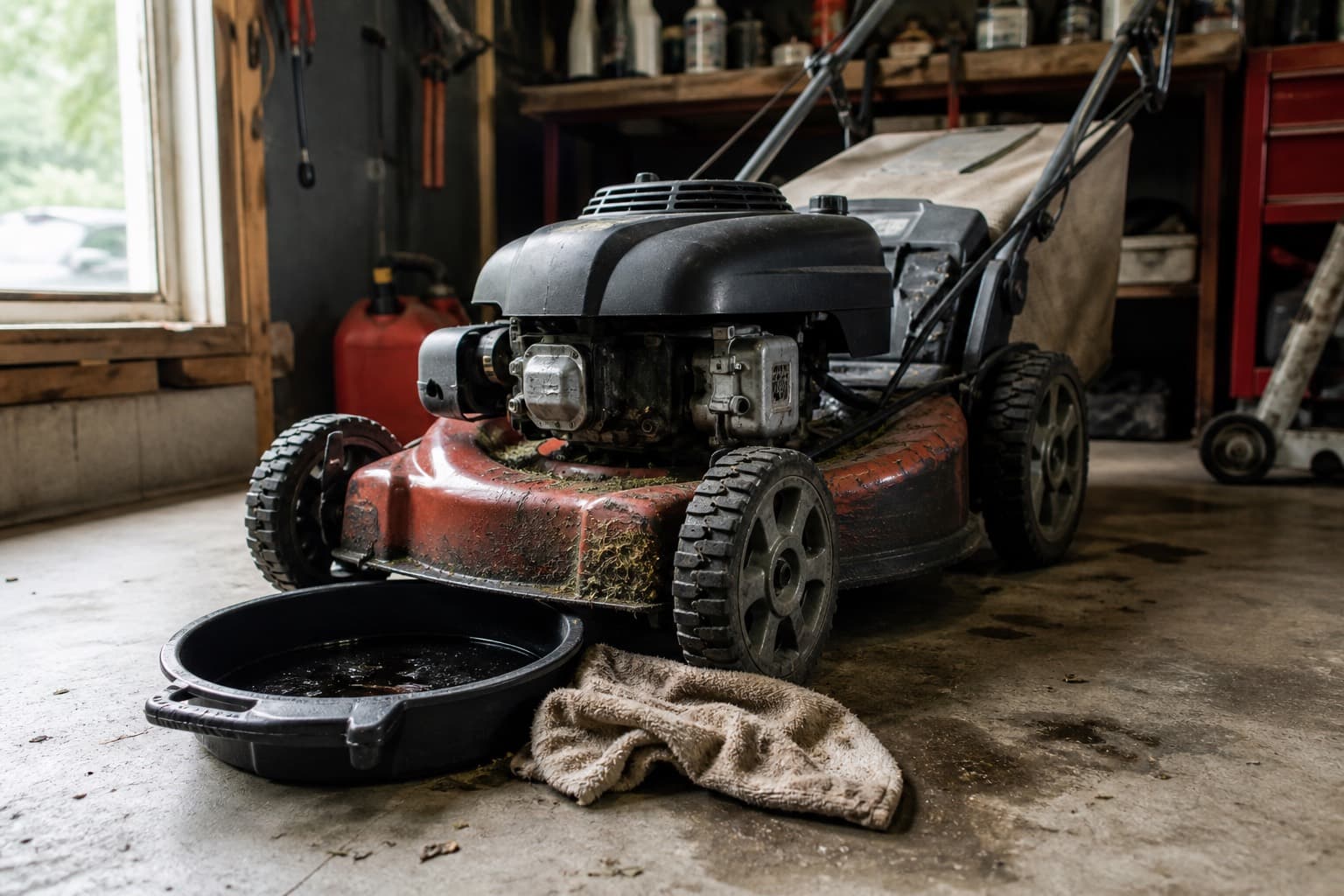
New equipment may offer a warranty and predictable maintenance, while used equipment can keep monthly costs low. The right choice depends on condition, parts availability, your ability to maintain it, and how much paid work is already booked.
Buy used when
- The machine suits your main service and parts are available locally
- You can inspect its condition or have a mechanic inspect it
- Avoiding a payment gives the business useful room during a slow month
Finance when
- You have enough booked work to use the equipment regularly
- The payment fits your cost model with room for fuel, maintenance, and slower weeks
- The warranty or productivity gain has real value to the business
Maintenance and shop time apply to any mower, new or used. Include blades, belts, oil, tires, downtime, and repair labor in the decision—not only the purchase price.
The same rule applies to larger landscape equipment. If most of your work is mulch and shrub beds, owning a skid steer may not make financial sense. Renting specialized equipment for occasional projects can be more practical until the calendar shows frequent demand.
Keep first-season marketing close to the route
Early marketing should help you build a compact service area, not scatter a few customers across a large county.
A useful starting point includes a phone number you answer, an accurate Google Business Profile, a simple website or quote form, and printed material for neighborhoods you already serve. A straightforward page that generates local website leads is more important than an expensive site with no clear service area or offer.
A full vehicle wrap, broad paid ads, multiple brands, and marketplace fees are harder to justify before you know which services and neighborhoods are profitable. Customer referrals and carefully targeted Nextdoor or Facebook leads can help fill a route without committing to a large campaign.
Track where each lead comes from. If a marketing expense repeatedly produces distant, low-value work, move the money somewhere more useful.
Start with simple software
From the first week, you need one dependable place for customers, properties, schedules, quotes, and invoices. A free plan may be enough while you are working alone. Features such as dispatch, GPS, and additional team access become more valuable when another person joins the schedule or missed information starts costing time.
Use the free-versus-paid software guide to decide when an upgrade is justified, and avoid common software buying mistakes. Payment-processing fees are also a real cost, so account for them in your pricing and publish a clear cash and card policy.
A sensible order for startup spending
- Choose the main service you plan to sell.
- Confirm local business, licensing, and insurance requirements.
- Open a business bank account and set up basic recordkeeping.
- Buy or service the essential equipment and arrange safe, legal transportation.
- Build prices from your actual costs, including repairs and overhead.
- Sell and complete work in a focused service area.
- Upgrade hauling, equipment, or software when booked work exposes a real limitation.
- Add employees or another truck when route density and demand support them.
If demand is still inconsistent, additional equipment usually adds overhead without solving the underlying problem. In the first season, dependable tools, disciplined pricing, and a manageable service area matter more than owning everything in the catalog.
How MowProHQ helps
MowProHQ gives a new lawn or landscape business one place to manage customers, properties, schedules, quotes, invoices, and payment options. You can start with the core tools and add team, dispatch, route, and marketing features as the company grows.
Use the hourly rate calculator to see how equipment and overhead affect your pricing. You can also compare current plans and pricing or create an account when you need a home for quotes, schedules, and invoices.
Frequently asked questions
- How much does it cost to start a lawn care business?
- Startup costs vary widely. If you already own a reliable truck, your main costs may be a mower, trimmer, blower, trailer or rack, insurance, and initial operating cash. If you also need a truck, the total will be much higher. Get local prices instead of relying on a national average.
- How much does it cost to start a landscaping business?
- A landscaping startup can cost more than a basic mowing operation because projects often require materials, hauling capacity, hand tools, and money for supplier purchases. Start with equipment for the services you have actually sold. Design software and large machinery can usually wait.
- What should I buy first?
- Buy the equipment required for your main service, a safe and legal way to transport it, and the small tools you will use every day. You should also budget for insurance, a business bank account, and a basic quoting and invoicing system. Branding upgrades and backup equipment can come later.
- What should a startup skip?
- Avoid taking on large payments for equipment you do not need yet. A new truck, skid steer, full vehicle wrap, broad advertising campaign, or second brand can wait until demand and cash flow justify the cost.
- Should I finance equipment in the first season?
- Financing may make sense when you already have enough profitable work for the equipment and the payment fits comfortably within your operating costs. A dependable used mower is often a safer first-season choice than a new machine with a payment but no established route.
- Does software belong in the startup budget?
- Yes, but it does not need to be expensive. From the beginning, you need a reliable way to store customer information, schedule work, send quotes, and issue invoices. Paid dispatch, GPS, and team features can wait until the business is large enough to need them.