MowProHQ Blog/Marketing
Nextdoor and Facebook Leads vs an Owned Lawn Care Site
Compare Nextdoor and Facebook lawn care leads with an owned website, including lead handling, privacy, consent, and account-control practices.
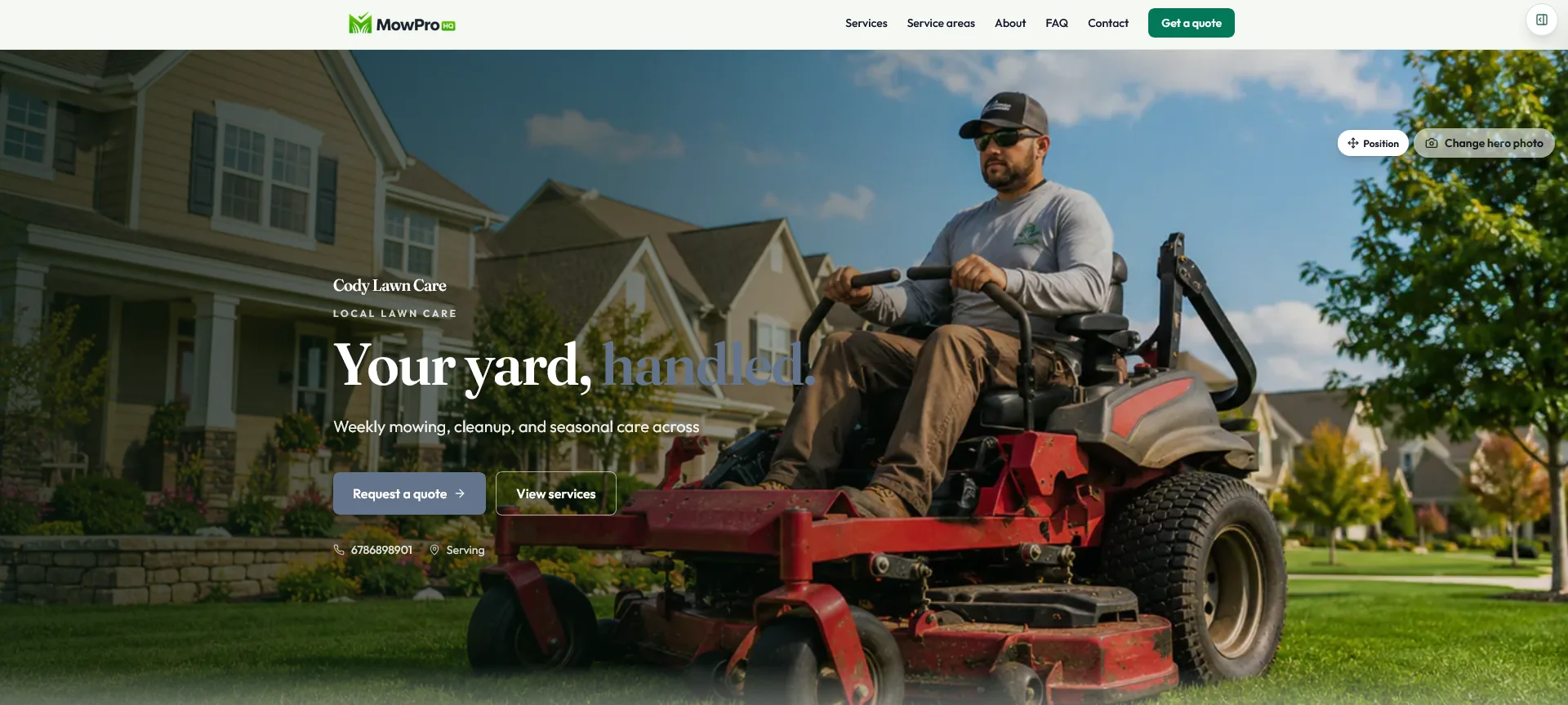
Nextdoor and Facebook can introduce a lawn care company to nearby homeowners at the moment they ask for a recommendation. An owned website serves a different purpose: it gives prospective customers a consistent place to review services, share quote details, and contact the business.
The practical question is not necessarily which channel to abandon. It is how to use social discovery without making a third-party feed the only path to your business. A lawn care website that captures leads can complement social activity, while the same channel-risk questions discussed in marketplaces vs owning customer relationships still apply.
Social platforms and owned websites play different roles
An owned site lets you decide how services are presented, what information a quote form requests, and where submissions go. You remain responsible for the domain, hosting, security, accessibility, and privacy practices.
Nextdoor and Facebook provide local reach and community context. In return, discovery depends partly on each platform's ranking systems, product changes, account access, and community rules. A page, profile, or message history on a platform is not the same as controlling the underlying platform.
| Consideration | Owned website | Nextdoor or Facebook |
|---|---|---|
| Primary role | Explain services and collect inquiries | Build awareness and join local conversations |
| Control | You manage the domain, content, and form | Features and visibility are governed by the platform |
| Customer details | Collected through your configured process | May begin in a post, comment, lead form, or message |
| Measurement | First-party analytics you configure | Platform reporting and referral tracking |
| Ongoing responsibility | Hosting, security, privacy, and maintenance | Policy compliance, account security, and moderation |
A balanced approach may use social channels for discovery and an owned site for detailed service information and quote requests.

Measure the full cost of each lead source
A social lead may have no direct lead fee, but it still has a cost. Include:
- Time spent monitoring groups, responding, and following up
- Advertising or promoted-post spend
- Unqualified or out-of-area inquiries
- Estimating time and travel
- Booked revenue, retention, and route fit
- Administrative work needed to document the agreed scope
Apply the same accounting to website leads, including hosting, content, search optimization, ads, and form maintenance. Compare channels over a meaningful period rather than judging them from one busy post or one quiet week. For estimating discipline, see how to price lawn care jobs.
A careful workflow for social lawn care leads
Before posting or replying, review the current platform terms, advertising policies, local group rules, and restrictions on commercial activity. Policies can change, and a practice allowed in one group or account type may not be allowed in another.
- Confirm the post allows business replies. Some groups limit promotions, links, repeated comments, or direct messages.
- Respond helpfully and accurately. State your service area and relevant services without making claims you cannot support.
- Keep personal details private. Do not ask someone to post an address, phone number, gate code, or access instructions publicly.
- Offer a secure next step. When rules permit, link to your quote page or invite the person to use an approved private channel.
- Document the scope. Put the property details, estimate, exclusions, and customer approval in your normal business system.
- Measure the result. Tag the source and review lead quality, booked work, route density, and time spent.
A neutral reply template
We provide [service] in [service area]. If group rules allow, you can review our services and request a property-specific quote at [your site]. Please send address and access details through the private form rather than posting them here.
If you publish a starting price, explain what it includes and what factors can change the estimate. If pricing depends heavily on the property, say so instead of guessing from a post or photo.
What an owned lawn care site should do
The site should help a visitor decide whether your company is a reasonable fit and provide a clear way to ask for a quote. Useful elements from the lawn care website leads guide include:
- Current services and service areas
- Clear quote-request and contact options
- Enough information to set expectations about frequency and scope
- Relevant reviews or project examples used with permission
- A privacy notice explaining what you collect and why
- A reliable process for responding and retaining records
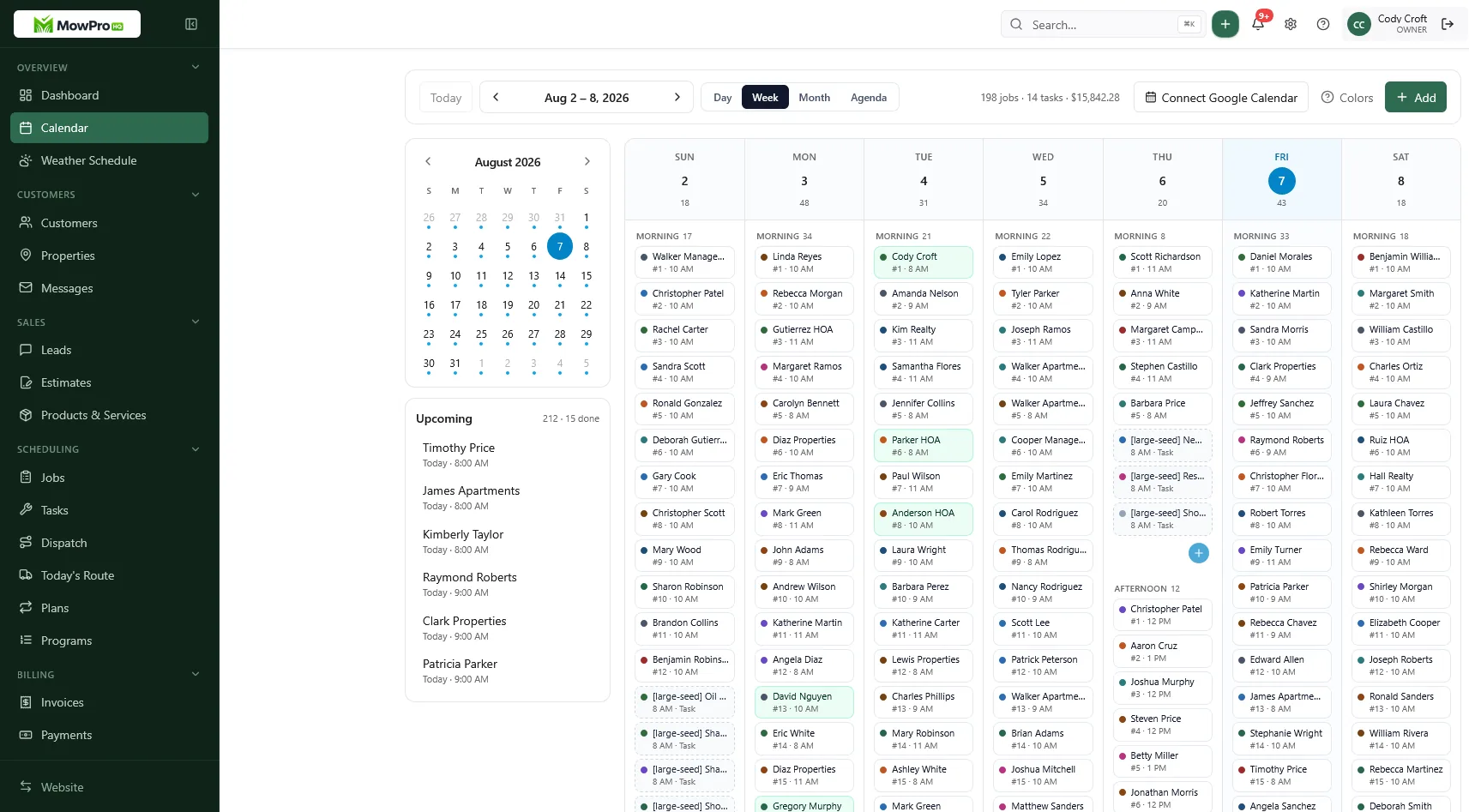
In MowProHQ
Privacy, consent, and customer communication
Collect only the information needed to evaluate and service an inquiry. Protect it with appropriate access controls, limit employee access, set a retention policy, and avoid copying sensitive details from a social profile without a valid business reason.
An inquiry does not automatically create permission for every type of marketing. Obtain and record the consent required for promotional texts, emails, or calls, provide applicable opt-out methods, and honor withdrawal requests. Transactional messages about a requested quote or scheduled service may be treated differently from marketing, but the details depend on applicable law and the tools you use. Seek qualified legal guidance for your jurisdiction when needed.
If a platform provides a native lead form, review its required disclosures and data-use terms before exporting or syncing submissions. Do not scrape group members, add people to marketing lists without appropriate permission, or use automation that violates platform rules.
Protect account and domain ownership
Business assets should be controlled by the business, not tied only to a former employee, agency, or owner's personal login.
- Register the domain in a company-controlled account and keep billing current.
- Use business-managed email addresses for platform administration where available.
- Assign more than one trusted administrator, with the minimum permissions each person needs.
- Turn on multi-factor authentication and store recovery codes securely.
- Document who controls the Facebook Page, Meta Business assets, Nextdoor Business Page, website, analytics, and ad accounts.
- Review access when staff or vendors change, and confirm in writing who owns content, data, and ad assets.
No setup eliminates platform risk, but these steps can reduce avoidable lockouts and ownership disputes.
A four-week channel review
| Week | Owned website | Social channels |
|---|---|---|
| 1 | Verify services, areas, privacy notice, and form delivery | Review profiles, account access, and group rules |
| 2 | Test quote requests on phone and desktop | Use a consistent, policy-compliant response |
| 3 | Record source and outcome for each inquiry | Track time, qualified leads, and booked work |
| 4 | Review conversion, route fit, and follow-up | Continue, adjust, or pause based on results |
Ask for reviews without incentives or pressure, and follow each site's review policy. Reviews without begging offers a practical process. Keep copies of customer-approved testimonials and project media, but do not copy a platform review to your site unless the platform terms and applicable permissions allow it.
When to adjust the mix
Consider reducing activity on a channel when it consistently produces out-of-area inquiries, poor route fit, policy concerns, or more administrative work than the resulting jobs justify. Consider investing more when the channel produces qualified work at an acceptable cost and your team can follow up reliably.
The right mix will vary by market and season. Review it periodically because social reach, local competition, ad costs, and search demand can change.
Using MowProHQ
MowProHQ can help lawn care businesses manage leads, quotes, customer records, scheduling, and related website workflows in one system. Review current plans and included features on the pricing page, or sign up to evaluate whether it fits your process.
Frequently asked questions
- Are Nextdoor and Facebook good for lawn care leads?
- They can be useful sources of local demand, especially when neighbors ask for recommendations. Results vary by market, group rules, response quality, and season. Many lawn care companies use social platforms alongside an owned website rather than relying on either channel alone.
- Why is an owned lawn care website better than social leads?
- An owned website gives you more control over the quote form, service information, analytics, and customer journey. Social platforms can still help people discover the business, but their features, reach, and policies may change.
- Should I quote lawn care prices in a Facebook comment?
- It depends on how standardized your pricing is. A public starting price may help qualify leads, while a property-specific quote can reduce misunderstandings about lot size, access, frequency, and scope. Avoid requesting personal property details in a public thread.
- How do social lawn care leads compare to marketplaces?
- Social networks, marketplaces, and owned websites have different costs and levels of control. Compare lead quality, acquisition cost, service-area fit, and the platform terms that govern how customer information may be used.
- What should a lawn care site include if I still use Nextdoor?
- Include current services, service areas, credible proof, contact details, a privacy notice, and a clear quote request. Keep the form short enough to complete while collecting the details needed to evaluate the property.
- How fast should I reply to a Nextdoor lawn care post?
- Prompt replies can help, but accuracy and fit matter too. Set a response target your team can consistently meet, then confirm the service area and scope before promising a price or start date.
- Can I run ads on Facebook instead of building a site?
- You can collect leads through Meta tools, an owned landing page, or both. An owned site can provide more control over the form and follow-up path. Whichever method you use, follow the platform's advertising rules and applicable privacy and marketing-consent requirements.