MowProHQ Blog/Marketing
How to Turn Website House-Wash Leads Into Booked Jobs
Build a house-wash website that collects useful quote requests, supports fast follow-up, and turns accepted estimates into scheduled jobs.
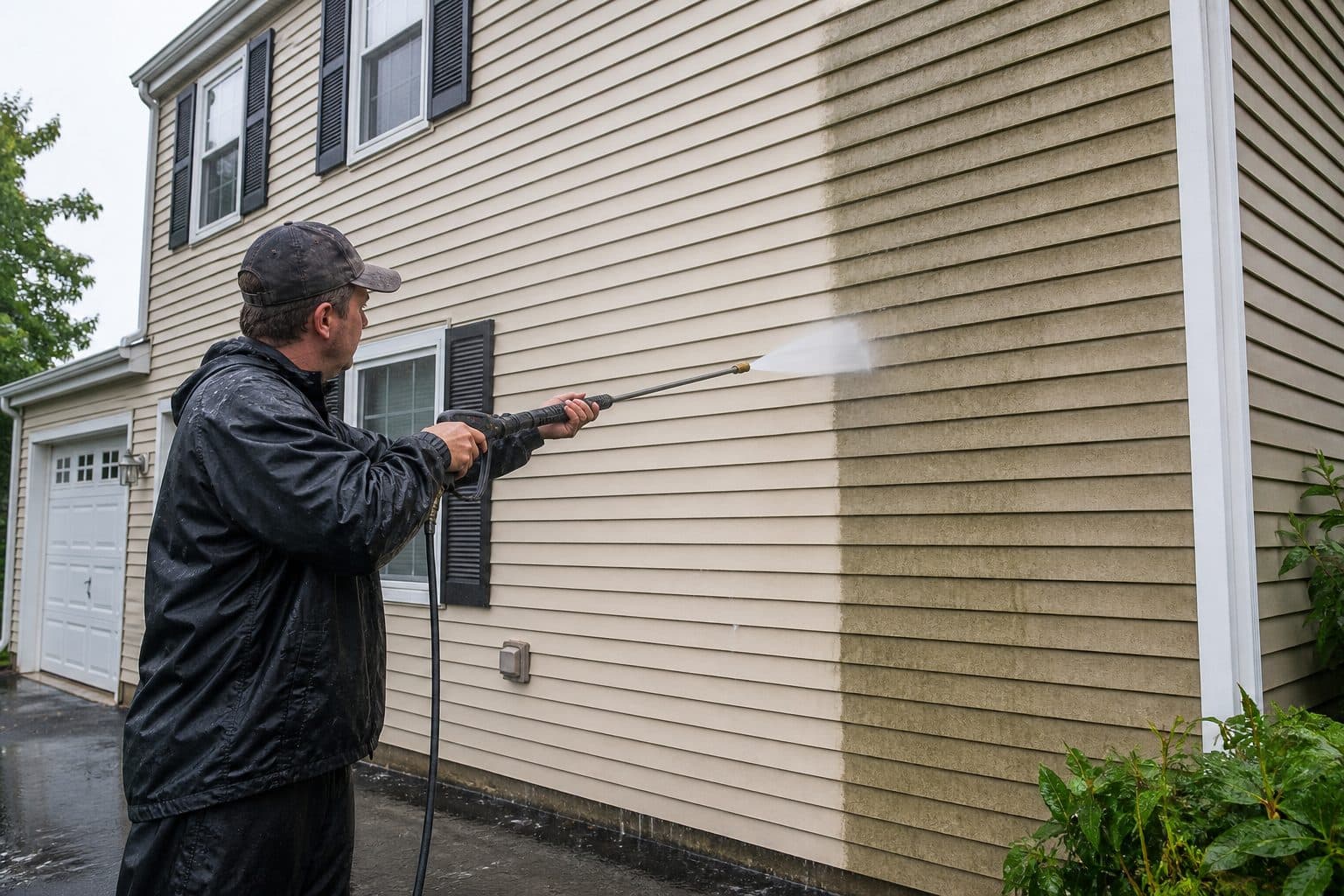
A useful house-wash website helps a local customer understand your services, confirm that you cover their area, and request a quote. Photos support trust, but the form and follow-up process determine whether an inquiry becomes scheduled work.
Build pages that answer common buying questions, ask only for useful information, and send every request into the same system used to quote house-wash work. Focus marketing on neighborhoods you can serve efficiently.
Must-have pages and proof
Most visitors want to confirm three things: you handle their type of property, you serve their location, and they can request a price without difficulty.
Pages that earn their keep
| Page | What it must do |
|---|---|
| Home | Say house washing / pressure washing, show the service area, quote CTA above the fold |
| Services | House wash, driveway, concrete — packages you actually sell, not a menu of fantasy add-ons |
| Service area | Cities you will take, plus a polite no for far leads |
| About | Real company name, insurance mention if you carry it |
| Proof | Siding clean-lines, driveway splits, two-story work if you do it |
| Quote / contact | The form, phone, and hours — not a map-only dead end |
Make the quote action easy to find in the header and at natural points on each service page.
Proof that beats stock spray
Use photos from your jobs. A real two-story and a real oxidized north wall convert better than a generic wand-on-concrete stock shot. Add:
- Three to six review sentences with first name and town
- Property types you actually take (one-story vinyl, two-story fiber cement, small commercial pads)
- License or insurance language only if true
- A one-sentence promise you can keep (same-day quote on weekdays, written scope, invoice when we finish)
Use only genuine reviews and claims you can support.
Service-area honesty is a lead filter
Publish the service area so distant requests can be screened early. For properties outside it, quote an appropriate travel charge or decline the work.
Worked example: a home page that books
Weak: “Welcome to our family-owned journey. We love making things clean. Contact us.” No area, no services, no form.
Strong: “House washing and driveway cleaning in [city] and [city]. Request a quote — address and photos welcome. We reply the same day, often from the driveway.” Then three packages, three real photos, and the form.
The page can be brief as long as it answers the customer's main questions.
Quote forms that ask the right questions
The form should collect enough information for a useful response without creating unnecessary friction.
Recommended fields
| Field | Required? | Why |
|---|---|---|
| Name | Yes | You have to call someone |
| Phone | Yes | Fastest follow-up in this trade |
| Yes | Quote delivery and portal later | |
| Property address | Yes | House outline on the map starts here |
| What to wash | Yes | House, driveway, both — different products |
| Stories | Optional | One vs two changes the number |
| Photos | Optional | Oxidation, access, and the back elevation |
| Access / water notes | Optional | Hose bib, well, dog, HOA |
| Preferred window | Optional | This week vs “whenever” |
| How they found you | Optional | Only if you actually read it |
Skip required “square footage of siding.” Most people do not know it. You can outline the house on the estimate map, then confirm from the driveway or photos. For the math, use how to price house washing and concrete.
Form copy that reduces junk
- Title the button “Request a quote,” not “Submit.”
- Say you serve a listed area so far-away spam self-filters.
- Promise a same-day reply on weekdays.
- Mention that driveways and houses are quoted as separate lines.
What to do with photos
Photos of all four sides, the driveway, and the worst wall beat a paragraph. If the siding is oxidized, you will see it. If the side yard is a foot wide, you will price access. Store those photos on the lead so the person who quotes and the person who washes see the same thing.
After they hit send
Show a thank-you that repeats the SLA: “We got it. We reply the same business day.” Give a phone number for people who would rather talk. Then make sure a human actually sees the lead. A pretty success page over an empty inbox is worse than no site.
Set a reliable response time
Homeowners may contact several providers at once, so delayed responses reduce the chance of booking. A prompt, clear reply is more useful than an immediate price with missing scope.
A same-day SLA you can staff
| When the lead arrives | Response target |
|---|---|
| Weekday before 3 p.m. | Same day, under 2 hours if you can — often a driveway quote |
| Weekday after 3 p.m. | That evening or 8 a.m. next morning |
| Saturday | Same day if you sell Saturday; otherwise first business morning |
| Sunday / holiday | Next business morning, not “sometime next week” |
Assign one person to own the inbox during each business period.
The first reply is not a novel
Reply with:
- Thanks and the property address so they know you read it
- Two clarifying questions max (stories, water, driveway yes/no)
- A time window for a drive-by, or a quoted range if the map plus photos are enough
- The next step: accept, start window, payment expectations
If you need to see it, schedule the look like a job, not a “we’ll swing by.” Scheduling should hold that appointment the same way it holds a wash.
Phone vs form
Treat missed calls like form submissions: capture the number, return the call, and send a brief text when appropriate. A business phone or receptionist service can help when technicians cannot answer.
Peak season is capacity management
In algae season and spring, speed-to-lead is also saying no. If you are booked three weeks out, say so on the site and in the first reply. Taking every lead and ghosting half of them is how you earn one-star reviews before the first rinse.
Connecting website leads to CRM
Retyping a web form into a notes app is how addresses get typoed and follow-ups die. The lead should become a customer and a property without a second keyboard session.
The handoff that does not lose data
- Form lands in a lead inbox you check, not a personal email only.
- One review creates the customer and property.
- Notes and photos stay on the property.
- Quote is built from that property — house outline, hardscape if they asked, story notes.
- Accepted quote becomes a job on the calendar.
- Job completion becomes an invoice. No new retyping.
If step 2 is “copy into the Facebook thread, then maybe quote later,” you will lose the weekend.
Why property-level records matter on day one
The person who filled out the form is not always the billed party. Landlords, property managers, and adult children book washes for addresses they do not live at. CRM that keeps customer and property separate saves you when the billing email and the hose bib belong to different humans.
Worked example: one lead, no retype
A visitor at 18 Cedar requests a house wash, uploads a north-wall photo, and says “two-story, dog in backyard.”
Weak: Email sits until Sunday. You DM a price with no scope. They say yes. Nobody writes down the dog. You open the gate. Bad afternoon. Invoice is a different number.
Strong: Lead inbox → property at 18 Cedar → quote with house-wash scope, two-story note, driveway as optional line → accept → Thursday job. The dog note is on the job. Invoice matches the quote.
Who is allowed to work a lead
Give two people access if you are not solo: the owner and whoever answers the phone. Do not make every helper a marketer. Leads need a consistent price and a consistent no for out-of-area work. Two seats on Free is enough for that.
Local SEO basics without a 50-page plan
You do not need a content department. You need to be findable for house washing in the zips you already serve.
Do these first
| Task | Why it matters |
|---|---|
| Claim Google Business Profile | Most “house washing near me” clicks start here |
| Match name, address, phone on the site | Inconsistent NAP looks untrustworthy |
| Put city names on the service-area page | Helps you show up for the towns you take |
| Use real wash photos on GBP and the site | Stock spray signals a thin company |
| Ask happy customers for reviews | Proof you cannot write yourself |
| Keep hours and phone correct | Wrong hours create angry missed-call leads |
A complete Google Business Profile and a live site on your own domain give customers two reliable ways to find current information and request service.
Pages you can skip for now
- Blog posts you will not maintain
- “Our process” essays with no CTA
- Chat widgets nobody staffs
A thin site with a working form beats a 20-page site that emails nobody. Add a real quoting habit before you add more pages.
Measure one number weekly
Every Friday, write down:
- Form leads
- Phone leads that mentioned the website
- Quotes sent same day
- Quotes accepted
- Jobs completed and invoiced from those accepts
If forms are high and accepts are low, your price or speed is the problem — not the headline. If forms are zero and GBP calls are strong, fix the form or the mobile CTA. Do not rebuild the whole brand.
A website that feeds quotes and invoicing is an ops tool. Treat it like one. Commercial visitors who want a pad route should land on the same inbox — then you put them on a recurring plan, not a Facebook thread.
In MowProHQ
How MowProHQ helps
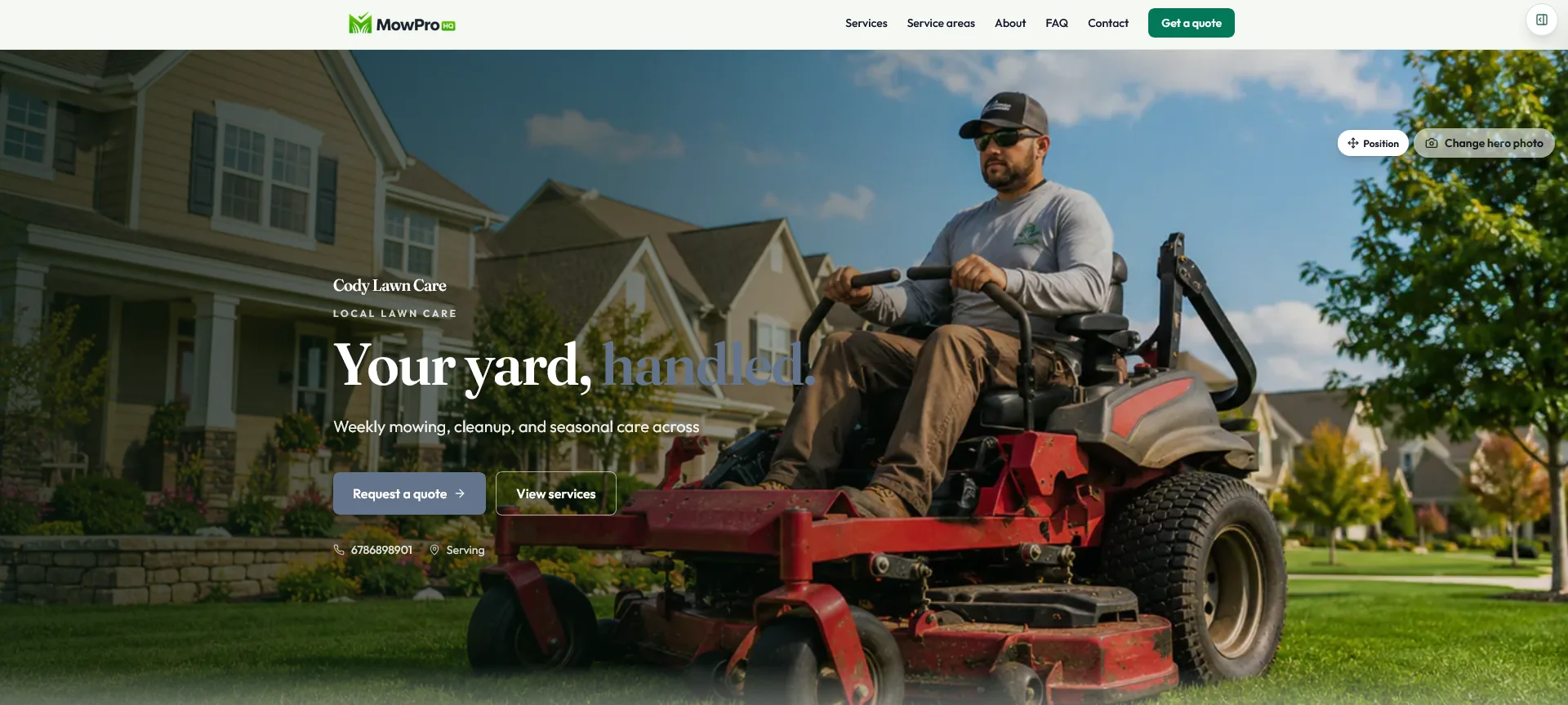
MowProHQ connects the website and lead inbox with customer records, properties, quotes, schedules, and invoices. This keeps the address, photos, and requested work attached as the lead becomes a job.
Compare current plans and pricing or create an account to test the website-to-quote workflow.
Frequently asked questions
- How do I turn website house-wash leads into booked jobs?
- Use a clear request-a-quote form, send submissions to a shared lead inbox, respond within a published business-hours window, and turn accepted quotes into scheduled jobs without retyping the property information.
- What should a pressure washing website include?
- Include the services you actually offer, your service area, real project photos, contact details, business hours, and a clear quote action. Visitors should be able to tell quickly whether you serve their property and how to request an estimate.
- What fields belong on a house-wash quote form?
- Ask for the customer's name, phone, email, property address, requested services, and optional story count or photos. Keep required fields limited to information needed for follow-up and an initial estimate.
- How fast should I follow up on a website house-wash lead?
- Respond the same business day when possible and publish a realistic response window your team can consistently meet. Fast follow-up matters, but a clear written quote is better than an immediate guess.
- Should website leads go to email or into the CRM?
- Send them to a shared lead inbox that can create a customer and property record. This reduces retyping and keeps the original address, notes, and photos attached to the quote.
- Do I need a live site on my own domain?
- A live site on your own domain gives customers a stable place to review services, confirm your area, and request a quote. Social profiles can support it, but they should not be the only place customers can find current business information.
- How do I measure house-wash website leads?
- Track form submissions, calls attributed to the website, response time, quotes sent, quotes accepted, and completed jobs. These numbers show whether the site is producing qualified work rather than only traffic.