MowProHQ Blog/Pricing
How to Price House Washing, Driveways, and Concrete
Learn how to price house washing, driveways, and concrete using labor, surface area, building height, access, condition, and travel.
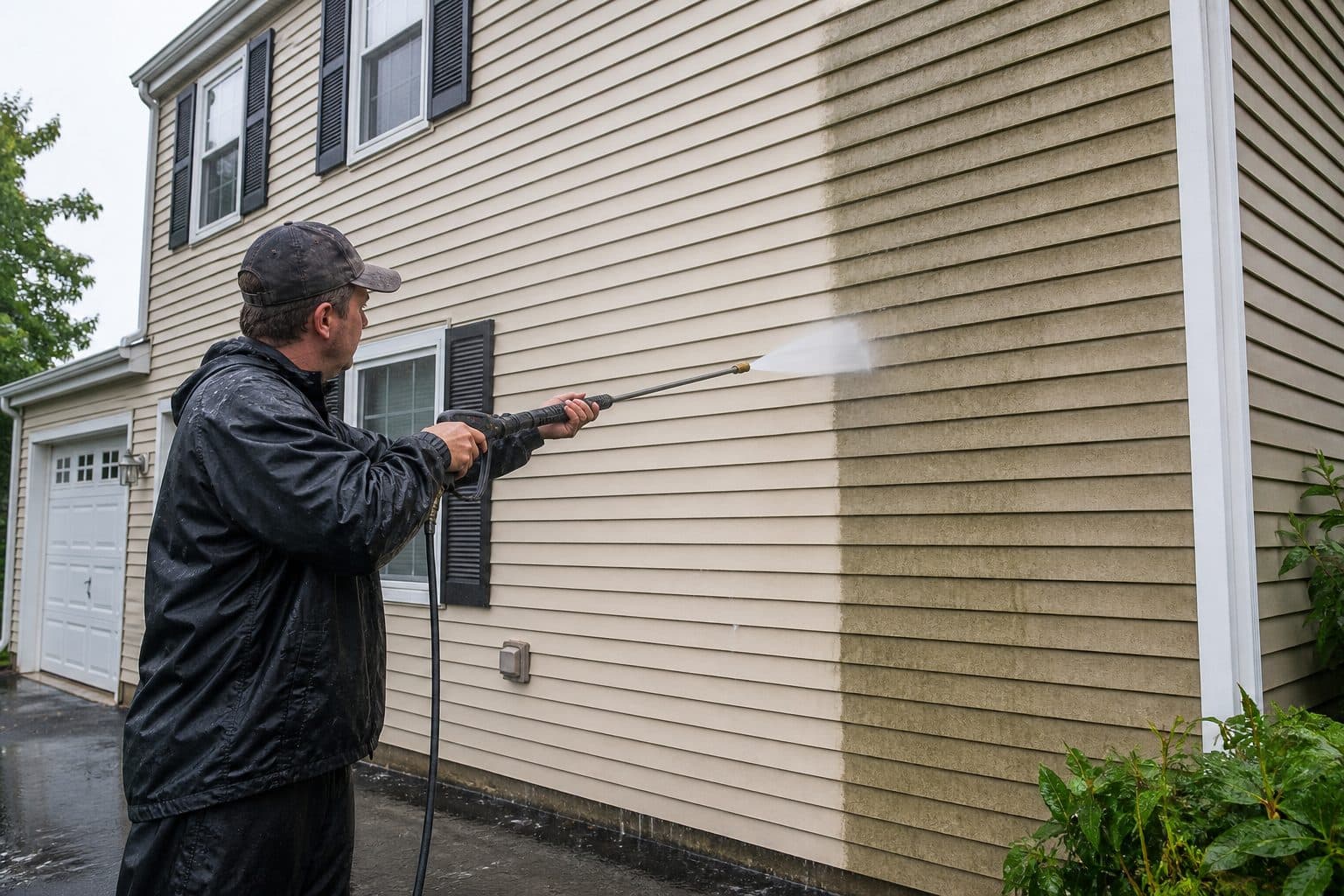
House washing and concrete cleaning involve different work and should be priced separately. Building height, access, surface condition, stain type, and travel can all change the time and materials required.
This guide explains how to build a cost floor, separate services, and create a quoting method another estimator can follow. Pair it with how to quote a house wash.
Know your numbers before you quote
Build a cost floor for one productive hour:
- Labor (loaded — payroll tax, workers’ comp, overtime reality)
- Fuel, truck, trailer, and pump wear
- Water when you haul it; chemicals and tips when you do not
- Insurance slice that actually matches washing, not “handyman”
- Overhead (phone, software, marketing, shop)
Then add the margin the business needs. Matching a lower competitor price without comparing scope and costs can create unprofitable work.
Worked example: cost floor for one wash hour
These numbers are illustrative — replace them with yours:
| Cost component | Per productive hour (example) |
|---|---|
| Loaded labor (1–2 people) | $42 |
| Fuel, truck, equipment reserve | $18 |
| Chemicals / water / tips | $8 |
| Overhead slice | $12 |
| Cost floor | $80/hour |
| Target margin | 30% |
| Target revenue | ~$115/hour |
If a one-story maintenance wash is 90 minutes on site plus 20 minutes of setup, breakdown, and allocated travel, you are in the ballpark of 110 minutes of economic time. At ~$115/hour that stop wants roughly $210 before add-ons — not $125 because a Facebook comment said “my guy does it for $99.”
You do not need perfect accounting. You need a floor you will not bid under without a reason (density fill-in, off-peak, or a commercial package with volume).
House, driveway, and concrete are not one job
A house wash is chemistry, height, dwell, and rinse. A driveway is surface area, oil, gum, and how fast the slab recovers. A pool deck or sidewalk is another product again — tighter edges, more furniture, more “you missed a spot.”
If concrete is included without a separate scope, customers may reasonably assume it is part of every house wash.
| Product | What you are really selling | Typical miss if you bundle |
|---|---|---|
| House wash (maintenance) | Siding, soffits, often garage door | Two-story and oxidation |
| House wash (restoration) | Extra passes, extra chemistry, still not “new” | Promising like-new vinyl |
| Driveway | Sq ft + oil + slope + cars that must move | “While you’re here” |
| Sidewalk / walk | Edges, gum, furniture | Tiny line, real minutes |
| Patio / pool deck | Furniture, screens, splash risk | Rework and complaints |
| Fence / dumpster pad | Access, grease, frequency | Commercial surprise |
Quote them as lines. Bundle the total if you want a package price. Keep the lines visible so a dropped driveway does not require a new invention.
On the estimate map, outline House for the building and hardscape for driveway or concrete. Lock footage. Price the line. Lot size stays turf if you also mow that address — see pressure washing on MowProHQ.
Story and access are multipliers, not footnotes
A one-story ranch with a hose bib on the corner is not a two-story with a six-foot side yard and a well pump that hates you.
Story
| Condition | Guidance |
|---|---|
| One-story, easy reach | 1.0 baseline |
| Two-story, good access | 1.3–1.5 |
| Two-story, tight sides or no rear access | 1.5–1.8 |
| Three-story / steep grade to the wall | Custom. Often a decline. |
Use completed-job data to determine how much additional time and cost height creates for your operation.
Access and water
| Condition | Multiplier or add |
|---|---|
| Hose bib close, open lot | 1.0 |
| Long hose run / well / no pressure | 1.15–1.35 or a water-haul fee |
| Locked gate, dog, parking that blocks the slab | Time + reschedule rule |
| HOA quiet hours or no-street-parking | Window premium or decline |
| Plants you must pre-wet and baby | Time. Do not “just be careful” for free. |
A size band is only a starting point when access is difficult.
Condition changes the product
Maintenance rinse and restoration are not the same SKU.
- Maintenance: Seasonal algae, light mildew, they wash every year or two. Predictable dwell. You can stand behind the result.
- Restoration: Years of oxidation, rust, fertilizer stain, or “we never had it done.” More chemistry, more passes, and an honest sentence that oxidized vinyl may stay chalky.
- Concrete stains: Oil, rust, tire marks, and dumpster juice are extras. A surface cleaner makes a driveway look 80% better. The last 20% is a different quote or a polite no.
Write the condition on the quote. Future-you will not remember which Cedar Lane was the oxidized one.
Example residential bands (customize to your market)
| Band | Typical house | Base on-site (easy access, maintenance) |
|---|---|---|
| Small one-story | Compact ranch / townhome | 45–75 min |
| Medium one-story | Common suburban | 75–110 min |
| Large one-story / rambler | Long walls, more garage | 110–150 min |
| Two-story medium | Standard two-story | 2–3.5 hours |
| Two-story large / restoration | Custom | Quote after look |
Then multiply for story, access, and condition. Round to numbers people remember.
Price add-ons explicitly
Windows (if you actually do them), screens, patio furniture reset, fence, roof (only if you sell it), and oil-spot treatment should not be “included unless we forget.”
Either:
- Bundle them into a named package, or
- List them as add-ons with prices
Ambiguity becomes a dispute when the siding is dry and they are pointing at the patio. Protect yourself with quotes that spell out scope.
Give employees a clear approval and pricing process before performing unquoted add-ons.
Cash vs card: decide once
Processing has a cost. Many washers use:
- A Cash price for cash or check, and
- A Regular (card) price that covers processing
Put both totals on the quote and invoice, and confirm current processing costs and applicable rules when setting the policy.
A clean approach:
- Publish the cash/check package as the base you need to keep.
- Show Regular as the alternate.
- Use the same language on the portal.
- Collect before you leave when you can — they forget wet siding faster than they forget a weekly mow.
Route density still matters
A $180 wash next to two others on the same street can be a good day. The same $180 wash 35 minutes across town may not be, especially if you haul water.
When a lead is outside your dense area:
- Charge a trip premium
- Raise the minimum
- Or decline and protect the day
Declining an isolated job can protect more profitable work already scheduled in the service area.
Density decision table
| Lead location | Default move |
|---|---|
| Inside your usual wash zone | Standard package |
| Edge of zone, fills a gap | Standard or small premium |
| 25+ minutes off path | Trip fee or higher minimum |
| Opposite side of town | Decline or waitlist |
A simple quoting formula you can teach
- Outline the House (and hardscape if they want it) and lock footage
- Estimate on-site minutes for that product
- Multiply by target revenue per minute
- Apply story, access, and condition multipliers
- Add explicit driveway / concrete / fence lines
- Round to clean numbers
- Write scope in one short paragraph
- State start window and Regular vs Cash
Test the method with another estimator. Large differences usually mean the assumptions need clearer definitions.
Worked quote: two-story maintenance plus driveway
- Base one-story medium maintenance: 90 minutes → at ~$1.90/minute ≈ $170
- Two-story with decent access: ×1.4 → $238
- Long hose run: ×1.1 → $262
- Round house wash to $275 cash / Regular card total per your rate
- Driveway ~800 sq ft, light oil: $150 cash as its own line
- Scope: siding, soffits, garage door; driveway optional; roof not included; oxidized spots may remain visible
The example is illustrative, but each amount should be traceable to time, measurements, site conditions, and scope.
Commercial vs residential instincts
Residential buyers compare three texts and a Facebook post. Commercial buyers care about insurance, invoice clarity, and whether you will still show up in July. They still notice if you are the cheap emergency vendor.
- Price dumpster pads, lots, and storefronts per property, not a handshake for “the shopping center”
- Use higher minimums for tiny pads that kill the day
- Recurring beats one-off — see commercial pressure washing routes
- Align invoicing with their AP cycle without accidentally waiting 45 days
When to raise prices
Raise when:
- Chemicals, labor, or insurance jump
- You are booked out and still matching Facebook numbers
- Two-story demand exceeds the hours you have
- Access got worse (new fence, new dog, new HOA rule)
- Your cost floor moved and last year’s $199 no longer clears margin
Apply current rates to new one-time residential quotes. Give recurring commercial customers reasonable notice and a concise explanation before changing their price.
Handling pushback without collapsing the number
- Offer to drop a line (driveway off, house only) instead of silently cutting the same scope
- Hold restoration as restoration
- Walk away: “At that budget you will be happier with a rinse-only from someone else, or a smaller scope from me.”
If every won job required a one-off exception, your rate card is fiction.
Where software helps pricing stick
Software will not invent your rates. It can:
- Store house and hardscape measurements so you are not re-guessing
- Keep quote → job → invoice aligned
- Keep Regular vs Cash consistent
- Hold property notes that explain why this two-story costs more
That is the point of quotes connected to invoicing, not another PDF template. Solo operators: see pressure washing software for a solo operator.
How MowProHQ supports wash pricing
MowProHQ lets you outline a house or hardscape on the estimate map, save the measurement, and price each line separately. Quotes, property records, schedules, and invoices stay connected as accepted work moves through the job.
Compare current plans and pricing or create an account to test the estimating workflow.
Frequently asked questions
- How do I price house washing correctly?
- Build a cost floor that includes labor, water, chemicals, fuel, equipment, insurance, and overhead. Estimate service time from the structure and site conditions, then adjust for height, access, and condition. Quote driveways and other concrete separately.
- Should house washing and driveway cleaning be the same rate?
- No. Siding prices depend on height, chemistry, dwell time, and rinse time. Concrete depends more on surface area, stains, edges, slope, and recovery requirements. Keep them as separate line items even when offering a package.
- How much extra should I charge for a two-story house wash?
- Two-story work generally requires more setup, reach, rinse time, and risk management. Use your recorded job times to develop a height adjustment, then account separately for tight access, steep grades, or unusual equipment needs.
- How should I handle cash vs card on pressure washing prices?
- Either include processing costs in one price or publish separate cash and card totals where permitted. Disclose the policy before approval, keep quotes and invoices consistent, and confirm local rules and current processor terms.
- How do I price oxidized or neglected siding?
- Treat restoration as a different service from maintenance washing. Heavy oxidation, algae, rust, or other staining may require more time and chemistry without guaranteeing a like-new result. Document the condition, define expectations, and price or decline the work accordingly.
- What is a simple formula for quoting a house wash?
- Measure the house or hardscape, estimate service time, apply your target revenue rate, adjust for height, access, and condition, then add separate concrete or other service lines. Write the scope and exclusions clearly.
- When should I raise house washing prices?
- Review prices when labor, chemicals, insurance, or equipment costs rise, or when actual job times exceed your estimates. Give recurring commercial customers notice; for new one-time residential work, apply the current rate to each new quote.