MowProHQ Blog/Recurring Revenue
Recurring Commercial Pressure Washing Routes
How to schedule, document, price, and invoice recurring commercial pressure-washing work for pads, storefronts, and parking areas.
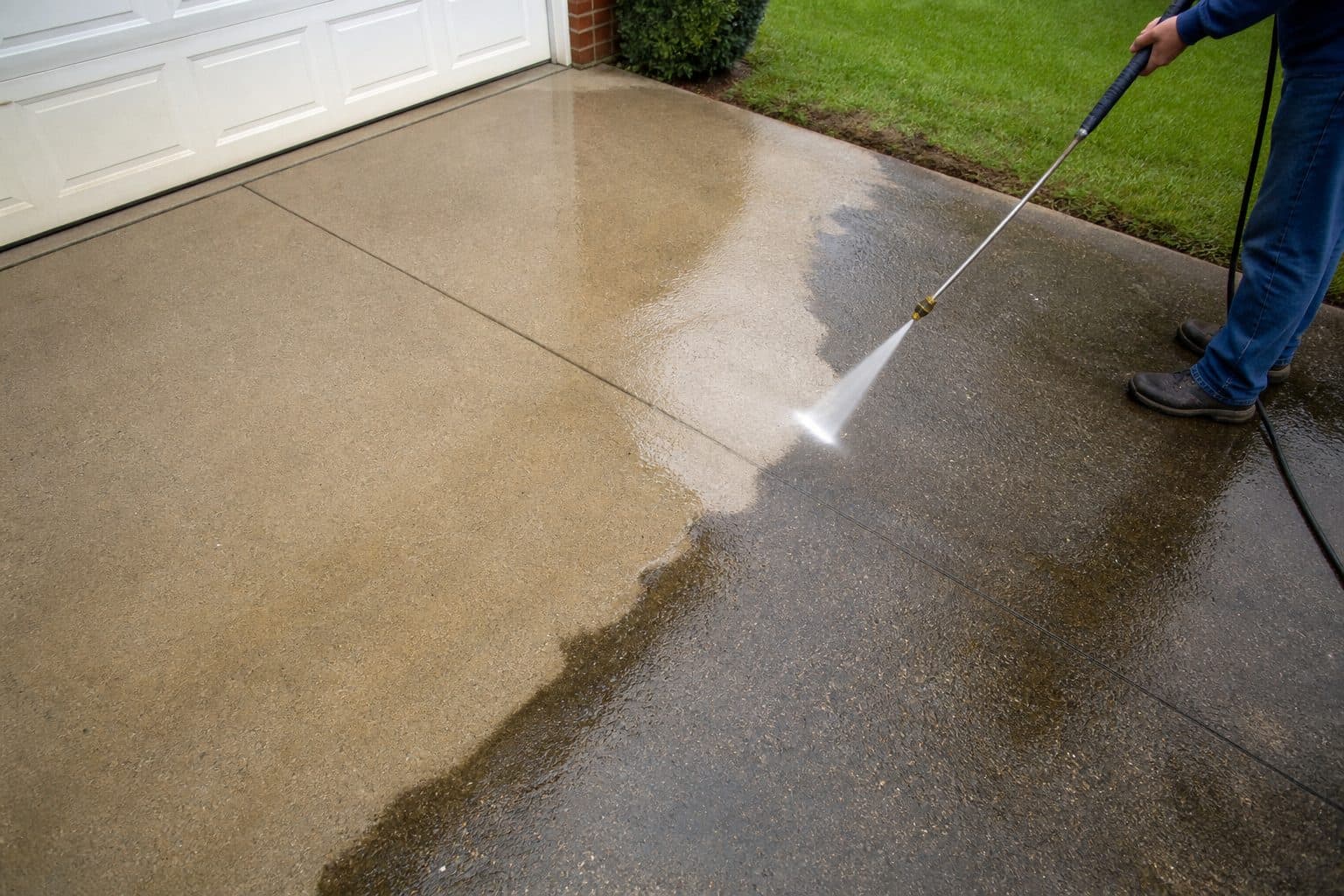
A recurring commercial wash route is a group of properties on defined service schedules, such as weekly dumpster pads, monthly parking areas, or quarterly storefronts. Each location needs a written scope, price, access window, and billing process.
Commercial and residential work can coexist, but they should not use identical workflows. Pair this guide with pricing house washing and concrete and prompt pressure-washing invoices.
Why recurring work needs a plan
- Predictable route density on scheduled service days
- Less quoting overhead per dollar earned
- Higher lifetime value than a single house wash
- Cleaner handoffs when a helper joins
- AP that can pay the same property every month
An unclear plan creates disputes about contamination, service hours, and included surfaces. Define those details before recurring work begins.
Residential house washing remains a separate offer with a different quote and payment process. See how to quote a house wash.
Design stops managers understand
Use named services instead of a broad promise to clean the property.
| Product | Typical cadence | Scope you must write |
|---|---|---|
| Dumpster pad / enclosure | Weekly or twice weekly | Pad, splash walls, drain if you actually do it |
| Restaurant back-of-house | Weekly | Grease limits, hours, water |
| Storefront walk | Weekly or monthly | Gum, edges, furniture, hours before open |
| Parking lot / oil lanes | Monthly or quarterly | Lanes vs full lot, oil extra |
| HOA / office entry | Monthly | Who authorizes extras |
| Canopy / drive-thru | As quoted | Height, night work, decline if you are not equipped |
Ambiguous appearance standards create unpaid expectations. List surfaces, exclusions, and additional charges. If you use an estimate map, outline the hardscape being washed rather than relying on total parcel size.
Scope table that prevents “I thought that was included”
| Item | Pad plan | Not included (example) |
|---|---|---|
| Dumpster pad slab | Yes | Interior of dumpsters |
| Splash walls to X feet | If listed | Full building wash |
| Nearby grease stains | Light pass | Restoration / enzyme treatment |
| Sidewalk to the door | Only if listed | Full parking lot |
| Overnight lot | Separate product | Daytime pad visit |
Attach the scope table to the quote or agreement, train the crew from it, and use the same descriptions on invoices.
Property records are the route
Each stop is a property, even when one LLC pays for six of them.
On the property, keep:
- Manager and after-hours contact
- Billing contact if different (it usually is)
- Water: bib, well, manager’s spigot, you haul
- Access hours, alarm, gate, dumpster delivery schedule
- Photos of the standard you sold
- Grease / oil notes that change time
- Last visit and anything that went wrong
Store these details with the property so another crew member can complete the visit without relying on the owner’s phone.
Separate the customer, billing entity, property, and site contact. A restaurant brand may not be the legal entity paying the invoice, and the property owner may not manage access.
Cadence, weather, and grease
Commercial wash schedules respond to contamination, traffic, weather, and site use rather than turf growth.
- Weekly pads: Miss a week and the next visit is a restoration you did not price.
- Monthly lots: Weather and events change the load. Write a make-up window.
- Quarterly storefronts: Easy to forget. The plan has to generate the due visit.
Write a weather policy that explains when work will be postponed, the rescheduling window, and how service frequency is handled after rain or severe weather.
Define when heavy overflow, new oil contamination, or blocked drains require a change order. Completion photos help both parties verify conditions and results.
Route day logic
Group by geography and hours:
- Morning: restaurant pads before they need the alley
- Midday: lots and HOA entries
- Night: storefronts that cannot be wet at 10 a.m.
A pad with a morning window and a lot restricted to overnight work may need separate route blocks even at the same address. Scheduling should generate each due visit reliably.
Price the stop, not the shopping center
Avoid a single price for an undefined shopping center. List each property, unit type, or service area.
- One price per property or unit type
- Minimums for tiny pads that still require setup
- Separate recurring and one-time emergency rates
- Trip premium if the stop sits off your dense pocket
- Annual price-review date
Illustrative logic only — replace with your floor from wash pricing:
| Stop | Pricing instinct |
|---|---|
| Dense weekly pad on an existing Tuesday | Lowest per-visit; highest annual value |
| Isolated monthly lot | Higher per visit; trip in the number |
| Initial restoration of a neglected pad | Project price, then recurring service |
| Night storefront | Window premium |
Review recurring discounts against actual route time and costs. A rate that was reasonable at signup may not remain viable as conditions change.
Convert an initial restoration into recurring service
An initial cleanup may require more labor and chemicals than maintenance visits. Quote the restoration and recurring service separately.
- Quote restoration as its own line with photos.
- Quote the recurring cadence as a second product.
- Do not bury restoration inside a cheap weekly number.
- After the first clean, put the plan on the calendar.
- Invoice the restoration promptly, then invoice recurring visits from completed work. Apply the same lead-capture process used for residential inquiries.
If the customer declines recurring service, close the one-time project without counting it as route revenue.
Invoice promptly even with net terms
Commercial clients may pay through an accounts-payable process rather than at the property. Send the invoice promptly so the payment period can begin.
- Property name and address matching their PO
- Line items that match the plan (weekly pad vs extra oil work)
- Accepted payment methods and any properly disclosed price differences
- Net terms written up front
- A clear view of open balances and aging
Follow the payment terms in the agreement, including any purchase-order or invoice-submission requirements. Net terms describe when payment is due, not when the invoice should be created.
See prompt pressure-washing invoices for the residential version of this workflow.
When a helper runs the pad
A documented route should allow another qualified crew member to complete the work.
They need:
- The property list in order
- Access and water notes
- The scope table
- A way to mark complete and extras
- Photos when the agreement requires proof of completion
The crew should not need to call the owner for routine water or access instructions. As the team grows, dispatch and time tracking can support the property record and route.
Metrics for a commercial wash book
| Metric | Why |
|---|---|
| Recurring stops versus one-time work | Shows how much revenue is scheduled |
| On-time percentage | Measures reliability against service windows |
| Approved extras billed versus performed | Reveals missed charges |
| Days sales outstanding | Shows collection speed |
| Stops or revenue per route hour | Measures route efficiency |
A weekly report of due, completed, invoiced, and unpaid work is enough to begin tracking these measures.
Capture commercial inquiries consistently
Commercial prospects may find the company through Google, referrals, or social media. A website form should ask for the property address, surface type, desired frequency, access window, and billing contact. Move every inquiry into the same lead and customer process. See the website lead guide.
How MowProHQ runs the route
MowProHQ keeps commercial customers, properties, schedules, quotes, and invoices connected. Outline the hardscape being quoted, convert accepted quotes into scheduled work, and create invoices from completed visits.
Review current plans and pricing, then create an account and test a recurring route with a small number of commercial properties.
Frequently asked questions
- How do I run a recurring commercial pressure washing route?
- Create a property record for each location with its service frequency, scope, price, access instructions, and billing contact. Schedule due visits and invoice from recorded completions.
- What commercial pressure washing work belongs on a recurring plan?
- Dumpster pads, restaurant service areas, storefront sidewalks, parking areas, and HOA or office entries may fit when cleaning needs repeat predictably. Quote initial restoration or unusual contamination separately.
- How should I price recurring dumpster pad and lot cleaning?
- Price each property from labor time, setup, access, water availability, contamination, disposal requirements, travel, and overhead. Use a minimum charge, and discount recurring work only when frequency and route density reduce your cost.
- How do I invoice commercial pressure washing without waiting 45 days?
- Send the invoice promptly after completion with the location, service date, purchase-order details, and line items accounts payable can match. State net terms in the accepted quote or agreement.
- What notes belong on a commercial wash property?
- Record the water source, permitted service hours, site and billing contacts, access instructions, waste schedules, drains or grease traps, site restrictions, and photos of the agreed standard.
- Should restaurant pads and parking lots be on the same route day?
- Combine them when geography, equipment, and access windows align. Separate them when one requires overnight work and another has a morning-only window.
- How is commercial wash different from residential house washing?
- Residential work is often a one-time project paid by the homeowner. Commercial work more often involves recurring schedules, detailed scopes, site contacts, purchase orders, compliance requirements, and formal payment terms.