MowProHQ Blog/Recurring Revenue
One-Time vs Recurring Lawn Mowing Service
How to decide between one-time and recurring lawn mowing work, price each service, protect route density, and set clear customer terms.
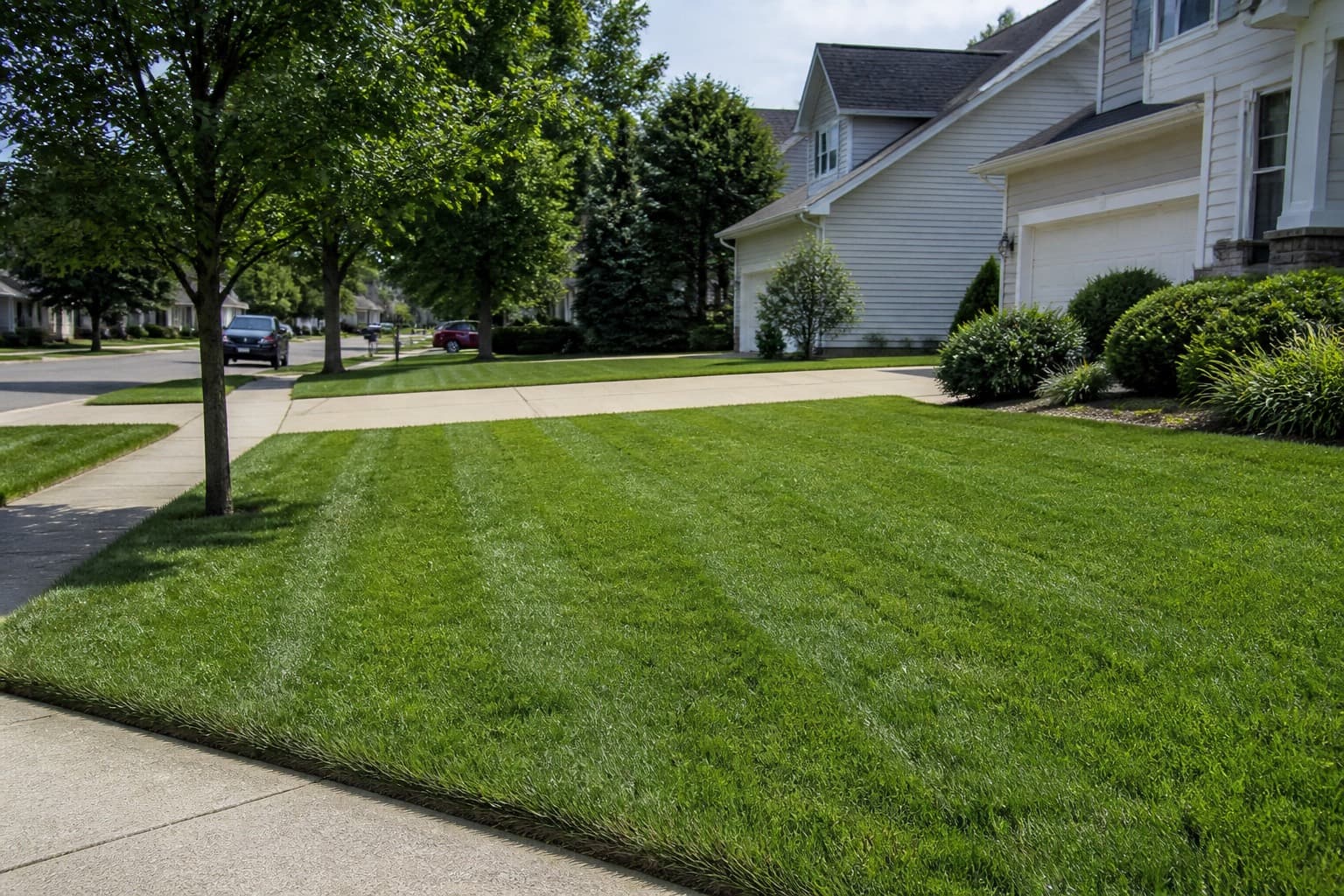
One-time lawn mowing and recurring lawn service solve different customer problems. A homeowner preparing for a party may need one visit. A customer who wants the property maintained through the growing season needs a schedule, not a series of last-minute requests.
The distinction matters to the lawn care company, too. A recurring stop becomes easier to estimate and route as the crew learns the property. A one-time job has to absorb its own quoting, travel, setup, and billing costs. Neither type is automatically better; each needs its own screening and service terms.
For more detail on ongoing service design, read recurring mowing plans. If the lawn is already overgrown, start with first-cut pricing. The broader operating process is covered in how to run a lawn mowing service.
How one-time and recurring mowing differ
A recurring service is built around repeat visits. The company can assign a regular route day, keep property notes, and estimate future labor from recent visits. The customer gets a clearer maintenance rhythm and usually knows when the crew is expected.
A one-time mow is a standalone project. The company may be seeing the property and its access problems for the first time, and there may be no later visit over which to spread the cost of estimating or setup.
| Factor | Recurring service | One-time service |
|---|---|---|
| Scheduling | Repeats on an agreed cadence | Scheduled for a defined visit or window |
| Property knowledge | Improves over time | Often limited to photos, notes, or an initial visit |
| Route planning | Can be grouped with nearby stops | Must fit around existing commitments |
| Grass condition | More predictable when visits stay on schedule | May differ substantially from the description |
| Pricing inputs | Based on expected repeat conditions | Must cover the full cost and risk of one project |
| Customer terms | Ongoing agreement with pause or cancellation rules | Scope, completion, and payment terms for a single job |
Weekly and biweekly service can both be recurring. A customer who calls only after the lawn becomes long is requesting intermittent project work, even if the same property has been serviced before.

When a one-time mowing job makes sense
A one-time job can be a good use of capacity when the details are known before the crew arrives. Common examples include:
- An initial cut or cleanup before recurring service begins
- Vacation lawn care for specific dates inside your service area
- Leaf, storm, or seasonal work sold as a defined lawn care add-on
- A vacant-property or real-estate cut with a clearly identified payer
- Work near existing stops that fits an otherwise open route window
Check the likely labor, disposal, drive time, and schedule impact just as you would for any other lawn care job price. Having an opening is not enough reason to accept work that loses money or puts another commitment at risk.
A practical capacity check
| Current schedule | Practical response |
|---|---|
| Full route with weather risk | Protect existing commitments; offer a later date or decline |
| Open window near the property | Quote after confirming condition and scope |
| Address outside the normal area | Include the added travel cost if appropriate, or decline |
| Job likely to require overtime | Compare the full labor cost with the value of the work |
| Unknown condition or access | Request current photos or inspect before confirming |
Demand often increases during the spring rush. Setting aside a limited number of project windows makes it easier to accept worthwhile cleanups without inserting them randomly into established routes.
How one-time work affects route density
One extra stop is not always a problem. The trouble starts when several isolated addresses add unpaid drive time or force crews to leave a productive cluster.
Watch for these patterns:
- One-time addresses are spread across several service areas.
- The requested date conflicts with a dense recurring route.
- The quote assumes maintained grass, but the property has gone weeks without service.
- A customer repeatedly requests “one more cut” without accepting an ongoing schedule.
- Marketplace work sends the crew to areas where you would not normally sell a plan. See marketplace work vs owning the customer relationship.
Tagging one-time jobs separately in dispatch and route planning makes their travel and schedule impact visible. Review the whole route before confirming a date; looking only at the individual job can hide the real cost.
Pricing a one-time lawn mow
There is no reliable universal multiplier for one-time mowing. The appropriate price depends on local wages and operating costs, the property, and the terms of the job. Start with the same cost model used for recurring work, then account for factors specific to the visit:
- Time spent estimating, communicating, and creating the job
- Drive time that cannot be shared with nearby stops
- Current grass height, moisture, obstacles, and debris
- Extra passes, bagging, hauling, or disposal
- Gate, pet, parking, or lockbox complications
- A narrow completion window or other scheduling constraint
- Payment risk and the administrative cost of collection
Current photos help, but they do not always show slope, standing water, hidden objects, or the amount of material to remove. For uncertain properties, state that the quote is based on the supplied information and explain how material scope changes will be approved before extra work begins.
Compare the offers by terms, not arbitrary prices
| Offer | Pricing basis | Terms to clarify |
|---|---|---|
| Weekly plan | Expected condition at weekly visits | Route window, weather, skips, payment, cancellation |
| Biweekly plan | Expected growth and labor at a longer interval | Seasonal cadence, excess growth, schedule changes |
| One-time maintained lawn | Current condition and standalone job costs | Service window, included work, access, payment |
| Vacation coverage | Number of visits plus short-term coordination | Dates, access, weather, trip extension |
| Neglected property | Cleanup labor, equipment, and disposal | Condition assumptions, change approval, completion standard |
A useful one-time quote describes what will be mowed, trimmed, edged, blown, bagged, or hauled away. It should also identify exclusions. A vague line such as “mow yard” leaves too much room for disagreement about fence lines, beds, clippings, or a second pass.
Put scope, cancellation, and payment in writing
Written terms do not need to be complicated, but they should match the work being sold. For a one-time service, consider documenting:
- Property address and areas included
- Expected condition or the photos used for the quote
- Service date or arrival window
- Weather and rescheduling process
- Access requirements and what happens if the crew cannot enter
- How added work or a changed property condition will be authorized
- Deposit, card-on-file, due date, and accepted payment methods
- Cancellation or late-notice policy
For recurring work, also address frequency, seasonal schedule changes, customer-requested skips, excessive growth after a pause, price-change notice, and how either party can end service.
Contract, deposit, automatic-payment, late-fee, and cancellation rules vary by location and customer type. Use terms that comply with applicable law, obtain the customer's clear consent, and have local counsel review your service agreement if you are unsure. Avoid charging a stored payment method or adding fees unless your agreement and local rules allow it.
Send the invoice according to the accepted terms and keep a record of approvals for changed work. If payment is overdue, follow a consistent collections process rather than continuing to schedule informal follow-up visits.
Vacation lawn care
Vacation requests are easier to manage when they are sold as a short, defined service. Before accepting, confirm:
- Start and end dates
- Number or frequency of visits
- The included mowing scope
- Current lawn condition
- Gate, pet, alarm, and lockbox instructions
- The person authorized to approve changes
- The person or company responsible for payment
- What happens if weather delays a visit or the trip is extended
Do not assume vacation coverage becomes recurring service. If the customer wants maintenance after returning, send a separate recurring proposal with its own start date and terms.
For an existing recurring customer, a pause may be reasonable, but confirm it in writing. Include the intended restart date and explain what happens if the lawn grows beyond the condition covered by the normal visit price. Local growth rates, irrigation, and seasonality all affect that decision.
Converting a one-time job to recurring service
The best time to discuss recurring care is after you understand the property and the customer has seen the completed work. Keep the offer straightforward:
- Complete and document the one-time scope.
- Explain which visit frequency is realistic for the property and season.
- Provide written options with scope, price, and expected service window.
- Include weather, pause, billing, and cancellation terms.
- Set the first visit only after the customer accepts.
- Save useful property notes in the customer record.
Do not rely on “we'll keep coming” as authorization. It leaves the start date, frequency, price, and cancellation rights unclear. A short written acceptance protects both parties and reduces billing disputes.
Not every one-time customer is a good recurring prospect. A listing may sell soon, the address may sit outside your route, or a marketplace agreement may restrict off-platform solicitation. In those cases, complete the agreed project well and close it out cleanly.
Measure the mix that works for your company
There is no percentage of recurring work that fits every lawn care business. A company specializing in cleanups will look different from one built around neighborhood mowing routes. Review a small set of measures each month:
- Revenue and gross profit by service type
- Crew hours, including travel and disposal time
- Miles per completed stop
- Quote and billing time
- On-time completion of recurring visits
- One-time customers who later accept a plan
- Cancellations, callbacks, and unpaid invoices
These numbers show whether project work is using spare capacity or disrupting dependable work. They are more useful than copying another company's target mix.
| Operating pattern | What to review |
|---|---|
| Mostly recurring routes | Capacity for weather delays and seasonal projects |
| Balanced project and recurring work | Dedicated project windows and route separation |
| Mostly one-time projects | Lead costs, estimating time, payment controls, and demand swings |
Website lead forms can ask whether the customer wants one visit or ongoing service, the property address, current condition, and preferred timing. That information lets the office screen route fit before promising a date.
Base hiring decisions on sustained workload rather than one unusually busy weekend. A shared crew schedule helps separate committed recurring hours from project requests that have not yet been accepted.
Weather and urgent requests
Your weather rescheduling policy should explain that exact service times may change when conditions are unsafe or mowing would damage the lawn. Apply the stated policy consistently to one-time and recurring customers.
If a customer needs completion before a closing, event, or inspection, first decide whether the deadline is realistic. Put the agreed window and the weather contingency in writing. Do not promise a deadline that depends on displacing work you have already committed to complete.
Property managers, listings, and “until it sells”
Real-estate and property-management work can produce repeat assignments, but each property still needs a clear scope and responsible payer.
Before scheduling:
- Quote from the current condition, not an old listing photo.
- Confirm whether the owner, agent, brokerage, or property manager is hiring you.
- Obtain written authorization from someone allowed to approve the work.
- Record purchase-order or vendor requirements before the visit.
- Document lockbox, tenant, gate, and parking instructions.
- Define whether service ends on a date, at closing, or after written cancellation.
An agreement for service “until it sells” is recurring work with an uncertain end date, not a one-time mow. State the cadence, payment terms, notice process, and final-service procedure. Do not assume a specific cancellation period is enforceable in every location; choose terms appropriate for the relationship and applicable law.
For larger common areas or multi-property assignments, account for the operational differences between commercial and residential lawn care. If the actual site differs materially from the approved scope, document the condition and obtain approval before expanding the work.
Managing both service types in MowProHQ
MowProHQ can keep one-time jobs and recurring visits tied to the same customer and property, with scheduling, property notes, quotes, and invoices in one workflow.
Review current options on the pricing page, or sign up to set up your account.
One-time work can fill useful project capacity, while recurring service can make routes more predictable. Define each offer clearly, price it from your own costs, and accept the work that fits the schedule you can actually deliver.
Frequently asked questions
- Should a lawn mowing service take one-time jobs?
- One-time jobs can be worthwhile when they fit an open route window, fall inside the normal service area, and are priced for the actual work involved. They are less attractive when travel, uncertain conditions, or schedule disruption would make the job unprofitable.
- Why can one-time mows hurt route density?
- One-time addresses do not repeat on a predictable schedule, so they can add drive time and pull a crew away from established route clusters. Reserving limited project capacity and screening each address for route fit helps control that disruption.
- How should I price a one-time lawn mow versus a recurring plan?
- Build both prices from your labor, travel, equipment, overhead, and desired profit. A one-time visit may cost more because quoting, setup, uncertain grass height, and access risk must be recovered from one job rather than spread across future visits.
- How do I handle vacation lawn care requests?
- Confirm the service dates, visit frequency, scope, access instructions, weather policy, and payer in writing. Treat the request as a defined short-term service rather than assuming it will continue after the customer returns.
- How do I convert a cleanup or one-time mow into a recurring plan?
- After completing the agreed work, offer written weekly and biweekly options that state the scope, start date, billing terms, and cancellation or pause policy. Only place the property on the recurring schedule after the customer accepts.
- Should I pause a recurring plan for vacation instead of canceling?
- A written pause can work if it includes a restart date and explains how excessive growth will be handled. Whether a pause, cancellation, or minimum service cadence is appropriate depends on your agreement, local growing conditions, and applicable law.
- What mix of one-time and recurring work is healthy?
- There is no universal target. Compare revenue, labor, drive time, schedule reliability, and customer retention for each type of work. The right mix is the one your crew can deliver without repeatedly delaying existing commitments.