MowProHQ Blog/Pricing
First-Cut and Overgrown Lawn Pricing
A practical guide to first-cut and overgrown lawn pricing, including inspection, crew time, equipment, disposal, safety, scope, and payment.
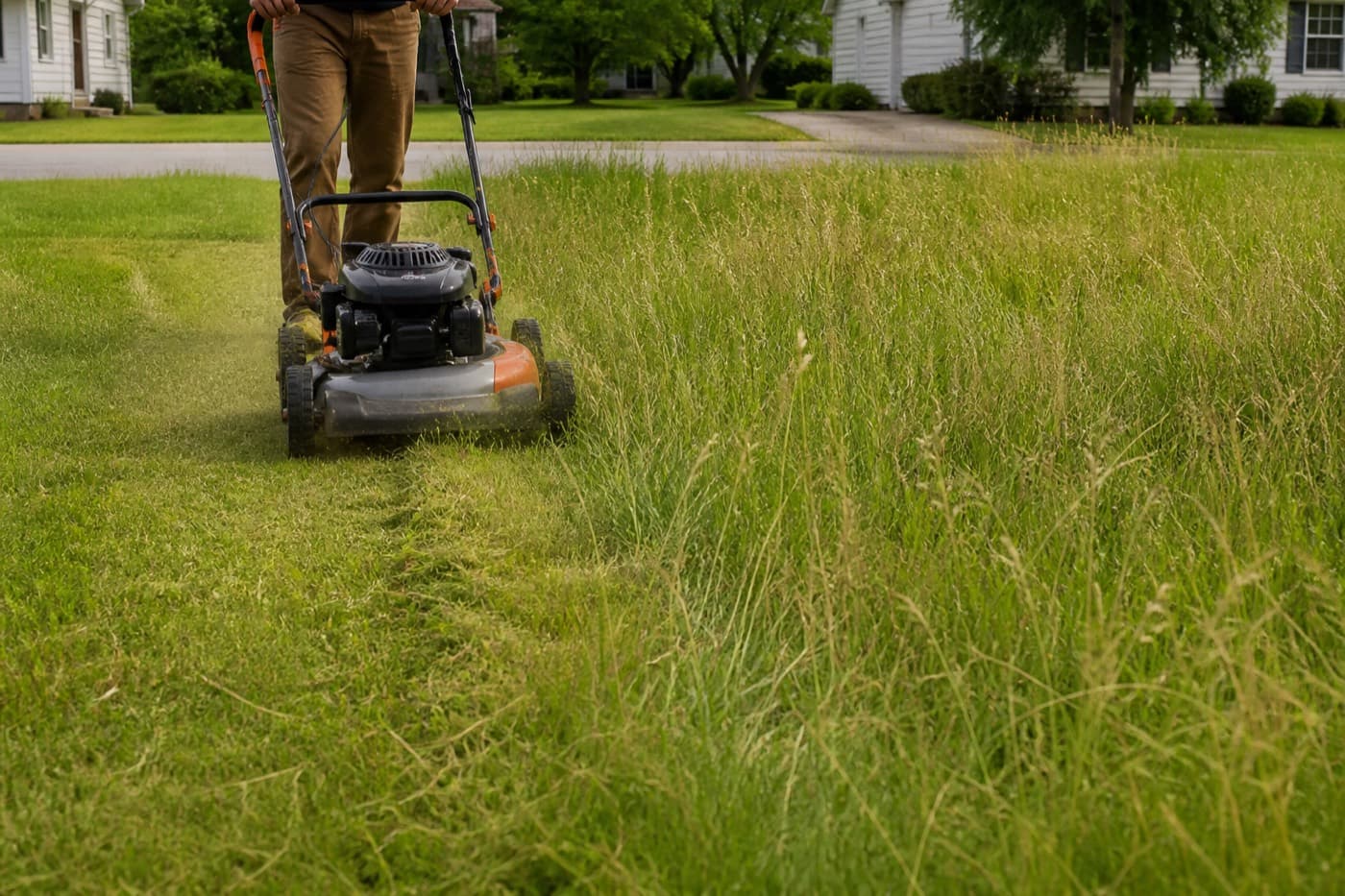
A recurring mow price normally assumes maintained turf, known access, and predictable production time. An overgrown first cut can involve hidden objects, dense or wet growth, extra trimming, multiple passes, and far more material than a normal visit.
That does not mean every first visit needs a large premium. It means the quote should reflect the property in front of you. This guide covers a practical inspection, an adaptable pricing formula, safety and disposal decisions, and the handoff to a recurring plan. Also see how to price lawn care jobs, the hourly rate calculator, and what a lawn mowing service includes.
Separate routine mowing from initial cleanup
Use separate service lines when the first visit requires work beyond your recurring-mow scope.
| Visit type | Working assumption | Quoting approach |
|---|---|---|
| Recurring mow | Turf is within the agreed service interval; access is known | Recurring package price |
| Slightly tall first visit | Turf is mowable with ordinary equipment and little extra material | Regular price or a modest, explained adjustment |
| Overgrown lawn cleanup | Production time, material volume, or site conditions differ materially | One-time project quote |
| Brush, saplings, dumping, or severe debris | Work may be land clearing rather than mowing | Specialized scope, referral, or decline |
A spring first cut for an existing customer may fit the regular service. A neglected property with waist-high growth may not. Calling the latter an initial cleanup helps distinguish it from the ongoing mow price.
If a weekly or biweekly customer pauses service long enough for conditions to change, use the resumption policy in the service agreement rather than improvising at the curb.
Inspect cautiously before quoting
Current photos can screen a straightforward property, but they do not reveal every hazard. Walk the site with the customer when practical. Do not enter locked, unstable, or visibly hazardous areas merely to prepare an estimate.
Record:
- Approximate mowable area and grass height, density, and moisture
- Rocks, wire, glass, toys, pet waste, irrigation parts, stumps, holes, and other visible or reported objects
- Slopes, drop-offs, soft ground, retaining walls, drainage channels, and water
- Gate widths, steps, parking, locked areas, and whether the selected equipment can reach each section
- Nearby windows, vehicles, people, pets, and public walkways exposed to thrown debris
- Known wildlife, nests, burrows, snakes, bees, or protected habitat
- Desired cutting height, edging and trimming scope, clippings plan, and finish expectations
- Utilities, local noise limits, disposal rules, and any property-specific restrictions
Stop and reassess if growth hides the ground. Ask the owner to remove personal property and disclose known hazards, but do not treat that request as a guarantee that the site is clear. A cautious first pass, spotter, handheld inspection, or refusal may be appropriate. Never reach into dense growth or move suspected hazardous material by hand without suitable procedures and protective equipment.
Lot-size bands are useful only after accounting for these conditions. Your quote should identify assumptions made from photos and allow re-quoting if the actual site differs materially.
A simple condition matrix
| Condition | Likely production effect | Practical response |
|---|---|---|
| Slightly above maintained height | Limited extra cutting or cleanup | Adjust time only if needed |
| Dense but visible turf | Slower travel and possible extra pass | Test a small area and estimate crew-hours |
| Ground obscured by growth | Unknown-object and footing risk | Inspect carefully; use suitable equipment or decline |
| Steep, wet, rutted, or unstable ground | Rollover, slip, rutting, and recovery risk | Delay, change equipment or method, exclude the area, or decline |
| Brush, saplings, dumped material, or suspected hazardous waste | Outside ordinary mowing scope | Re-scope as specialized work or refer |
Height labels such as “knee-high” are useful descriptions, not reliable pricing formulas. Density, moisture, terrain, and equipment can matter as much as height.
Build the price from cost and time
A teachable first-cut lawn pricing formula is:
Quote = (estimated crew-hours × target revenue per crew-hour) + equipment or travel charges + disposal cost + uncertainty allowance + tax, if applicable
Use crew-hours consistently. Two workers for 90 minutes equal three crew-hours of labor, even though the truck is on site for 1.5 hours. If your target rate is already built for a two-person crew by elapsed hour, label it that way and do not multiply by two again.
Estimate each component:
- Inspection, setup, and hazard control
- Mowing, trimming, edging, and blowing
- Additional passes or a scheduled return
- Bagging, loading, transport, and legal disposal
- Travel that is not covered by the normal route
- Equipment transport, rental, fuel, wear, cleaning, and blade service
- A defined allowance for uncertainty that cannot reasonably be eliminated before work
Avoid vague “risk fees.” Explain the condition behind an allowance, and never use a markup as permission to perform unsafe work.
Worked example with hypothetical numbers
Suppose a one-person job is estimated as follows. These figures demonstrate the math; they are not market rates or recommended prices.
| Component | Hypothetical calculation |
|---|---|
| Normal production baseline | 35 minutes |
| Heavy-growth factor | 35 × 1.8 = 63 minutes |
| Bagging and loading | 20 minutes |
| Total estimated crew time | 83 minutes ÷ 60 = 1.383 crew-hours |
| Labor/equipment revenue target | (83 ÷ 60) × $110 = $152.17 |
| Disposal facility charge | $25.00 |
| Access uncertainty allowance | 10% of $152.17 = $15.22 |
| Calculated subtotal | $152.17 + $25.00 + $15.22 = $192.39 |
| Example rounded quote | $195 before any applicable tax |
The actual factor, target rate, disposal charge, and allowance should come from your costs, local market, inspection, and historical production. If disposal travel is already included in crew time, do not charge the same time twice. If equipment wear is already in the target revenue rate, add a separate equipment charge only for a genuine extra cost such as a rental or specialty machine.
If you offer different payment methods, follow applicable law and card-network rules and state the price clearly. See cash vs card pricing.
Match equipment and method to the site
An ordinary finish mower may not be appropriate for dense grass, woody growth, hidden debris, or steep slopes. Choose equipment within the manufacturer's intended use and slope limits. Account for gate width, machine weight, ground pressure, discharge direction, guarding, rollover protection, and safe transport.
Heavy growth may need an initial higher cut and a later reduction rather than one aggressive pass. Cutting too low can scalp or stress turf, and wet material can clump or clog equipment. Set the finish based on turf health, conditions, and equipment capability—not solely on a customer request for the shortest possible cut.
Equipment damage caused by normal job risk belongs in your operating costs unless the contract and law support another outcome. Document known customer-caused hazards, but do not surprise the customer with an invoice for routine wear or an unexplained repair.
Plan for heat, wildlife, and worker safety
Overgrown work is slower and more physically demanding than routine mowing. Build a job plan appropriate to the crew, weather, and site:
- Schedule strenuous work for cooler periods when possible and provide water, rest, shade, acclimatization, and emergency procedures appropriate to heat conditions
- Use task-appropriate eye, hearing, foot, leg, hand, respiratory, and high-visibility protection
- Keep guards and discharge controls in place; establish exclusion zones around people, pets, windows, vehicles, and roads
- Train workers on slopes, backing, loading, clearing clogs, lockout or shutdown procedures, and the specific machines used
- Stop for lightning, unsafe heat, poor visibility, unstable ground, or any condition outside the crew's training and equipment
- Never clear a jam or inspect a blade with powered equipment running
Wildlife requires its own pause rule. Do not mow through nests, young animals, active burrows, hives, or snakes. Stop, keep distance, and follow local wildlife laws or contact a qualified wildlife professional. A deadline is not a reason to harm wildlife or expose a worker to a bite or sting.
Consult current regulations, safety guidance, equipment manuals, and your insurer for requirements that apply to your business. This article is pricing guidance, not a substitute for a site-specific safety program.
Decide what happens to the clippings
An overgrown lawn can generate more material than the property can reasonably absorb. Agree on the method before work:
| Debris option | Scope question | Pricing input |
|---|---|---|
| Mulch or leave dispersed clippings | Can this be done without smothering turf or leaving unsafe piles? | Cutting and distribution time |
| Collect and leave on property | Where may material be placed legally and acceptably? | Collection and movement time |
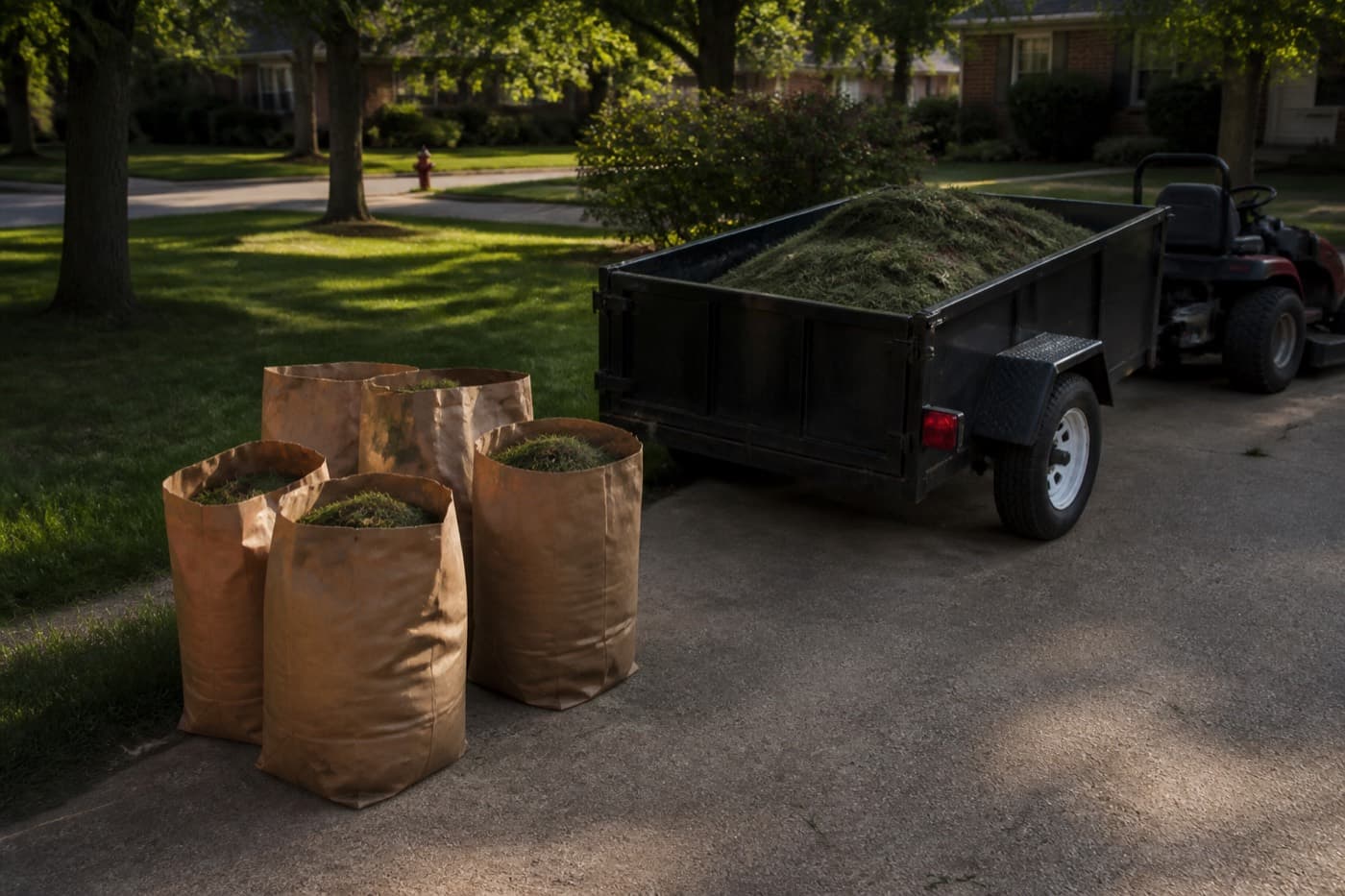
| Bag and haul | What material is accepted, and at which facility? | Bags, loading, crew time, mileage, and disposal charge |
| Municipal pickup | Are dates, container rules, and volume limits confirmed? | Preparation and staging time |
Do not place material in the street, storm drains, vacant land, or another person's container unless local rules and permission clearly allow it. Add-on pricing and dump-run time should include the full handling cycle, not only the facility ticket.
Write a scope that can be finished
A useful cleanup quote states:
- Areas included and excluded
- Approximate starting condition and assumptions
- Mowing, trimming, edging, blowing, and debris tasks included
- Target height or practical finish standard
- Number of passes or visits included
- Handling of beds, fences, ditches, leaves, litter, pet waste, and dumped material
- Customer responsibilities for access, pets, vehicles, and personal items
- Weather and unsafe-condition rescheduling rights
- A change-order process for concealed debris, blocked access, excess volume, or conditions materially different from the quote
- Price, tax, deposit if any, payment timing, and cancellation terms
Avoid promising that a severely neglected lawn will look like maintained turf after one visit. Offer a defined option: one higher pass, multiple passes where safe, or a staged return. If the work uncovers a new hazard, stop the affected work, document it, and get written approval for a revised scope before continuing.
Photos before and after the job help document the property and agreed result. Follow privacy rules and obtain permission before using customer-property images in marketing.
Set practical payment terms
For uncertain or disposal-heavy jobs, consider a lawful deposit, card authorization, or progress payment that covers committed costs. Do not charge unapproved extras. The quote should say when payment is due, which payment methods are accepted, how change orders are authorized, and whether a not-to-exceed amount applies.
Invoice the cleanup separately from recurring service, list approved disposal or specialty charges clearly, and send the invoice promptly. For more, see how to get paid faster.
Protect the route and know when to decline
Treat a cleanup as a project block, not a regular stop that might run long. Limit how many uncertain jobs a crew receives in one day, reserve time for disposal, and use dispatch to protect existing commitments. Work outside your normal service-area radius should cover the added travel and recovery time.
Delay, refer, or decline when:
- The work is land clearing, hazardous-material handling, or another service you are not equipped or insured to perform
- The slope, footing, heat, visibility, access, wildlife, or hidden-object risk cannot be controlled
- Suitable equipment cannot enter or operate within its limits
- The customer will not approve a safe scope, realistic finish, or payment terms
- The schedule does not allow the work without compromising safety or existing commitments
During the spring rush, a clear no is better than an unsafe yes.
Move from cleanup to recurring service
After completing the cleanup:
- Confirm the result against the written scope
- Offer weekly or biweekly service with its own start date, frequency, price, and scope
- Schedule the next visit only after acceptance
- Save gate, hazard, equipment, and property notes
- Keep the cleanup invoice separate from the recurring agreement
If the customer wants one-time work only, close the project without implying that a future overgrown visit will receive the recurring price. One-time and recurring mowing should have distinct expectations.
Keep cleanup and recurring work organized
MowProHQ can keep the initial cleanup quote, property notes, schedule, invoice, and recurring service separate. Review current options on pricing, or sign up when you are ready.
A sound overgrown lawn quote is not simply a multiple of the weekly price. Inspect first, choose a safe method, estimate the full crew and disposal cycle, define the finish, and get approval for changes before doing extra work.
Frequently asked questions
- Why is a first cut more expensive than a regular mow?
- A recurring mow price assumes maintained grass, known access, and predictable production time. An overgrown first cut may require inspection, slower passes, trimming, debris handling, and equipment better suited to heavy growth. Quote it as a separate cleanup with a written scope.
- How do I quote an overgrown lawn?
- Inspect the property when practical, or collect current photos and detailed access information. Estimate crew-hours, equipment, disposal, travel, and a reasonable uncertainty allowance. State the finish standard, exclusions, payment terms, and what happens if hidden conditions change the work.
- Should the first cut be required before a recurring plan starts?
- Usually, if the property is outside the condition assumed by your recurring service. Keeping the cleanup and recurring plan separate makes the scope and price clearer, but a slightly tall lawn may not need a separate cleanup.
- What if the customer wants the first cut at the weekly price?
- Explain which extra work is outside the recurring-mow assumption and offer a cleanup-only or cleanup-plus-plan quote. If the customer will not approve a safe, workable scope, decline the job.
- How many passes should I include in a first-cut price?
- There is no universal number. Base it on turf condition, mower capability, weather, and the promised finish. State whether the quote includes one pass, multiple passes, or a later return, and avoid removing more leaf height than is appropriate for the grass.
- Can I convert a cleanup into a recurring account?
- Yes. Present the recurring frequency, scope, and price separately, and schedule the next visit only after the customer accepts those terms.
- How do first cuts affect routing and capacity?
- Treat uncertain cleanups as project blocks rather than ordinary route stops. Allow time for inspection, slower production, loading, disposal, weather, and equipment cleanup so one job does not disrupt the rest of the route.