MowProHQ Blog/Dispatch
Dump Runs, Fuel Stops, and Hidden Route Time
How to measure, schedule, and price dump runs, fuel stops, and other non-service time on a lawn care route.
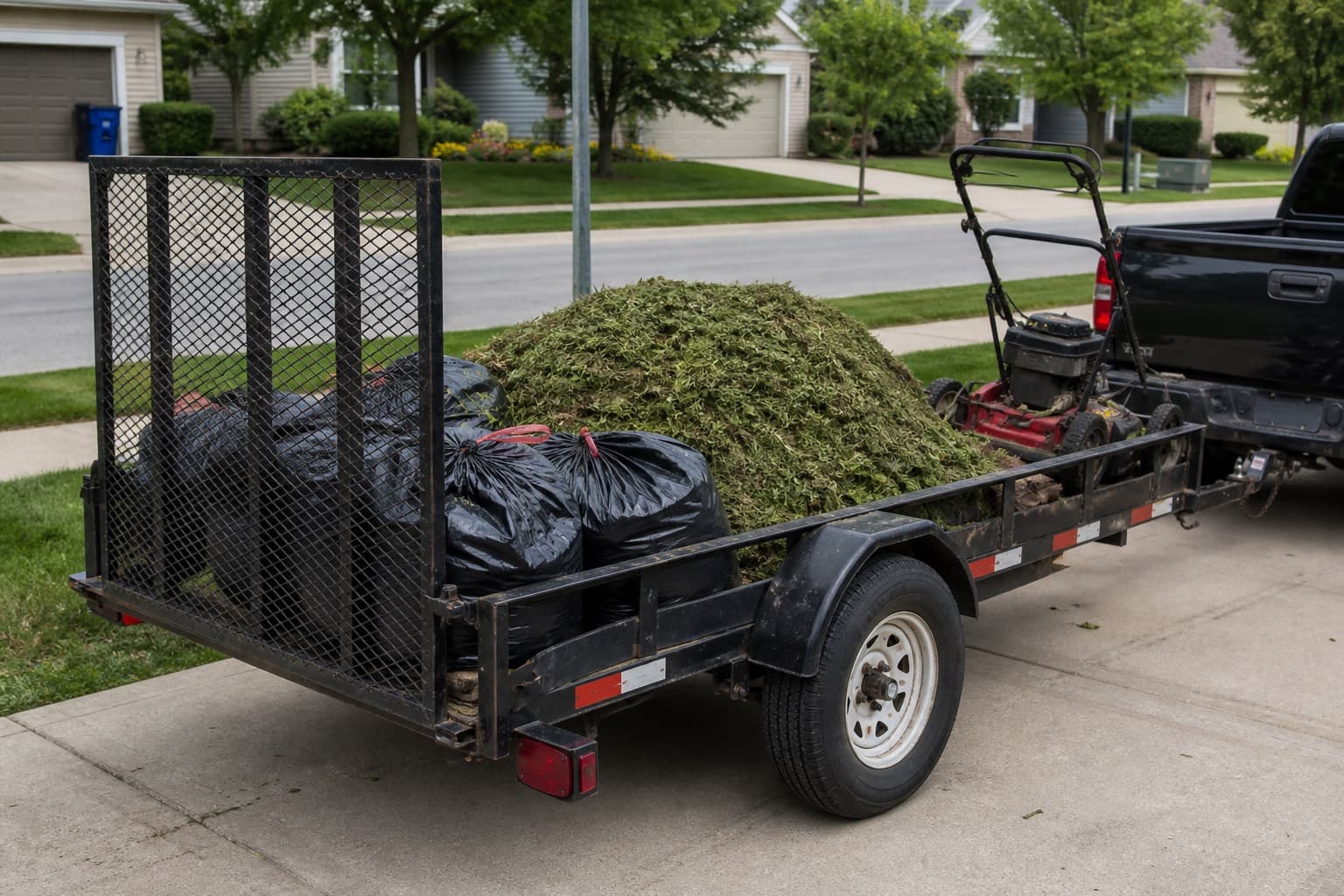
Dump runs, fuel stops, supply pickups, and shop resets all consume crew time. When they are left off the schedule, a route can appear to have more capacity than it actually does.
This guide explains how to measure non-service time, add it to the route, price haul-away, reduce avoidable travel, and define when additional disposal trips require customer approval.
Measure the minutes that are not mowing
Track several representative days during the regular season and again during heavy leaf or cleanup work.
Clipboard columns:
- Time leaving shop
- Arrive / leave each paying stop
- Fuel start and end
- Dump arrive / leave
- Back to shop
If you use GPS for day-of dispatch, review a representative route and label non-service blocks. Otherwise, a paper or phone log is sufficient.
Worked example: a 12-stop plan that completed nine
| Block | Clock | Paying? |
|---|---|---|
| Shop → first stop | 25 min | No |
| Stops 1-4 | 2 hr 10 min | Yes |
| Emergency dump (full) | 55 min | No |
| Stops 5-7 | 1 hr 25 min | Yes |
| Fuel + drinks | 22 min | No |
| Stops 8-9 | 50 min | Yes |
| Backtrack for a missed blow | 18 min | Warranty |
| Shop | 20 min | No |
Two of the planned stops were not completed because the trailer filled early and the dump was not scheduled. The time log also shows that the fuel stop consumed capacity assigned to customer work.
Typical non-mow buckets:
| Bucket | Example range | Usually caused by |
|---|---|---|
| Deadhead to first stop | 10-30 min | Living far from the zone |
| Between-stop travel | 4-12 min each | Scattered route |
| Fuel | 10-25 min | Starting on empty |
| Dump | 40-90 min | Waiting + drive + unload |
| Access problems | 5-15 min | Missing or outdated notes |
| Shop reset | 15-40 min | Blades, trash, tomorrow’s fuel |
These ranges are illustrative; measure your own operation. If travel and disposal consume a large portion of the day, revise the route plan and prices.
Put dump and fuel on the board
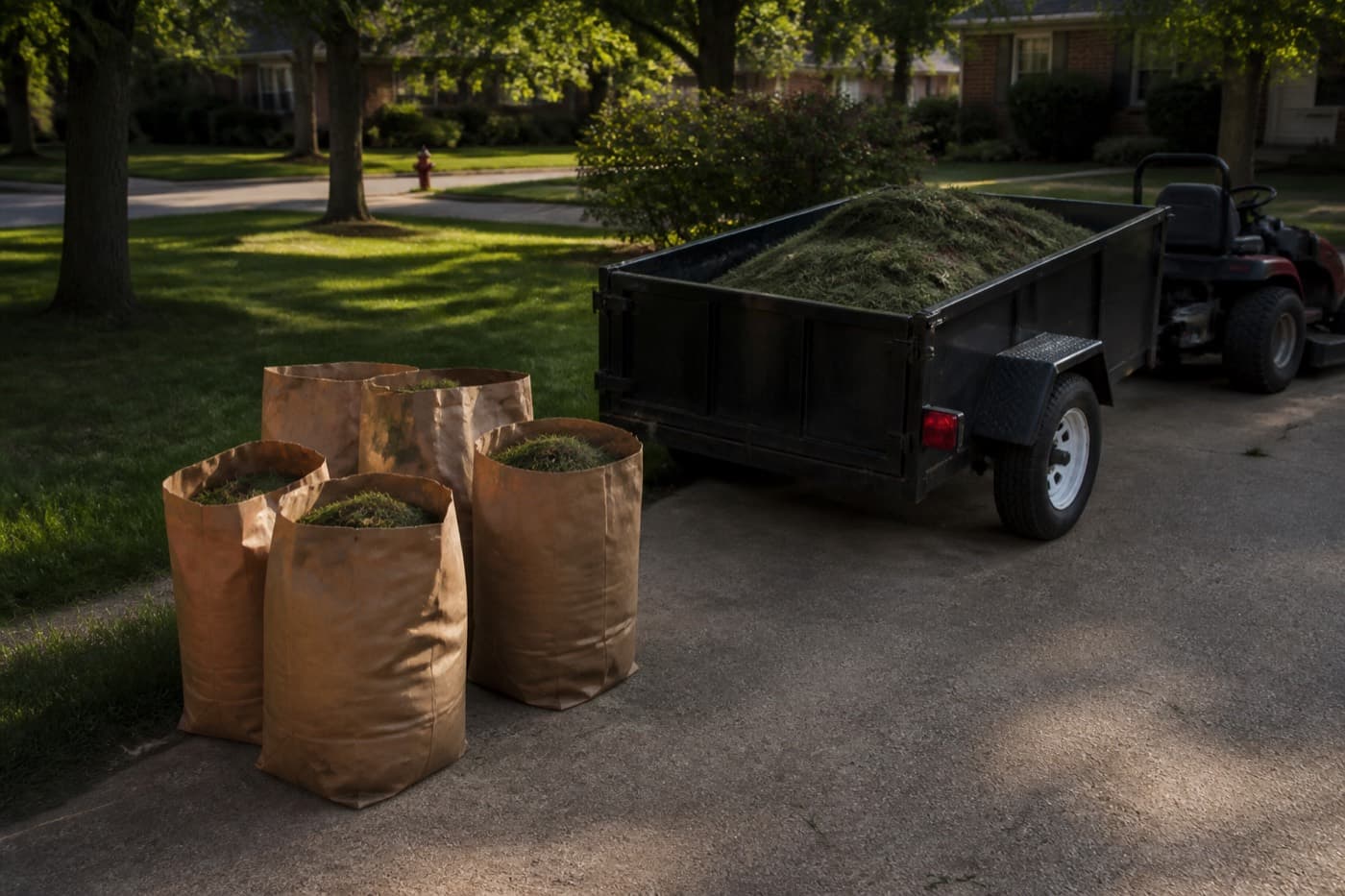
If an activity occupies the crew and trailer, reserve time for it on the schedule.
Dump: Choose a window before the expected load reaches capacity, preferably while the route is near the facility.
Fuel: start of day or paired with dump. Not between two tight HOAs.
Shop: if you require a blade check, it is on the clock and on the timeline.
| Plan | Use when | Avoid when |
|---|---|---|
| Dump before the route | Trailer already full from yesterday | You then deadhead across town empty |
| Mid-route dump window | Leaf / cleanup days | The schedule has no measured duration |
| End-of-day dump | Light bagging, site on the way home | Overflow at stop six |
| Fuel at open | Every normal day | “We’ll catch it later” |
| Fuel + dump combination | Locations and timing align | Combining them adds significant travel |
Put DUMP and FUEL on the same schedule the crew uses for customer work. Scheduling software should support non-customer time blocks.
If a dump window takes 60 minutes, remove that hour from available customer capacity. Do not schedule the route as though both blocks can occupy the same time.
Price bagging and haul-away separately
Do not assume bagging and disposal fit inside the standard mowing price.
Haul-away cost stack:
- Extra on-site minutes (bagging is not blowing)
- Trailer space that crowds out other stops
- Dump fee
- Risk (weight, wet loads, contamination)
Price it explicitly on the quote, the same way you would a bed-weeding add-on in your rate card.
Illustrative haul-away menu
| Product | Includes | Pricing logic |
|---|---|---|
| Weekly bagging, light | Clippings only, one dump share | Add-on per visit or monthly |
| Cleanup haul | First-cut volume | Project minimum + volume |
| Leaf haul | Seasonal, wet weight | Minimum + extra trip fee |
| Storm debris | Mixed waste | Quote after photos; may refuse |
| Customer-supplied bags at curb | No dump | Cheaper; still time |
| Volume signal | Price move |
|---|---|
| Fits with the day’s other bagging | Standard add-on |
| Fills the trailer alone | Cleanup / project price |
| Needs a second trip | Second-trip fee on the quote |
| Wrong waste for your site | Decline or sub it |
If bagging is included in a recurring package, make sure the package covers typical labor and disposal costs. Define volume limits so unusual material can be quoted separately.
Compare disposal expenses with bagging and haul-away revenue. Repeated fees without corresponding revenue may indicate underpricing; see expenses and reports.
Crew habits that burn drive time
Most wasted miles are not traffic. They are decisions.
| Habit | What it costs | Replacement habit |
|---|---|---|
| Start on fumes | Mid-route fuel | Fuel at open |
| “We’ll dump if we need to” | Emergency mid-list | Named dump window |
| Backtracking for a forgotten tool | 15-30 min | Truck checklist before roll |
| Lunch across town “because it’s cheaper” | 20-40 min | Lunch in the zone |
| Owner adds a far stop at 11 a.m. | The afternoon | Density rules |
| Two stores for mix and blades | Extra deadhead | One shop run on a shop day |
| Personal errands during paid route time | Unrecorded delay | Handle outside the route under a clear policy |
Queue time may be unavoidable. When facility rules and safety allow, send only the equipment and workers needed for disposal.
Property notes cut another kind of hidden time: the drive back because nobody wrote the gate code. That is property notes, not a dump problem, but it shows up on the same audit as a 12-minute hole.
Drive-time rules you can teach
- Publish the next day’s list in advance and avoid unnecessary distant additions.
- Far leads get a trip fee or a no — same as your pricing density rules.
- The trailer leaves the shop able to finish the planned bagging load.
- If the expected volume requires two trips, confirm the scope and price before continuing.
- Completions include “load status” on bagging days (empty / half / dump now).
When the second trailer trip is a price change
A second trip may result from internal planning or customer-specific volume. Identify which before changing the price.
Internal planning issue (do not add a customer charge):
- You brought a trailer that cannot hold a normal week of your own bagging product
- You skipped the planned dump and made it worse
- You stacked three haul-away jobs with no window
Scope exceeds the written allowance (follow the agreement):
- Neglected first cut sold as a mow
- Leaf piles that were “a few bags”
- HOA storm debris
- They added a rental dumpster’s worth of branches after you quoted clippings
Say the rule on the quote:
Haul-away includes the volume stated above. If the material requires an additional facility trip, we will provide the additional price for approval before continuing.
Stop before performing the additional trip, document the volume, and obtain approval using the process in the agreement.
| Situation | Do |
|---|---|
| Heavily overgrown first visit | Cleanup price; include expected disposal trips |
| Weekly customer suddenly bags everything | Mid-season change; new add-on |
| You sequenced the day poorly | Absorb the internal cost and fix the schedule |
| Site closed / long line | Next time, earlier window; do not add mows |
Leaf season and spring cleanups are where this rule earns its keep. Midsummer clippings usually do not.
Reserve disposal time on the route
A tight bagging Tuesday might look like:
| Time | Stop |
|---|---|
| 7:00 | Fuel + roll |
| 7:20-10:40 | Dense bagging cluster A |
| 10:40-12:00 | DUMP (on the board) |
| 12:30-3:30 | Cluster B, blow-only or light bags |
| 3:30 | Shop or second dump only if already priced |
This schedule contains fewer lawns than a route without bagging. It can still be profitable when haul-away is priced to cover the added labor, travel, and fees.
Weather changes can combine two high-volume days. Preserve or add disposal capacity when moving those jobs; see the weather rescheduling guide.
Commercial sites may provide approved disposal, which changes the cost structure. Confirm in writing what material may be placed there and follow facility, environmental, and local disposal requirements.
How MowProHQ supports route time and pricing
MowProHQ can place dump, fuel, and shop blocks beside customer work, include haul-away on quotes and invoices, and preserve property notes that affect service time.
Review current plans and pricing for dispatch, GPS, time tracking, and payment details. Then create an account and test the route using your measured disposal and fuel windows.
Frequently asked questions
- How much time do dump runs take on a lawn care route?
- Measure the full trip: travel to the facility, queue time, unloading, fees, and travel to the next job. Actual time varies by route and facility, so record several trips instead of relying on an estimate.
- Should I schedule dump runs or go when the truck is full?
- Schedule a window based on expected load volume and facility hours. Pair the dump with fuel only when the locations and timing make sense, and leave contingency room during leaf or cleanup season.
- How should I price bagging and haul-away?
- Include added on-site labor, loading and unloading, travel, disposal fees, vehicle capacity, and overhead. State how much volume or how many facility trips are included and how additional loads are approved.
- How do fuel stops hide inside lawn care route time?
- Fuel stops consume travel, queue, and refueling time and can pull a crew out of a dense service area. Begin the route prepared or place fuel in a planned route window.
- When does a second dump trip mean I should change the price?
- Charge or requote when customer-specific volume exceeds the documented allowance and the agreement permits it. Do not add a charge when the extra trip results from your equipment choice, missed dump window, or planning error.
- How can I measure non-mow minutes without GPS?
- Track departure, arrivals, departures, fuel, disposal, breaks, and shop time for several representative days. A paper log or phone timer is enough to establish a baseline before considering GPS.
- Do dump runs belong on the crew schedule?
- Yes. Add dump, fuel, supply, and required shop windows to the schedule so route capacity reflects all paid working time, not only customer stops.