
MowProHQ Blog/Reports
Expenses and Reports for a Lawn Care Business
Learn how to categorize lawn care expenses, reconcile the books, track cash flow, and review job and company profitability.
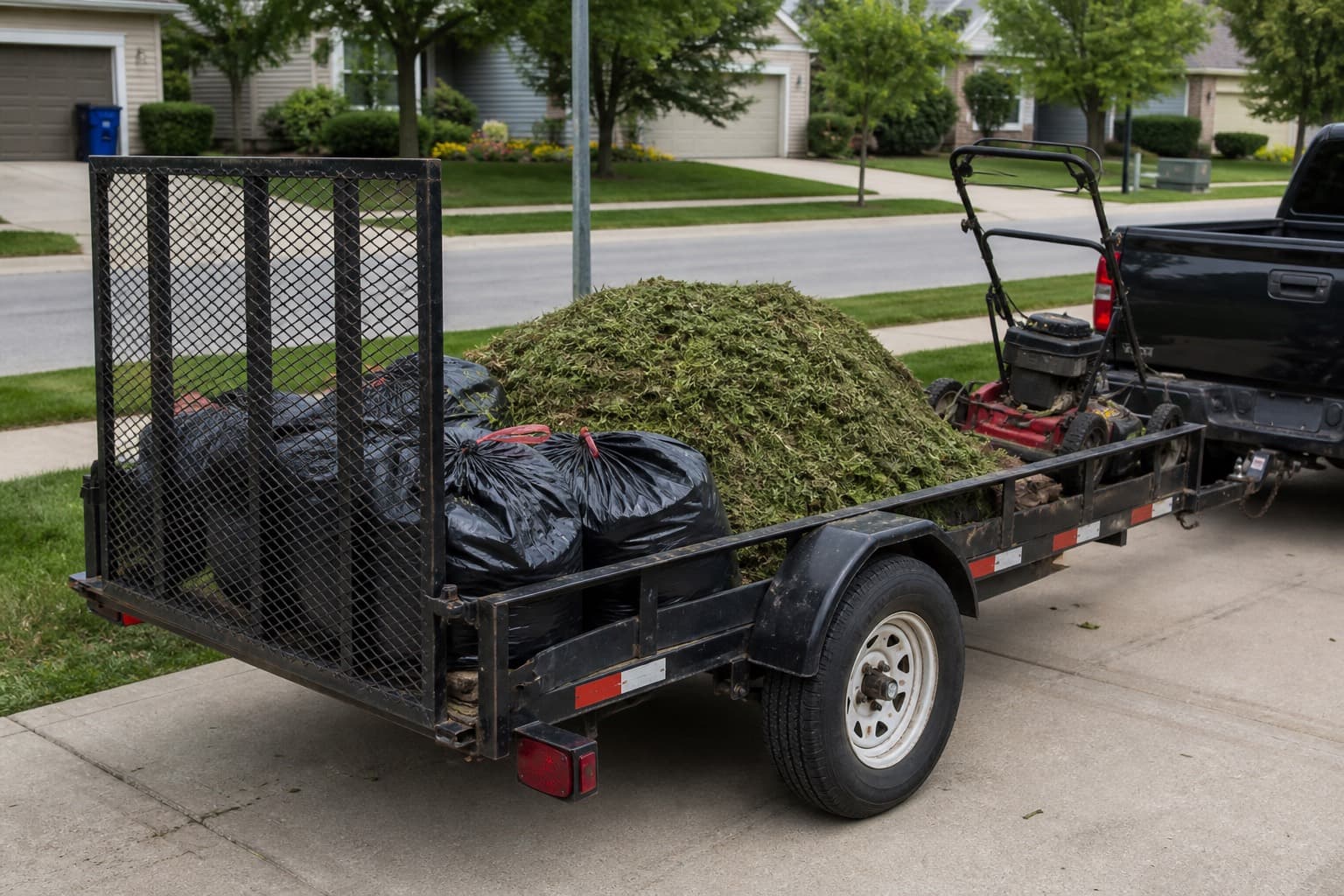
Full routes do not necessarily mean a profitable lawn care business. A week can look busy while unbilled work, overtime, long drives, equipment costs, and slow collections quietly consume the cash.
Useful lawn care business reports connect three different questions:
- Profitability: Did completed work earn more than it cost?
- Cash flow: Is enough money available when payroll, fuel, debt, and taxes are due?
- Financial position: What does the business own and owe?
Those answers come from related records, but they are not interchangeable. An invoice can create revenue before cash arrives, a mower purchase can reduce cash without becoming an immediate expense on the profit and loss statement, and a loan payment can include both interest expense and principal reduction.
Choose and document an accounting method
Your accounting method determines when income and expenses appear in the books.
- Cash basis generally records income when received and expenses when paid.
- Accrual basis generally records income when earned and expenses when incurred, even if payment happens later.
This distinction matters. Under accrual accounting, an unpaid invoice may appear as revenue and accounts receivable. Under cash accounting, it generally does not become income until collected. Inventory, payroll, customer deposits, prepaid costs, and long-term contracts can add further rules.
Do not switch between cash and accrual views to make a month look better. Ask a qualified accountant which method is permitted and useful for your entity, tax filings, financing needs, and management reports. Document the choice, then label any operational dashboard that uses a different basis.
Build useful lawn care expense categories
A chart of accounts should be detailed enough to support decisions and tax preparation, but simple enough to use consistently. Avoid putting recurring purchases into “miscellaneous.”
| Group | Examples | Why separate it |
|---|---|---|
| Direct labor | Field wages, employer payroll costs, workers’ compensation allocation | Connects labor to service delivery |
| Materials and disposal | Fertilizer, mulch, plants, seed, bags, dump fees | Supports service and job costing |
| Vehicle and equipment | Fuel, repairs, maintenance, registration, lease cost | Shows the cost of operating the fleet |
| Subcontractors | Properly classified outside labor | Keeps outside production visible |
| Merchant and collection costs | Card processing, bank fees, bad debt where applicable | Reconciles gross invoices to net deposits |
| Overhead | Insurance, rent, software, office phone, bookkeeping, marketing | Supports the whole company rather than one job |
| Assets and financing | Equipment purchases, loan principal, interest | Prevents cash spending from being misclassified |
| Taxes and owner activity | Sales tax, payroll liabilities, estimated taxes, draws or distributions | Keeps liabilities and equity separate from operating expense |
Your accountant may use different names or place an item elsewhere. Consistency and correct treatment matter more than copying a generic chart.
Separate direct costs from overhead
Direct costs can be tied reasonably to a service or job. Overhead supports the business as a whole. The split is useful when pricing lawn care jobs, but it should be applied consistently.
Two basic formulas are:
Job contribution = job revenue − job direct costs
Estimated full job profit = job contribution − allocated overhead
Contribution is not the same as net profit. It shows what remains to cover overhead and profit. If you allocate overhead, choose a rational driver—such as labor hours, crew hours, or revenue—and use it consistently. The hourly rate calculator can help organize a cost floor, but its output is only as reliable as the assumptions entered.
Record payroll completely
Wages alone understate labor cost. Depending on your location and benefits, loaded labor may include:
- gross wages and overtime;
- employer payroll taxes;
- workers’ compensation;
- paid leave and benefits;
- payroll service charges; and
- other required employment costs.
Use person-hours when evaluating labor productivity. Two employees working 45 minutes produce 1.5 labor hours, not 0.75. Crew hours can still be useful for scheduling, but the report must identify which measure it uses.
Keep time records tied to jobs when practical. A crew timeclock can make recurring problem properties visible. Also obtain professional guidance before treating a worker as an independent contractor; classification depends on the actual working relationship and applicable law, not just the label on an agreement.
Track mileage and vehicle costs without double counting
Keep a contemporaneous mileage log showing the date, business purpose, origin, destination, and business miles. Retain purchase, fuel, insurance, repair, registration, lease, parking, and toll records as applicable.
Tax rules may allow a standard mileage method or an actual-expense method in some situations. Eligibility, elections, mixed personal use, commuting, vehicle ownership, and prior depreciation can change the result. Do not deduct both standard mileage and the same actual vehicle costs for the same use.
Management reports can still assign a reasonable vehicle cost to routes even when the tax return uses another method. Label that internal allocation clearly so it is not posted twice to the books. Better route planning can improve both drive time and vehicle cost, but compare results with your own history rather than a generic mileage target.
Handle equipment purchases and depreciation carefully
A mower purchase is a cash outflow, but it may be recorded as an asset rather than an immediate operating expense. Depreciation allocates an asset’s cost over time; tax law may provide different deductions or elections. Repairs, improvements, trade-ins, financing, and asset disposals can receive different treatment.
Maintain an asset register with:
- purchase date, seller, description, and serial number;
- invoice and proof of payment;
- business-use information;
- financing documents;
- improvements and major repairs;
- depreciation claimed; and
- sale, trade, loss, or disposal details.
An equipment replacement reserve can help with cash planning, but moving cash into a reserve account does not itself create an expense. Have a qualified accountant determine capitalization, useful life, depreciation, and tax treatment.
Keep receipts and supporting records
A bank or card statement proves that money moved, but it may not prove the business purpose or what was purchased. Keep an itemized receipt or invoice, payment evidence, and a short business-purpose note where the connection is not obvious.
Create a written retention schedule for:
- income and customer records;
- expense receipts and vendor invoices;
- payroll and worker records;
- mileage and vehicle records;
- bank, card, loan, and merchant statements;
- contracts, insurance, licenses, and tax filings; and
- asset records and depreciation schedules.
Required retention periods vary by document, tax issue, and jurisdiction. Asset records may be relevant for years after purchase. Digital copies can be useful if they are complete, readable, backed up, and acceptable under applicable rules. Confirm the schedule with a qualified accountant, tax professional, or attorney.
Reconcile before trusting the reports
Reconciliation compares the books with independent records. At least monthly:
- Reconcile every bank and credit-card account to its statement.
- Match merchant batches, fees, refunds, and chargebacks to net deposits.
- Review completed work not yet invoiced and invoices not yet collected.
- Compare payroll reports with bank withdrawals and payroll liability accounts.
- Review loans so principal and interest are separated.
- Investigate uncategorized, duplicate, stale, or unusual entries.
- Compare sales-tax and payroll-tax liabilities with filed returns and payments where applicable.
If a $1,000 card batch has a $30 fee, the deposit may be $970. Recording only the deposit can understate both revenue and fees. The books generally need the gross activity and the fee recorded separately, subject to your accounting setup.
Operations software should keep quote → job → invoice aligned, while accounting software maintains the ledger and reconciliations. This separation is one reason to choose lawn care business software that exports clean records instead of maintaining several conflicting spreadsheets.
Review cash flow every week
Profit does not guarantee available cash. Receivables may be late, debt principal may be due, equipment may need replacement, and tax money may be sitting in the operating account.
Use a short rolling cash forecast:
Projected ending cash = beginning cash + expected receipts − expected payments
List expected dates, not just monthly totals. Include payroll, payroll taxes, sales-tax remittances where applicable, fuel, cards, loan payments, rent, insurance, vendor bills, owner draws, and planned equipment purchases.
| Weekly review | Question |
|---|---|
| Completed but unbilled work | What must be invoiced now? |
| Accounts receivable by age | Which balances need the next collection step? |
| Expected customer receipts | Which amounts and dates are reasonably likely? |
| Payroll and tax liabilities | What cash is committed rather than available? |
| Vendor and debt payments | What is due before expected receipts arrive? |
| Minimum operating cushion | What happens if weather or collections move? |
Invoice promptly after verified completion. Same-day invoicing does not guarantee payment, but it removes avoidable delay.
Measure profitability with consistent formulas
Review company profitability from a closed, reconciled profit and loss statement. Then use operational measures to explain the result.
Revenue per labor hour = earned service revenue ÷ production labor hours
Operating profit = operating revenue − operating expenses
Operating margin = operating profit ÷ operating revenue × 100
Define each input. Decide whether revenue excludes sales tax, whether labor hours include paid drive and shop time, and whether owner labor has a management cost assigned. Use the same definition from period to period.
Illustrative company example
The figures below demonstrate the math only. They are not recommended prices, costs, or margins.
| Line | Illustrative amount |
|---|---|
| Earned service revenue | $8,200 |
| Loaded field labor | ($3,150) |
| Fuel | ($410) |
| Materials and disposal | ($315) |
| Merchant fees | ($130) |
| Allocated vehicle and equipment cost | ($400) |
| Allocated overhead | ($550) |
| Operating profit | $3,245 |
The arithmetic is:
$8,200 − $3,150 − $410 − $315 − $130 − $400 − $550 = $3,245
$3,245 ÷ $8,200 × 100 = 39.6% illustrative operating margin
If the same work used 78 production labor hours:
$8,200 ÷ 78 = $105.13 illustrative revenue per labor hour
That ratio does not prove profitability by itself. It must be compared with this company’s loaded labor, vehicle and equipment, overhead, service mix, accounting method, and historical results.
Illustrative job example
Suppose a $60 visit uses two workers for 45 minutes. That is 1.5 labor hours. If the company’s documented loaded labor assumption is $27 per labor hour:
| Job line | Illustrative calculation |
|---|---|
| Revenue | $60.00 |
| Loaded labor | 1.5 × $27 = ($40.50) |
| Materials | ($3.00) |
| Variable vehicle/equipment cost | ($6.00) |
| Merchant fee | ($2.00) |
| Contribution before overhead | $8.50 |
The visit contributes $8.50 before overhead in this illustration. Drive time, disposal, callbacks, or unbilled extras would reduce it. Sampling jobs that routinely run long can be more useful than pretending every stop is measured perfectly. Keep accurate property notes and separate unusual first cuts, haul-away, and other scope from routine mowing. Dump runs need both time and disposal cost.
Use reports on a practical schedule
Daily or at completion
- Mark work complete and record exceptions.
- Capture time, materials, disposal, and approved extras.
- Create or queue the correct invoice.
- Save receipts and mileage records.
Weekly
- Review unbilled work, cash, receivables, payroll hours, overtime, and upcoming obligations.
- Compare scheduled with completed stops.
- Investigate jobs that ran materially longer than estimated.
- Choose a specific action: correct an invoice, follow up on a balance, re-estimate a property, or change a route.
Monthly
- Reconcile accounts and close the books.
- Review profit and loss, balance sheet, and cash flow.
- Compare actual results with the budget and prior comparable periods.
- Review revenue per labor hour, selected job contribution, overhead, and equipment needs.
- Update pricing, scope, or service zones when the records support it.
Seasonality can distort a single month. Compare like periods and account for spring cleanups, weather, leaf work, and end-of-season operations. Keep residential and commercial work distinct when their scopes and billing cycles differ; see commercial vs residential operations.
Treat taxes as obligations, not spare cash
Tax handling depends on entity type, location, services, employees, and elections. Sales tax collected from customers and payroll withholdings are generally liabilities, not operating income. Loan principal and owner draws or distributions are generally not ordinary operating expenses. Income-tax payments may also need treatment outside operating profit, depending on the entity and books.
Keep separate liability accounts and consider separate cash accounts for amounts reserved for tax payments. Ask a qualified accountant or tax professional about:
- income and estimated tax payments;
- sales and use tax on services and purchases;
- payroll deposits, filings, and year-end forms;
- employee and contractor classification;
- depreciation and equipment elections;
- vehicle deductions and mileage records;
- owner compensation, draws, and distributions; and
- state and local requirements.
This article provides general operational information, not accounting, tax, payroll, or legal advice.
Keep the software role narrow
MowProHQ can keep customer, property, scheduling, quote, and invoice records connected so operational reports begin with consistent data. It does not replace reconciled accounting records or professional advice.
Review current options on pricing, or sign up when you are ready to organize jobs and invoices in one system.
Frequently asked questions
- What expenses should I track every week?
- Review field payroll, fuel, materials, disposal fees, repairs, merchant fees, and subcontractor costs each week. Record overhead such as insurance, software, rent, and phone service too, even if you analyze those costs monthly.
- What reports should I actually open?
- Weekly, review completed work not yet invoiced, invoices issued, cash collected, overdue balances, payroll hours, and near-term cash needs. Monthly, review the profit and loss statement, balance sheet, cash flow, accounts receivable, revenue per labor hour, and selected job results.
- How do I know if a job is profitable?
- Start with job revenue minus direct labor, payroll burden, materials, disposal, subcontractors, card fees, and a reasonable equipment or vehicle cost. That shows contribution before overhead. Allocate overhead consistently if you also want an estimate of full job profit.
- Should I use spreadsheets or lawn care software for reports?
- Use operations software for customers, work, time, and invoices, and accounting or bookkeeping software for the general ledger, bank reconciliation, payroll, and tax records. A small spreadsheet can help with analysis, but it should not become an unreconciled second set of books.
- How often should I review profitability?
- Review operational indicators and cash weekly, then close and review the books monthly. Compare results with your own budget, prior periods, route design, and pricing assumptions rather than relying on a universal industry benchmark.
- Should a lawn care business deduct mileage or actual vehicle expenses?
- The available methods and documentation rules depend on the vehicle, ownership, prior elections, and current tax law. Keep a contemporaneous business-mileage log and all vehicle receipts, then ask a qualified tax professional which method applies. Do not claim both methods for the same use.
- How long should a lawn care business keep receipts?
- Keep receipts and supporting records long enough to substantiate income, deductions, payroll, assets, and tax filings under the rules that apply to you. Retention periods vary by record and jurisdiction, and asset records may need to be kept beyond the purchase year. Confirm a written schedule with a qualified accountant or tax professional.