MowProHQ Blog/Dispatch
Route Planning and Dispatch for Lawn Care Crews
A practical guide to lawn care route planning, crew dispatch, customer windows, weather changes, safe driving, and responsible location tracking.

Good lawn care route planning is not simply arranging pins in the shortest order. A route has to fit the work: recurring schedules, crew capability, equipment, property access, customer expectations, safe driving, and changing weather.
The goal is a day crews can actually complete without rushing. Start with a clear plan, make changes through one dispatcher or agreed process, and communicate early when the plan moves.
Why lawn care routes need more than a map
Lawn care routes combine several constraints:
- Recurring visits: Weekly, biweekly, and seasonal work must land on the correct cycle.
- Property details: Gates, pets, parking, quiet hours, slopes, and access instructions can change how a stop is handled.
- Crew and equipment needs: Not every crew or machine is appropriate for every property.
- Customer commitments: Commercial sites and residential customers may have different access or timing requirements.
- Weather exposure: Rain, lightning, heat, wind, air quality, and soft ground can affect both safety and service quality.
A maps app can suggest a driving order, but it does not know whether a stop is due, whether the trailer fits, or whether the crew has the right equipment. Your scheduling software should keep the route editable, while your CRM keeps each stop connected to the right customer and property history.
Start with service zones
Before optimizing individual stops, define the areas you can serve consistently. A useful zone may be a neighborhood group, HOA, commercial corridor, or another cluster that matches how your crews work.
Practical zone rules include:
- Prefer recurring work that strengthens an existing route.
- Review outlying stops separately instead of quietly adding them to a full day.
- Account for travel when pricing lawn care jobs.
- Keep weekly and biweekly cycles predictable where possible.
- Revisit boundaries when traffic, crew locations, or customer mix changes.
Do not assume two nearby pins belong together. A divided highway, school pickup traffic, restricted entrance, or trailer-unfriendly street can make the map misleading. Residential and commercial work can also require different pacing; see commercial vs residential lawn care operations.
Build tomorrow's route step by step
The evening before, or at another consistent planning cutoff:
- Pull the recurring and one-time visits that are actually due.
- Group stops into practical geographic pockets.
- Check customer windows, access restrictions, and contractual priorities.
- Match each group to a crew with the right skills and equipment.
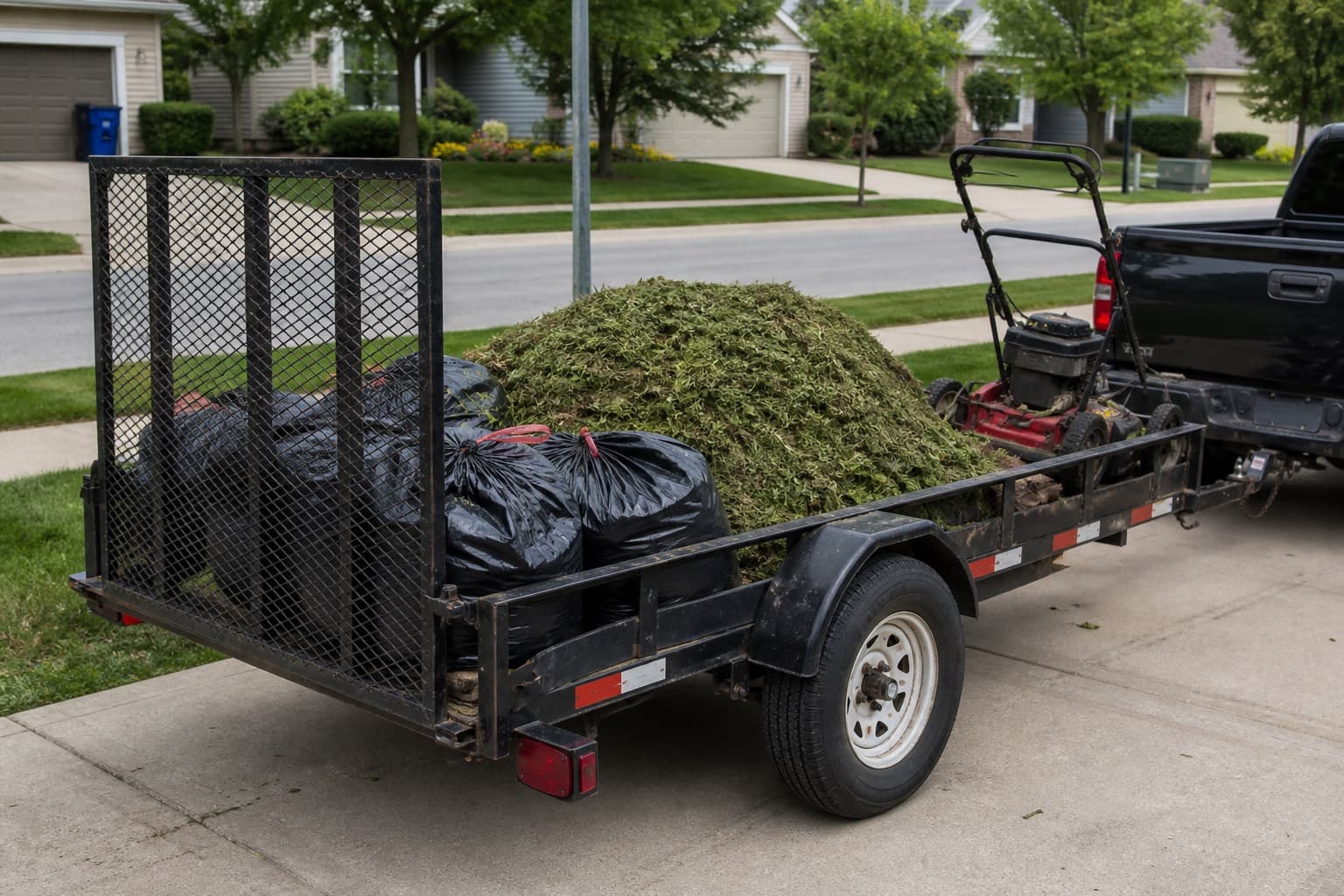
- Add planned fuel, material, disposal, and meal stops where relevant.
- Sequence the route using realistic traffic and access, not customer names.
- Leave reasonable room for normal variation and known risks.
- Attach the property notes the crew needs.
- Publish the route and identify who may change it.
Route planning is not complete until someone checks the operational details. A mower that cannot access a rear gate or a trailer that needs a disposal run can undo an otherwise tidy sequence. Dump runs and route time should be planned as part of the day when they are predictable.
Set a clear dispatch process
The size of the company changes who dispatches, but not the need for ownership.
| Operating model | Route owner | Practical dispatch habit |
|---|---|---|
| Solo operator | Owner-operator | Publish a realistic day list and avoid changing it while driving |
| Small crew team | Named office or field lead | Confirm assignments, equipment, and exceptions before departure |
| Multiple crews | Dispatcher or operations lead | Use one source of truth, defined escalation rules, and controlled route changes |
A dispatcher should know which decisions crews can make themselves and which require approval. For example, a crew may be allowed to change the order of two nearby stops after finding a locked gate, while adding paid work or moving a promised commercial visit may require office approval.
Keep changes in the shared job record rather than relying on a group text. That gives the next crew context and helps the office distinguish completed, skipped, blocked, and rescheduled work. For more team workflow ideas, see crew scheduling apps for lawn care and scaling from solo operator to crew.
Use customer windows you can support
Exact arrival times are often fragile on multi-stop routes. Use a service day or arrival window that matches the business model and any contract terms.
- Explain the normal window when the customer books.
- Record hard access restrictions separately from customer preferences.
- Do not promise an exact time merely because the current map predicts it.
- Notify the customer when a meaningful delay or date change becomes known.
- State what the customer should do about gates, pets, vehicles, and irrigation.
- Avoid repeated vague updates; give the best honest information available.
A useful delay message says what changed, gives the revised window or next update time, and provides a way to report an access problem. It should not blame the crew or promise a time the dispatcher cannot support.
Dispatch for safe driving
No route improvement is worth distracted or unsafe driving. Set expectations before crews leave:
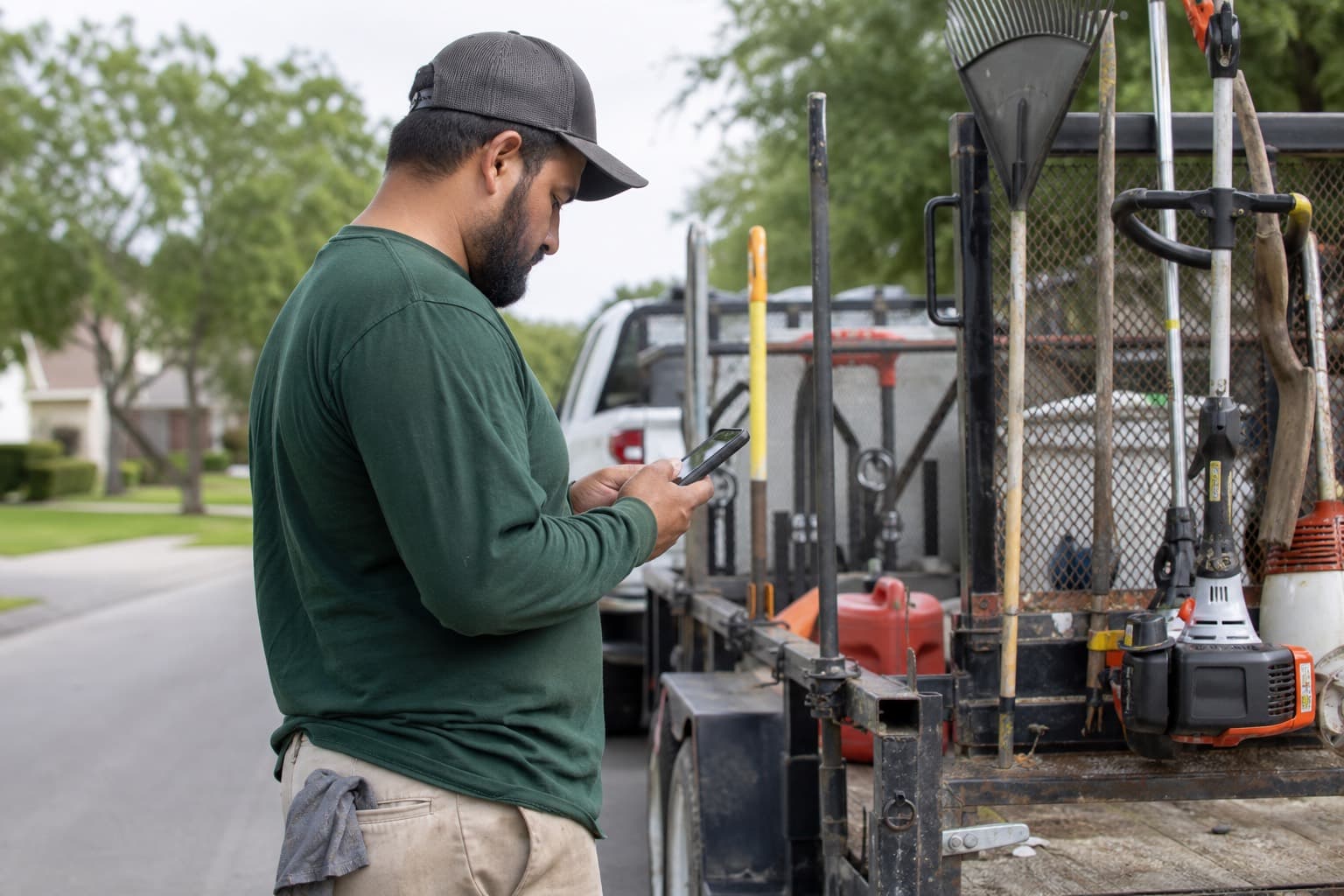
- Drivers review the route and mount navigation before moving.
- Route changes, messages, and job notes are handled while legally parked.
- A passenger may handle updates only when doing so does not distract the driver.
- The dispatcher should not expect an immediate response from a moving vehicle.
- Crews may stop or reroute when road, visibility, vehicle, trailer, or weather conditions are unsafe.
- Schedules must allow legally required breaks and should not pressure crews to speed.
Navigation suggestions are not instructions to make an unsafe turn, enter a restricted road, or park illegally. Drivers remain responsible for operating safely and following road rules.
Handle employee location data carefully
Location can help show the last completed stop, support dispatch, or locate a company vehicle during working hours. It also creates privacy, security, and employee-relations risks.
Before enabling employee or vehicle tracking:
- Identify a specific business purpose.
- Check federal, state, provincial, and local requirements that apply to your workforce.
- Give clear notice and obtain consent where required.
- Explain what is collected, when tracking starts and stops, and whether off-hours data is collected.
- Limit access to people who need it and protect accounts appropriately.
- Choose a retention period instead of keeping detailed history indefinitely.
- Provide a process for correcting errors or reporting a device problem.
Use the least intrusive data that meets the need. Where possible, track only during scheduled work and avoid collecting a worker's location from a personal device outside working time. A delayed or inaccurate dot should not, by itself, be treated as proof that an employee was idle or dishonest.
This is operational guidance, not legal advice. Employment, privacy, notice, consent, and record-retention rules vary by location. Review your policy with qualified local counsel before rollout. For additional operational context, read GPS and day-of dispatch for lawn care.
Make weather decisions with safety first
Weather dispatch should be a documented process, not a last-minute guess. Monitor reliable local forecasts and alerts, then confirm actual field and road conditions when possible.
Consider:
- Lightning and severe-weather alerts
- Heat, cold, wind, and air-quality guidance
- Standing water, saturated soil, and the risk of turf damage
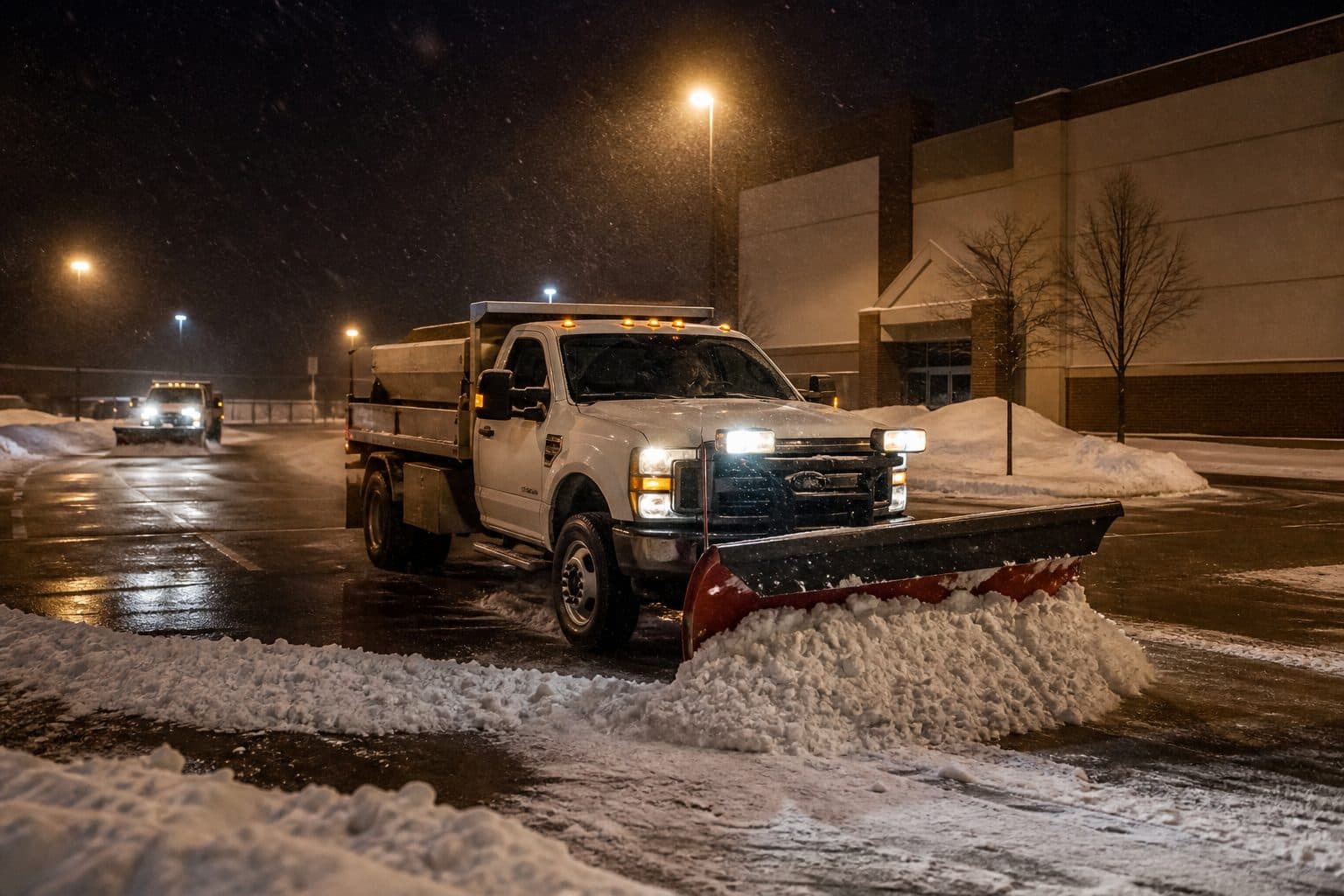
- Visibility and road conditions for trucks and trailers
- Manufacturer limits for equipment
- Local restrictions and site-specific rules
Set decision roles and check-in times, but allow crews to stop work when conditions at the property are unsafe. Never use a schedule cutoff as a reason to continue through lightning, dangerous heat, poor visibility, flooding, or another serious hazard.
When work must move:
- Mark affected visits consistently.
- Rebuild capacity before promising replacement times.
- Move neighborhood groups together where practical.
- Protect contractual or access-dependent commitments without compromising safety.
- Send customers a revised window or a specific time for the next update.
- Record the reason so the office and crew see the same status.
Preserving the old sequence can be useful, but it is not always correct. Soil conditions, crew availability, customer access, and subsequent forecasts may require a new plan. See weather rescheduling for lawn care routes for a deeper workflow.
Day-of dispatch checklist
At the start of the day:
- Confirm crew attendance, vehicles, trailers, and required equipment.
- Review weather and known road issues.
- Highlight restricted windows, pets, gates, and unusual hazards.
- Make sure crews know who is dispatching and how to report a problem.
During the day:
- Watch job statuses rather than demanding constant driver replies.
- Record access failures, skips, add-ons, and customer approvals on the job.
- Reassign work only after checking travel, equipment, safety, and customer commitments.
- Tell affected customers when the expected service window materially changes.
At close:
- Reconcile completed, blocked, and unfinished visits.
- Capture approved add-ons for invoicing.
- Carry over work deliberately instead of leaving it in an ambiguous status.
- Note recurring route problems for the next planning cycle.
Review route health with trends
Choose a small set of measures and review them consistently. Avoid turning one difficult weather day into a broad conclusion.
| Measure | What to examine | Question to ask |
|---|---|---|
| Drive time between stops | Trend by route or zone | Is the service area spreading or is the sequence causing backtracking? |
| Planned vs completed visits | Carryover and reason codes | Are routes overloaded, or are access and weather the main causes? |
| Overtime | When and where it occurs | Is it tied to route design, job estimates, delays, or staffing? |
| Access failures | Repeated properties and causes | Are reminders and property notes clear enough? |
| Add-ons completed and billed | Missing approvals or records | Is extra work captured before the crew leaves? |
| Customer-window misses | Notice timing and root cause | Are windows realistic and are delays communicated promptly? |
| Weather carryover | Capacity and neighborhood grouping | Does the recovery plan preserve workable routes? |
Use the numbers to ask better questions, not to rank crews without context. Traffic incidents, equipment failures, training assignments, and difficult properties can all affect a day.
Common route and dispatch problems
| Problem | What it looks like | Practical response |
|---|---|---|
| Scattered route | Repeated cross-town travel | Tighten zones, batch outliers, or revisit travel pricing |
| Constant same-day changes | Crews receive conflicting instructions | Name one route owner and define change rules |
| Invisible property notes | Calls about gates, pets, or access | Put current notes on the job and review sensitive access data |
| Unrecorded add-ons | Work is completed without approval or billing details | Document scope and customer approval before starting |
| Unrealistic windows | Customers expect exact arrivals all day | Use supportable windows and send proactive updates |
| Unsafe urgency | Drivers are expected to answer or reroute in motion | Require parked updates and allow safe stops |
| Excessive tracking | Location remains visible without a clear need | Narrow collection, access, working hours, and retention |
Review recurring problems during the season and change one part of the process at a time. A better map cannot fix unclear authority, missing notes, unsafe expectations, or unrealistic customer promises.
In MowProHQ
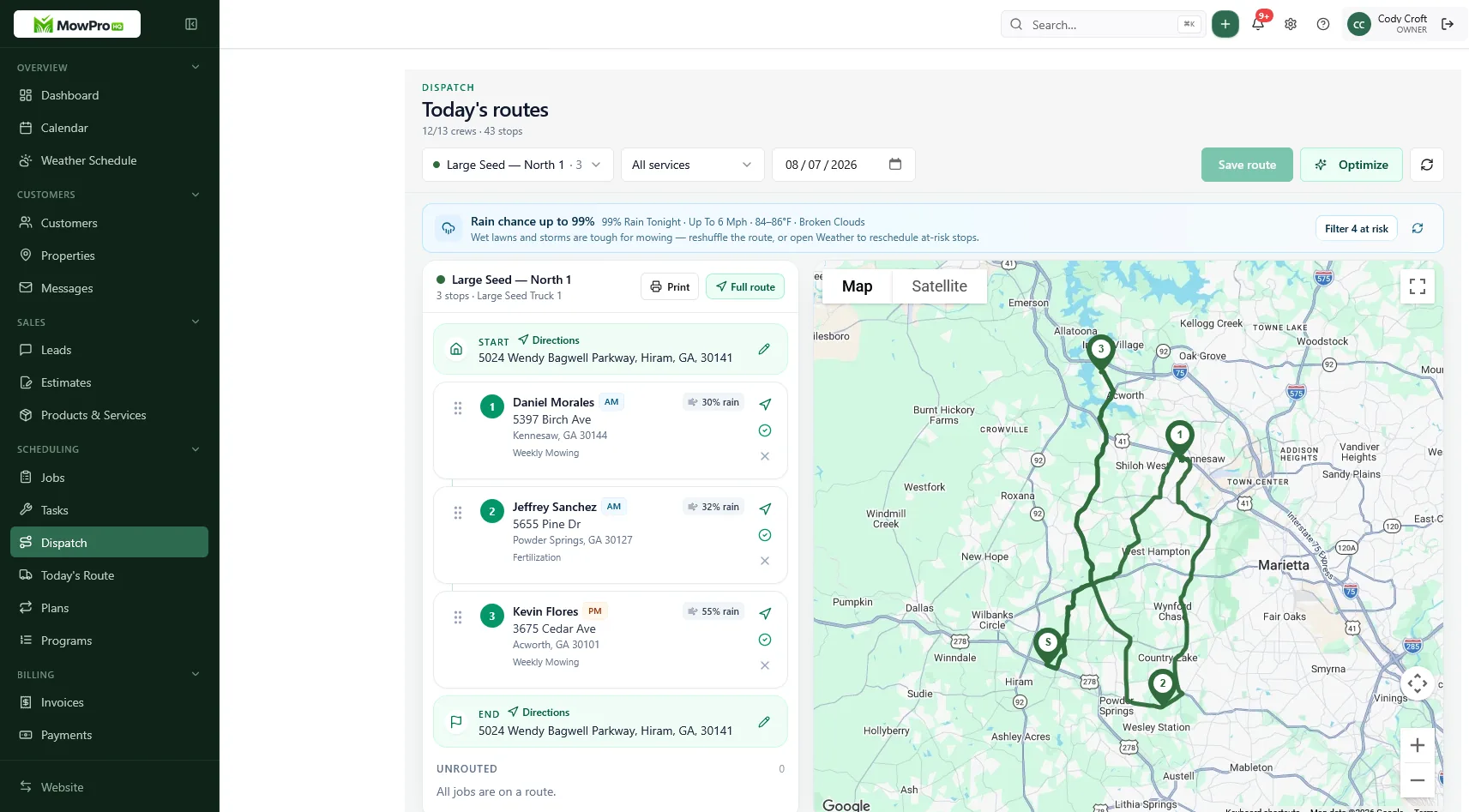
Route planning with MowProHQ
MowProHQ brings scheduling, customer and property details, recurring work, and dispatch context into one workflow. Review current options on pricing, or sign up to get started.
The strongest route is not necessarily the shortest line on a map. It is the one that crews can follow safely, customers can understand, and the business can adjust when conditions change.
Frequently asked questions
- What is the biggest mistake in lawn care route planning?
- Treating the shortest map route as the whole plan. A workable route also accounts for service frequency, crew skills, equipment, access restrictions, customer windows, disposal stops, weather, and enough room to handle normal delays.
- How should a lawn care company handle rain-day dispatch?
- Set a decision process before bad weather arrives, use current forecasts and field conditions, pause work when conditions are unsafe, move affected stops in neighborhood groups where practical, and tell customers what changed. Avoid promising a replacement time until crew capacity and conditions are reasonably clear.
- When does a solo operator need formal dispatch habits?
- As soon as recurring work, add-ons, or customer promises become hard to hold in your head. A published day list, consistent property notes, service-area rules, and a simple process for delays help even when the owner is also the only technician.
- What route-planning metrics should I review?
- Useful measures include drive time between stops, planned versus completed visits, avoidable overtime, access failures, unbilled add-ons, late customer notifications, and weather-related carryover. Compare trends over time rather than relying on one unusual day.
- Should lawn care companies track employee locations?
- Only when there is a clear work-related need and after checking applicable laws. Tell employees what is collected, why, when tracking is active, who can see it, and how long it is kept. Limit tracking to working time where possible, restrict access, and do not treat a location dot as proof of misconduct.
- How precise should customer arrival windows be?
- Use a window the route can realistically support and explain that weather, traffic, equipment trouble, and earlier jobs may change it. Give an update when a material delay becomes known, and follow any timing requirements in the customer contract.