MowProHQ Blog/Operations
Commercial vs Residential Lawn Care Ops: What Changes
Compare commercial and residential lawn care operations, including contracts, bidding, scheduling, crews, insurance, safety, invoicing, and access.
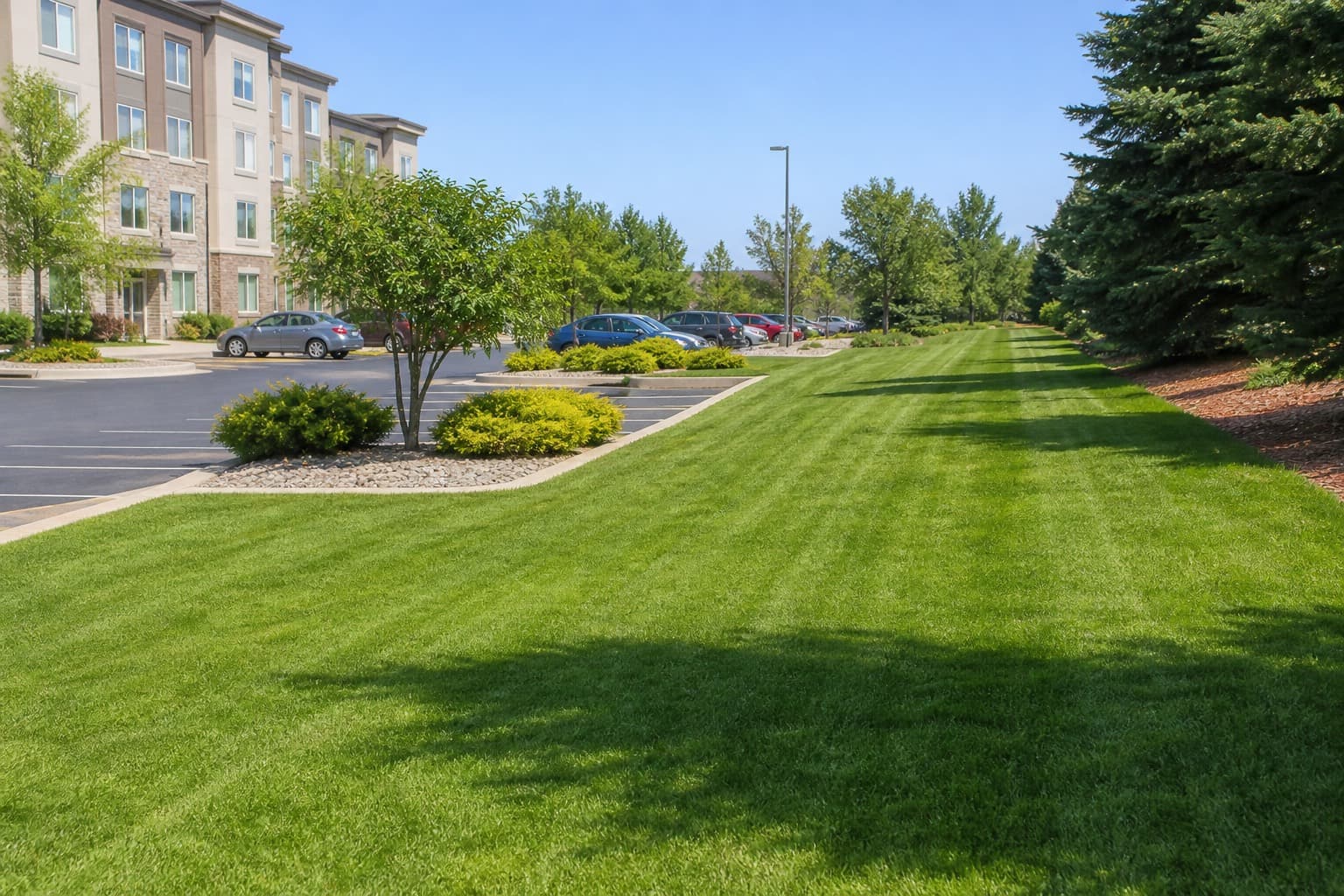
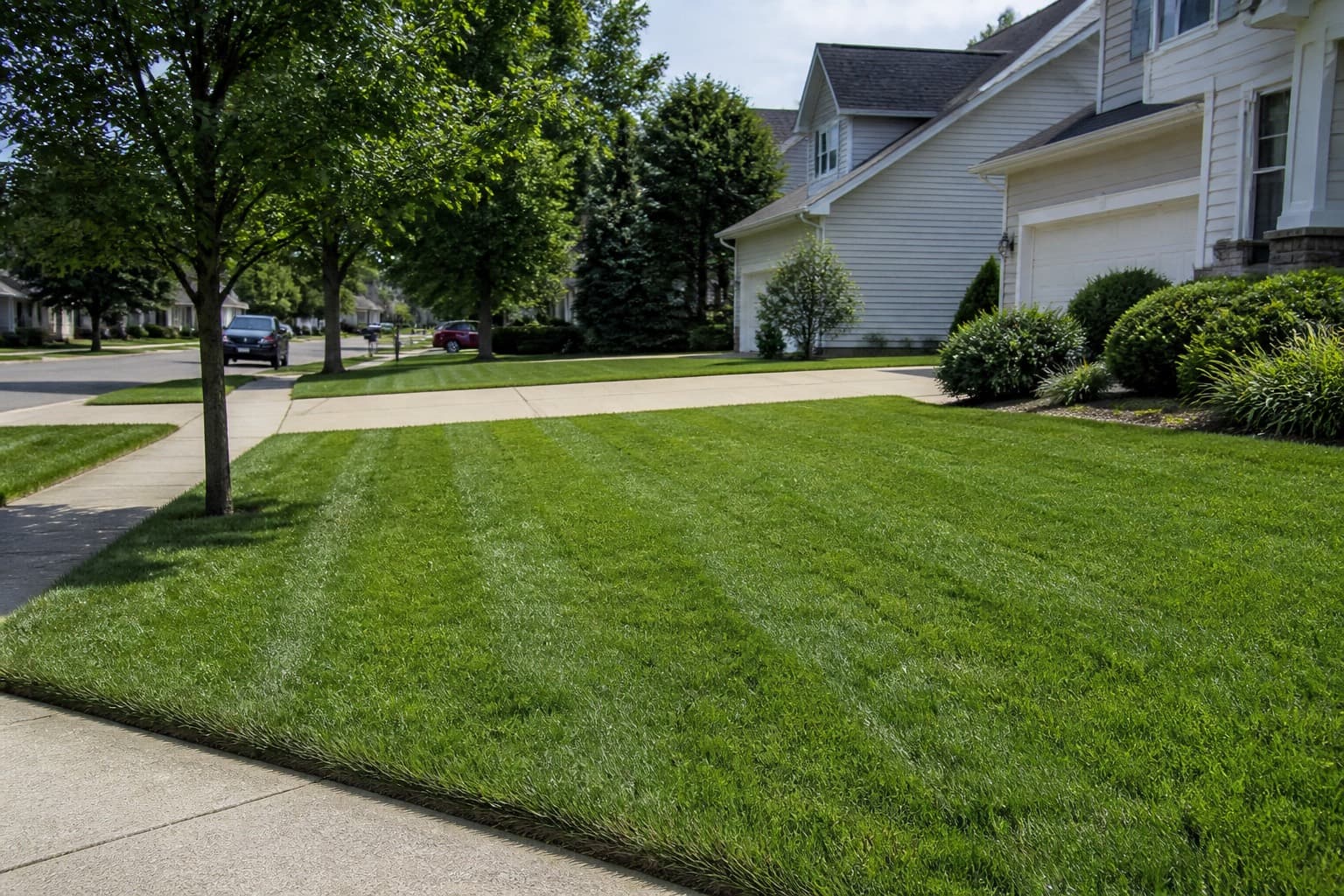
Commercial lawn care and residential lawn care use many of the same field skills, but they can require different operating systems. A homeowner may approve a change directly, while an HOA, office, retail site, or public property may involve a property manager, board, procurement contact, and accounts-payable team.
Those differences affect bidding, scheduling, access, safety, staffing, insurance, taxes, and payment. They are tendencies, not universal rules: a residential estate can be more complex than a small office, and a well-run commercial account can be straightforward.
Commercial vs residential lawn care at a glance
| Operating area | Residential work | Commercial or HOA work |
|---|---|---|
| Decision-makers | Often an owner or resident | May include a manager, board, tenant, procurement, and accounting |
| Scope | Often property-wide and relatively simple | Commonly divided by zones, specifications, or bid documents |
| Access | Gates, pets, parking, customer preferences | Loading rules, public traffic, restricted areas, and service windows |
| Scheduling | Route density and customer windows | Route density plus business hours, quiet hours, events, or tenant needs |
| Billing | Card, bank transfer, check, or other agreed method | May require vendor setup, a PO, invoice fields, and approval steps |
| Documentation | Quote, messages, and property notes | May add contracts, certificates, safety plans, reports, and photos |
| Staffing | General route skills may be enough | Site rules may require specific training, supervision, or equipment |
Use the table as a discovery checklist, not as a substitute for reviewing the actual property and agreement.
Identify the people and approval path
Before quoting, find out who can answer site questions, approve the proposal, authorize additional work, receive service updates, and process invoices. These may be different people.
| Role | Likely concern | Information to record |
|---|---|---|
| Homeowner or resident | Appearance, timing, price | Scope, frequency, access, communication preference |
| Property or facility manager | Service quality, complaints, continuity | Site contact, escalation path, reporting expectations |
| HOA board or committee | Budget, appearance, resident concerns | Approval process, meeting dates, change-order authority |
| Procurement | Bid compliance, vendor qualifications | Submission format, deadlines, required forms |
| Accounts payable | Correct documentation and approvals | Billing address, PO rules, invoice format, payment terms |
| On-site staff or tenants | Safe, unobstructed access | Parking, entrances, deliveries, peak traffic periods |
Your lawn care CRM and property notes should distinguish these contacts. Crews need operational instructions, but sensitive billing or personal information should only be available to people who need it.
Write a scope that both sides can follow
A useful scope says what will happen, where, how often, and under what conditions. For a commercial property or HOA, identify areas such as entrances, common lawns, medians, pond banks, courtyards, playgrounds, and dog areas. Attach a marked map when property boundaries or responsibilities are not obvious.
How to write lawn care quotes applies to both customer types. A commercial proposal may also need:
- Service areas, tasks, frequencies, and seasonal assumptions
- Measurable quality or completion standards where practical
- Exclusions, such as irrigation repair, litter removal, shrubs, or storm cleanup
- A process and authorized contacts for change orders or extra work
- Customer responsibilities, including access and hazard disclosure
- Weather, cancellation, renewal, and termination terms
- Invoice schedule, payment terms, taxes, and purchase-order requirements
- Required insurance, licenses, permits, reports, or safety documents
Contract language can shift substantial risk. Indemnity, defense, warranty, automatic-renewal, damage, and termination provisions deserve careful review. Templates and bid forms are not automatically fair or suitable for your business. Consider asking a qualified local attorney and insurance professional to review significant agreements; this article is general operational information, not legal advice.
Price the work, constraints, and risk
Property size is only a starting point. Lot-size quoting can help establish the area, while lawn care pricing should also account for:
- Expected labor by task and season
- Travel, loading, parking, and internal walking time
- Equipment restrictions and transport
- Obstacles, slopes, drainage, and cleanup
- Administrative work, reporting, meetings, and vendor compliance
- Weather disruption and authorized extra work
- Insurance, licenses, taxes, overhead, and contract risk
- Payment timing and the cost of carrying receivables
Example: a small site with tight access
An office lawn may resemble a large residential stop on a map, yet require alley access, a narrow service window, and walk-behind equipment. Measure or test the actual workflow before relying on acreage alone. If the stop breaks an otherwise compact route, include that operational cost in the estimate or decide that the account is not a fit.
Avoid assuming that commercial work carries a particular margin or that residential customers pay faster. Calculate the expected contribution of each account using your own labor, overhead, collection history, and capacity data.
Check procurement requirements before bidding
Private companies, HOAs, institutions, and public agencies may use different procurement processes. Read the entire request for proposal or bid package and track deadlines, addenda, mandatory site meetings, bid bonds, references, forms, and submission rules.
For public work, local or state rules may address contractor registration, prevailing wages, certified payroll, public records, subcontracting, or bidding. Requirements vary by location and project. Verify them with the issuing agency and qualified local advisers rather than relying on assumptions from another jurisdiction.
Keep a record of questions and written answers. If a bid document conflicts with what a site contact says, request clarification through the stated procurement channel.
Plan access and scheduling around the site
Residential access may involve a gate, pets, vehicles, children, and a preferred service window. Commercial sites can add deliveries, customers, tenants, security systems, school or event schedules, and restricted loading areas.
Confirm:
- Approved entry points and where trucks and trailers may park
- Keys, codes, badges, and who manages them
- Quiet hours and local noise restrictions
- High-traffic periods, deliveries, events, and emergency routes
- Areas closed to certain equipment or chemicals
- Known utilities, irrigation, lighting, and other site hazards
- Who can resolve an access problem during the service window
Do not store access codes in an unsecured crew message or place them in broad customer communications. Establish a process for changing or returning credentials when an employee leaves or a contract ends.
| Site type | Possible constraint | Scheduling response to consider |
|---|---|---|
| Residential street | Pets, parked cars, customer window | Group nearby stops and retain a contact method |
| HOA common area | Quiet hours, residents, amenities | Use a consistent window that follows site rules |
| Retail property | Shoppers, deliveries, entrances | Schedule around lower traffic when feasible |
| Office property | Employee parking and meetings | Coordinate lots and noisy work with the site |
| Public or institutional site | Specifications and public access | Follow the approved work and safety plan |
Route planning should account for service windows and equipment, not just distance between pins. Scheduling software can make constraints visible, but someone still needs to verify that the route is workable.
Match staffing and equipment to the account
A separate commercial crew is not always necessary. Start with the site's requirements, then decide whether an existing crew has the skills, supervision, equipment, and time to meet them consistently.
- Train crews on the written scope and who may request changes
- Confirm competency before assigning unfamiliar equipment or terrain
- Plan coverage for absences, turnover, and seasonal workload
- Account for setup, cleanup, documentation, and travel in labor plans
- Define when the crew should stop work and contact a supervisor
- Follow applicable wage, overtime, break, youth-employment, and worker-classification rules
Employment requirements vary by jurisdiction and can change. Consult the appropriate labor agency or a qualified local adviser for your circumstances, especially when using subcontractors or classifying workers.
Job checklists can translate the contract into field steps. Keep them focused: a crew should be able to identify the service areas, quality checks, site contacts, hazards, and documentation required for that visit.
| Site | Crew and equipment considerations | Common issue to prevent |
|---|---|---|
| Open common area | Suitable deck, trimming capacity, experienced lead | Missing boundary or frequency details |
| Tight courtyard | Approved narrow equipment and careful access | Equipment damage or blocked paths |
| Retail frontage | Public-awareness training and controlled cleanup | Debris near people, vehicles, or doors |
| Residential infill | Standard route setup and property notes | Pulling the crew off route for avoidable extras |
Treat safety as site-specific
Commercial does not automatically mean more dangerous, and residential does not mean low risk. Perform an appropriate hazard assessment for each property and update it when conditions change.
Potential controls include:
- High-visibility clothing, cones, or temporary work-zone controls
- Safe separation from pedestrians, vehicles, and building entrances
- Equipment inspection, guards, hearing and eye protection
- Heat, severe-weather, and hydration procedures
- Chemical labels, training, records, notices, and re-entry requirements
- Plans for slopes, water, traffic, overhead hazards, and hidden utilities
- Incident reporting and emergency contacts
Applicable occupational-safety, pesticide, environmental, and traffic-control rules depend on the work and location. Follow equipment instructions and current requirements from the relevant federal, state, provincial, and local authorities. Document training and corrective action rather than treating a signed checklist as proof that every hazard is controlled.
Confirm insurance and responsibility
A commercial customer may ask for a certificate of insurance, additional-insured status, a waiver of subrogation, or particular coverage limits. A certificate generally documents coverage; it does not by itself change the policy or guarantee that a claim is covered.
Before agreeing:
- Send the full insurance section to your broker or agent.
- Confirm that your operations, equipment, vehicles, employees, subcontractors, and chemical applications are appropriately addressed.
- Ask what endorsements are available and what they cost.
- Make sure the contract description and legal business name are accurate.
- Use a documented process for subcontractor insurance if subcontracting is permitted.
Do not promise coverage or accept unfamiliar risk language based only on a certificate request. The policy, endorsements, contract, facts of a loss, and local law can all matter.
Set up invoices and payment before service
Payment speed varies across both residential and commercial customers. The practical difference is that organizations may have more process around an invoice. Complete vendor onboarding and confirm requirements before the first service when possible.
Ask about:
- Billing contact and legal entity name
- Purchase-order or work-order requirements
- Invoice portal, email, format, and required line items
- Billing frequency and contractual payment terms
- Documentation needed for extras or completion
- Dispute, late-payment, suspension, and collection procedures
- Accepted payment methods and related fees, if lawful and disclosed
Your lawn care invoicing process should match the contract. For overdue balances, follow the agreement and applicable law before charging fees, stopping service, applying payments, or pursuing invoice collections. Rules on notices, interest, liens, consumer accounts, and collection practices vary by jurisdiction.
| Payment risk | Residential control | Commercial or HOA control |
|---|---|---|
| Incorrect invoice | Confirm customer and service details | Match legal entity, PO, scope, dates, and submission method |
| Unapproved extra | Obtain documented approval | Use the contract's change-order process |
| Service dispute | Retain quote, notes, and appropriate photos | Retain specifications, reports, approvals, and appropriate photos |
| Late payment | Follow agreed reminders and remedies | Follow escalation and remedies in the contract and local law |
Build cash-flow forecasts from the agreed terms and your actual collection history. Do not base a bid on an assumed payment date.
Handle sales tax and other tax questions locally
Tax treatment for mowing, landscaping, materials, chemicals, delivery, and bundled services varies by jurisdiction. Customer type alone may not determine whether a charge is taxable, and an exemption certificate may require validation and retention.
Before invoicing a new kind of work:
- Verify registration and filing obligations where you operate
- Determine how labor, materials, and subcontracted work should be stated
- Collect and retain valid exemption documentation when applicable
- Keep records that support the amounts reported
A qualified local tax professional or revenue authority can advise on your facts. Avoid copying the tax setup from another lawn care company without confirming that its services and jurisdiction match yours.
Review the first month
Use the first several visits to compare the written assumptions with real operations:
- Walk the property with an authorized contact.
- Brief the crew on scope, access, safety, and escalation.
- Track actual labor, travel, equipment, and administrative time.
- Submit invoices in the required format.
- Record access failures, scope questions, incidents, and approved changes.
- Review the account with the customer and crew as appropriate.
If conditions differ materially from the proposal, use the contract's clarification or change process. Do not silently expand the scope or direct the crew to ignore a requirement.
Decide whether to mix commercial and residential routes
Mixing account types can work when the operational requirements align. Consider:
- Does the site strengthen or interrupt route density?
- Can the assigned crew meet the service window and scope?
- Is the required equipment already on the route?
- Will administrative work displace field capacity?
- Can the business support the agreed billing cycle?
- Does customer concentration create unacceptable risk if the contract ends?
Review the portfolio periodically using actual route time, rework, incidents, receivables, and account-level costs. A commercial label does not make an account better, and a residential label does not make it simpler. Fit depends on the specific property, agreement, and business.
Managing mixed lawn care operations
MowProHQ can keep property notes, quotes, schedules, and invoices connected across residential, commercial, and HOA accounts. Review the current options on pricing, or sign up when you are ready to try it.
The best mix is one your team can price, staff, service safely, document, and collect under clear agreements.
Frequently asked questions
- How is commercial lawn care different from residential lawn care?
- Commercial and HOA work commonly involves more stakeholders, formal scopes, procurement requirements, site-specific access rules, and structured invoicing. Residential work often has a simpler approval path, but the exact process and payment timing depend on the customer and agreement.
- Should I mix commercial accounts into residential routes?
- It can work when the property fits the route, service window, equipment, crew skills, and cash-flow plan. Review the actual travel and labor requirements instead of deciding by property type alone.
- How do I quote commercial or HOA lawn care?
- Walk the site, divide it into service areas, document frequency and exclusions, estimate labor and equipment time, and confirm who may authorize extra work. Review the proposed contract and procurement requirements before accepting the account.
- Why can commercial invoices take longer to process?
- Some organizations require purchase orders, vendor onboarding, specific invoice fields, or approval by several people. Ask about the process and payment terms before work begins; do not assume that every commercial customer pays on the same schedule.
- What access issues should a commercial lawn care company plan for?
- Common considerations include gates, loading areas, parking, quiet hours, pedestrian traffic, pets, tenants, restricted equipment, and the availability of an on-site contact. Record verified instructions in the property notes and brief the assigned crew.
- Do commercial properties need different lawn care crews?
- Not always. Assignments should reflect the site's equipment restrictions, safety plan, service window, public exposure, and required training. A cross-trained residential crew may be suitable for some sites, while others may need a dedicated team.
- Is commercial lawn care more profitable than residential lawn care?
- Neither category is automatically more profitable. Results depend on pricing, labor, travel, equipment, overhead, scope changes, payment timing, seasonality, and risk. Compare each account with your own cost and capacity data.