
MowProHQ Blog/Quotes
How to Write Lawn Care Quotes That Win Jobs
Learn how to write a clear lawn care quote with scope, pricing, exclusions, acceptance terms, and a practical example you can adapt.

A lawn care quote should do more than name a price. It should help the customer understand what you will do, what you will not do, how often you will visit, and what happens next.
The goal is not to make every residential mowing quote read like a long contract. It is to remove the assumptions that cause awkward conversations later. This guide covers a practical quote structure, an example, inspection notes, acceptance terms, and the handoff to scheduled work.
Respond promptly without guessing
Fast replies are helpful, but a rushed number can cost more than a short delay. For a straightforward residential lawn, you may be able to quote from current photos, measurements, and property details. For uncertain work, reply with the next step instead of inventing a price.
Your first response can confirm:
- The service address
- The requested work and frequency
- Any photos, measurements, or access details you still need
- Whether an on-site inspection is required
- When the customer can expect the written quote
“I can inspect the property Thursday and send the quote Friday” is more useful than an immediate price built on missing information.
A practical triage table
| Request | Sensible next step |
|---|---|
| Straightforward residential mowing | Confirm details; quote remotely if the information is reliable |
| Overgrown, steep, obstructed, or poorly documented property | Inspect before committing to a fixed price |
| Commercial or multi-property work | Walk the site and prepare a location-specific written proposal |
| Storm or emergency cleanup | Describe known conditions and use a range or time-and-materials approach only if your terms support it |
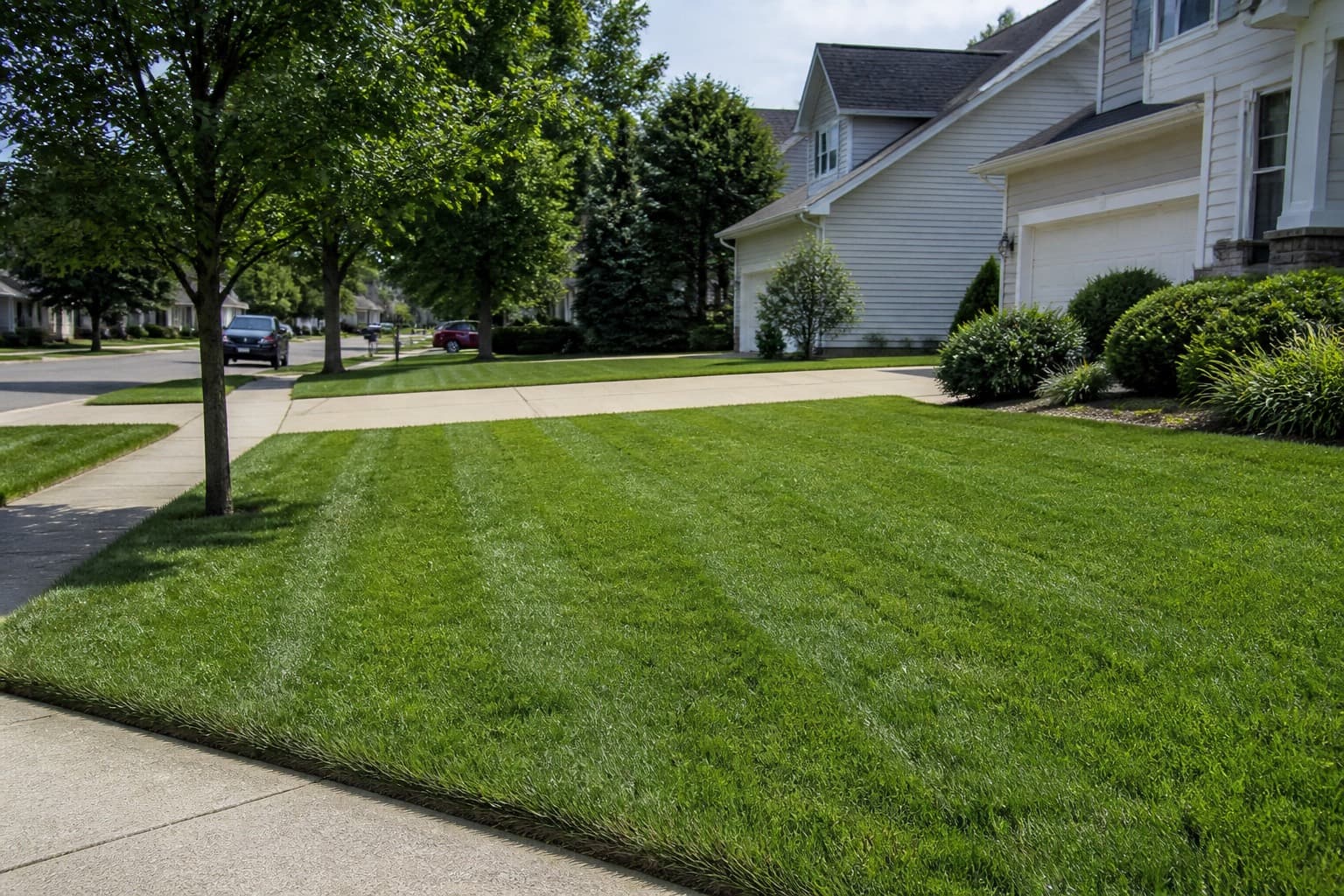
The anatomy of a strong lawn care quote
1. Quote details, customer, and property
Include your business name and contact details, a quote number, issue date, customer name, and service address. Give each property its own scope and price when a customer has multiple locations. A CRM for customers and properties can keep those records separate.
2. Scope in plain language
Write observable tasks:
Mow maintained turf areas, trim accessible grass around fixed obstacles, edge paved walks and driveway, and blow loose clippings from paved surfaces.
Be cautious about broad phrases such as “full lawn care,” “complete cleanup,” or “as needed.” If a result depends on property condition, weather, customer maintenance, irrigation, or plant health, describe the work you control rather than guaranteeing an outcome.
3. Frequency and schedule window
State whether the work is weekly, every other week, monthly, seasonal, or one-time. Explain whether the quoted price is per visit, per month, or for the entire project. For recurring plans, also explain how weather delays, holidays, growth conditions, and skipped visits are handled. Avoid promising an exact day unless you can consistently meet it.
4. Price presentation
Show the base service, optional work, and the unit for every amount. State whether tax is included, added, or not applicable based on your tax setup. If you use different lawful prices or fees by payment method, disclose them before acceptance and make sure they comply with card-network rules and applicable law.
Build your amount from a consistent pricing method, the hourly rate calculator, or a documented lot-size quoting system—not a guess made at the curb.
5. Assumptions and exclusions
An exclusion is clearer when paired with what happens next. For example:
- The price assumes unlocked access and a secured pet; a return trip may require approval and an additional charge.
- Routine mowing excludes leaf removal, hauling, bed weeding, shrub work, and storm debris unless listed.
- The recurring price assumes the lawn is already at a maintainable height; an initial cut or cleanup requires separate approval.
- The quote assumes visible, accessible conditions; concealed utilities, irrigation components, unstable ground, hazardous material, and unknown site conditions are excluded.
- Work outside the listed scope requires a written change order or a separate quote.
Do not use exclusions to avoid ordinary care or responsibilities imposed by law. Tailor them to the actual service and property.
6. Start window, validity, and cancellation
Give a realistic start window and an expiration date. Price validity protects both parties when fuel, disposal, labor, material, or property conditions change. If the customer accepts after expiration, reconfirm the price and schedule in writing.
For recurring service, explain how either party can cancel, how much notice is required, what happens to work already completed, and whether any lawful, clearly disclosed cancellation charge applies. Project cancellation terms should address ordered materials, mobilization, deposits, and completed work. Do not copy a cancellation policy without checking local consumer rules.
7. Acceptance and electronic signature
Provide one clear acceptance method: sign electronically, click “accept,” or return a signed copy. A casual reply such as “looks good” can be ambiguous, so ask the customer to accept the identified quote and terms.
Electronic signatures and records are commonly used, but requirements and exceptions vary. Keep a time-stamped copy of the exact quote and terms accepted, provide the customer a downloadable copy, and obtain legal review for your jurisdiction and type of work.
8. Payment terms and authorization
State when invoices are sent, when payment is due, accepted methods, deposits, late-payment terms, and what happens if an account becomes overdue.
Permission to perform work is not necessarily permission to charge a card or bank account. For auto-pay or stored payment methods, obtain a separate, clear authorization that states the amount or method for determining it, timing or frequency, cancellation process, and how the customer receives receipts. Use a compliant payment provider; do not place full card or bank details in a quote, email, or property note.
9. Tax and legal review
Sales-tax treatment for lawn care, materials, hauling, and related services varies by location. Configure tax based on current guidance from your tax professional or revenue authority, and show the customer how tax will be handled.
A quote can create legal obligations when accepted. Recurring agreements, auto-renewal, cancellation, deposits, financing, commercial work, pesticide applications, and high-value projects deserve particular care. Have a qualified local attorney review your standard quote and service terms. This article is operational guidance, not legal or tax advice.
For billing workflow ideas, see lawn care invoicing and payment cadence.
A copy-ready quote structure
Use this outline in quote software, an accessible PDF, or a well-formatted email:
- Header: Business name, contact details, issue date, and quote number
- Prepared for: Customer and property address
- Service package: Name and plain-language scope
- Frequency and timing: Weekly, every other week, or one-time, plus the service window
- Price: Base amount, unit, optional items, applicable tax, and total
- Assumptions and exclusions: Short, property-specific list
- Changes: Written approval process for added work or changed conditions
- Start and access: Start window, gate instructions, pets, parking, or water access
- Payment: Deposit, invoice timing, due date, methods, and separate auto-pay authorization if used
- Cancellation: Notice and responsibility for completed work or committed costs
- Validity: The date the quote expires
- Acceptance: Signature or explicit electronic acceptance of the quote and linked terms
Sample residential lawn mowing quote
The numbers below are illustrative. Replace them with amounts produced by your own costs, production rates, and market.
| Quote item | Example wording |
|---|---|
| Property | 412 Oak Street |
| Recurring scope | Mow maintained turf, trim accessible edges around fixed obstacles, edge paved walks and driveway, and blow loose clippings from paved areas |
| Frequency | Every other week during the agreed service season |
| Price | $72 per completed visit, plus applicable tax |
| Optional first visit | Initial cut and debris pickup: $95, only if approved |
| Exclusions | Bed weeding, shrub pruning, leaf removal, hauling, bagging, storm debris, and areas blocked by locked gates or unsecured pets |
| Scheduling | Expected Tuesday–Thursday route window; weather may shift service |
| Changes | Added work or materially different site conditions require written price approval before work proceeds |
| Payment | Invoice after service; due within 7 days. Any recurring payment authorization is completed separately |
| Cancellation | Either party may end recurring service with written notice; completed work remains payable |
| Valid through | October 14, 2026 |
| Acceptance | Electronically sign or select “Accept” for Quote Q-1042 and its attached service terms |
This version lets the customer compare scope as well as price. “Mowing: $72” does not.
Templates beat improvisation
Create reusable packages for:
- Core mow package in weekly and every-other-week versions
- Initial cleanup
- Seasonal leaf or storm add-on
- Small commercial or HOA property
Then customize the conditions, exclusions, schedule, and price for the property. Templates improve consistency, but they should not override what you observed.
Package library checklist
| Template | Details to define |
|---|---|
| Weekly mowing | Turf areas, edging, cleanup, service window, exclusions |
| Every-other-week mowing | Growth assumptions, handling of excessive height, price |
| Initial cleanup | Labor or quantity assumptions, debris, hauling, disposal |
| Beds or shrub care | Tasks, frequency, material responsibility |
| Commercial maintenance | Per-site scope, service calendar, reporting, insurance, invoicing |
Site visit checklist
- Address and property boundaries
- Access, gates, parking, and route from truck to work
- Obstacles, slope, and equipment clearance
- Soft, wet, eroded, or unsafe areas
- Pets, waste, toys, and play equipment
- Turf height, debris, leaves, and existing damage
- Beds, shrubs, or trees if included
- HOA or site restrictions the customer provides
- Irrigation heads, utility markers, lighting, edging, and decorative rock
- Noise, timing, or equipment restrictions
Take photos with permission and follow applicable privacy rules. Store relevant findings as property notes so the crew sees the conditions behind the quote. Avoid recording gate codes or sensitive access information in unsecured documents.
When photos and maps are enough
Remote quoting may be reasonable when:
- Measurements and images are current and show all work areas
- The customer answers condition and access questions
- The scope is simple and your assumptions are written
- You reserve the right to propose a change before starting if actual conditions materially differ
Maps and public imagery can be outdated or obscure slope, gates, fences, and backyard conditions. Confirm the address, included areas, pets, and access in writing.
Follow-up without being pushy
- Send the quote
- Send one reminder after two or three business days
- Send a final note near the validity date
- Close the lead as won, lost, declined, or no response
Record reasons when customers volunteer them, but do not pressure them for an explanation. Over time, the pattern may reveal unclear packages, slow response, unavailable timing, or pricing that needs review.
Follow-up message patterns
- First reminder: “I wanted to confirm that you received Quote Q-1042 for 412 Oak Street. I’m happy to answer questions about the scope or frequency.”
- Before expiration: “Quote Q-1042 is valid through October 14. Let me know if you would like to accept it or request a revised option.”
- After acceptance: “Thank you. We received your acceptance and will confirm the start window, access notes, and billing setup next.”
Turning quotes into scheduled work
Acceptance is the start of the handoff, not permission to improvise. Confirm any required deposit or payment authorization, then turn the accepted quote into the customer, property, and job or recurring plan. Integrated lawn care software can reduce retyping.
Common handoff failures include:
- A quote accepted in email but never added to the route
- A price on the calendar that does not match the quote
- Bed work sold monthly but never scheduled
- Initial cleanup discussed but never approved
- Crew notes that omit an exclusion or access requirement
- Auto-pay enabled without clear authorization
Use this conversion checklist:
- Verify the accepted quote version and acceptance record
- Create or update the customer and property
- Save necessary site notes and photos with appropriate access controls
- Create the recurring plan or one-time job at the accepted price
- Confirm the service window and customer responsibilities
- Set up invoicing and obtain separate payment authorization if needed
- Give the crew the scope, exclusions, and approved changes
Related ops reading: lawn care scheduling software.
Change orders: handle surprises before doing the work
If the customer asks for extra work—or the site differs materially from the stated assumptions—pause when it is safe to do so. Send a written change order that identifies:
- The added or revised scope
- The price or pricing method
- Any tax, material, or disposal cost
- The schedule impact
- The customer's approval
For urgent safety work, your attorney-reviewed terms should define who may authorize it and any spending limit. Do not rely on a crew member's memory of a driveway conversation.
Make the quote accessible
A customer should be able to read, understand, and accept the quote using the technology they rely on.
- Use descriptive headings, short paragraphs, and plain language
- Keep text readable and maintain sufficient color contrast
- Do not use color alone to identify required fields, included work, or status
- Give images meaningful alternative text when they convey information
- Use real text and a logical reading order in PDFs instead of a photo or flattened scan
- Label form fields and make acceptance possible by keyboard
- Provide a downloadable copy that works with screen readers
- Offer a reasonable alternative format or acceptance method when requested
Test the customer-facing flow on a phone and with keyboard navigation. Accessibility requirements vary, so seek qualified guidance for the laws and standards that apply to your business.
Mistakes that create weak or risky quotes
- A low number with no defined scope
- No distinction between weekly and every-other-week service
- An initial cleanup hidden inside the recurring price
- Guaranteed outcomes the contractor cannot control
- Fees, tax, or payment timing disclosed only after acceptance
- A vague “extras as needed” clause with no approval process
- Auto-pay language buried in general terms
- No quote expiration or cancellation process
- An inaccessible image-only PDF
- Legal terms copied from another company or state
Commercial quotes need extra clarity
For HOAs, offices, and multi-site clients:
- Use one scope and price section per property or unit type
- Define the service calendar, reporting, and weather process
- Confirm insurance, vendor onboarding, purchase-order, and invoice requirements
- Name the people authorized to approve change orders
- Address storm work, extras, and material markups
- Tie the start date to written acceptance and onboarding completion
- Have counsel review indemnity, insurance, renewal, termination, and dispute terms
See commercial vs residential lawn care ops for broader differences.
Quote metrics worth tracking monthly
| Metric | Why track it |
|---|---|
| Median time to send | Shows whether leads wait too long |
| Acceptance rate by service | Helps compare packages and lead quality |
| Voluntary loss reasons | Identifies recurring objections |
| Estimated margin on accepted work | Checks whether sold work supports the business |
| Quote-to-schedule time | Reveals handoff delays |
| Change-order frequency | Flags weak scopes or inspections |
Start with a status, sent date, accepted date, and optional reason. Use the data as a prompt to investigate—not proof that one wording or price caused the result.
Handling price objections
When a customer asks for a lower price:
- Change scope visibly: Remove a service or offer a different frequency instead of quietly discounting the same work.
- Keep initial work separate: Price an overgrown first cut or cleanup on its actual condition.
- Write the alternatives: Present Option A and Option B with their respective scope and price.
- Document approved exceptions: Add a reason and expiration where appropriate.
- Decline respectfully: If the requested scope cannot work at the budget, say so clearly.
Do not assume every route-dense property deserves a discount. Confirm that any adjustment still covers labor, equipment, overhead, risk, and profit.
In MowProHQ
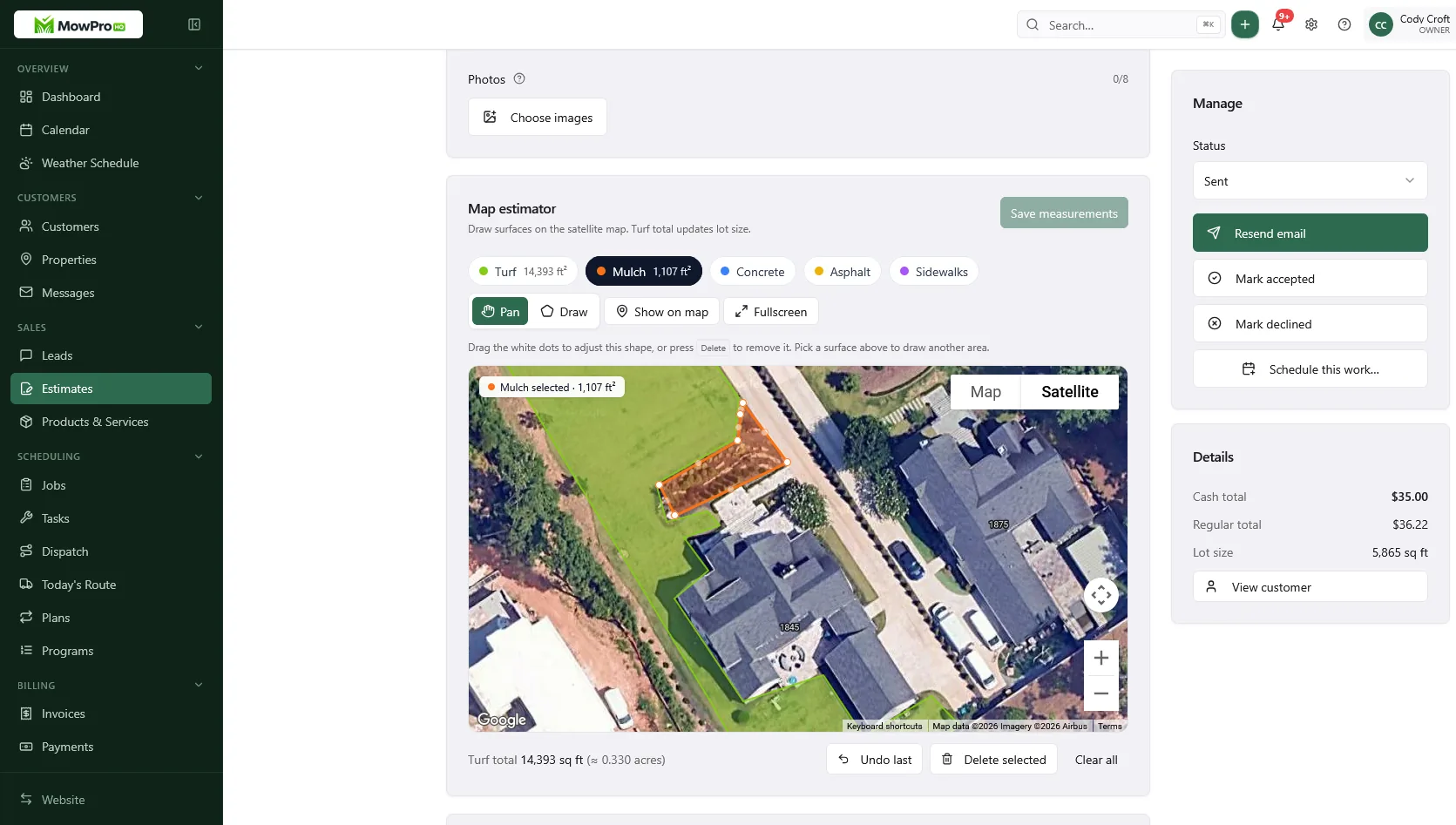
How MowProHQ helps quoting
MowProHQ helps connect estimates with customer, property, scheduling, and invoicing records so teams can carry an accepted scope into operations. Review current options on the pricing page, or sign up when you are ready to try the workflow.
A strong lawn care quote is easy to understand and realistic to deliver. Define the work, surface the exceptions, get clear acceptance, and carry the same details into the schedule and invoice.
Frequently asked questions
- How do you write a lawn care quote?
- Confirm the customer and property, describe the included work, state the frequency and price, list assumptions and exclusions, and explain acceptance, payment, and scheduling. Add terms for quote validity, changes, and cancellation where appropriate.
- What should be included in a mowing estimate?
- Include the service address, mowing scope, frequency, price, taxes or fees if applicable, access assumptions, exclusions, service window, payment terms, quote expiration date, and a clear way to accept.
- How fast should I respond to a quote request?
- Respond as soon as you can provide an accurate quote. For a straightforward property, that may be the same or next business day. If you need a site visit, acknowledge the request and give a realistic date for the inspection and written quote.
- Should every lawn get a site visit before quoting?
- No. Recent photos, measurements, maps, and reliable property details may be enough for straightforward work. Inspect in person when slope, access, condition, debris, safety, or a complex commercial scope could materially affect labor or equipment.
- How do I follow up on unanswered quotes?
- Use a simple, respectful cadence, such as one reminder after two or three business days and a final note near the quote's expiration date. Then close the lead and record the outcome.
- How do quotes connect to scheduling and invoicing?
- After acceptance, confirm the customer, property, scope, price, start window, and billing setup before creating the job or recurring plan. Keeping the accepted quote attached to the work record reduces retyping and scope mistakes.
- Is an accepted lawn care quote a contract?
- It may create contractual obligations depending on its wording, acceptance method, and local law. A quote is not a substitute for legal advice. Have a qualified local attorney review your quote and service terms, especially for recurring, commercial, high-value, or auto-pay work.