MowProHQ Blog/Recurring Revenue
Recurring Mowing Plans and Subscriptions That Stick
Design weekly and biweekly mowing plans customers keep - clear scope, pause rules, billing that matches visits, and ops that survive rain.

A recurring mowing plan is an ongoing weekly or biweekly service agreement with clear scope, price, and pause/weather rules - so the yard stays on your calendar and your route stays dense. One-off cleanups pay today’s fuel; plans pay the note on the truck. The operators who sleep better in July are the ones whose calendar is mostly plans, not hope.
If you are choosing between chasing cleanups and building a book of recurring stops, choose plans - then write them tightly enough that they do not become weekly arguments.
Why recurring plans win
- Predictable weekly density for routes
- Less quoting overhead per dollar earned
- Higher lifetime value per customer
- Easier staffing because demand is visible ahead of the week
- Cleaner handoffs when a helper or second truck joins
The catch: a sloppy plan becomes a weekly argument about what was included. Ambiguity is more expensive than a slightly higher published price.

Design packages customers understand
Keep three clear tiers when you can:
- Mow + edge + blow (core)
- Core + beds touch-up
- Premium with seasonal extras defined in writing
Ambiguous “full service” packages create unpaid expectations. Write scope the way you would in a winning quote - lot size, inclusions, exclusions, and what costs extra. Lot-based quoting helps keep similar yards consistent - see lot-size quoting.
Scope table that prevents “I thought that was included”
| Item | Core plan | Not included (example) |
|---|---|---|
| Mow turf areas | Yes | Tall weed lots / first cleanup |
| Edge walks/drive | Yes | Flower bed redesign |
| Blow hard surfaces | Yes | Leaf packages in fall unless listed |
| Bed weed touch-up | Tier 2+ | Full bed installs |
| Shrub trimming | Only if listed | Hedge restoration |
Publish the table. Train crews on the table. Invoice from the table.
Converting one-off cleanups into plans
Many of your best recurring accounts start as a rescue mow. Convert on purpose:
- Finish the cleanup to a clear standard and price it as a one-time job
- Show the weekly or biweekly plan price while the contrast is obvious
- Put start date, frequency, and scope in writing before the next visit
- Schedule the first plan visit while you are still on site or same day
- Confirm access notes so the second visit is not a scavenger hunt
Do not soft-promise “we can just keep coming.” Soft promises become unpaid assumptions. The conversion pitch is simple: predictable yard, predictable day window, predictable invoice - cheaper drama than calling for a cleanup every time it gets away.
Weekly vs biweekly: set expectations
Tell customers what changes with frequency:
- Clippings and growth between visits
- Time on site (biweekly is often slower, not cheaper per minute)
- How you handle a missed week after rain
- When frequency should change mid-season (spring stretch vs summer)
Biweekly customers often need a higher per-visit price even if monthly totals look similar - your pricing framework should reflect time, not only calendar math.
Worked example: weekly vs biweekly math
A yard takes 35 minutes weekly. On biweekly in peak growth it takes 55 minutes and leaves more scrap. Charging “half of weekly” for biweekly underprices the visit. A cleaner approach: price the biweekly visit for the longer stop, then show monthly totals honestly so the customer can choose.
Rules that keep plans from rotting
Put these in writing before the first invoice:
- Pause policy (vacation holds, how far ahead to request, whether a makeup visit is automatic)
- Weather make-up window (what “next available” means)
- Early/late start in shoulder seasons
- Price review date each year
- Access requirements (gates unlocked, pets secured, cars moved when possible)
- Skip vs cancel language so a pause does not silently become churn
When the policy lives only in your head, every exception becomes a custom CRM of texts. Put the decision on the property record where the crew and office can see it.
Pause policy that customers respect
- Request pauses at least X days ahead (pick a number you can honor)
- State whether billing pauses immediately or after the next completed visit
- State how restart works (same route day vs next open slot)
- Cap open-ended pauses if you need the slot for a waitlist
Billing that matches the plan
Options that work:
- Invoice per visit after completion
- Weekly or monthly subscription billing with clear visit credits
- Autopay for stable accounts
- Dual cash/card pricing when you want the rate difference visible on the invoice
Whatever you choose, invoice quickly and keep balances visible - see lawn care invoicing and cash vs card pricing.
Billing checklist for recurring accounts
- Plan scope matches what the crew is doing
- Frequency on the plan matches the route
- Pauses skip due visits without deleting history
- Weather moves do not create double invoices
- Price changes have an effective date and a note on the customer/property
Ops: plans need software, not sticky notes
A recurring plan should:
- Generate the right due visits
- Skip cleanly for pauses and weather
- Keep history on the property
- Feed dispatch without retyping
- Hand a clean list to crews
That is core scheduling software territory. Sticky notes cannot tell you which biweeklies are due after a rain week and a vacation hold in the same neighborhood.
Growing plans without breaking service
When you add too many accounts in a new zip code, density dies. Grow by:
- Filling existing route pockets first
- Raising prices before overextending
- Hiring and training before the calendar bursts
- Declining far one-offs that poison tomorrow’s board
Crew capacity planning pairs with crew scheduling and spring rush scheduling.
Growth filter for new recurring leads
| Question | If “no,” reconsider |
|---|---|
| Does this address sit near existing stops? | Far lead tax |
| Is scope clear enough to train a helper? | Quality risk |
| Can you absorb them after the next rain week? | Overbook risk |
| Is price reviewed for today’s costs? | Margin risk |
Seasonal extras without wrecking the base plan
Leaf cleanup, aeration, and spring cleanups should usually sit beside the mowing plan - not hide inside a vague “full service” promise. Sell them as dated add-ons or seasonal packages with their own scope. That keeps summer mowing priced for summer work and prevents October from becoming unpaid overtime wrapped in goodwill.
Shoulder-season playbook
- Announce early/late start rules before the first awkward week
- Offer frequency changes (weekly → biweekly) with a written price
- Keep high-value commercial and HOA plans prioritized when days shorten
- Pause cleanly instead of ghosting a customer until March
- Review prices before spring rush, not during it
Customers tolerate seasonal changes when they hear them early. They cancel when the first cold week feels like a no-show.
Metrics that tell you plans are healthy
Track a short list monthly in season:
- Active recurring properties (and net adds/churn)
- Average revenue per active plan
- Visits completed vs visits due
- Pause rate and average pause length
- Cancellations with a one-line reason code
- Unbilled completed visits (should stay near zero)
If active plans rise while completed-vs-due falls, you sold capacity you do not have. If churn spikes after rain weeks, your make-up communication is the product problem - not your mower deck.
Saving at-risk subscriptions
Customers cancel when:
- Quality slips
- Communication is silent after misses
- Billing surprises them
- The yard looks worse than DIY week
- Access problems turn into no-shows without a call
Win them back with consistent service windows, proactive weather texts, and a clean invoice trail - not a desperate discount spiral. A small recovery playbook beats a permanent 20% coupon. Most “price” cancellations are really trust cancellations wearing a cheaper excuse.
At-risk save sequence
- Acknowledge the miss or complaint the same day
- Fix the yard on a defined window
- Log the resolution on the property
- Confirm the ongoing plan scope so the argument does not repeat
- Only discount if you are buying time to restore trust - not as a habit
If the same property triggers two complaints in a month, treat it as a standards and note problem - not a coupon problem. Ride the next visit, rewrite the property notes, and make sure the crew running it sees the updated standard before wheels roll.
In MowProHQ
How MowProHQ supports recurring work
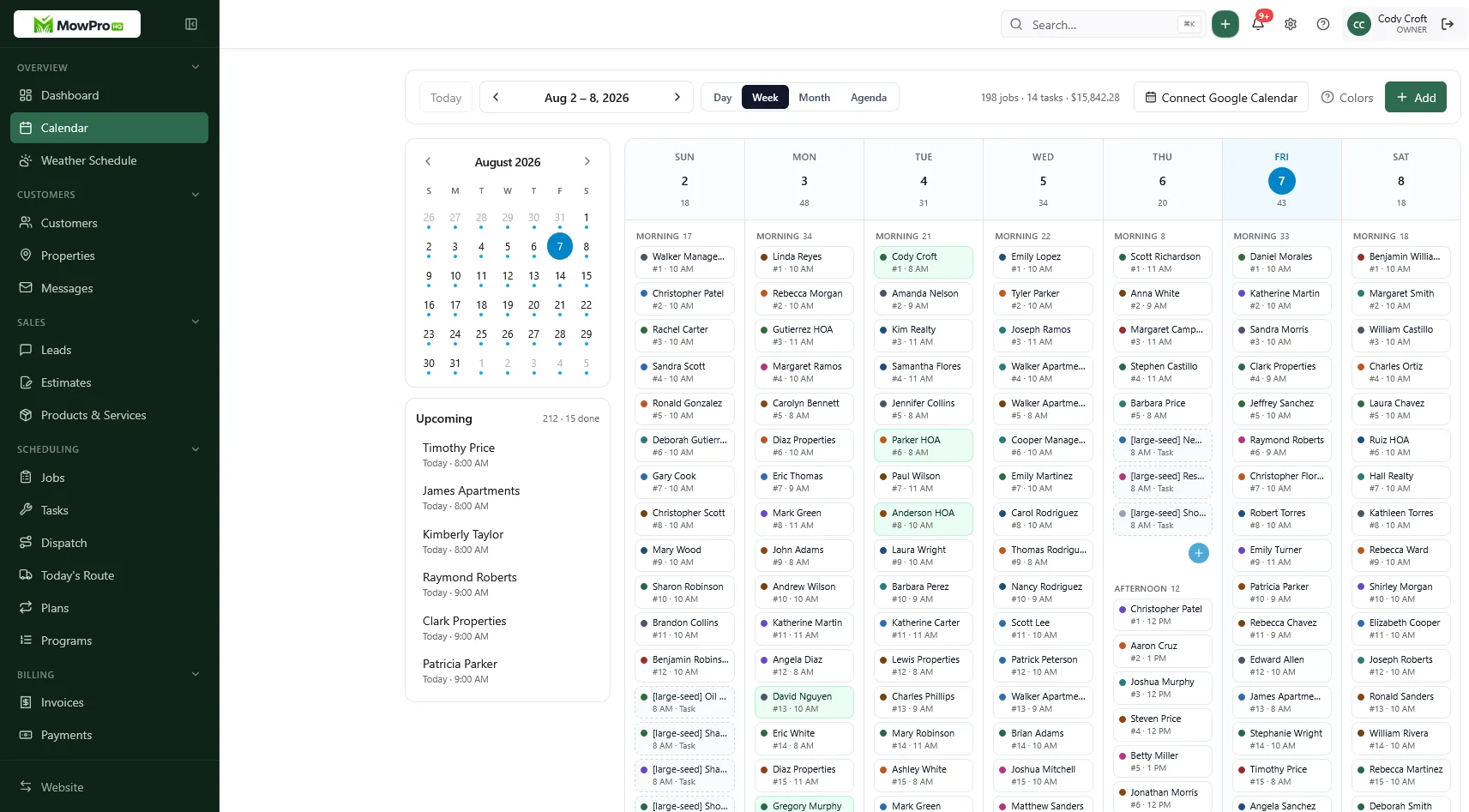
MowProHQ treats recurring services as first-class plans alongside customers, properties, quotes, and invoices - so you are not rebuilding next week from memory. Core scheduling, customers, quotes, and invoices stay free with no seat fees; property notes, lot-size quoting, and dual cash/card pricing on invoices support how plans are sold and billed. Growth and Pro unlock advanced modules when volume demands them (Free card processing 4% + $0.30; Premium card rate 3.5% + $0.30 on Growth/Pro).
Subscriptions stick when the yard looks right and the paperwork is boring. Make boring your competitive advantage - and sign up if you want plans, properties, and invoices in one place instead of three notebooks.
Frequently asked questions
- What is a recurring mowing plan?
- A recurring mowing plan is an ongoing service agreement - usually weekly or biweekly - with defined scope, visit frequency, pricing, and rules for pauses and weather make-ups. Unlike one-off cleanups, the plan keeps the customer on your calendar until they pause or cancel.
- Is weekly or biweekly lawn service better for the business?
- Weekly usually builds denser routes and steadier cash flow; biweekly can work with higher per-visit pricing and clear growth expectations. Choose by yard growth rate, customer budget, and whether your routes stay dense. Ambiguous frequency is what creates weekly arguments.
- How should lawn care companies bill recurring plans?
- Common options are invoice-per-visit after completion, weekly or monthly subscription billing with clear visit credits, and autopay for stable accounts. Whatever you choose, bill quickly, keep balances visible, and write pause and make-up rules so surprises do not become cancellations.
- What policies keep mowing subscriptions from turning into disputes?
- Put pause rules, weather make-up windows, shoulder-season start and stop dates, annual price review timing, and access requirements in writing. When policy lives only in your head, every exception becomes a custom text thread that the next crew cannot see.
- Why do lawn care customers cancel recurring service?
- Most cancel when quality slips, communication goes silent after misses, billing surprises them, or the yard looks worse than DIY. Consistency, proactive weather updates, and a clean invoice trail retain more accounts than discount spirals.
- How do recurring plans help with routing and staffing?
- Plans create predictable weekly density, reduce quoting overhead per dollar earned, and make demand visible for hiring. The catch is operational: the plan must generate due visits, skip cleanly, and keep history on the property - not on sticky notes.
- Should biweekly customers pay less per month than weekly?
- Not automatically. Biweekly visits often take longer because growth is heavier, so per-visit price is usually higher even when monthly totals look similar. Price time on site and scrap volume, not only calendar math.