MowProHQ Blog/Operations
One-Time Construction Cleans vs Recurring Window Routes
How to price, schedule, and invoice post-construction window cleaning separately from recurring residential and storefront routes.
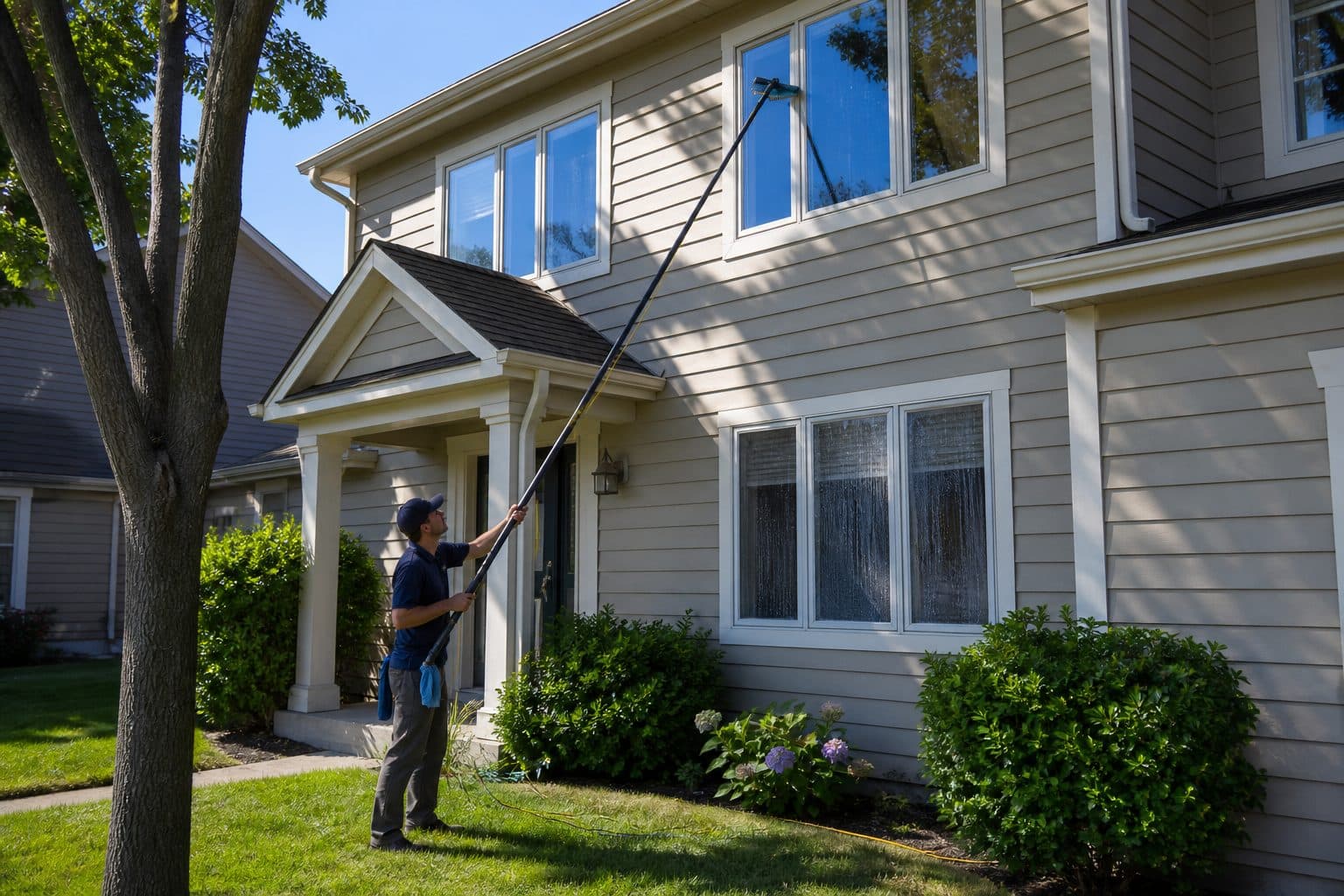
Post-construction window cleaning is different from recurring maintenance. Stickers, paint overspray, plaster dust, unfinished trades, and uncertain access create a project scope that should not be priced or scheduled like a routine exterior visit.
This guide explains when construction work fits, how to define the scope and return visits, and how to protect recurring residential and storefront schedules.
They are different products
A recurring visit assumes you will be back. You invest in door codes and pane notes, a day pattern, and a package price. The glass is maintenance soil: pollen, fingerprints, dust.
A construction visit assumes the house is still a job site. You have to quote openings you cannot fully see, fight film and silicone, and maybe return when the painter is done. That overhead belongs in the number.
| Factor | Recurring route | Construction clean |
|---|---|---|
| Soil | Pollen, dust, fingerprints | Stickers, paint, plaster, tape, silicone |
| Quoting | Known property | Cold walk or photos that lie |
| Visits | Cadence you sold | Often rough + final |
| Route fit | Designed pocket | Often a far spec house |
| Who pays | Customer on file | Builder, buyer, or “the other guy” |
| Callback risk | Streak on a known pane | They painted after you left |
| Lifetime value | The book | This check — unless you convert |
Interior versus exterior still matters. Construction interiors are worse: sawdust on sills, no furniture path, and rooms that were “done” until the punch list moved.
When construction work helps
Take it when it serves the company, not when you are afraid of a quiet Thursday.
Helpful construction:
- A final clean that converts to a quarterly on the same address
- A builder you already have terms with, inside your service area
- Off-peak fill at a project rate that clears target revenue per hour
- A storefront remodel on a pad you already wash weekly — priced as extra soil, not as the weekly
These jobs should still clear your floor after windshield and a possible return visit. Water-fed speed on a finished house does not apply to film and paint.
Capacity slot table
| Board state | Construction policy |
|---|---|
| Dense storefront dawn + full residential pocket | No, or a final you already blocked |
| Open afternoon in core zone | Yes, at project rates |
| Edge of map, no cluster | Trip fee or decline |
| Crew already in overtime | Routes first |
Spring and closing season are when punch-list demand explodes. Protect the storefront mornings and home pockets that already pay you. New spec houses are projects you schedule, not surprises you squeeze between cafes.
When construction wrecks the book
The damage is not one extra house. It is a week of spec addresses in the wrong places.
It wrecks the route when:
- The house is 25 minutes off the pocket and never becomes a quarterly
- You give them the monthly exterior number “to win the builder”
- A rough clean lands on your best storefront dawn
- They paint after the final and expect a free third visit
- You say yes from a text photo that hid the grids and the third story
Tag construction as a different color or job type. If it looks like just another stop, it will be sequenced like one — and you will drive across town for a stranger while a cafe opens dirty.
Empty miles are unpaid labor. Random punch lists are how empty miles return after you thought you solved them.
Price construction like a project
A simple rule: construction visit ≥ recurring exterior × 1.5–3.0, plus a second-visit line if the site is still live, plus trip fee if needed.
Why the premium is fair:
- You may not recover the walkthrough
- Soil is slower than pollen
- Stickers and paint are not water-fed minutes
- No residual unless you convert
- Callback risk if other trades keep working
- Who-pays risk is real
Do not give a builder the loyal quarterly rate. Loyalty is earned by staying on the plan.
Illustrative comparison (two-story, ~36 openings)
| Offer | Price logic (example) | What they bought |
|---|---|---|
| Quarterly exterior, water-fed | $165 | Known house, route density |
| Quarterly interior + exterior | $280 | Occupied-home product |
| Construction final, house empty, paint done | $420–$550 | One project visit, sticker and paint time |
| Construction rough + final | Two project invoices | Return written on the quote |
| Construction + grids / third story | Custom | Walk it; do not guess |
Show Regular vs Cash the same as always. Invoice the project immediately — builders disappear after closing. Your receivables should not.
Write the soil and the return rule
A construction quote that says “clean all windows” will lose. Write:
- Openings / panes as you count them
- Interiors, exteriors, screens, tracks — each a line
- Stickers, paint, plaster, tape included or excluded
- Skylights and glass railings
- Visit count (rough, final)
- What happens if they paint after the final
- Who pays, and when
If two estimators produce very different prices for the same property, define the soil, access, and visit assumptions more clearly.
Schedule them off the route clock
Recurring glass has clocks: storefronts before open, homes in mid-morning pockets. Construction has a different clock: site access, other trades, and a closing date someone promised a Realtor.
Do:
- Block project time on a day that is not the dawn strip
- Confirm the site is actually ready (paint dry, film off, water on)
- Send two people if the note says grids and three stories
- Leave a gap for the return visit you already sold
Do not:
- Weave a spec house into a cafe sequence
- Send a water-fed-only tech to a silicone-and-sticker interior
- Promise “Friday before photos” by stealing a plan neighborhood
- Start before the responsible payer is confirmed
Far construction leads need the same trip rule as far homes: premium, batch, or decline.
Invoice the project and the plan as two things
Same-day send on the construction invoice. Dual Regular vs Cash if that is your policy. The billing name on the quote is the billing name on the invoice. If the builder says “bill the buyer,” get that in writing before the pole comes off the roof.
When you convert:
- Finish the project to the standard you sold
- Invoice the project in full
- Put quarterly or monthly options in writing
- Store codes and skipped panes on the property — the helper will need them
- Schedule visit one of the plan
- Do not say “we’ll just keep coming”
An informal promise to return creates an unclear recurring obligation without an agreed price or scope.
Conversion fails when the address is outside your area, the buyer is flipping the listing, or the only relationship is a builder who forbids you talking to the homeowner. Take the honest project check. Do not rebuild your week around a maybe.
Mix, metrics, and saying no
Track monthly:
- Percent of hours that are recurring vs construction
- Revenue per hour on each
- How many construction jobs converted within 30 days
- Miles per paying stop on project days vs route days
- Unpaid construction invoices older than 14 days
Even strong project revenue may not be worthwhile if it repeatedly delays recurring customers. Compare the full effect on travel, overtime, callbacks, and collections.
Mix that usually holds
| Mix | Typical feel | Risk |
|---|---|---|
| 80%+ route hours | Predictable schedule and repeat customers | Project capacity may be limited |
| 60/40 | Manageable if projects are local and blocked | Watch closing season |
| 50/50 or more project work | Frequent schedule changes | Recurring growth may stall |
When you hire, staff to the route book, not to last weekend’s spec-house spike. Software for a small crew should show which stops actually come back.
The builder, the Realtor, and the unlocked maybe
Real estate construction work looks like volume. It is often a revolving door.
Rules that keep it profitable:
- Quote the current soil, not last week’s listing photo
- Know who pays before you unload
- Require access in writing; a lockbox failure is not a free second trip
- Do not start an informal “until it sells” weekly at a construction discount
- If they want ongoing care after closing, sell a plan with a real cadence
Listings close. Supers change. Your invoice should not wait on either.
If the same spec address comes back every time the painter touches a sash, you do not have a one-time customer. You have an unofficial maintenance job that refused the plan. Requote or walk.
How MowProHQ keeps projects off the route price
MowProHQ keeps construction jobs and recurring plans attached to the same customer and property while preserving their separate scopes. Quotes, the schedule, and invoices carry those distinctions through the workflow.
Compare current plans and pricing or create an account to test project and recurring work on the same schedule.
Frequently asked questions
- What is the difference between a construction window clean and a recurring route?
- A construction clean is a project that may involve stickers, paint, plaster, tape residue, and multiple visits. Recurring service involves known panes, predictable maintenance soil, and an established cadence. They should have separate scopes, prices, and schedule blocks.
- Should I put construction window cleans on the regular route?
- Usually not. Schedule construction cleans in dedicated project blocks or available capacity so they do not delay recurring storefront or residential work. Label them clearly as projects.
- How should I price a post-construction window clean?
- Price from the number and type of openings, soil condition, access, debris removal, and likely visit count. Define sticker, paint, silicone, and plaster removal, and identify the responsible payer before work begins.
- How many visits does a construction window clean take?
- Many projects require a rough clean after dirty trades and a final clean before handover. Additional work may be needed if other trades soil the glass afterward. State the included visit count and return-work policy on the quote.
- How do I convert a construction clean into a recurring window route?
- Complete and invoice the construction scope first, then present written monthly or quarterly maintenance options. If the customer accepts, create the recurring plan with a clear scope, price, and first service date.
- Who pays for construction window cleaning — builder or homeowner?
- Confirm the responsible party before starting. Put the billing name, property, payment terms, and any purchase-order requirements on the quote. Do not begin while responsibility for payment is unclear.
- What mix of construction and recurring window work is healthy?
- There is no universal percentage. Track whether project work delays recurring customers, creates overtime, or produces weaker revenue after travel and callbacks. Keep construction work within capacity you can schedule deliberately.