MowProHQ Blog/Recurring Revenue
What a Lawn Mowing Service Should Include
Define a clear lawn mowing service scope, including mowing, trimming, edging, clippings, access, weather, safety, exclusions, and add-ons.
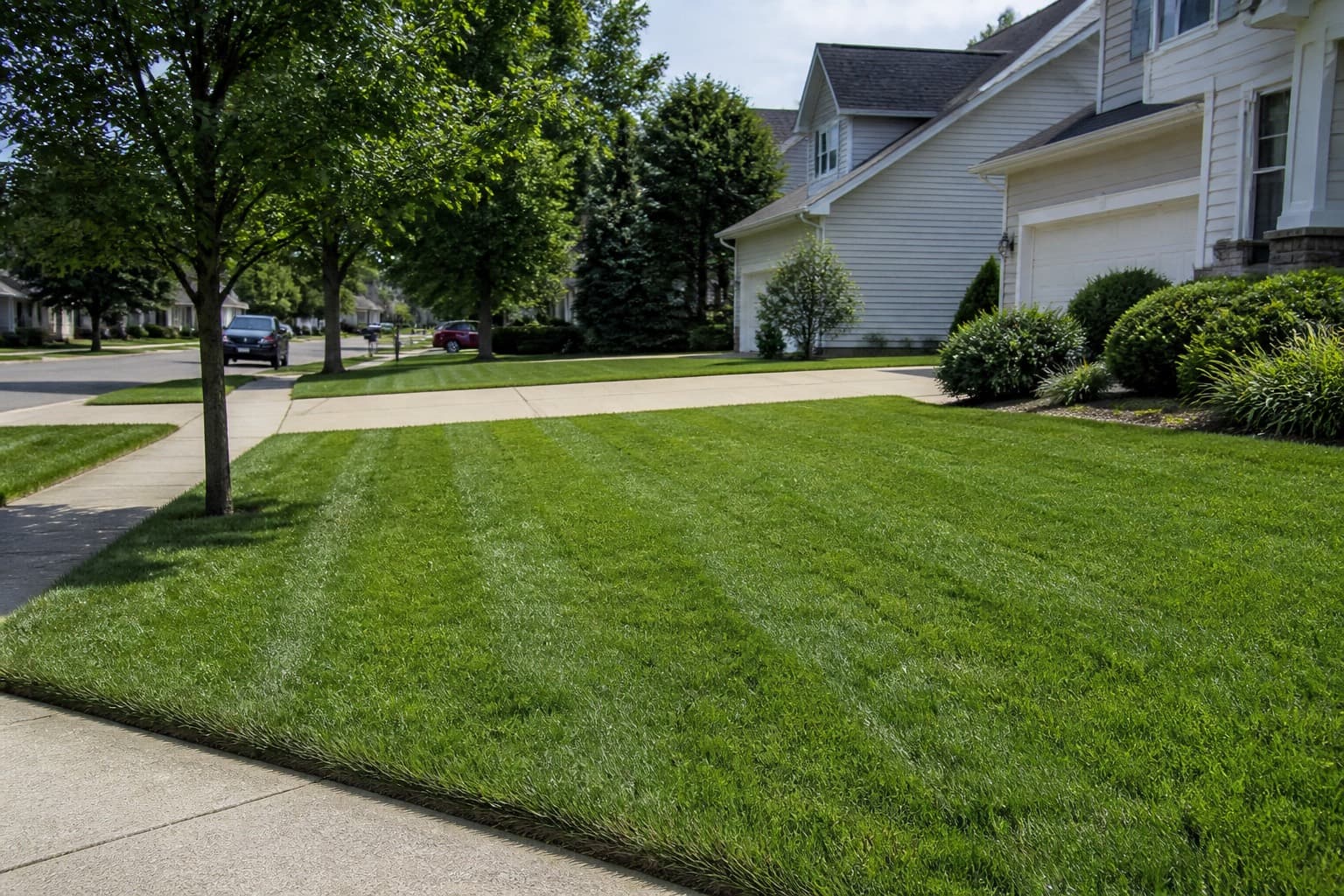
A lawn mowing service should be specific enough that the customer, office, and crew all picture the same finished property. “Mow the lawn” is too vague: it does not answer whether trimming, curb edging, bagging, pet-waste pickup, or a locked backyard is included.
The practical solution is a short core scope supported by a property map, exclusions, and a change-order process. Use the framework below in lawn care quotes, recurring mowing plans, and crew checklists.
A clear one-sentence mowing scope
Start with language like this, then adjust it to the property:
Mow the identified turf areas, trim grass the mower cannot safely reach, edge the listed hard surfaces, and clear loose mowing clippings from accessible hard surfaces, subject to the access, weather, and safety terms below.
That sentence avoids promising every kind of lawn or landscape work. The quote should also state the service frequency, approximate cutting-height policy, included zones, and whether clippings are mulched, discharged, collected, or hauled away.

What a basic lawn mowing service includes
There is no universal package, but a repeatable core service commonly covers:
| Task | A practical core scope | Details to write down |
|---|---|---|
| Mowing | Maintained, reachable turf in identified zones | Frequency, cutting-height policy, slopes, and equipment limits |
| Trimming | Grass around fixed objects and edges the mower cannot safely reach | Fences, foundations, posts, trees, and sensitive areas |
| Edging | Selected borders where turf meets a hard surface | Sidewalks, driveway, curb, and patio boundaries |
| Clipping cleanup | Loose mowing debris cleared from included hard surfaces | Which surfaces and where clippings may be directed |
| Closeout | Gate secured and obvious completion issues documented | Photos, notes, and customer notification if used |
The scope should match what the estimator saw. Store gate details, mowing zones, hazards, and finish notes with the property record; property notes are especially useful when a substitute crew runs the route.
Mowing and trimming boundaries
Define “lawn” by area, not by the customer’s address. A site sketch or labeled photo can distinguish front turf, side strips, fenced backyard, drainage areas, roadside banks, and neighboring property.
A standard mow generally covers maintained turf that the crew can reach and service safely with the planned equipment. It does not automatically include brush, ivy, volunteer saplings, unmanaged ditches, or grass that has grown beyond normal maintenance conditions. An overgrown property may need a separate first-cut cleanup.
Cutting height should be an operating policy rather than a promise to remove a fixed fraction of growth regardless of conditions. Turf type, season, recent rain, heat, and customer-requested frequency all affect what can be cut without avoidable scalping or clumping. Moving between weekly and biweekly mowing can materially change visit time and finish quality.
Obstacles and movable items
State what the crew will move. A sensible default is to work around items that are not already cleared rather than moving toys, hoses, furniture, trampolines, temporary pools, cords, or decorations. Small, obvious items may be moved as a courtesy only if that is company policy and they can be handled safely.
Crews should not trim blindly around utility markers, loose wire, hidden irrigation components, or objects concealed by tall grass. Document visible hazards before work begins and stop in the affected area when the safe course is unclear.
Edging: name the actual edges
“Edging included” can mean several different jobs. Identify the boundaries in the quote.
| Edge type | Typical treatment |
|---|---|
| Turf along sidewalks and driveways | Often included when specifically listed |
| Turf along a street curb | Include only where work can be performed safely and lawfully |
| Patio or other hardscape | Include if accessible and named in the scope |
| Landscape-bed edges and tree rings | Often an add-on or higher service tier |
| New trenches or badly overgrown edges | Quote as corrective or project work |
| Metal, plastic, stone, or other decorative borders | Define the tool and finish; do not assume |
Mechanical edging, string trimming, redefining a bed, and restoring a buried curb are not interchangeable. The agreement should say how often edges are maintained and what happens when corrective work is needed first.
Grass clippings: mulch, discharge, bag, or haul
Clipping handling is one of the most common scope gaps. Choose and document a method:
- Mulch or return clippings to the turf when conditions and equipment allow.
- Discharge onto the lawn without leaving unreasonable windrows or piles.
- Bag or collect only when included or approved as an add-on.
- Haul away only when disposal is part of the price and permitted locally.
Blow-off normally means clearing loose mowing clippings from the included sidewalks, drive, patio, porch, or other named hard surfaces. It does not mean a full leaf cleanup, storm-debris removal, or hauling pre-existing piles.
Never direct debris toward people, vehicles, windows, pools, neighboring property, storm drains, or traffic. Street and stormwater rules vary, and many places restrict leaving yard debris in gutters or roads. If haul-away is offered, include loading and dump-run time in the job scope.
Access, gates, pets, and blocked areas
The customer should provide safe access by the stated arrival window. The agreement should cover:
- Gate location, code, key, and latch instructions
- Minimum gate width or equipment-access needs
- Locked gates and failed codes
- Parked vehicles or materials blocking turf
- Pets secured indoors or in a separate closed area
- Pet waste, food bowls, leads, and invisible-fence warnings
- Permission requirements for tenants, HOAs, or shared areas
Do not rely on “the dog is friendly.” Loose animals can escape through an open gate, react to equipment, or place the crew at risk. If access is unsafe or unavailable, the policy should say whether the crew services only reachable areas, skips the visit, or offers a return trip. Also state whether the regular charge, a reduced charge, or a return-trip charge may apply.
Weather, site conditions, and schedule changes
A weather policy should protect the lawn as well as the route. Rain alone is not the only issue: saturated soil can rut, steep banks can become unsafe, and lightning, smoke, extreme heat, high wind, or poor visibility can make outdoor work unreasonable.
Explain that the provider may:
- Delay the visit or shift the route
- Use lighter equipment or omit an unsafe area
- Raise the cutting height when conditions warrant
- Return on the next practical service day
- Suspend service when repeated access or site conditions prevent safe work
Avoid guaranteeing an exact weather make-up day unless the operation can consistently meet it. If growth becomes excessive after a delay or customer-requested skip, document whether additional labor requires approval. Seasonal planning is easier with defined spring scheduling and end-of-season procedures.
What is not included unless listed
Put exclusions beside the included work—not in an unexpected invoice note.
| Usually separate from a basic mow | Why it needs its own scope |
|---|---|
| Overgrown or neglected first cut | Different labor, equipment, debris, and risk |
| Bagging, collection, or haul-away | Added handling and disposal |
| Leaf, storm, or event cleanup | Volume is unrelated to normal mowing |
| Bed weeding, mulching, or planting | Separate landscape work |
| Shrub, hedge, vine, or tree work | Different tools, training, and hazards |
| Pet-waste or substantial trash removal | Sanitation, handling, and time |
| Irrigation, fence, lighting, or hardscape repair | Repair work is not turf maintenance |
| Fertilizer, herbicide, pesticide, or growth regulator | Regulated treatment with separate requirements |
| Moving heavy or fragile property | Damage and injury risk |
| Inaccessible or unsafe areas | Cannot be completed responsibly |
Use add-on pricing for predictable extras and job pricing for corrective or unusual work.
Changes require approval before work
A request made at the curb is still a scope change. Before performing extra work, record:
- What the customer asked to add or change
- The affected area and expected result
- The added price or pricing method
- Any schedule impact
- Approval from an authorized person
For a small residential account, written approval may be a signed quote, portal acceptance, email, or text retained with the job. Commercial agreements may require a formal change order or purchase order. Do not assume that a tenant, neighbor, on-site employee, or crew member can authorize added charges.
Frequency changes are also change orders. Moving from weekly to biweekly service affects growth, clipping volume, and route planning; update the service and price instead of treating it as the same visit performed less often.
Damage, pre-existing conditions, and reporting
Photograph or note visible concerns before the first service: exposed irrigation heads, low wires, loose edging, cracked hardscape, fragile ornaments, drainage failures, and existing turf damage. The customer should identify hidden systems and recent installations that a reasonable inspection would not reveal.
The agreement should distinguish:
- Pre-existing or concealed conditions
- Normal effects disclosed in the service scope
- Damage caused by either party’s negligence or failure to follow access instructions
- Prompt notice, documentation, inspection, and resolution procedures
Do not use a blanket statement that the company is never responsible for damage. Responsibility and enforceability depend on the facts and local law. If an incident occurs, stop if needed, make the area safe, take photos, notify the office and customer, and preserve the record rather than debating fault on site.
Regulated treatments are separate services
Mowing does not authorize applying fertilizer, herbicide, insecticide, fungicide, or other regulated products. These services may trigger state or local licensing, supervision, notification, posting, label-compliance, storage, transport, application-record, and insurance requirements.
Use a separate treatment scope that identifies the service and legally required information. Follow the product label and applicable law; customer permission does not replace licensing or label requirements. Chemical work should appear on a crew checklist only when the company and assigned worker are authorized to perform it.
Safety can override the planned scope
The crew should have authority to pause or omit work when conditions create an unreasonable risk. Examples include people in the discharge zone, loose pets, active utility work, hidden debris, unstable slopes, standing water near electrical equipment, aggressive insects, or traffic exposure.
Set a few non-negotiable rules:
- Keep people and animals clear of operating equipment.
- Inspect the work area for visible hazards before mowing.
- Use guards and required protective equipment.
- Do not bypass equipment safety features to finish faster.
- Stop and report conditions outside the crew’s training or authorization.
- Follow local noise, traffic, debris, and work-hour rules.
Safety omissions should be documented with the affected area and next step. They should not be disguised as completed work.
Define completion and customer acceptance
“Done” should be observable. A basic visit may be complete when:
- Included turf has an even appearance without obvious missed strips
- Included trimming and edging match the written standard
- Loose clippings are cleared from named hard surfaces
- Gates are returned to the agreed position
- Skipped areas, damage concerns, or requested follow-up are documented
State how customers report a service concern and the time allowed for inspection. Give the provider a reasonable opportunity to inspect and correct verified incomplete work before a refund, credit, or third-party repair is considered. Avoid promising that silence waives rights where local consumer law says otherwise.
A job checklist helps crews apply the same acceptance standard at every visit. Photos are useful for unusual conditions, but they should support—not replace—a clear scope.
Residential and commercial scope need different detail
The work may still be mow, trim, edge, and blow, but larger or shared properties need more documentation. For commercial sites:
- Attach a map with turf, beds, parking islands, and excluded zones.
- Identify the person authorized to approve changes.
- Define litter pickup, dumping, and event debris separately.
- Record work-hour, noise, parking, and pedestrian restrictions.
- Coordinate gates, alarms, loading areas, and other vendors.
- Set reporting, inspection, invoicing, and purchase-order requirements.
See commercial versus residential lawn care operations for more differences. Keep the final map, approved changes, and site contacts in the customer and property record.
Check local contract requirements
Service-contract rules vary by state and municipality. Before adopting a template, check requirements that may apply to:
- Contractor, pesticide, fertilizer, or business licensing
- Consumer cancellation or auto-renewal disclosures
- Electronic signatures and recurring-payment authorization
- Sales tax and invoice wording
- Insurance, indemnity, and damage provisions
- Notice methods, late fees, collections, and termination
- Noise, yard-waste, stormwater, and right-of-way work
Use plain language and make the complete terms available before acceptance. For higher-value commercial agreements, regulated services, or uncertain local requirements, have a qualified local attorney or regulator review the form. This guide is operational guidance, not legal advice.
Keep the sold scope connected to the job
MowProHQ can keep property details, quotes, recurring work, crew notes, and invoices connected so the field team sees the scope the customer accepted. Put included work and add-ons on the job instead of relying on memory or separate text threads.
Review current options on pricing, or sign up when you are ready to set up your workflow.
A professional lawn mowing service includes the work both parties agreed to, performed where access and conditions allow. Write the boundaries clearly, document changes, and make the completion standard easy for customers and crews to recognize.
Frequently asked questions
- What should a basic lawn mowing service include?
- A clearly defined basic visit often includes mowing the agreed turf areas, trimming grass the mower cannot safely reach, edging the hard surfaces listed in the quote, and blowing loose clippings from accessible hard surfaces. The exact scope should be written into the quote or service agreement.
- Is edging included in lawn mowing?
- It depends on the package. Many companies include edging where turf meets sidewalks and driveways, while bed edges, tree rings, decorative borders, and newly cut edges are separate work. List each included edge instead of relying on the word edging alone.
- Does lawn mowing include bagging grass clippings?
- Not automatically. Clippings may be mulched or discharged back onto the lawn when conditions allow. Bagging, collection, and haul-away add labor and disposal volume, so they should be included only when the agreement says so.
- What is normally excluded from a mowing visit?
- Common exclusions include overgrown first cuts, leaf and storm cleanup, shrub or tree work, bed maintenance, moving heavy objects, pet-waste removal, chemical treatments, repairs, and areas the crew cannot safely access. Local practices vary, so the written agreement controls.
- What happens if a gate is locked or a pet is outside?
- The agreement should explain whether the accessible areas will be serviced, the visit will be skipped, or a return trip can be scheduled for an added charge. Customers should secure pets and provide working gate instructions before the arrival window.
- Can a mowing company apply weed killer or fertilizer during a visit?
- Only when that work is separately authorized and performed in compliance with applicable licensing, labeling, notification, storage, and recordkeeping rules. A mowing agreement should not imply that regulated treatments are included.
- How should weather delays be handled?
- Use a written weather policy covering delays, route shifts, unsafe heat or storms, saturated soil, and catch-up service. The provider should be allowed to postpone work when mowing could damage the property or put people at risk.