MowProHQ Blog/Pricing
How to Price Lawn Care Add-Ons
A practical guide to pricing leaf removal, aeration, bagging, cleanups, bed work, and shrub trimming without giving away labor.
Lawn care add-ons can improve a route's revenue, but only when the price covers the work. Bagging, leaf removal, aeration, bed weeding, and shrub trimming add time, equipment wear, materials, and disposal that a normal mowing price may not include.
The practical fix is a written rate card. Give each service a measurable unit, calculate its cost, and define exactly what the customer is buying. This guide complements how to price lawn care jobs, what a lawn mowing service includes, and how to write lawn care quotes.
Start with a repeatable pricing formula
Estimate the total cost of doing the add-on, then apply the gross margin your business needs.
Estimated cost = labor + payroll burden + materials + equipment + travel + disposal + allocated overhead
Price before tax = estimated cost ÷ (1 − target gross margin)
Margin and markup are not interchangeable. If estimated cost is $120 and the target gross margin is 40%, the calculation is:
$120 ÷ (1 − 0.40) = $200
Charging $168 would be a 40% markup on cost, but only a 28.6% gross margin. Use the hourly rate calculator to establish a labor and overhead baseline, then adjust it for the equipment and risk of each service.
Treat every dollar example in this article as illustrative. Local wages, dump fees, material costs, competition, taxes, and property conditions vary. Your own job history is more reliable than a national price range.
Build the add-on menu
Choose units that estimators can measure and crews can verify.
| Add-on | Useful pricing unit | Commonly missed cost | Scope limit to write down |
|---|---|---|---|
| Bagging | Per visit, bag, or cubic yard | Loading and disposal time | Included quantity |
| Haul-away | Per load or cubic yard | Drive and dump fees | Accepted material |
| Leaf removal | Minimum plus tier or crew-hour cap | Wet volume and return visits | Areas and number of visits |
| Bed weeding | Per bed, square foot, or capped crew-hour | Detailed handwork | Bed boundaries and time cap |
| Shrub trimming | Size band, linear foot, or crew-hour | Cleanup and disposal | Height, access, and plant count |
| Aeration | Serviceable square foot or lot band | Machine transport and turns | Reachable turf only |
| Overseeding | Square foot plus material | Seed quantity and calibration | Seed type and watering duty |
| Initial cleanup | Project or capped crew-hours | Blade wear and hidden debris | Defined tasks and debris volume |
| Extra travel | Zone or per trip | Nonproductive drive time | Area outside normal route |
An initial first cut is usually a project, not a normal mow. Likewise, a stop outside your service radius may need a trip charge or a higher minimum.
For recurring plans, state the cadence. "Monthly bed touch-up, up to 30 crew-minutes" is clearer than "beds included."
Write scope before price
A short scope prevents most add-on disputes. It should say:
- Which lawn, beds, shrubs, or debris piles are included
- The quantity, area, service tier, or crew-hour limit
- Whether materials, loading, haul-away, and disposal are included
- What is excluded, such as roofs, gutters, large limbs, hazardous waste, or inaccessible areas
- Who marks irrigation, invisible fence, lighting, and other hidden items
- What weather or site conditions allow rescheduling
- What requires a change order
- When payment is due
Take dated photos for work whose volume is easy to dispute. Attach them to the quote or job record when practical.
Bagging and haul-away
A standard mow may mulch or discharge clippings and blow hard surfaces. Do not assume bagging is included unless the mowing scope says so.
Bagging adds collection, loading, transport, unloading, and disposal. A practical price can use:
Bagging price = base handling minimum + volume charge + disposal charge
For predictable weekly properties, a per-visit price may work. For spring growth or one-time cleanups, use a minimum with an included quantity, then charge for additional bags, cubic yards, or loads. Define "load" by vehicle or trailer capacity so it does not change from quote to quote.
Keep mixed waste separate. Soil, logs, construction debris, and contaminated material may cost more to handle or may not be accepted at your normal site. Include dump travel in the price using your actual dump-run and route time.
The job checklist should show bagging only when the customer approved it.
Leaf removal
Leaf work varies with tree cover, moisture, terrain, bed detail, access, and disposal volume. A single flat price across every property is unlikely to stay accurate.
Inspect the property or request current photos, then choose one of these structures:
| Structure | Best use | Important protection |
|---|---|---|
| Minimum plus light/medium/heavy tier | Repeatable residential properties | Define each tier with photos or volume |
| Estimated crew-hours with a not-to-exceed amount | Uncertain conditions | Get approval before exceeding the cap |
| Per cubic yard or load | Haul-heavy work | Define measurement and compaction |
| Fixed project price | Well-inspected, stable scope | Use a written change-order clause |
State whether the service includes turf, beds, paved areas, curb pickup, haul-away, and a final mow. Also state that later leaf drop is a new visit unless the quote includes multiple visits.
Wet, frozen, or compacted leaves can materially change production. Your quote can allow rescheduling or additional work with customer approval rather than promising the same result under every condition. Reserve enough schedule capacity; heavy leaf work can disrupt otherwise efficient routes. Review pricing and capacity during end-of-season planning.
Aeration, overseeding, and soil amendments
Measure serviceable turf, not total parcel size. Exclude buildings, beds, pavement, water, steep or unsafe slopes, and areas the machine cannot reach.
For aeration, account for:
- Equipment delivery, setup, passes, turns, and cleanup
- Gates, steps, slopes, soft ground, and obstacles
- A second worker when loading or site conditions require one
- Repair reserve, fuel, and machine rental or ownership cost
For overseeding, lime, or other amendments, show product and application separately when that makes the quote clearer. Record the product, coverage rate, and quantity. Do not promise germination or a specific turf result when weather, soil, irrigation, pets, traffic, or customer care are outside your control.
Tell the customer who is responsible for watering and for marking irrigation heads, shallow utilities, pet fences, and low-voltage lines. Follow equipment instructions, product labels, licensing rules, and applicable treatment-plan requirements. Reschedule when soil or weather conditions make the work unsafe or ineffective.
Shrub trimming and ornamental work
Routine shaping and neglected restoration are different products.
| Service | Typical definition | Practical unit |
|---|---|---|
| Maintenance trim | Light growth returned to an existing shape | Shrub-size band or linear foot |
| Detail cleanup | Selective handwork and cleanup | Capped crew-hours |
| Restoration | Major size reduction or neglected hedge | Inspected project price |
| Tree work | Work beyond your written height or risk limit | Separate qualified service or referral |
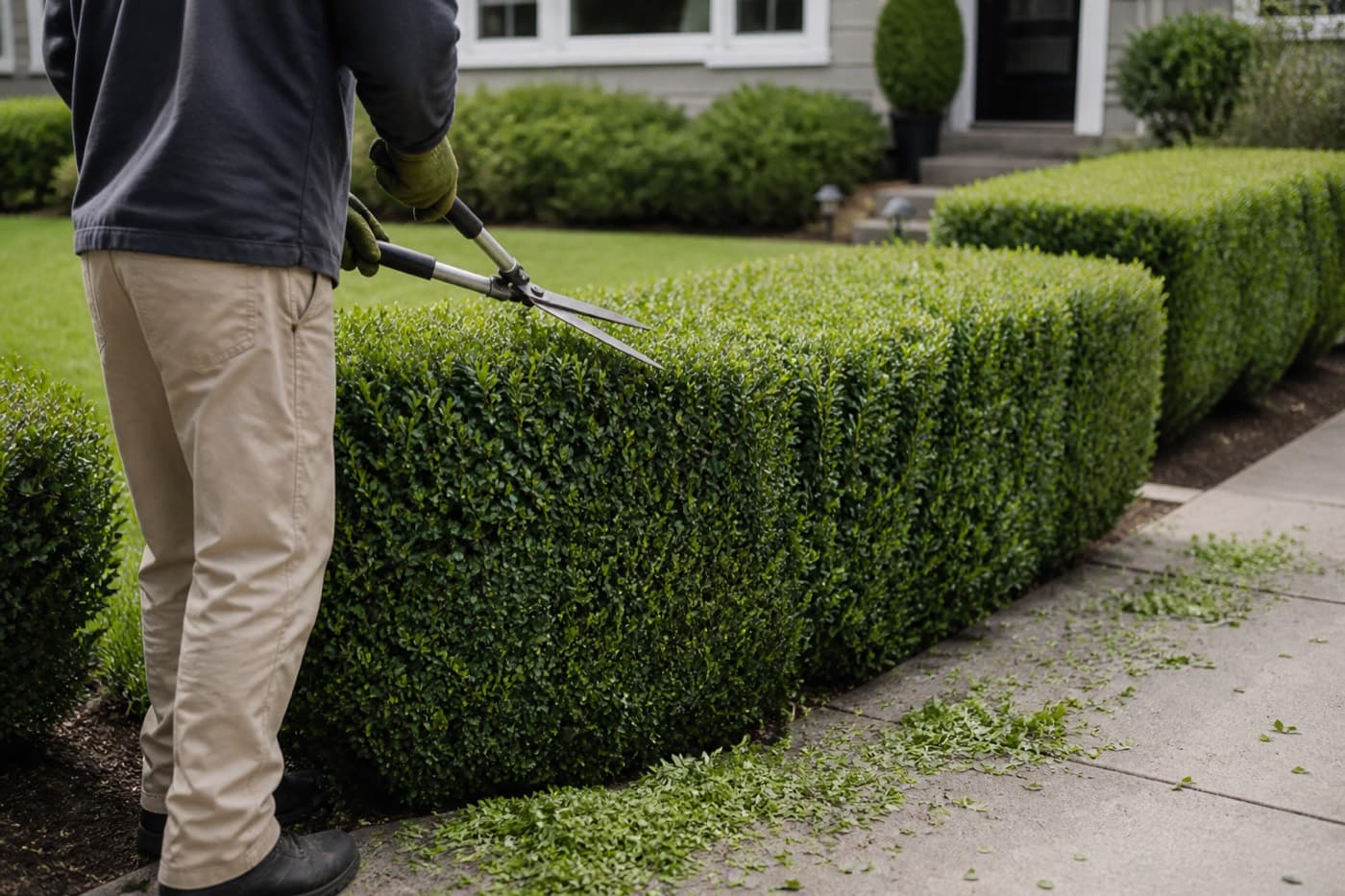
Count the plants and note approximate height, width, density, access, and disposal. Specify whether the quote includes both sides and the top of a hedge. Avoid guaranteeing plant survival or recovery after aggressive reduction.
Set firm safety boundaries. Decline work near energized lines, unstable trees, unsafe slopes, traffic exposure, or heights beyond your crew's training and equipment. Follow applicable safety rules and use qualified tree professionals where the work calls for them.
Bed weeding and touch-ups
Bed work expands quickly when the scope says "as needed." Sell a defined result or a time allowance:
- Per-bed pricing for simple, repeatable beds
- Square-foot pricing where density is reasonably consistent
- Capped crew-hours for neglected or uncertain beds
- A recurring time allowance for maintenance customers
Clarify whether the work is hand pulling, mechanical removal, or a labeled herbicide application performed under applicable rules. Define edging, mulch disturbance, debris removal, and disposal separately. When the cap is reached, stop and request approval instead of continuing unpaid.
Cleanups, storm debris, and one-time work
Price a cleanup as a project using the same method as overgrown first-cut work. Do not discount uncertain work based on the possibility that a one-time customer may become recurring.
For storm debris, inspect before committing. Identify weight, sharp objects, unstable limbs, overhead hazards, access, equipment needs, and disposal restrictions. Use photos and written authorization. Do not let a verbal request at the curb expand a mowing visit into unquoted cleanup.
Some work should be declined or referred. Examples include hazardous trees, unknown chemicals, biohazards, asbestos-containing debris, and material your disposal facility will not accept.
Use written change orders
A change order is appropriate when the conditions or requested work differ from the approved quote. Common triggers include:
- More debris, shrubs, beds, or turf than documented
- Wet or compacted material that changes labor or disposal
- Blocked access or extra hand-carry distance
- Added tasks requested by the customer
- Hidden hazards or unmarked property features
- Additional materials or disposal loads
Document the added scope, price, schedule effect, and approval. Email, text, or a customer portal can work if it creates a clear record and meets local contract requirements. For urgent safety issues, stop work and contact the customer.
Quote tax and payment clearly
Sales tax treatment for labor, materials, disposal, and landscaping services varies by jurisdiction. Confirm the rules with your state or local tax authority and a qualified tax professional. The quote should say whether tax is included or added and should separate taxable items when required.
Before scheduling, disclose:
- Deposit amount, if any
- Balance due date and progress-payment milestones
- Accepted payment methods
- Late-payment, cancellation, and returned-payment terms
- Any card surcharge or cash-discount policy
Payment practices must comply with card-network, processor, and local legal requirements. Do not add a surprise fee after the work. The guidance in cash versus card pricing and lawn care invoicing can help you build a consistent policy.
Material-heavy or multi-day projects may justify a deposit sized to committed costs. Small add-ons are often simplest to invoice when completed. Whatever policy you choose, put it on the approved quote.
Worked example
Assume a contractor inspects a property and estimates a medium leaf cleanup. These figures are examples only, not recommended market prices:
| Line item | Example amount |
|---|---|
| Leaf cleanup, one visit | $225 |
| Haul-away and disposal, one load | $40 |
| Bagging on a separate final mow | $25 |
| Scheduled weekly mow | $80 |
| Subtotal before applicable tax | $370 |
The $370 math is $225 + $40 + $25 + $80. The quote should also say that the leaf price covers one visit, one disposal load, and the photographed areas. Later leaf drop, extra volume, or added beds requires a new quote or approved change order.
This example is useful because every amount maps to a task. The customer can remove an optional line, and the crew can see exactly what to perform.
Keep the rate card current
Review add-on prices when wages, fuel, material prices, disposal fees, production times, or route conditions change. Compare estimated hours with actual crew-hours and compare estimated disposal with receipts. Repeated overruns usually mean the unit, scope, or production assumption needs work.
Update your website, quote templates, and crew instructions together. Retire old flyers and estimates so customers and employees are not working from different prices.
Keep add-ons connected from quote to invoice
MowProHQ can help keep approved add-ons visible across quotes, scheduled work, and invoices. Review current options on the pricing page, or sign up when you are ready to set up your workflow.
A good add-on menu is not a list of guesses. It is a set of measurable services your customer can approve and your crew can complete profitably.
Frequently asked questions
- How should lawn care companies price add-ons?
- Choose a measurable unit, estimate crew time, and add materials, equipment, disposal, travel, overhead, and profit. Then write the scope, limits, and approval process on the quote.
- Should bagging be included in a mowing package?
- Only when the package explicitly includes it and the price covers the extra handling and disposal. Otherwise, list bagging and haul-away as separate add-ons.
- How do I price leaf removal?
- Use a minimum charge plus a volume tier, estimated labor, or both. Account for wet or compacted leaves, bed cleanup, loading, disposal, and additional visits while trees are still dropping.
- How do I price aeration and overseeding?
- Price measured or serviceable turf area, crew and machine time, travel, and materials. State access requirements, marking responsibilities, watering instructions, and what conditions allow rescheduling.
- What is a fair way to price shrub trimming?
- Separate routine maintenance from restoration work. Price by shrub-size band, linear feet, or estimated crew-hours, with disposal and difficult access added when needed.
- How do I stop add-ons from becoming free extras?
- Put every add-on on the approved quote and crew work order. Set quantity or time limits, require approval for changes, and document any courtesy work so it does not become an assumed recurring service.
- When should a customer pay for a lawn care add-on?
- State the deposit, due date, accepted payment methods, and any lawful fees before work starts. Small jobs are often due at completion; material-heavy or multi-day projects may justify a deposit and progress payments.