MowProHQ Blog/Treatments
Chemical and Fertilizer Programs for Lawn Care Operators
A practical guide to compliant lawn treatment programs, scheduling, application records, storage, safety, and customer communication.

A lawn care fertilizer program is more than a list of seasonal visits. It is a controlled service with licensing, label, safety, environmental, recordkeeping, and customer-notification duties. Those duties vary by location and product, so another operator's template is not a compliance plan.
This guide covers the business systems around lawn treatments. It does not recommend products, mixtures, rates, or treatment timing. The current product label, applicable law, and guidance from qualified local professionals must control those decisions.
Confirm licensing before selling a program
Before adding fertilizer, herbicide, insect control, or another treatment to a lawn care quote, identify the rules that apply. Depending on the jurisdiction and product, you may need a business license, applicator credential, technician registration, supervision, insurance, notification, or reporting.
Use a pre-launch checklist:
- Confirm the product category and intended site are permitted.
- Verify business and applicator credentials with the relevant regulator.
- Document required training and renewal dates.
- Confirm insurance coverage with your broker.
- Identify posting, neighbor-notice, re-entry, and record-retention rules.
- Check waterway, drainage, school, pollinator, and other site restrictions.
- Ask a qualified local regulator, extension specialist, agronomist, or licensed adviser to resolve uncertainty.
Do not assume a retail product may be applied commercially without additional credentials. Software, supplier advice, and past practice do not override the current label or law.
Design a clear treatment program
Describe the service without promising that every turf problem will disappear. Define the assessment, permitted treatment categories, expected visit windows, exclusions, and what happens when conditions are unsuitable.
| Program element | Put it in writing |
|---|---|
| Scope | Areas covered, treatment categories, and excluded areas |
| Visit plan | Expected rounds and flexible seasonal windows |
| Site review | Conditions that can cause a skip, delay, or referral |
| Customer duties | Access, irrigation information, and child or pet precautions |
| Communication | Advance notice, completion notice, and required posting |
| Billing | Per-visit or seasonal terms, cancellation, and weather-delay policy |
Price labor, compliant handling, travel, equipment, training, recordkeeping, insurance, and disposal into the service. The cost-floor approach used for pricing lawn care jobs applies here too.

Treat the label and SDS as operating documents
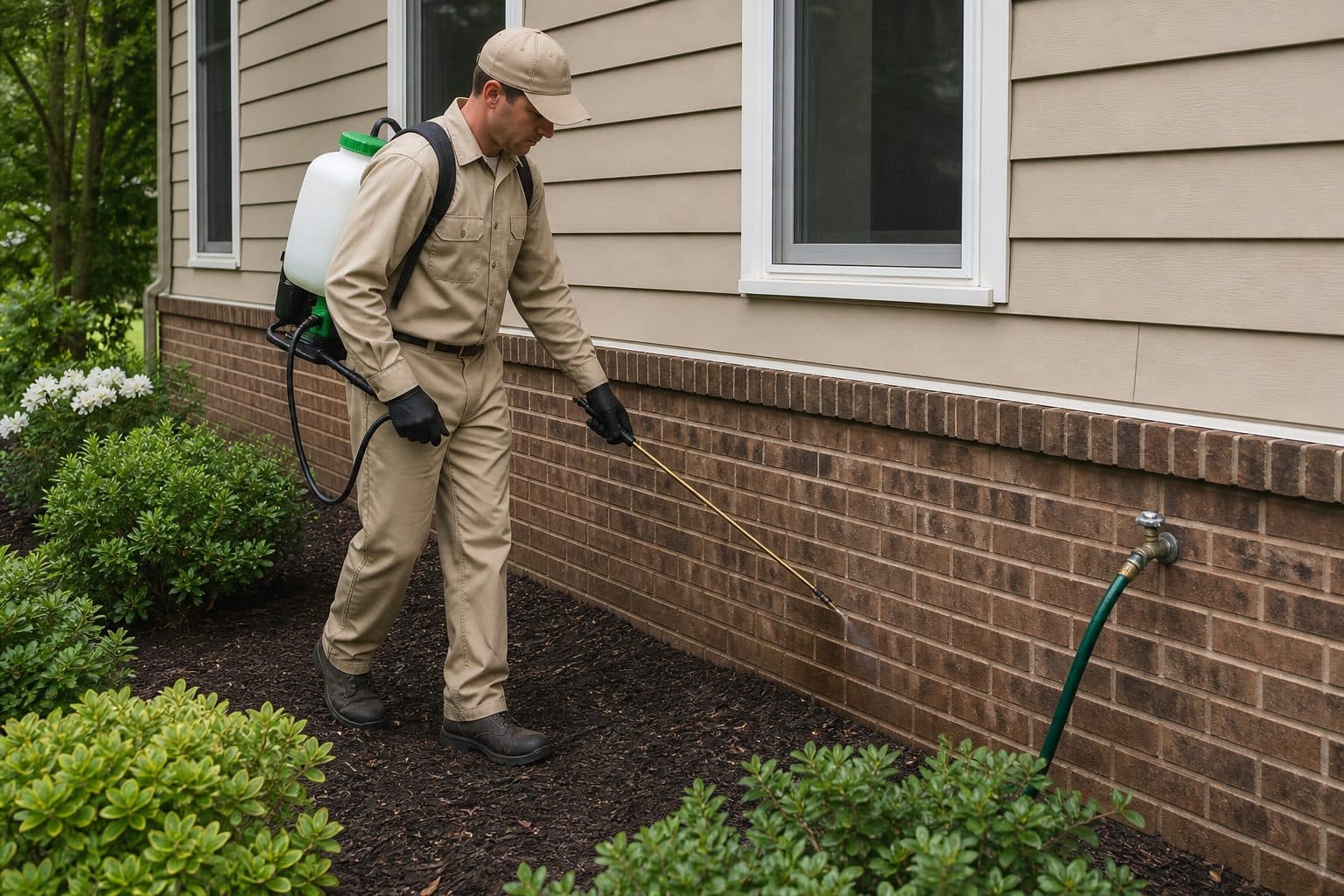
The pesticide label is legally enforceable in many jurisdictions. Read the complete current label before use and keep it available to the applicator. Follow its requirements for approved sites, directions, personal protective equipment (PPE), environmental precautions, re-entry information, storage, disposal, and emergencies.
Maintain the current Safety Data Sheet (SDS) for each workplace chemical and make it readily accessible as required. Train workers to find labels and SDSs, report damaged containers, and stop work when instructions are unclear.
Before dispatch, confirm:
- The product is approved for the intended use and site.
- The applicator has the required credential and supervision.
- Label-required PPE is available, serviceable, and used correctly.
- Any required fit testing, medical evaluation, or respirator program is current.
- The current label and SDS are accessible.
- Record and notice templates capture local requirements.
- The crew knows how to stop and escalate uncertain work.
Never rely on memory, an old label, or a generic rate in a customer note. Directions for one product do not transfer to another.
Schedule around weather and site conditions
A calendar can show when a round is due; it cannot decide whether an application is lawful or appropriate. The qualified applicator should assess current and forecast weather, turf and soil conditions, drainage, nearby people and animals, sensitive areas, and label-specific restrictions.
| Condition | Operational response |
|---|---|
| Wind or changing wind | Check label and legal limits; postpone when conditions do not comply or drift cannot be prevented |
| Rain or irrigation | Follow label restrictions and delay when runoff, wash-off, or reduced performance is a concern |
| Heat, drought, or stressed turf | Stop and obtain product-specific, qualified guidance |
| Saturated, frozen, or sloped ground | Evaluate runoff and environmental restrictions before proceeding |
| People, pets, or unexpected activity | Pause, secure the area as required, and follow notice or re-entry rules |
| Unmarked sensitive feature | Do not guess; identify it and obtain qualified guidance |
When conditions change, use the same discipline as a weather reschedule: mark the visit as not applied, record why, move the affected route, and notify the customer. Never record a weather skip as a completed treatment.
Protect sensitive sites and neighboring property
Property notes should identify wells, storm drains, ditches, ponds, streams, slopes, gardens, play areas, and neighboring property relevant to the work. The label or local rules may require buffers, setbacks, seasonal restrictions, or other controls.
Prevent drift, runoff, spills, and applications to unintended surfaces. Follow local requirements for containers, waste, unused product, and rinse material. Stop when boundaries or sensitive features are uncertain, and refer unusual sites to a regulator or qualified local adviser.
Avoid broad claims such as “pet friendly,” “safe,” “organic,” or “environmentally harmless” unless they are accurate, properly qualified, and supported. Use factual descriptions and label-based precautions.
Store and transport products responsibly
Build procedures from product labels and SDSs, manufacturer instructions, fire and building codes, transport rules, and environmental requirements. A written plan should cover:
- A secured, access-controlled location suitable for the products stored
- Original readable labels and an up-to-date inventory
- Separation of incompatible products where required
- Protection from damage, temperature extremes, and unauthorized access
- Vehicle security, load restraint, and pre-trip container inspections
- Required documents, emergency contacts, and appropriate spill supplies
- Lawful handling of damaged containers, waste, and empty packaging
Never use food or beverage containers for chemicals or leave products where customers, children, or animals can reach them. Ask the fire marshal, environmental agency, transport authority, or another qualified local official about location-specific requirements.
Prepare for spills before leaving the shop
A spill plan should be specific to the products, quantities, work sites, and laws involved. Train employees to stop work, protect people, consult the label and SDS, contact the designated supervisor, and call emergency services or the required reporting authority when appropriate.
The plan should identify:
- Who can stop work and secure the area.
- Where emergency contacts and product information are kept.
- Which PPE and spill materials are required for the products carried.
- When evacuation, emergency response, or regulatory reporting is required.
- How notifications, response, disposal, and follow-up will be documented.
Avoid generic cleanup instructions: the wrong response can increase exposure or move contamination into soil, drains, or water. Follow the label, SDS, emergency responder directions, and local reporting requirements.
Keep complete application records
Required fields and retention periods vary. Configure the process around applicable rules and have a qualified local professional confirm it. Common record fields include:
- Customer and exact treatment location
- Date and time
- Applicator name and credential information
- Product name and registration details where applicable
- Target and treated site or measured area
- Amount used and label-directed application rate
- Method and relevant equipment identifier
- Weather and site conditions required by the label or regulator
- Customer, occupant, neighbor, or public notifications
- Posting, re-entry, skip, complaint, or incident notes
Keep source records intact and correct errors with an auditable update rather than deleting the original entry. Restrict access, back records up, and make them retrievable for customer questions, inspections, medical emergencies, or incident review.
Store access and sensitive-area notes with the property record, not in an informal group chat.
Notify customers, occupants, and pet owners
Notice rules may specify content, timing, delivery method, signage, or retention. Follow those rules and the label exactly. A good workflow includes:
- Advance notice with the service window and required preparation
- A check that people and pets are clear of the work area
- Required flags, signs, door hangers, or direct notices
- A completion message with applicable restrictions
- A contact path for product information, concerns, or exposure questions
- A record of when and how notice was provided
Do not invent a universal “safe when dry” statement. Re-entry and exposure instructions are product- and jurisdiction-specific. Communicate the exact applicable restriction in plain language.
For routine updates, customer texting can reduce missed notices, but it does not replace legally required posting or delivery methods.
Mow routes vs treatment routes
Treatments and recurring mowing plans can share a customer record without sharing a crew or visit.
| Route model | Appropriate when | Main control |
|---|---|---|
| Dedicated treatment route | Specialist credentials or equipment are needed | Clear handoff and property history |
| Combined service visit | Work is compatible and the crew is qualified | Separate checklists and records |
| Qualified subcontractor | Your team cannot legally or safely perform the work | Verify credentials, insurance, scope, and record delivery |
If licensing, weather, site conditions, or equipment make a combined visit unsuitable, split the work. Route density never justifies assigning an unqualified employee or bypassing label directions.
Review the program every week
Use a short compliance and operations checklist:
- Which rounds are due, delayed, or marked as not applied?
- Are licenses, training, insurance documents, or product records nearing expiration?
- Are current labels, SDSs, PPE, notices, and spill supplies available?
- Are application records complete and internally consistent?
- Did any complaint, exposure concern, spill, equipment issue, or near miss require escalation?
- Have laws, local restrictions, or product registrations changed?
Software can flag missing information, but a checkbox cannot establish compliance. Periodically review the program with the relevant regulator, extension service, licensed agronomist, attorney, insurance professional, or other qualified local adviser.
How MowProHQ helps treatment programs
MowProHQ can keep customer, property, schedule, quote, invoice, and visit history connected so treatment work is easier to coordinate and retrieve. Your team remains responsible for licenses, label compliance, safety procedures, notifications, and official records.
Review current plan details on pricing. If the workflow fits your compliance process, create an account at signup.
A well-run lawn care fertilizer program is limited to work the company is qualified to perform. Sell a clear scope, follow the current label and local law, document every decision, and pause whenever conditions or instructions are uncertain.
Frequently asked questions
- Do lawn care operators need a license to apply fertilizer or pesticides?
- Requirements vary by product, service, and jurisdiction. Pesticide work commonly requires business or applicator credentials, and fertilizer rules may also apply. Confirm current requirements with the relevant regulator or a qualified local compliance professional before offering treatments.
- What belongs in a lawn treatment application record?
- Record the property, date and time, applicator, product and registration details, treated area, target, amount or label-directed rate, relevant weather, method, required notifications, and any skip or incident notes. Follow local rules for fields, format, reporting, and retention.
- How should weather affect a lawn treatment schedule?
- The current product label and applicable law control. Wind, precipitation, temperature, forecast changes, and site conditions may require a delay. Document the decision and reschedule instead of improvising outside approved conditions.
- How should customers and pet owners be notified?
- Follow label directions and local notice, posting, and re-entry requirements. Give clear advance and completion notices, communicate the applicable restrictions without guessing, and keep a record of the notice provided.
- How should lawn chemicals be stored and transported?
- Follow each label and SDS, manufacturer guidance, fire code, transport rules, and local environmental requirements. Preserve original labeling, secure products appropriately, prevent incompatible materials from mixing, and maintain an incident plan.
- When do I upgrade from a spreadsheet for lawn chemicals?
- Consider a property-level system when several people perform applications, field records are incomplete, weather changes create duplicate visits, or customer and regulatory questions take too long to answer. Software supports the process but does not replace licensing, training, label compliance, or required official records.