MowProHQ Blog/Treatments
What to Document on Every Pest Treatment
What to record after each pest treatment, including target pests, products, locations, access notes, photos, and required compliance details.
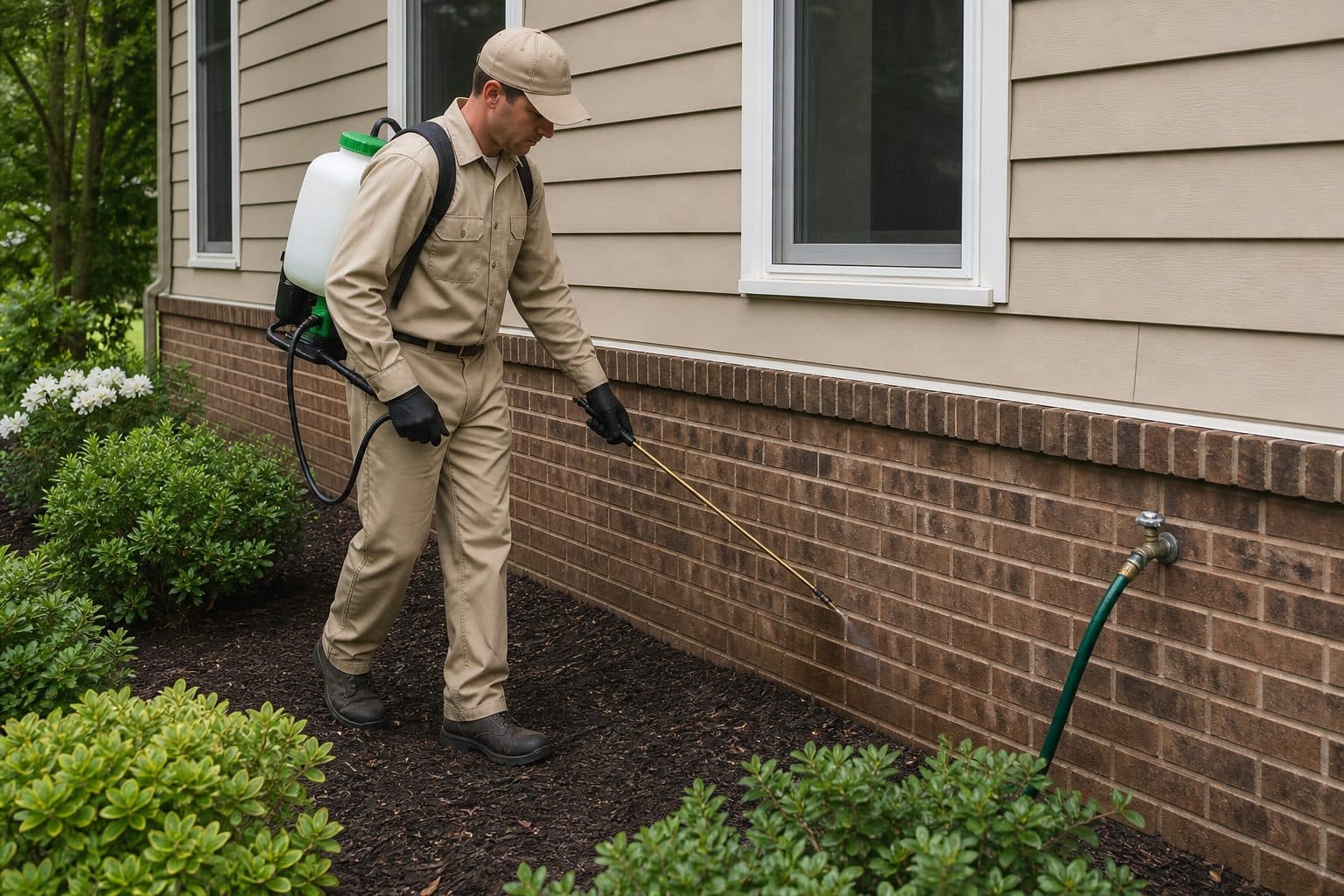
A customer callback or follow-up visit should not begin with uncertainty about the previous treatment. Each pest visit needs a clear record of the target pests, products, treatment locations, access details, and any relevant photos.
This guide explains which fields belong on the visit, how to keep notes readable, who updates the record, and how operational documentation differs from regulatory reporting. Pair it with how to run recurring pest treatments.
Note fields every treatment needs
If you only store a name and an address, you have a contact list, not a CRM. The property record has to answer the questions a tech asks in the driveway and the questions a homeowner asks on a callback.
The must-haves
| Field | Why it exists | Example |
|---|---|---|
| Visit type | Matches what you sold | Quarterly exterior, not “pest” |
| Target pests | Sets the promise | Odorous house ants, spiders — not “bugs” |
| Products and amounts | Next visit and callback | Product name, EPA number if you use it, quantity |
| Where treated | Stops guessing | Foundation, garage joint, no interior |
| Weather / skip | Explains a move | Light rain, wash-off rule — pocket moved |
| Access | How they get in | West crawl hatch, latch then lift |
| Animals | Safety and skip | Two dogs — confirm inside before mix |
| Interior permission | Scope | Interior not authorized; kitchen only on call-back |
| Applicator | Who to ask | License # on file; name on the visit |
| Billing vs site | Who to call | Tenant texts; owner pays |
If a line does not change the next 15 minutes or the next callback, it belongs in quieter history — not in the scan line.
Commercial kitchens, HOAs, and multi-family add device maps, logbook rules, and who can authorize interiors. The note still has to be on the property, not in the office manager’s head.
Nice-to-haves that earn their keep
- Bait station or rodent-device map (count, locations, last service)
- Neighbor treatments or shared walls that change pressure
- Re-entry language you actually told them
- Last complimentary callback date and why
- Mix leftover / tank note if it changes the next stop
Keep the record focused on information that affects service, safety, access, scope, or billing. Technicians need to scan it quickly.
Write notes techs will actually read
Style is an ops problem. Long notes get skipped. Cute notes get ignored. Accusatory notes get argued.
Rules that work:
- Lead with the visit type. “Quarterly exterior” before “they’re nice.”
- Name the pest. “Ants at the expansion joint” beats “activity.”
- One fact per line when you can.
- Date the change. “2026-09-02: new hatch latch; old ‘kick the board’ note retired.”
- Delete the lie. If the dog is gone, remove the dog line. Stale warnings train techs to ignore all warnings.
Great vs useless
| Useless | Useful |
|---|---|
| “Kinda a big house” | “Long west foundation; 35–45 min exterior” |
| “Watch the dog” | “Shepherd — must be inside; if out, skip mix and note” |
| “Sprayed last time” | “2026-06-04: Product X, 1.1 gal, foundation + garage” |
| “Customer is picky” | “No interior. Do not treat flower pots. Text before crawl.” |
| “Stations somewhere” | “6 rodent stations: 4 garage wall, 2 rear fence. Map in photos.” |
Useful notes describe an action or condition another technician can verify.
Worked example: before and after
Before: “Mr. Cole — been with us forever, ants sometimes, hatch is tricky, wife hates smell, sprayed the usual.”
After:
- Quarterly exterior; target: odorous house ants, spiders
- 2026-09-02: Product X, 1.2 gal, foundation and garage door threshold
- Crawl hatch west side, lift latch; no interior this visit
- Dogs: confirm inside; if out, do not mix, text office
- Re-entry: keep pets off wet foundation 30 min (what we told them)
- 2026-08-11: complimentary callback, kitchen ants — billed interior declined
Same customer. The second version does not require a phone call.
Photos that help the next visit
Photos are evidence, not a camera roll.
Shoot:
- Hatch or station the next person will hunt for
- The hotspot you treated (joint, gap, nest)
- Interior area only if you entered it
- Anything that will change pricing (new addition, locked garage)
Do not shoot:
- Forty similar foundation courses
- The van
- The customer’s kids or mail
Caption in the same close-out: “West hatch” or “Garage joint — ants.” Unlabeled photos become a slideshow nobody opens. Pair photos with the product line so a callback is a record, not a debate.
Update notes after exceptions
A note that is only written at signup is a spring fiction by September. Landscaping changes. Dogs change. Hatches rust. The tech who hit the exception owns the update.
Close-out habit (60 seconds):
- Access failed? Write what failed and what worked.
- Extra work? Write what was done and whether it was billed.
- Customer asked for a permanent change? Change the preference line the same day.
- New pest or new area? Put it on the next visit and on the quote if it is a new product.
If only the owner edits notes at 9 p.m., the afternoon helper will always be wrong. This is the same “named owner” idea as dispatch: someone owns the board, someone owns the note.
Who edits what
| Change | Who updates | When |
|---|---|---|
| Hatch / dog / interior permission | Tech | Before leaving the stop |
| Products / amounts / photos | Tech | Same visit |
| Scope / package | Office after a written yes | Same day |
| Billing contact | Office | When they tell you |
| Price | Office | When the quote changes |
| Complimentary callback used | Office + tech | Same day |
Texts are for the window and the one-time exception. The permanent fact goes on the property. If you only text “new hatch is on the west,” the next truck will not have it.
Callbacks live or die on the last record
When they say “you were just here,” you need to show:
- Date of last visit
- Visit type they paid for
- Target pests you named
- Where you did and did not treat
- Whether this call is inside the program promise or a billed add-on
That conversation is pricing plus documentation. Without the record, you will eat interiors to keep the review. With the record, you can say “kitchen was excluded; we can come back as an interior add-on” without sounding like you are dodging.
Privacy and mix hygiene
Product names, hatch locations, and alarm notes are not marketing content.
Practical hygiene:
- Store access on the property record the tech uses for the stop
- Do not paste hatch details into a 12-person group text that outlives the helper
- Do not put mix recipes on invoices or review-request emails
- When the customer changes a lock, retire the old code in the same edit
- Limit admin access if your shop has seasonal people who do not need the whole book
You still need the hatch on the truck. Hiding it in a binder only the owner has is how techs lean on siding. The point is a controlled record, not a scavenger hunt.
Compliance sits beside this habit
This close-out is for the next tech, the invoice, and the callback. It is not a claim that your state pesticide report is filed.
MowProHQ can keep notes, products, applications, and photos on the customer record. Chemical tracking is a Growth module. Confirm what your state requires — forms, IDs, timelines — before you retire a dedicated compliance tool. Dedicated reporting may still be needed. The pest control software buying guide is explicit about that split on purpose.
Follow the label. This article is ops, not legal advice.
A 12-line template you can paste
Use this on every visit, then delete unused lines:
- Visit type:
- Target pests:
- Products / amounts:
- Where treated:
- Interior / crawl / attic (yes/no, rooms):
- Weather / skip:
- Hatch / access:
- Pets / re-entry told:
- Stations / devices:
- Photos (what they show):
- Billed extras:
- Next-visit warning:
If a line is empty, you have not finished close-out. Empty is more honest than “sprayed the usual.”
Notes that change quoting and dispatch
A good note is also a quoting tool. Long foundations, locked interiors, and crawl access belong on quoting pest work from the house and the rate card, not only in a warning the tech swears at.
Dispatch uses the same lines to match tech and stop. Putting a green helper on “crawl only, German roaches, dogs maybe out” is how quality complaints and overtime arrive together.
Weather days need notes too: “do not spray west foundation if standing water — bait only.” That sentence saves a wash-off and a callback.
Seasonal note review
Once per quarter, filter properties with:
- Product lines older than two visits with no confirmation
- Dog notes with no date
- “Picky” or “careful” with no specifics
- Stations with no count
- Any stop that generated a tech call last month
Fifteen minutes a week beats a Saturday of “we need to clean up the CRM.”
If a helper says “the note was wrong,” treat that as a gift. Fix the line, date it, and thank them. Techs stop reporting bad notes when the office argues. The truck is closer to the hatch than you are.
How MowProHQ helps treatment records
MowProHQ keeps notes, photos, and application history on the property next to the schedule, quote, and invoice. This gives field and office staff access to the same service record.
Compare current plans and pricing or create an account to test the documentation workflow. Confirm state reporting requirements before replacing a dedicated compliance tool.
Frequently asked questions
- What should you document on every pest treatment?
- Record the property, date, visit type, target pests, product names and amounts, treatment locations, weather or skip reason, applicator, relevant photos, and current access details such as hatches, pets, and interior permission.
- Does treatment documentation replace state pesticide reporting?
- No. Operational notes support future visits and customer questions, but they may not satisfy state filing requirements. Confirm applicable rules before replacing a dedicated compliance system.
- What photos belong on a pest stop?
- Photograph access points, device locations, the condition treated, and anything that will affect the next visit. Keep only useful images, add brief captions, and connect them to the written treatment record.
- Who should update pest treatment notes?
- The technician should update access details, products, amounts, and photos before leaving the stop. The office can update billing contacts, approved scope, and program frequency when those change.
- What is an example of a good pest treatment note?
- A useful note is specific: “Quarterly exterior. Ants at garage expansion joint. Product X, 1.2 gal, foundation and garage door. Hatch west side, dogs inside. No interior.” Avoid vague notes such as “sprayed, looks fine.”
- How long should a pest close-out take?
- A consistent template should make routine closeout quick. Lead with the visit type and products, date important changes, and remove stale access or pet information so technicians can scan the record.
- Where should pest records live?
- Keep records on the property and attach them to the visit so authorized technicians and office staff can find them. Operational software can hold the company record, but confirm which information must also be submitted to the state.