MowProHQ Blog/Treatments
How to Sell Aeration and Overseed Without Wrecking the Mow Week
Price, schedule, and route lawn aeration and overseeding as seasonal work without disrupting the weekly mowing schedule.
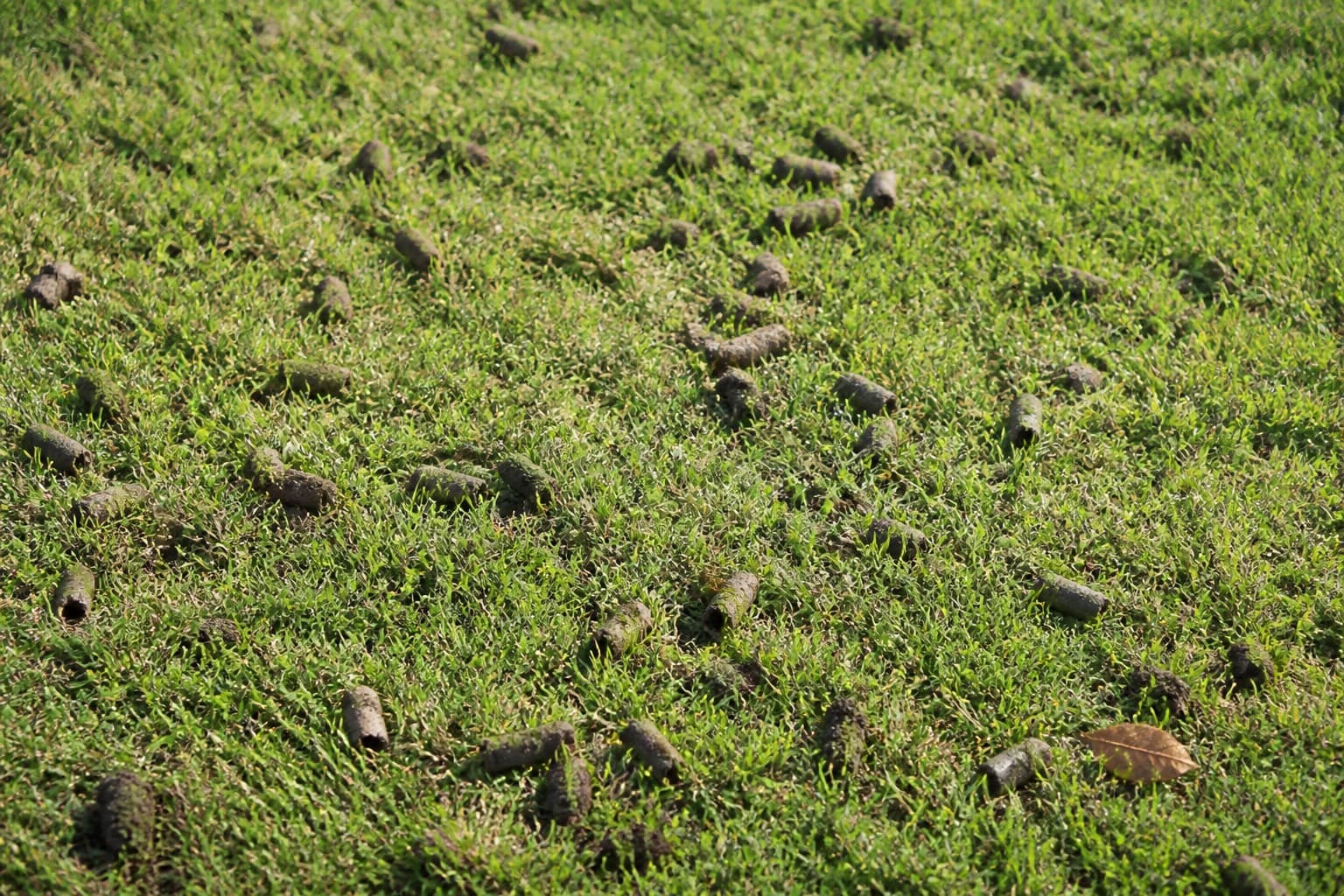
Aeration and overseeding can be valuable seasonal work, but they do not behave like a quick mowing add-on. The machine takes trailer space, job time changes with soil and access, and seed creates follow-up questions that a normal mow does not.
The practical approach is to sell a defined ticket within a service window, reserve equipment days, and group nearby properties. That protects the weekly route while giving customers a clearer idea of what they are buying.
Start with the site, not the sales pitch
Core aeration is not automatically right for every lawn. Compaction, drainage, turf species, thatch, soil type, recent pesticide applications, irrigation, slope, and time of year can all change the recommendation. Warm-season and cool-season grasses also have different recovery and seeding windows.
Before quoting, record:
- Approximate turf area and the areas the machine can safely reach
- Gate widths, slopes, steps, soft shoulders, retaining edges, and tight turns
- Irrigation heads, invisible dog fences, shallow lighting wire, drainage, and other known private lines
- Thin, bare, diseased, dormant, or heavily weeded areas
- Shade, irrigation coverage, and the customer's ability to water
- Turf type, when known, and any recent herbicide or other pesticide application
When diagnosis or timing is uncertain, use guidance from a local extension service or qualified turf professional. Aeration can help relieve some compaction, but it does not correct every drainage, soil, pest, or establishment problem.
Mark utilities and private systems
Before work, follow the utility-locate process required in your area. Public locating services may not mark customer-owned irrigation, low-voltage lighting, septic components, invisible fences, or other private lines. Ask the customer to identify and mark those items, but do not treat their memory as a guarantee.
Put the responsibility, lead time, and rescheduling policy in writing. If a hazard is unmarked, uncertain, or too close to the planned path, stop and leave that section untreated until it can be assessed safely.
Sell a window, not a fragile promise
A service window gives the crew room to work around rain, saturated or hard soil, high heat, wind, equipment trouble, and seed timing. The right window varies by region and grass type, so avoid using one nationwide calendar rule.
A clear quote should state:
- Scope: reachable turf, number or pattern of passes, seed if selected, and cleanup
- Window: a realistic date range, plus how and when the exact day will be confirmed
- Access: unlocked gates, pets inside, toys and hoses removed, and room for truck and trailer
- Site preparation: utility and private-system marking requirements
- Exclusions: inaccessible or unsafe areas, seedbed renovation, topdressing, plug collection, or watering unless specifically included
- Weather policy: conditions that can delay or stop work
- Customer aftercare: watering, traffic, and mowing responsibilities
Use texting for reminders and day-before confirmation, but keep the approved scope and window on the estimate and job record.
Customer-ready wording
We schedule aeration in a service window and confirm the workday after reviewing weather, ground conditions, equipment, and access. Your quote lists the reachable turf, included passes, seed selection if applicable, cleanup, utility-marking requirements, and aftercare responsibilities.

Build lawn aeration pricing from your costs
Measured turf area or consistent size bands give you a repeatable starting point. Then account for the work the square-foot number does not show: travel, gates, slopes, loading, setup, cleanup, and machine handling.
Use the same cost-floor approach described in lawn care add-on pricing. Base the quote on your current labor burden, equipment ownership or rental cost, materials, overhead, expected production, and margin—not a competitor's flyer or an old flat rate.
| Line | Useful pricing unit | Costs and scope to include |
|---|---|---|
| Core aeration | Measured turf area or property band | Travel, setup, passes, operator time, equipment, fuel, cleanup |
| Overseeding | Turf area plus seed quantity | Seed cultivar or blend, label rate, spreader time, calibration, waste allowance |
| Soil amendment | Turf area plus material | Soil-test basis where appropriate, product, application labor, legal requirements |
| Watering or follow-up | Per visit or defined package | Travel, time, equipment, number and limits of visits |
| Difficult access | Time or documented surcharge | Gates, slopes, handwork, loading, or smaller equipment |
Keep separate services visible on the estimate. A practical aeration-and-overseed ticket might show:
- Core aeration for the measured reachable turf
- The planned pass pattern, adjusted where safe and suitable
- Seed product, quantity, and application rate
- Hard-surface cleanup
- Service window and confirmation process
- Customer watering and access duties
- Site, weather, and establishment limitations
Invoice against that approved scope instead of adding a vague seasonal charge to the mowing invoice.
In MowProHQ
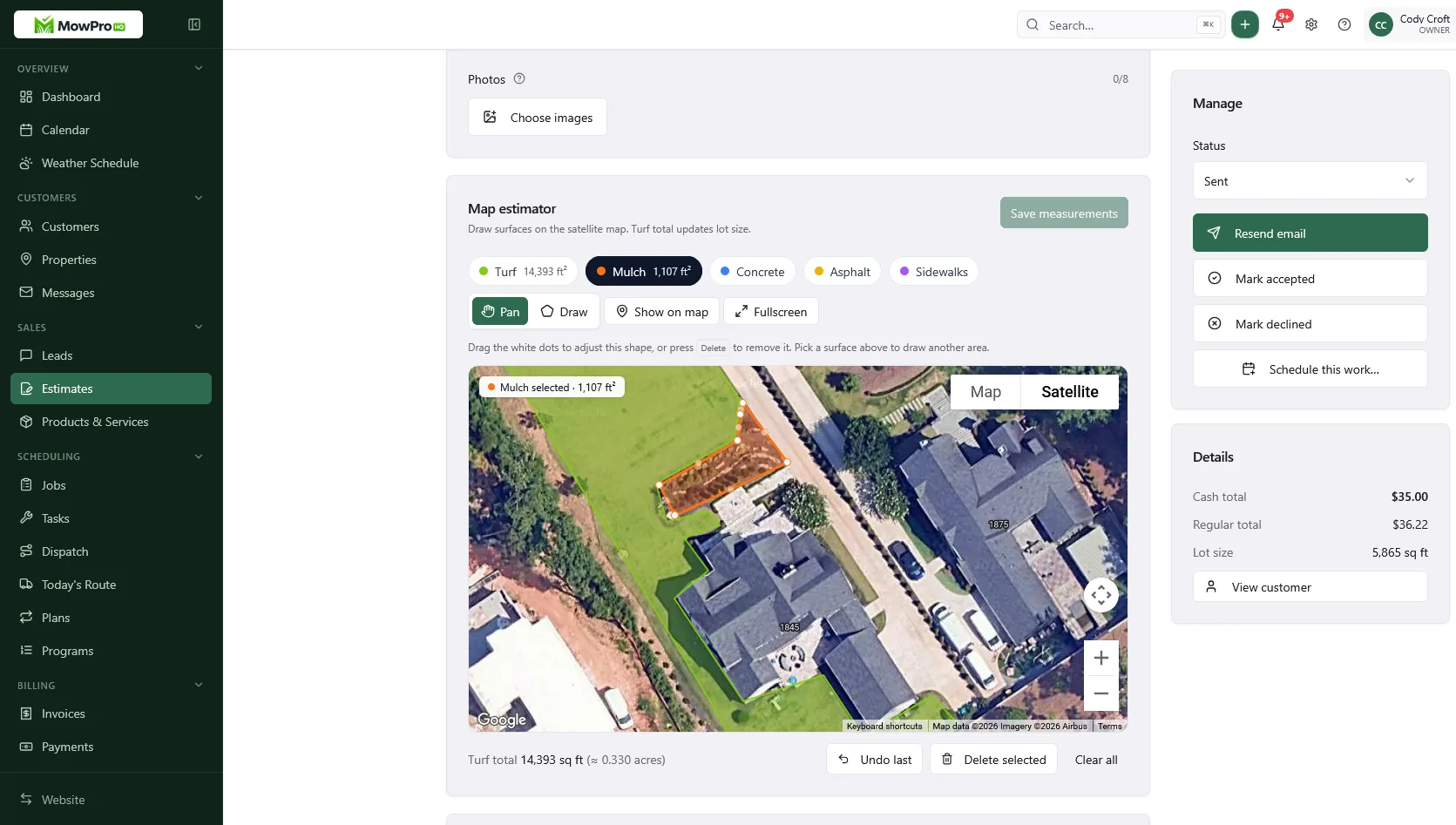
Treat equipment days as their own production plan
Whether you own, rent, or subcontract the aerator, confirm the operating plan before opening sales. Check transport weight and tie-down requirements, trailer capacity, machine width, maintenance, rental hours, fuel or charging needs, and what happens if the machine goes down.
| Setup | Can work when | Common failure point |
|---|---|---|
| Dedicated aeration blocks | Jobs are grouped and mowing capacity remains protected | Too many tickets are sold into the same weather window |
| Same-stop add-on | Small site, approved scope, suitable conditions, correct crew and equipment | An unscheduled request delays the route |
| Weekend block | Voluntary staffing and local work-hour rules support it | Fatigue or overtime was ignored in the price |
| Subcontracted work | Insurance, scope, customer communication, and records are clear | Responsibility for damage, delays, or payment is unclear |
Set capacity before promoting the service
Estimate capacity from actual production rather than ideal machine speed:
- Start with available crew and equipment hours.
- Subtract loading, travel, setup, breaks, refueling, cleanup, and likely delays.
- Divide the remaining time by tested production for each property band.
- Hold back capacity for weather recovery and equipment trouble.
- Stop or waitlist sales when the remaining slots are gone.
If you collect a deposit, state the scheduling window, cancellation terms, weather policy, and refund treatment clearly and comply with applicable consumer rules.
In MowProHQ
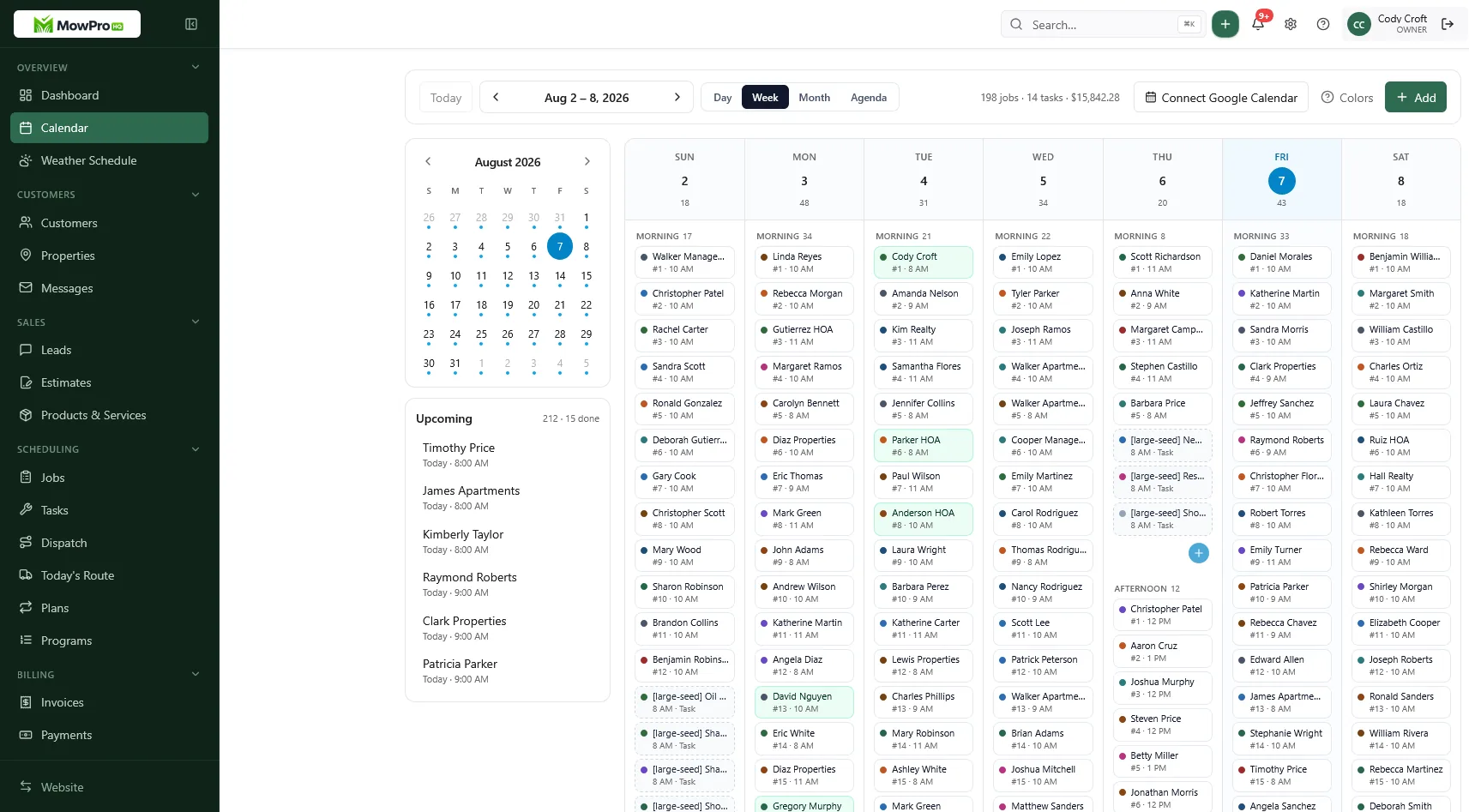
Route the work in neighborhood batches
Several nearby properties usually produce a more reliable day than isolated jobs across town. Offer the same neighborhood window, then sequence stops by access, machine needs, and ground conditions.
When weather changes the plan, move the batch and send one consistent update. Do not scatter every delayed ticket into already-full mowing days.
Avoid aerating saturated ground that may rut or smear, excessively dry ground that prevents useful penetration, frozen soil, or sites where traction is unsafe. Wind, heat, drought, and forecast rain can also affect seed application and establishment. Establish written stop-work criteria, then let the field lead use judgment when actual conditions differ from the forecast.
Sell overseeding as a defined application
Overseeding results vary. Seed selection, species compatibility, soil contact, temperature, moisture, shade, existing turf competition, pests, disease, traffic, and customer aftercare all matter. State what you will do and avoid guaranteeing a uniform result by a particular date.
The estimate and completion record should identify:
- Seed brand or product, species or blend, lot information when available, and quantity
- Label application rate and the area treated
- Spreader setting or calibration record used by the crew
- Areas intentionally skipped
- Customer watering, traffic, and first-mow instructions
- Follow-up service or callback terms, if offered
Read and follow the seed label, including application, storage, and any treated-seed precautions. Select seed suited to the site and region, and do not imply that more seed than the labeled or recommended rate will solve poor conditions.
Before seeding, review recent and planned herbicide use. Some product labels require an interval before or after seeding. If fertilizer, herbicide, insecticide, fungicide, or another regulated product is part of the visit, follow its label and all applicable licensing, recordkeeping, notification, transport, storage, and worker-protection requirements. Rules differ by product and jurisdiction.

Aeration and overseeding can be coordinated with fertilizer programs when turf needs, product labels, and local rules support the timing. Keep each application and service scope identifiable in the property history.
Give the crew a short safety and quality plan
Use the equipment manufacturer's instructions and train operators before the season. The job hazard assessment should address slopes, rollover or run-away risk, pinch points, vibration, noise, manual handling, traffic, bystanders, pets, dust, heat, and loading.
At minimum, build the day around these controls:
- Inspect the machine, guards, tines, controls, tires, and tie-downs before use.
- Wear task-appropriate eye, hearing, foot, hand, weather, and high-visibility protection.
- Use ramps, winches, lifting help, and tie-down methods rated for the equipment.
- Shut down and isolate the machine before clearing jams, inspecting tines, or servicing it.
- Keep people and animals out of the work zone.
- Do not operate across slopes or on edges beyond the manufacturer's limits.
- Rotate demanding work, provide water and breaks, and watch for heat or cold stress.
- Follow label-required personal protective equipment when handling treated seed or any regulated product.
Local occupational-safety rules and manufacturer instructions control; a checklist does not replace either one.
For quality control, adapt your job checklist to include pre-existing-condition photos, marked hazards, treated area, passes, seed used, skipped sections, hard-surface cleanup, and customer notice. Keep the list short enough to complete in the field.
Set expectations before and after the visit
Customers should know that plugs may remain temporarily, visible improvement is not immediate, and germination or establishment is not fully under the contractor's control. Explain any recommended watering and mowing plan for the specific seed and local conditions without promising that every customer can or will execute it.
At completion:
- Record the actual area and materials used.
- Photograph unusual conditions, skipped areas, and the finished site.
- Remove seed and debris from hard surfaces where practical.
- Send aftercare instructions and identify the customer's next action.
- Note any weather, access, or site limitation that changed the scope.
If a customer asks for same-day work from the driveway, quote it first and schedule it only when capacity, conditions, marking, and equipment are ready. A polite waitlist is better than an unsafe job or a missed mowing route.
Keep seasonal tickets organized in MowProHQ
MowProHQ can keep the estimate, property notes, schedule, crew instructions, and invoice connected without mixing an aeration batch into the recurring mow plan. Review current options on pricing, or sign up when you are ready to organize seasonal work.
Frequently asked questions
- Should aeration happen on the same day as weekly mowing?
- Usually, dedicated aeration blocks are easier to staff and route. Small properties may fit after a mow when the equipment, crew, access, and approved ticket are already in place, but an unplanned add-on can delay the rest of the route.
- How should lawn care companies price aeration and overseed?
- Use measured turf area or consistent property bands, then account for travel, setup, machine time, labor, equipment cost, seed, cleanup, overhead, and margin. Keep aeration, seed, amendments, and follow-up visits visible as separate lines when their costs or scopes differ.
- What is a fair aeration window to sell customers?
- Choose a realistic local window based on turf type, soil moisture, weather, equipment availability, and crew capacity. Explain that the exact day may move and confirm it shortly before service. Local extension guidance can help with timing.
- Do I need my own aerator to sell the service?
- No. Owned, rented, or properly insured subcontracted equipment can work. Confirm availability, transport, maintenance support, operator competence, and backup plans before filling the schedule.
- Should I guarantee grass from overseeding?
- Avoid promising a result you cannot fully control. Document the seed and application rate, site conditions, customer watering duties, weather limitations, and any written warranty or callback policy. Follow the seed label and use cultivars suited to the site and region.
- How do I keep aeration from wrecking my mow week?
- Set a weekly sales cap, reserve crews and equipment, group nearby properties, and keep weather recovery time open. When conditions are unsuitable, move the aeration batch instead of scattering individual jobs through full mowing routes.
- Can aeration and fertilizer run as one program?
- They can be coordinated when agronomically appropriate, but each service still needs a clear scope and record. Follow product labels and all licensing, notification, storage, and application rules for fertilizers or pesticides; requirements vary by location.