MowProHQ Blog/Scheduling
How to Run Recurring Pest Treatments as a Route
A practical guide to scheduling recurring pest treatments by neighborhood, handling weather, documenting visits, and preparing work for another technician.
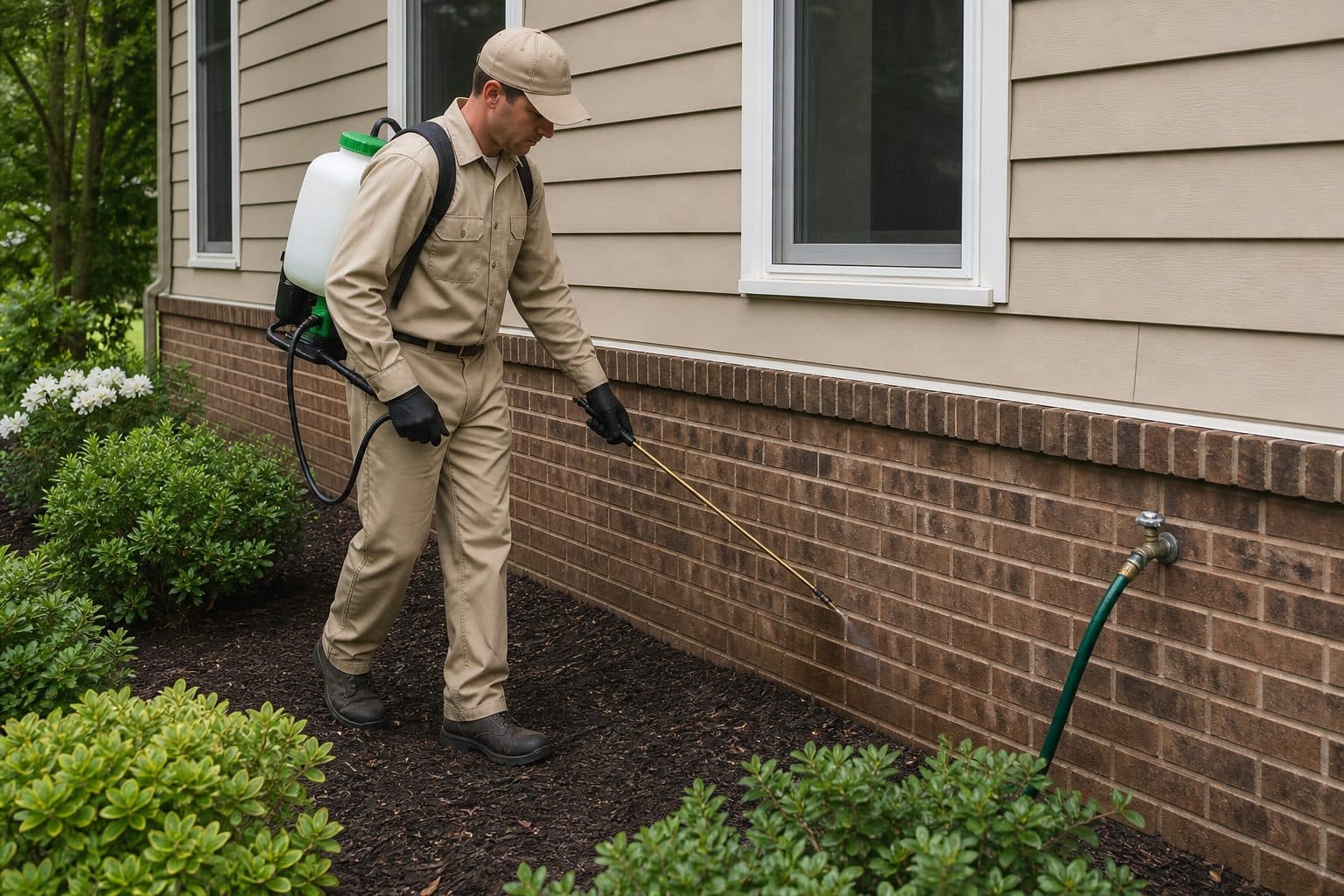
Recurring pest service becomes easier to manage when visit types, neighborhood groups, weather rules, and property histories are documented. Without that structure, the schedule turns into a collection of unrelated calls that is difficult to hand to another technician.
This guide covers defining the service, scheduling recurring visits, handling weather, preparing field notes, and separating operations software from required compliance reporting. Pair it with pest-control software for small residential routes if you are replacing paper or spreadsheets.
Sell a visit type, not “we’ll take care of it”
Customers do not buy a vague promise. They buy a visit they can picture, on a cadence they can remember. Publish a short menu and train every estimator and tech to sell from it.
A workable residential menu:
- Quarterly exterior — foundation, perimeter, typical entry points; written target pests
- Monthly pressure — same exterior plus a defined interior or hotspot cadence
- Initial clean-out — first visit, heavier scope, priced as a job
- Call-back / interior add-on — trip fee plus named rooms or crawl/attic
Write what is out as clearly as what is in. Termite work, wildlife, bed bugs, and German-roach clean-outs are not a quarterly perimeter spray. Scope belongs on the quote, the plan, and the job — see how to price quarterly pest service and quoting pest work from the house.
Example route card (illustrative)
| Visit type | Cadence | Typical on-site time | What the customer hears |
|---|---|---|---|
| Quarterly exterior | Every 90 days | 20–40 min | Predictable perimeter, few surprises |
| Monthly pressure | Every 30 days | 25–45 min | Hot spots, written interior rules |
| Initial clean-out | Once | 45–90 min | First visit is a job, not a cheap quarter |
| Interior / crawl add-on | As sold | Extra 15–60 min | Named area, not “while we’re here” |
If team members describe the same package differently, clarify the written scope before selling more of it.
Build pockets, not a collection of favors
Route density has a direct effect on cost. A recurring stop near several others may be profitable at a price that would not cover a separate 25-minute drive.
Set a service-area policy and apply it consistently. Use travel charges or higher minimums where appropriate, and accept distant work when it helps establish a viable new zone. Routing can make travel visible, but it cannot remove the cost of scattered customers.
Day-of habits that keep the board honest:
- Publish the sequence the night before
- Batch weather and wash-off moves instead of rewriting the week stop-by-stop
- Put mix, refill, and dump time on the clock, not in the cracks
- Store hatch, pet, and bait-station notes where the tech will see them — see what to document on every pest treatment
Spring and first-warm-week pressure will test this. A calendar that already has due quarterly visits survives better than a stack of “we’ll fit you in.”
Keep recurring programs at the center of the route
Recurring programs create predictable route density, while one-time calls add less predictable work. Keep most route days centered on due program visits, with written pause rules, weather procedures, and prices that match the service time. Schedule one-time work intentionally and offer a recurring program when it genuinely fits the customer's needs.
Mix that usually works
| Work type | Role in the week | Risk if it dominates |
|---|---|---|
| Quarterly exterior | Backbone density | Low if scope stays tight |
| Monthly pressure | Fills remaining capacity | Longer visits, more interiors |
| Initial clean-out | Project revenue | Eats daylight if underpriced |
| Same-week call-back | Service promise | Random miles, no residual if free |
Chase lead apps only with eyes open. They can fill a slow Thursday. They also keep the customer. Build an owned book with a site, quotes, and a CRM you control. Missed calls while a tech is in a crawlspace are how the next account never makes the board — catch those leads on a number the shop owns.
Weather and labels move the pocket, not the thread
Rain, wind, and re-entry rules are not a personality test. They are dispatch.
If a spray will wash off or the label kills the window, move the pocket. Tell those customers once. Keep the sequence so Thursday still looks like a route. Stop-by-stop texts after every shower destroy density and your evening, and the next tech inherits a board that no longer matches the street.
Write the rule before the storm:
- What wash-off window you honor
- Which visit types can still run (bait, stations, interiors with permission)
- Who owns the move
- How the customer hears it (one message, not three apologies)
Granular “we’ll try you Friday” promises are how two techs show up at the same house and nobody hits the far pocket.
Property history is the briefing
The technician should not need to call the office for routine access or treatment-history information.
Every stop on a recurring pest route needs, at minimum:
- Visit type and target pests
- Last products and where they went
- Pets, kids, and re-entry language you actually used
- Crawlspace / attic / interior permission
- Bait station or rodent-device map if you have them
- Billing vs site contact
If the helper still needs you to narrate the third stop, the property record is incomplete. Log applications where the next visit will see them. Chemical and application tracking on MowProHQ lives on the customer record — it is not a substitute for state pesticide reporting. Confirm what your state requires before you retire a dedicated compliance tool.
Quote the house, then put the visit on the board
A quote is a mini contract: property, visit type, cadence, price, exclusions, start window, and how to pay. Send it fast. Homeowners often request two numbers; the first clear one sets the standard.
When the work is the building, quote the structure. Outline the House on the estimate map. Keep turf lot size off the pest line. Accepted quotes should become a customer, a property, and a plan or job without retyping what you sold.
Quote-to-route handoff
| Step | Owner | Done when |
|---|---|---|
| House / photo review | Estimator | Structure and access noted |
| Quote sent | Office | Customer can accept |
| Accepted | Office | Plan or job created |
| Treatment notes saved | Anyone who heard them | Hatch, pets, interior rules |
| First visit on the board | Dispatch | Tech can see it without a text |
If the handoff lives in a group chat, you will lose a hatch location and a first visit in the same week.
Get paid on the same rhythm you treat
Record completed work promptly and send or queue the invoice while the service details are current.
A simple close-out:
- Tech marks the stop complete
- Products and photos hit the property the same visit
- Office (or you) sends the invoice the same day
- Dual Regular vs Cash totals match the quote
- Balances stay visible in a portal or a follow-up text
Recurring programs should follow a consistent billing schedule. If you offer different payment prices, explain the policy before service begins and keep it consistent on quotes and invoices. Confirm current processing costs and applicable rules when setting prices.
People, quality, and the second tech
Solo works until it does not. The jump is less about payroll and more about a shared board.
Before you hire:
- Visit types and rates are written
- Property notes exist
- Application close-out exists
- Someone besides you can invoice
When you add a technician, give them access to the current schedule and property records instead of forwarding screenshots. Compare current plan options when you need dispatch, route planning, location, chemical-record, or time-tracking features.
Quality is a system. A missed hotspot becomes a text. A missed hotspot with a target-pest note and a photo standard becomes training. If you run treatments later, track them like a program, not a memory.
A 90-day operating cadence
Use this as a scoreboard, not a motivational poster.
| Window | Finish these |
|---|---|
| Days 1–14 | Three visit types, radius drawn, quote template, invoice template, application close-out |
| Days 15–45 | First dense pocket, same-day invoicing, notes on every stop, cash vs card policy published |
| Days 46–90 | Quarterly plans as the default offer, initial-visit rule enforced, far-stop policy, weekly review of time vs revenue |
Track a few numbers: revenue per tech hour, percent of stops that are recurring, quote-to-schedule lag, and days-to-paid. Call-backs as a percent of program visits tell you whether you under-scoped the quarter or under-documented the last spray.
How MowProHQ helps you run the treatment week
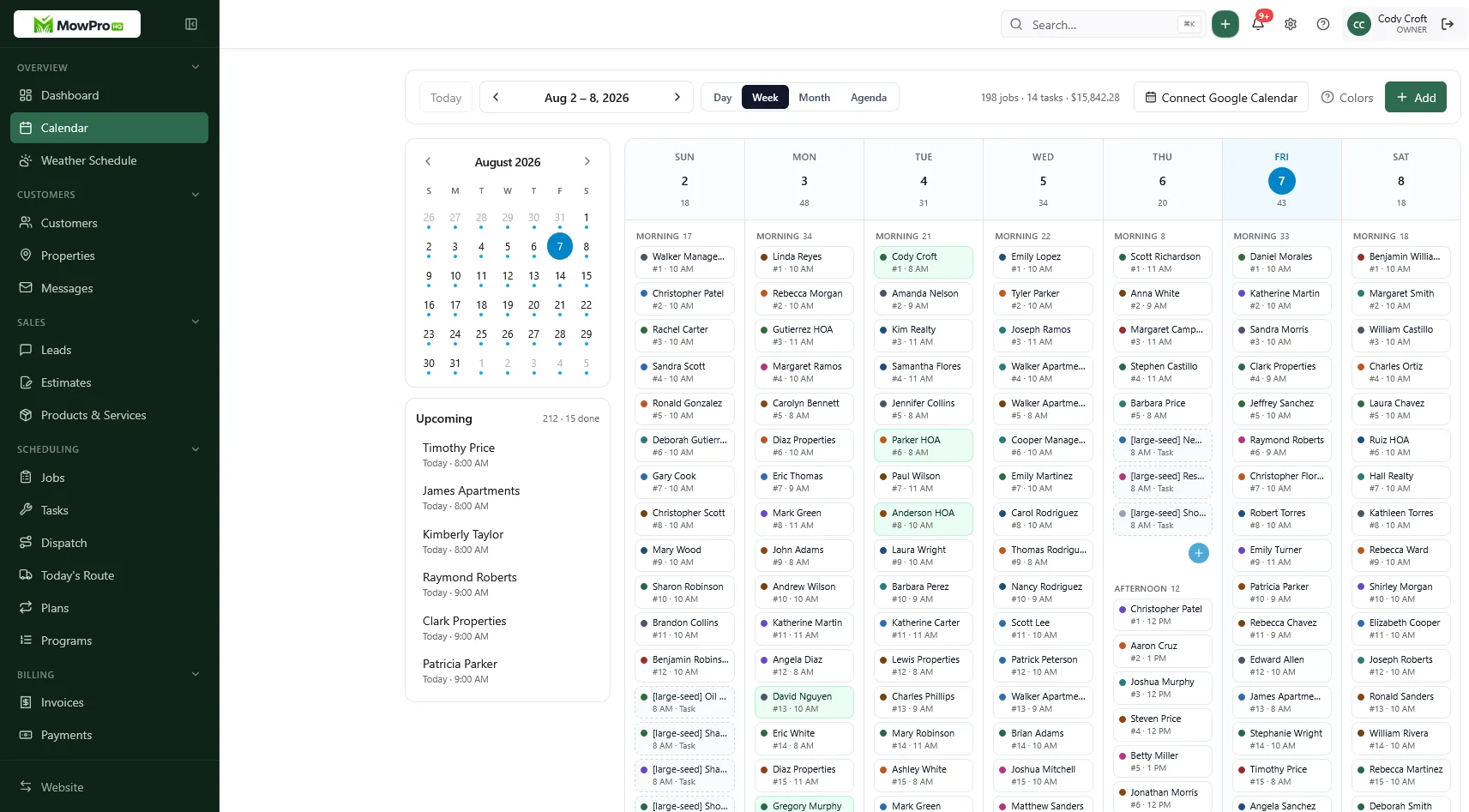
MowProHQ connects scheduling, customer and property records, quotes, and invoices. Route, communication, chemical-record, and team features can be added as the operation grows.
Confirm state pesticide reporting requirements before replacing any dedicated compliance tool. Compare current plans and pricing or create an account and test the workflow with a real week of due visits.
In MowProHQ
Frequently asked questions
- How do you run recurring pest treatments as a route?
- Define a short menu of visit types, schedule due treatments by neighborhood, and record products and service details on each property. When weather or label requirements affect service, move related stops together and communicate the change consistently.
- Should pest control be scheduled like a lawn route?
- The route-density principles are similar: group nearby stops and account for travel. The service itself is different because pest work follows a treatment program for a structure rather than a turf schedule.
- How often should residential pest service run?
- Frequency depends on the pest, property, climate, label requirements, and service agreement. Many general residential programs use quarterly exterior visits, while higher-pressure accounts may need monthly service. One-time calls should be scheduled deliberately around recurring work.
- What happens when rain hits a pest treatment route?
- Follow the product label and your written weather policy. When treatment cannot proceed, move the affected neighborhood group together where practical and send customers one clear update while preserving the route sequence.
- What does the next pest tech need before they leave the shop?
- Provide the visit type, target pests, previous products, access instructions, pet information, interior permission, and whether the stop is recurring service or separately billed work.
- When should a pest company add a second technician?
- Consider hiring when overtime and missed service windows are recurring, profitable demand remains available, and the schedule and property records are documented well enough for someone else to follow.
- What software does a recurring pest route need?
- Look for a shared schedule, customer and property records, quotes that become visits, invoices that match accepted work, and application records. Dedicated regulatory reporting may still be required, so confirm state rules before replacing a compliance tool.