
MowProHQ Blog/Growth
How to Run a Lawn Mowing Service in 2026
A practical guide to running a lawn mowing service: setup, pricing, routes, equipment, safety, contracts, billing, and day-to-day operations.

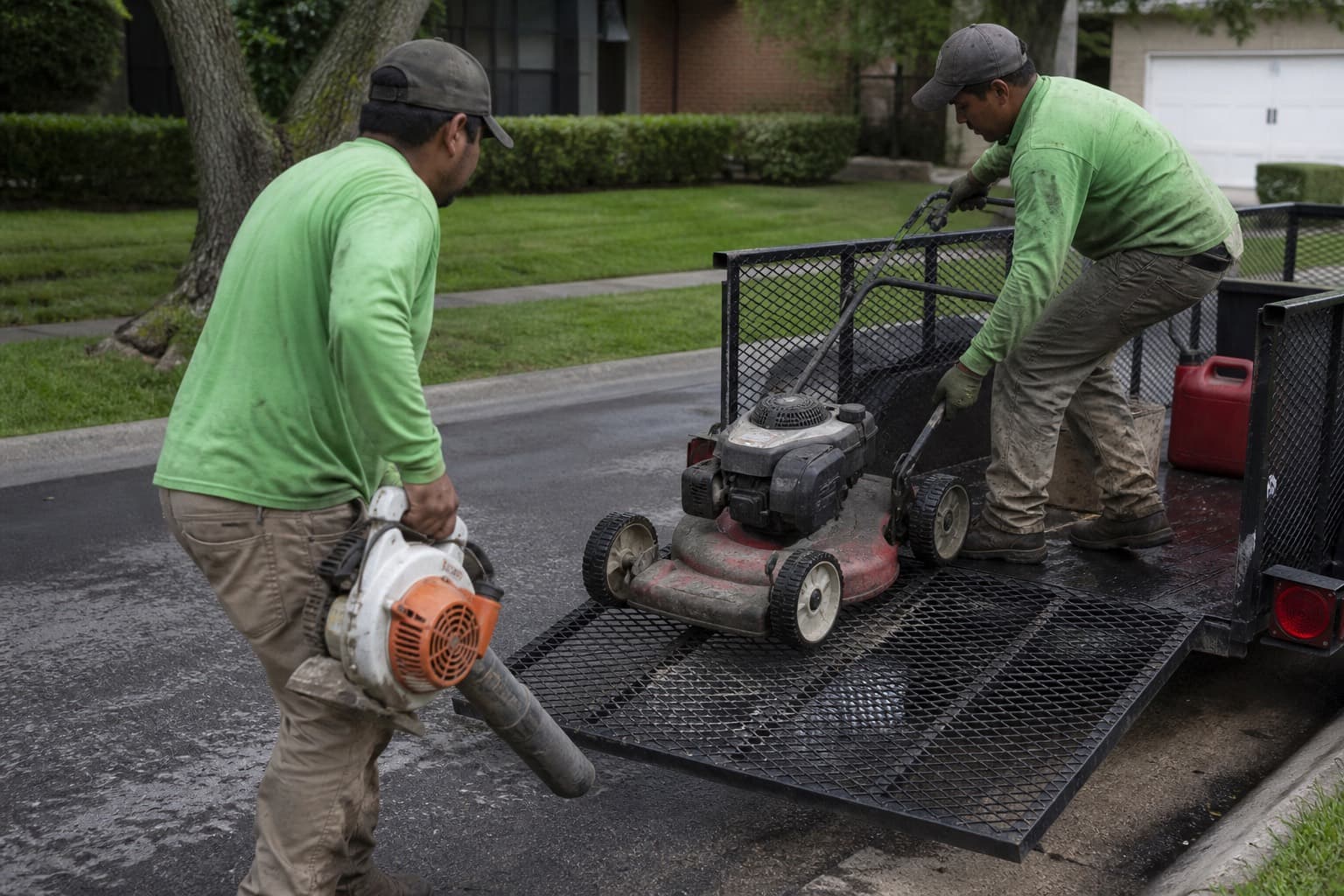
Buying a mower starts the work. Running a lawn mowing service means building a repeatable operation around it: clear services, accurate quotes, safe equipment, practical routes, written customer expectations, and dependable payment.
This guide focuses on the day-to-day systems behind a lawn mowing business. If you are still building the foundation, use the lawn care business operations checklist. If installations and larger projects will be central, also read how to start a landscaping business and lawn care versus landscaping in year one.
Set up the business for your location
Registration and licensing rules are local. Before advertising or accepting work, check the requirements that apply where the business is formed and where it operates. A city business license may not cover nearby municipalities, and mowing, pesticide application, irrigation, tree work, hauling, and snow services can fall under different rules.
Use this as a research checklist, not legal or tax advice:
- Choose a business structure and register names or entities as required.
- Obtain federal, state, and local tax accounts that apply.
- Confirm local business, contractor, hauling, and vehicle requirements.
- Check zoning or home-occupation rules if equipment is stored at home.
- Keep business money separate and establish a recordkeeping process.
- Learn sales tax rules for each service and jurisdiction you serve.
- Before applying pesticides or regulated products, confirm licensing, training, notification, storage, and recordkeeping rules.
A local attorney, accountant, tax professional, licensing office, and insurance agent can help interpret the rules for your facts. Recheck requirements when you add a service, employee, vehicle, or operating area.
Insure the work, vehicles, and equipment
Personal auto and homeowners policies may exclude business activity. Ask a licensed insurance professional to review how you operate, including trailers, helpers, subcontractors, chemical applications, and equipment stored off site.
Coverage to discuss may include:
| Exposure | Coverage or control to discuss |
|---|---|
| Property damage or injury | General liability |
| Trucks and trailers used for work | Commercial auto |
| Mowers, handheld tools, and stored equipment | Inland marine or equipment coverage |
| Employees injured at work | Workers' compensation, where required or appropriate |
| Customer or employee data | Cyber or data-related coverage |
| Higher-severity claims | Commercial umbrella |
Policy names, exclusions, limits, certificates, and legal requirements vary. Do not assume a customer waiver replaces insurance.
Sell a defined service
“We take care of the yard” is difficult to quote and easy to dispute. Give customers a short service menu with a written scope.
- Weekly core service — mow, edge specified hard surfaces, and blow hard surfaces.
- Less-frequent core service — the same tasks, priced for the actual growth and time expected.
- Enhanced recurring service — core mowing plus specifically scheduled bed or shrub work.
- Separate add-ons — bagging, haul-away, leaves, aeration, shrub trimming, or an overgrown first cut.
State what is excluded. Tall or wet turf, hidden debris, pet waste, inaccessible gates, leaf piles, steep areas, and restoration work can materially change the job. Put the same scope on the quote, recurring plan, and crew checklist. See what a lawn mowing service should include and lawn care job checklists.
Example service menu
| Service | Cadence | Included | Priced separately |
|---|---|---|---|
| Core mowing | Agreed recurring interval | Mow, defined edging, blow-down | Bagging, debris removal, extra trimming |
| Enhanced plan | Agreed mowing and add-on schedule | Core work plus named tasks | Work outside the written cadence |
| First cut | One visit | Scope based on current condition | Hauling or concealed obstacles |
| Cleanup project | One-time | Itemized project tasks | Changes approved after work begins |
Price from your costs and capacity
Do not copy a competitor's price without knowing what it includes. Your floor should account for:
- Wages or owner labor, including payroll burden where applicable
- Travel, loading, fueling, disposal, and administrative time
- Fuel, blades, line, repairs, and equipment replacement
- Vehicle, trailer, insurance, software, rent, and professional fees
- Taxes and a reasonable operating margin
Estimate total job time, including a fair share of travel and non-mowing work, then apply your required hourly production rate. Lot size helps, but slope, gates, obstacles, trimming, parking, and turf condition often matter more. Use the lawn care hourly rate calculator, lawn care pricing guide, and lot-size quoting guide.
| Pricing input | What to record |
|---|---|
| Direct job time | Mowing, trimming, edging, blowing, cleanup |
| Allocated route time | Drive, load, fuel, and disposal |
| Labor cost | Pay plus applicable payroll burden |
| Equipment cost | Fuel, maintenance, depreciation or replacement reserve |
| Overhead | Insurance, administration, software, storage, professional help |
| Risk or condition | Access, slope, overgrowth, debris, weather sensitivity |
Review estimated time against actual time. Adjust the estimate, route, scope, or price when the numbers do not work.
Useful pricing rules:
- Treat weekly and less-frequent mowing as different workloads. See weekly versus biweekly mowing.
- Quote neglected first visits as condition-based work. See first-cut and overgrown lawn pricing.
- Give add-ons their own scope and price. See pricing lawn care add-ons.
- Account for travel and route position. See setting a lawn mowing service area.
Use written quotes and service terms
A quote should identify the customer and property, scope, frequency, price, taxes if applicable, exclusions, acceptance method, and anticipated start conditions. Avoid promising an exact start or completion date when weather, access, or permitting can change it.
For recurring work, use written terms reviewed for your jurisdiction. Depending on the service, address:
- Renewal, cancellation, pause, and notice rules
- Weather delays and rescheduling
- Customer access obligations, locked gates, pets, toys, and hidden hazards
- Turf conditions that permit skipping or modifying a visit
- Extra work and change approval
- Payment timing, deposits, late balances, refunds, and disputed charges
- Damage reporting and a practical opportunity to inspect or correct work
- Photos used for job records and how customer information is handled
Consumer-contract, automatic-renewal, deposit, late-fee, card-surcharge, lien, and cancellation laws vary. Have local counsel review your terms instead of copying another company's contract.
Use a written lawn care quote whenever scope, condition, or frequency changes. If you offer different payment methods, check card-network and state rules before advertising a cash discount or adding any fee; see cash versus card pricing.
Quote-to-schedule handoff
| Step | Complete when |
|---|---|
| Property reviewed | Access, condition, hazards, and assumptions are recorded |
| Quote sent | Scope, price, terms, and acceptance are documented |
| Quote accepted | Customer and property records are created or updated |
| Visit scheduled | Crew can see the correct date or service window |
| Notes attached | Gate, pet, parking, and contact instructions are visible |
Build compact, realistic routes
Route density can reduce drive time, fuel use, and schedule variability. Define a service area and evaluate new work by both job margin and route position. A distant property may fit if it starts a deliberate new cluster; otherwise, a higher minimum or polite decline may be more sustainable.
Use route planning and dispatch and service-area radius guidance to shape the week.
Before each route:
- Confirm the stop order and any access restrictions.
- Check forecast, soil conditions, and local operating restrictions.
- Inspect and secure equipment and trailer connections.
- Allow time for fueling, disposal, breaks, and traffic.
- Put property notes where the person doing the work can see them.
- Set a process for delays, incidents, and customer updates.
Record fuel and disposal time instead of treating them as invisible. See hidden route time and property notes for lawn care crews.
Make a weather policy before bad weather
Wet turf can rut, clump, spread disease, reduce cut quality, and increase slip risk. Heat, lightning, smoke, wind, flooding, and poor visibility can also make outdoor work unsafe.
A practical weather policy should explain:
- Who decides whether conditions are safe and serviceable
- How customers will be notified
- Whether work moves to the next suitable day or route cycle
- How prolonged growth affects scope or pricing
- When a skipped service is credited, billed, or handled under the plan
- That crews may stop work when conditions become unsafe
Avoid a policy that pressures workers to continue through hazardous conditions. Follow applicable occupational safety requirements and use weather rescheduling guidance to build a workable recovery plan.
Maintain safe, dependable equipment
Choose equipment for the properties you actually serve, not only for maximum deck size. Access width, slope ratings, noise rules, transport capacity, dealer support, parts availability, and safe storage all matter.
Equipment and safety checklist
- Follow manufacturer manuals, guards, rollover protection, and maintenance intervals.
- Train operators before independent use and document that training.
- Inspect blades, tires, belts, controls, shields, and fluid leaks.
- Wear task-appropriate eye, hearing, foot, hand, sun, and visibility protection.
- Walk unfamiliar lawns for rocks, wire, toys, holes, and other hazards.
- Keep people and animals clear of discharge zones.
- Shut equipment down and isolate energy before clearing or servicing it.
- Secure machines, fuel, batteries, and loads during transport and storage.
- Keep fuel and chemicals in approved, labeled containers away from ignition sources.
- Maintain first-aid, incident, emergency-contact, and severe-weather procedures.
This list is not a substitute for equipment manuals, OSHA or state-plan rules, pesticide labels, transport regulations, or competent safety advice. Requirements change with the equipment and work performed.
Decide how recurring and one-time work fit
Recurring plans support route planning, but they need clear skip, pause, weather, and seasonal rules. One-time cuts and cleanups can fill capacity when priced for their condition and travel.
| Work type | Operational use | Common risk |
|---|---|---|
| Recurring mowing | Planned route base | Scope creep or seasonal mismatch |
| Less-frequent mowing | Serves suitable properties | More growth and variable job time |
| First cut or cleanup | Condition-based project | Hidden debris and underestimated disposal |
| Vacation or one-time mow | Intentional gap fill | Scattered travel and unclear expectations |
Read recurring mowing plans and one-time versus recurring mowing before setting the mix. If you use a lead marketplace, understand who owns the customer relationship and data; compare marketplaces with an owned customer list.
Invoice accurately and handle payments carefully
Close out each visit while the details are fresh:
- Record completion, exceptions, and approved extras.
- Send the invoice according to the written agreement.
- Match line items, discounts, taxes, and payment terms to the accepted quote.
- Reconcile payments, deposits, refunds, and processor fees.
- Follow a consistent, lawful process for overdue balances.
See lawn care invoicing and invoice collection practices.
Use a reputable payment provider and avoid collecting card details through ordinary text or email. Limit access to financial and customer records, use unique accounts and multifactor authentication where available, keep software updated, back up necessary records, and define how long you retain photos, gate codes, addresses, and payment records. Publish an accurate privacy policy for your actual practices and follow applicable privacy, breach-notification, marketing, and payment-security requirements.
Hire and manage workers lawfully
Hiring adds capacity and responsibility. Before the first shift, confirm:
- Whether the person is legally an employee or independent contractor; a contract label alone does not decide classification
- Work authorization, onboarding, payroll, withholding, wage, overtime, break, and recordkeeping duties
- Workers' compensation, unemployment, leave, and other state or local requirements
- Driver qualification and insurance approval for company vehicles
- Safety training, protective equipment, supervision, and incident reporting
- Written expectations for quality, customer communication, equipment, and data access
Rules vary significantly. Consult payroll, legal, tax, insurance, and safety professionals familiar with your location. Do not use cash payment or contractor treatment to bypass employment obligations.
Operationally, hire only after the service can be taught: packages and rates are written, property notes are complete, checklists exist, and someone can verify and invoice the work. Crew scheduling and scaling from solo to a crew cover the workflow side.
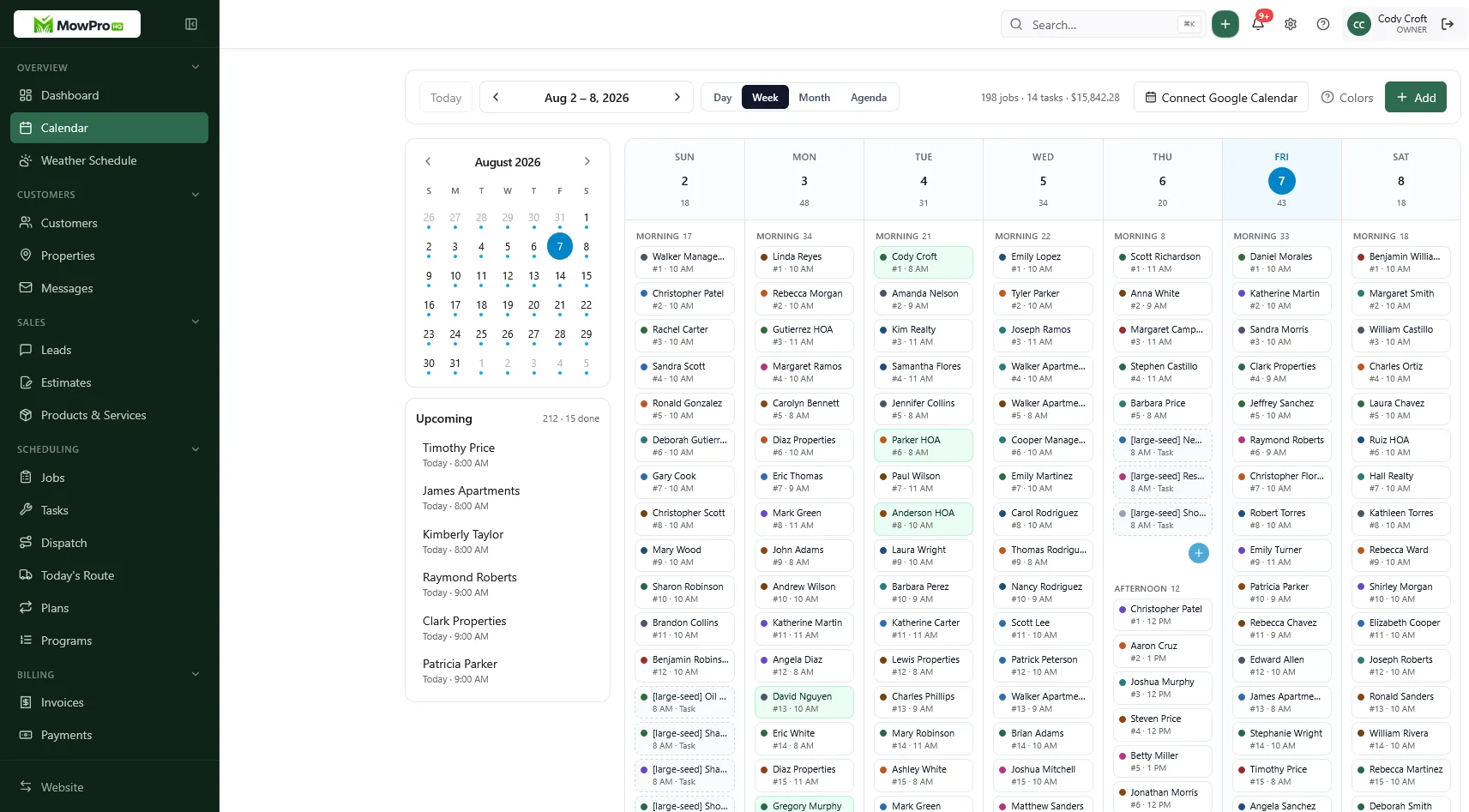
In MowProHQ
Keep one operating checklist
Build the business in phases based on local approvals, demand, and capacity rather than assuming a fixed launch timeline.
| Phase | Finish before moving on |
|---|---|
| Legal and financial setup | Registration, applicable licenses and tax accounts, banking, bookkeeping, insurance review |
| Service design | Defined packages, exclusions, pricing method, service area, written terms |
| Field readiness | Maintained equipment, transport and storage, safety training, emergency procedures |
| Customer workflow | Quote, acceptance, property notes, schedule, completion record, invoice |
| Growth | Route review, capacity forecast, lawful hiring process, quality checks, data access controls |
Review a small set of useful measures: estimated versus actual job time, revenue relative to production hours, route drive time, recurring workload, quote acceptance, unpaid balances, callbacks, incidents, and equipment downtime. Expense tracking and reports can help reveal whether a busy schedule is producing a healthy operation.
Software for running the week
At minimum, your system should keep customers and properties, schedules, quotes, job records, and invoices connected. As the operation grows, crew access, route planning, online payments, a customer portal, and a website lead inbox may reduce duplicate work.
Use the guides to lawn care CRM, scheduling software, and choosing lawn care business software to compare tools against your workflow.
MowProHQ brings lawn care customer records, scheduling, quotes, invoices, and related operating tools together. Current plans and features are listed on pricing. When you are ready to try it with your own workflow, sign up.
The mower performs the service. The systems around it make that service clear, safe, repeatable, and financially visible.
Frequently asked questions
- What does it take to run a lawn mowing service?
- You need more than mowing equipment. A dependable service has clear packages, cost-based pricing, written customer terms, safe work practices, organized routes, reliable billing, and records for taxes and compliance.
- How should a lawn mowing service package its work?
- Define a core service such as mowing, edging, and blowing, then list optional work separately. State the frequency, exclusions, weather policy, and price in writing so the customer and crew understand the same scope.
- What licenses and insurance does a lawn mowing business need?
- Requirements vary by state, county, and city and by the work performed. Check business registration, local licensing, tax, vehicle, employment, and pesticide rules. Ask a licensed insurance professional about appropriate coverage, which may include general liability, commercial auto, equipment, and workers' compensation.
- What software does a lawn mowing service need?
- At minimum, keep customer and property details, schedules, quotes, work records, and invoices organized. Route planning, crew access, online payments, and a customer portal become useful as operating complexity grows.
- How many customers does a lawn mowing service need?
- There is no universal number. Required volume depends on pricing, costs, property size, route density, season length, crew capacity, and the owner's income goals. Build a forecast from your own costs and available production hours.
- When should a lawn mowing service hire?
- Consider hiring when recurring demand exceeds safe, reliable capacity and the business can support the full employment cost. Before hiring, confirm worker classification, payroll, tax, insurance, wage, safety, and recordkeeping obligations with qualified local professionals.