MowProHQ Blog/Growth
When a Solo Pool Tech Should Add a Second Truck
How to decide when a pool route has enough demand, density, staff readiness, and documented processes to support a second truck.
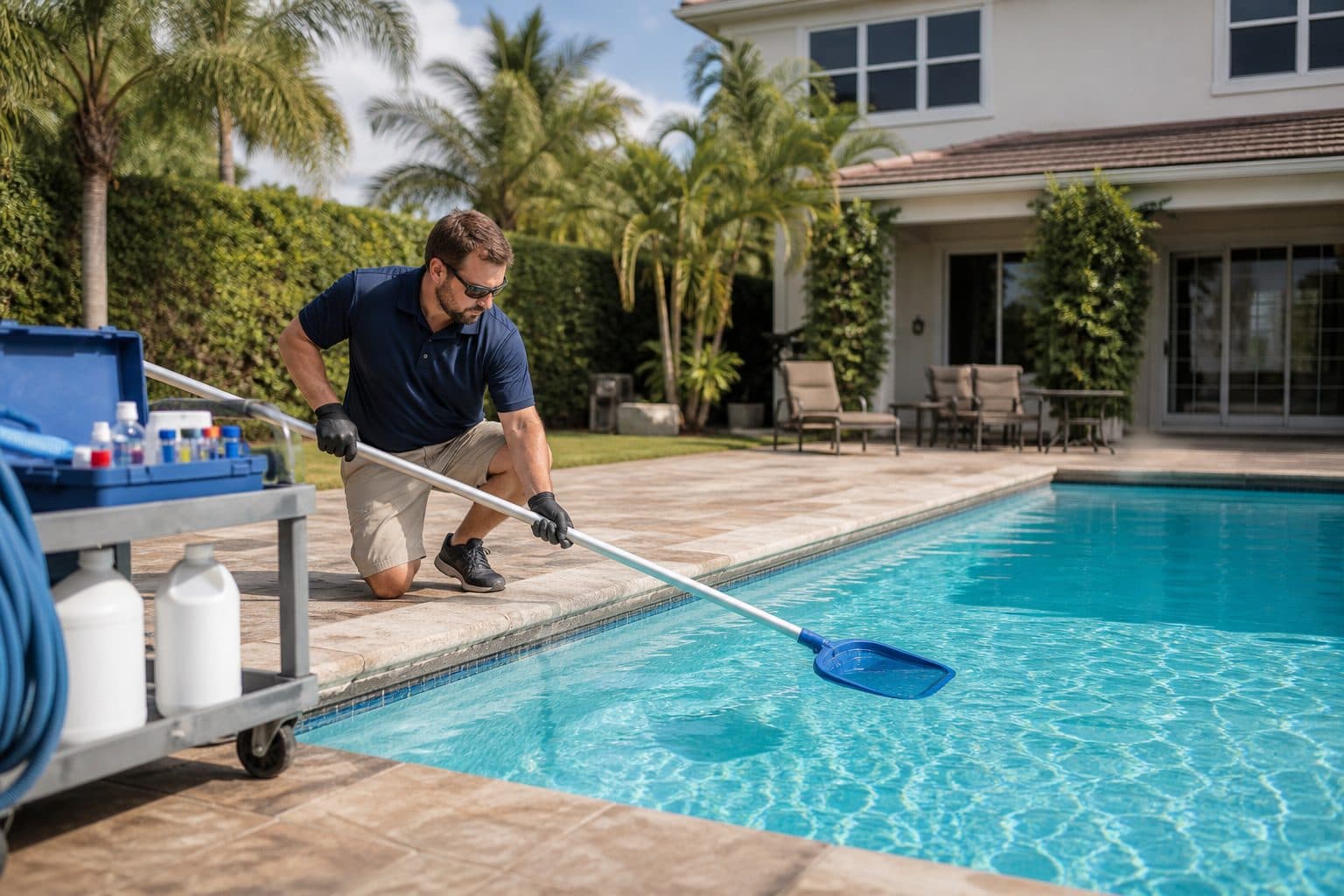
A second pool truck can create useful capacity, but only when the route and the employee are ready for it. Adding a vehicle too early increases insurance, fuel, equipment, and labor costs without guaranteeing enough profitable work to cover them.
This guide provides a practical go-or-wait test. Read it alongside how to run a weekly pool route and the similar decision process for adding a second lawn care truck.
One truck, two people is still one route
Do not treat hiring and buying another vehicle as the same decision. A new employee can ride the existing route while learning the service standard and property records. A second truck adds a separate schedule, equipment set, chemical inventory, and quality-control responsibility.
| Setup | What you bought | When it fits |
|---|---|---|
| Solo, one truck | Your hours | Fine until you decline in-area weeklies |
| Two people, one truck | Speed on hard cages and recoveries | First hire, most shops |
| Two people, two trucks | Two routes | After one list is full and dense overflow exists |
| Two thin trucks | Extra payments | Almost never |
If the existing schedule still has significant open capacity, another truck is likely to divide a thin route while adding overhead.
The readiness test
Look for all of the following:
- The current route is full based on actual service and travel time
- Overtime is recurring rather than caused by one unusual week
- You are declining or waitlisting profitable weeklies inside the area
- The second person can pass a random quality audit from the notes
- Notes, extras, and invoices do not live only in your head
- The new truck’s cost still clears your hourly floor
If overtime comes from long drives between scattered properties, tighten the service area before adding a vehicle. If the employee cannot yet meet the service standard, continue training. Clear property notes are part of that process.
If schedules, notes, and approvals still depend on the owner, document those processes before splitting the route.
What the second truck costs
Calculate the full cost before shopping, using current quotes and realistic assumptions.
| Line | Why it matters |
|---|---|
| Payment or cash outlay | The obvious one |
| Insurance | Often the surprise |
| Fuel | Two trucks, two burn rates |
| Chemical inventory | You cannot share one cart across town |
| Hoses, vac, test kit, cell cleaner | The truck is useless empty |
| Labor to run it | A parked truck is not capacity |
| Shop hours | Another vehicle and equipment set to maintain |
| Software / phones | Additional user and device costs |
Run the weekly numbers with two vehicles and two labor costs. If nearby demand cannot cover the added cost at current prices, improve the first route or wait. The same method in how to price weekly pool service still applies.
Check whether your software, phone, insurance, and payment providers charge more when you add an employee or vehicle. Include those changes in the budget.
Density first, then the second pin map
The second route should be built around a compact area, not every job you previously declined. Split work by geography so both technicians are not crossing town throughout the day.
Good split:
- Existing dense Thursday becomes Truck A
- Overflow plus a waitlist in the same two HOAs becomes Truck B’s seed
- Far pump calls stay quoted and scheduled, or declined
Bad split:
- “You take the weird ones”
- Equipment jobs on one truck, weeklies sprinkled on both
- Whoever texts first gets the next pin
- Green recoveries dumped on the new helper with no notes
Scheduling and routing are how you see that split on a board instead of in two brains.
Worked example: the yes and the no
Ready. The first technician has a full Thursday route and has worked overtime for several weeks. Six qualified weekly customers are waiting within the same two subdivisions. The second technician can follow property notes, meet the quality standard, and close out visits correctly. Those facts support building a second route in a concentrated area.
Not ready. The current day has eight scattered stops and several long drives. A distant lead accepts an outdated price, and the new employee still needs help with access codes and chemistry targets. Another vehicle would add cost without fixing the route design or training gaps.
The difference is established demand and operational readiness, not the desire to grow.
Systems that must exist on day one of two trucks
Borrowed from the route playbook and from pool service software for a small company:
- One published board both techs see
- Property notes attached to each stop
- A written weekly core and a published extras menu
- Invoices that go out without you typing from memory — see same-day pool invoicing
- A storm and skip rule both trucks obey
- A clear way to see assignments and progress
A basic shared system may be enough during training. Dispatch and location features become more useful when two trucks operate independently every day. Do not rely on a spreadsheet that only the owner understands.
Both technicians should use the same approved process for chemical records and water analysis. Operations software may document applications, but specialized chemistry tools may still be required.
What to do instead of buying iron
If you failed the go test:
- Raise prices on the first route
- Add trip fees or decline far pins
- Fill the existing pocket from the waitlist
- Add a helper on the same truck for recoveries and long cages
- Reprice or release accounts that remain below your current cost floor
- Schedule chemical pickup and equipment jobs so the “full” day is honest
Another vehicle does not solve weak pricing or a scattered route.
If you would decline the overflow as a new lead at today's price and location, it should not be the reason to buy another truck.
The first 30 days of two trucks
- Split the map on paper before you split the keys
- Ride the new list once
- Audit water and finishes twice a week
- Do not accept new far pins “to feed the truck”
- Review hours, callbacks, and unbilled extras every Friday
- Be willing to return to one truck if demand does not support the split
Correcting the decision early is cheaper than operating two underfilled routes for a full season.
Train the employee to work from the same notes they will use alone. If they cannot complete a straightforward weekly visit independently, continue ride-along training before assigning a vehicle.
Quality is the hidden gate
A second route that misses baskets, chemistry checks, or completion records will create callbacks that affect both schedules. Use appropriate photos, checklists, and audits, and require extra work and skipped stops to be recorded clearly.
Give the second technician access to the current digital schedule rather than sending a paper list or screenshot each morning.
How MowProHQ runs two pool trucks on one board
MowProHQ keeps both routes, properties, quotes, and invoices in one place. Shared CRM, scheduling, quotes, and invoices give both technicians access to the same current information.
Compare current plans and pricing when you need dispatch, GPS, chemical records, time tracking, or additional team features. You can also review the full pool service tools or create an account to test the two-route workflow before committing to another vehicle.
Frequently asked questions
- When should a solo pool tech add a second truck?
- Consider a second truck when the first route is consistently full, overtime has become normal, and profitable demand remains within a concentrated area you already serve. A second vehicle will not solve scattered customers, weak pricing, or an unreliable schedule.
- How many pools per day means I need another tech?
- There is no universal number. A compact route can support more daily stops than a scattered route with difficult access and repair calls. Base the decision on actual working hours, recurring overtime, route density, and qualified demand.
- Should I buy the second truck before I hire?
- Usually not. Train the second technician on the existing route until they can complete straightforward stops from the documented instructions. Add the vehicle when the employee is ready to run an independent list and enough work exists to support it.
- What does a second pool truck actually cost?
- Include the purchase or payment, insurance, fuel, maintenance, equipment, chemical inventory, employee labor, and additional shop time. Compare the full monthly cost with realistic revenue from the route rather than counting only the truck payment.
- Is a second tech the same as a second truck?
- No. A second employee can work alongside you in the same vehicle before running an independent route. Many companies benefit from adding help and improving training before taking on another vehicle.
- What systems do I need before a second pool truck?
- You need a written weekly scope, current property notes, a shared schedule, a process for extra work, and invoicing that does not depend on the owner remembering every stop. The second technician should be able to start the route without a phone briefing.
- When should I refuse to add the second pool truck?
- Wait when the overflow is distant, underpriced, or limited to a short seasonal spike. Improve pricing, tighten the service area, use a waitlist, or add temporary help before committing to a year-round vehicle expense.