
MowProHQ Blog/Growth
When to Add a Second Lawn Care Truck
A practical capacity and cost test for adding a second lawn care truck, including route density, financing, insurance, hiring, safety, and cash flow.
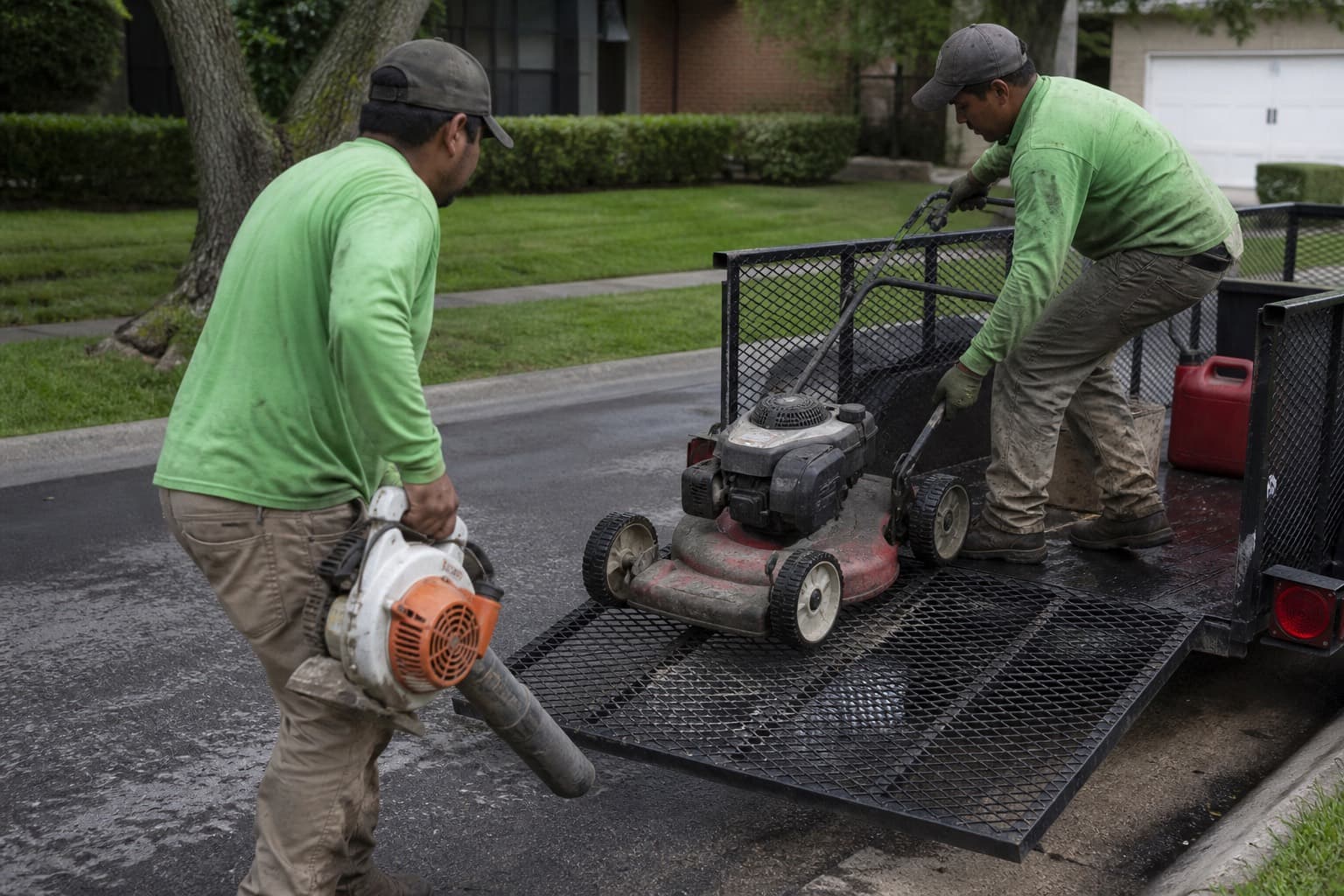
A second lawn care truck can unlock growth, but it does not create demand, route density, or profit by itself. It adds a second dispatch unit—and a second set of fixed costs, compliance work, equipment, and people to manage.
The right time is usually when a proven route is close to its practical capacity, profitable work is waiting nearby, and the business can carry the added cost during slow weeks. Use the test below alongside solo-to-crew scaling, training a second mower, and the lawn care hourly rate calculator.
A second employee is not automatically a second route
One truck with two people is still one route. A helper may reduce unloading time, trimming time, and fatigue without requiring another vehicle. That is often the simpler first step because supervision and equipment stay together.
| Setup | Capacity added | Main tradeoff |
|---|---|---|
| Solo, one truck | Owner labor | Simple, but limited by one person’s hours |
| Two people, one truck | More production on one route | Added payroll, but one dispatch unit |
| Two crews, two trucks | A separate route | More coverage plus substantially more overhead |
| Two partly filled trucks | Flexible scheduling | High idle cost and duplicated travel |

Measure practical capacity, not a generic stop count
“How many lawns can one truck mow?” has no reliable universal answer. Ten large or difficult properties may consume more time than twenty compact ones. Gates, hills, bagging, cleanup, trailer access, disposal, weather, and traffic all matter.
Start with eight to twelve representative weeks from your own operation. Separate weather recovery and unusual projects so they do not distort the baseline.
Practical weekly capacity
Available crew hours × target utilization = productive field hours
If a crew is scheduled for 40 hours but you reserve time for fueling, maintenance, meetings, weather, and normal disruption, do not model all 40 as billable production. Choose a utilization assumption supported by your records, not an industry anecdote.
Then track:
- Productive field hours and revenue by route
- Drive, dump, fuel, loading, and shop time
- Overtime and work pushed into later days
- Quotes declined or waitlisted by neighborhood
- Rework, callbacks, and missed services
- Seasonal demand and historical customer loss
A route may feel full because it is poorly arranged. Before adding a truck, tighten the service area, improve route planning, and correct underpriced work with a consistent job-pricing method.
The second-truck go/no-go test
The case is stronger when you can answer yes to each question:
- Is the current route consistently near practical capacity after normal maintenance and weather time?
- Is there documented, profitable demand inside a compact route—not merely scattered leads?
- Can a trained, qualified, and insurable person run one route without constant owner supervision?
- Are job notes, checklists, schedules, time records, and invoices usable by both crews?
- Does the forecast cover the complete vehicle and labor cost in a conservative month?
- Is there enough cash or available credit for repairs, deductibles, payroll, and delayed customer payments?
- Is there a useful plan for the truck during the off-season or other low-demand periods?
Failing one item does not always mean “never,” but it identifies the risk you must solve before signing a loan or lease.
Calculate the full cost of the second truck
The dealer payment is only one line. Build a monthly forecast with fixed costs, variable costs, and the labor needed to put the vehicle to work.
| Cost group | Include |
|---|---|
| Acquisition | Down payment or cash purchase, principal, interest, lease charges, sales or use tax, and dealer fees |
| Vehicle compliance | Commercial registration, inspections, permits, plates, and any trailer requirements |
| Insurance | Commercial auto, physical damage, hired/non-owned coverage when relevant, trailer/equipment coverage, and umbrella coverage |
| Equipment | Trailer, mower, handheld tools, racks, tie-downs, safety gear, and initial spare parts |
| Operation | Fuel, tires, oil, blades, routine service, tolls, washing, and parking or storage |
| Repairs and downtime | Unexpected repairs, towing, rentals, lost production, and a replacement reserve |
| Employment | Wages, overtime, payroll taxes, workers’ compensation, benefits, recruiting, onboarding, and paid training |
| Administration | Scheduling, phones, software, bookkeeping, and added management time |
Use quotes from your lender, insurer, equipment vendors, and local agencies. Insurance can change materially based on the driver, vehicle, trailer, territory, claims history, coverage limits, and type of work.
Break-even formula
Estimate the monthly revenue required to cover the added capacity:
Break-even revenue = added fixed costs ÷ contribution margin ratio
Where:
Contribution margin ratio = (revenue − route-level variable costs) ÷ revenue
For planning, suppose the second unit adds $6,000 per month in fixed and committed costs and your documented contribution margin ratio is 45%:
$6,000 ÷ 0.45 = $13,333
That illustrative unit would need about $13,333 in monthly revenue just to cover those added costs before contributing additional operating profit. Your result may be much higher or lower. Test slower months, overtime, a repair, higher insurance, customer churn, and late payments. Do not use best-month revenue as the baseline.
Also calculate cash flow. A route may look profitable on an accrual basis while payroll, the loan, fuel, and repairs come due before customers pay.
Buy, finance, or lease?
Each option changes risk; none makes an underfilled route profitable.
- Cash purchase: avoids interest but can consume the reserve needed for payroll and repairs.
- Loan: preserves some cash but creates a fixed payment and may require a lien, guarantee, or minimum insurance coverage.
- Lease: may reduce the initial outlay, but mileage, wear, modification, early-termination, and end-of-term provisions matter.
- Short-term rental or seasonal lease: can help test demand where available, though availability, towing permission, equipment fit, and cost must be verified.
Compare the total amount paid, term, rate, fees, collateral, prepayment terms, mileage limits, expected resale value, warranty, and downtime support. Have a qualified adviser review terms you do not understand; this article is not financing, legal, or tax advice.
Insurance, registration, and driver qualification
Talk with a commercial insurance agent before choosing the truck or driver. A personal auto policy may exclude business use, employees, trailers, permanently mounted equipment, or the limits a lender requires. Confirm how tools are covered while stored, transported, or left overnight.
Vehicle and trailer rules vary by state, province, municipality, weight rating, combination weight, vehicle use, and whether you cross jurisdictional lines. Depending on the operation, requirements may include:
- Commercial registration, inspections, or operating permits
- A specific driver-license class or medical qualification
- Trailer registration, brakes, lighting, breakaway equipment, or safety chains
- Hours, vehicle-marking, or recordkeeping rules
- Separate pesticide or chemical transport and application requirements
Do not assume a pickup and landscape trailer are exempt because another contractor runs the same setup. Verify the actual vehicle and trailer ratings with your motor-vehicle and transportation agencies, and use local legal or compliance guidance when needed.
Before assigning keys, document a valid license, acceptable motor-vehicle record, insurer approval, towing competence, and training on backing, parking, load securement, accident reporting, and equipment security. Recheck qualifications on a defined schedule.
Employment and safety responsibilities
A second truck usually means someone works beyond your immediate view. That raises the importance of written procedures and proper employment practices.
Confirm worker classification, wage and overtime rules, timekeeping, meal and rest requirements, workers’ compensation, unemployment obligations, onboarding documents, and required workplace notices with local employment and payroll professionals. Calling a regular crew member a contractor does not make that classification valid.
Build a route-level safety process that covers:
- Pre-trip vehicle and trailer inspection
- Hitch, coupler, chains, breakaway cable, lights, tires, and load securement
- Mower, trimmer, fuel, battery, and chemical storage
- Personal protective equipment and heat, weather, and hydration procedures
- Backing with a spotter and avoiding unsafe roadside parking
- Phone use, seat belts, speed, fatigue, and distracted driving
- Injury, property-damage, spill, theft, and collision reporting
- Authority to stop work when conditions are unsafe
Keep inspection, maintenance, training, and incident records. Requirements differ by location and operation, so consult your insurer and local safety or employment professionals.
Plan maintenance and downtime before launch
A second route needs a maintenance system, not just another mower. Add the truck, trailer, and every machine to a service calendar. Record mileage or hours, inspections, repairs, blade service, tires, fluids, and manufacturer-recommended intervals. The shop-time guide can help you schedule work that is otherwise easy to hide.
Decide in advance what happens when the new truck or primary mower fails:
- Is there a backup vehicle or rental source that permits towing?
- Can the route be consolidated without unsafe overtime?
- Which customers receive priority after a delay?
- Who authorizes repairs, and at what spending limit?
- How much cash is reserved for the deductible and urgent work?
Capacity that disappears after one breakdown is not dependable capacity.
Build the second route around density
The new route should begin as a compact cluster, not a collection of every job you previously declined. A practical split might move an established neighborhood to the new truck and combine it with nearby waitlisted customers. Keep the first route compact as well; do not weaken one profitable day to make the other look busy.
Avoid splits such as:
- Sending the second truck all the distant or difficult jobs
- Letting both trucks cross the same town throughout the day
- Assigning stops based on which customer called most recently
- Taking low-margin work simply to keep the new vehicle moving
Use dispatch practices to compare planned and actual drive time.
In MowProHQ
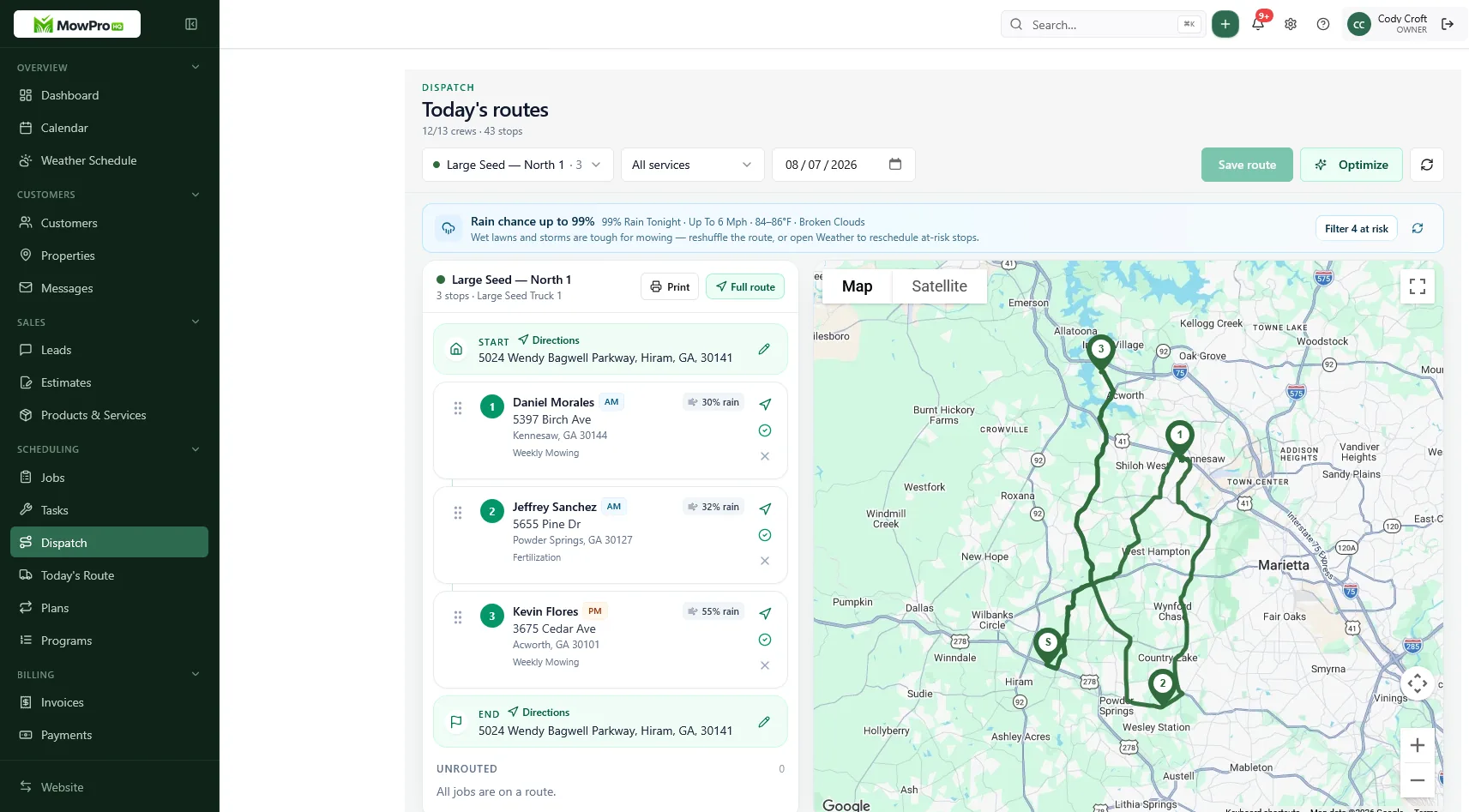
A qualified example
Consider a company whose primary route has been near its measured practical capacity for several months. It has a waitlist concentrated in two adjoining neighborhoods, current pricing supports its target margin, and a trained employee is approved by the insurer to drive and tow.
The owner models the truck, trailer, equipment, payroll, insurance, maintenance, and downtime using written quotes. The plan still has positive cash flow in a slower-month scenario, and the business retains an emergency reserve after the down payment. Moving part of an existing dense route gives the second crew a stable starting schedule.
Contrast that with a company experiencing overtime because its stops are scattered. Its interested leads are far apart, the likely driver has not been approved by the insurer, and the forecast assumes every new quote closes with no cancellations or repairs. A second truck would duplicate overhead before fixing the route. Tightening the territory, training the employee, and improving prices are better next steps.
The lesson is not that a particular number of stops is safe. It is that the decision should survive realistic capacity, staffing, and cash-flow tests.
Account for idle and seasonal capacity
A truck that is productive in spring may sit underused in midsummer or winter. Model revenue and costs by month, not as one annual average. Loan or lease payments, registration, storage, and much of the insurance continue while production falls.
Possible responses include building a cash reserve, staggering purchases, using flexible rentals where practical, scheduling preventive maintenance during slow periods, or adding compatible seasonal services only when they fit your skills, insurance, equipment, and market. Do not assume a new service will automatically fill the gap.
Track these after launch:
- Scheduled versus available crew hours
- Revenue and contribution margin by truck
- Drive time, fuel, overtime, and callbacks
- Days the truck is idle or unavailable
- Repair and maintenance cost per mile or operating hour
- Customer retention and route density
If the second unit remains thin, consolidating routes or selling underused equipment may be less costly than keeping it for appearances.
Tax and accounting questions to settle
Ask your accountant or tax professional how the purchase or lease should be recorded and how local rules affect depreciation, interest, sales or use tax, mileage and expense records, equipment disposal, and employee vehicle use. Tax treatment depends on entity, jurisdiction, business use, timing, and current law; a deduction does not make an unnecessary truck affordable.
Keep the purchase agreement, loan or lease documents, titles, registrations, insurance records, mileage, receipts, maintenance history, and allocation of business versus personal use. Your bookkeeper should also create a way to compare each truck’s revenue and direct costs without pretending shared overhead disappears.
Systems to have before the keys change hands
The business should be able to run when you are not in either cab:
- One published schedule with clear route ownership
- Complete property access and service notes
- Job checklists and photo standards
- Consistent quotes, change approvals, and invoices
- Clock-in, mileage, fuel, and purchase procedures
- Weather, delay, skip, and customer-communication rules
- Vehicle inspections, maintenance logs, and key control
- Collision, injury, spill, and equipment-theft procedures
Software for a small lawn care crew should reduce owner dependence, but software cannot repair weak pricing or create a qualified driver.
What to do if the numbers do not work
Delay the purchase and improve the constraint:
- Raise under-market prices carefully using a price-increase process
- Reduce drive time and decline jobs outside the service area
- Add or train a helper on the existing truck
- Waitlist nearby demand instead of accepting scattered work
- Remove consistently unprofitable accounts with a professional customer offboarding process
- Improve maintenance planning and reduce preventable downtime
- Test a shorter commitment if an appropriate rental is available
The first 30 days with two trucks
- Publish both routes and backup assignments before launch.
- Complete documented vehicle, trailer, equipment, and safety training.
- Ride with the new driver until work and driving standards are consistent.
- Review route hours, drive time, fuel, overtime, and callbacks each week.
- Inspect the truck and trailer on schedule and close maintenance issues promptly.
- Compare actual cash flow with the forecast and investigate material differences.
- Resist distant or discounted work added merely to keep the truck busy.
Set review dates before launch—such as 30, 60, and 90 days—and decide what would trigger route consolidation, pricing changes, or sale of the vehicle.
Keep both crews on one board
MowProHQ can keep customer records, routes, property notes, quotes, and invoices together as you move from one truck to two. Review current plan details on the pricing page, or sign up when you are ready to organize the operation.
Frequently asked questions
- When should a lawn care company add a second truck?
- Consider a second truck when your current route is consistently near practical capacity, profitable demand is waiting inside a compact service area, a qualified driver can run the route, and conservative cash-flow projections cover the truck and crew through slower periods. No single stop count or revenue threshold works for every company.
- How many lawns per day mean I need another truck?
- There is no universal number. Property size, travel, terrain, service scope, equipment, crew size, disposal time, and weather all change daily capacity. Measure productive hours, drive time, overtime, deferred work, and contribution margin using your own route history.
- Should I hire before buying a second lawn care truck?
- Usually, it is safer to identify and train the likely driver before committing to another vehicle. Confirm that the employee is legally qualified, insurable, and able to perform work independently. Your order may differ if a seasonal lease or reliable subcontracting arrangement reduces the commitment.
- What costs should I include for a second lawn care truck?
- Include the purchase or lease, interest, taxes and fees, commercial insurance, registration, trailer and equipment, fuel, maintenance, repairs, tires, storage, software, payroll, payroll taxes, workers’ compensation, training, and a reserve for downtime. Ask local insurance, tax, accounting, employment, and vehicle-registration professionals which rules apply.
- Is a second crew the same as a second truck?
- No. Adding a helper can increase production on one route without creating a separate route. A second truck creates another dispatch unit with its own driver, equipment, operating costs, maintenance schedule, and safety responsibilities.
- What systems should exist before a second truck?
- At minimum, use a shared schedule, complete property notes, job checklists, time and mileage records, maintenance logs, incident procedures, and consistent estimating and invoicing. The business should be able to operate when the owner is not riding in either truck.