MowProHQ Blog/Pricing
How to Raise Lawn Mowing Prices Professionally
A practical process for raising mowing rates using a cost floor, clear notice, updated packages, and consistent account decisions.

Price increases are easier to manage when they follow a consistent review process. Start with the cost and time required to provide the service, choose an effective date, and communicate the change clearly.
Use this process with how to price lawn care jobs and the hourly-rate calculator. If an account remains below the cost floor after repricing, review the guide to ending service professionally.
Know the floor before you write the letter
Enter wages, payroll burden, fuel, equipment, overhead, and target margin in the calculator. Then price each visit from expected service and route time, especially where conditions have changed.
| Trigger | Move |
|---|---|
| Fuel / labor jump | Across-the-board or by zone |
| Booked out while discounting | Apply the current rate card |
| Yard got harder | Recalculate that property |
| Off-route | Trip fee or decline |
| Long-term account below cost | Reprice or end service with notice |

How to say it (short)
Subject / opener: Lawn service price update effective [date]
- What stays included (mow, edge, blow, scope)
- New visit or monthly number
- Effective date that follows the agreement and notice requirements
- Choice: weekly vs biweekly as a different product
- How to ask a question (one channel)
Keep the notice brief and factual. Give customers one clear channel for questions.
Worked example
- Old medium weekly: $55
- Floor says $80 before add-ons
- New weekly: $80
- Biweekly alternative: $110 (not $40)
- Notice March 1, effective April 1
- Two accounts leave. Tuesday gets two paying stops from the waitlist.
Update the system the same day
Update quotes, recurring plans, invoices, the website, and the rate card. For automatic payments, follow the agreement, processor terms, and applicable notice and authorization rules before changing the amount.
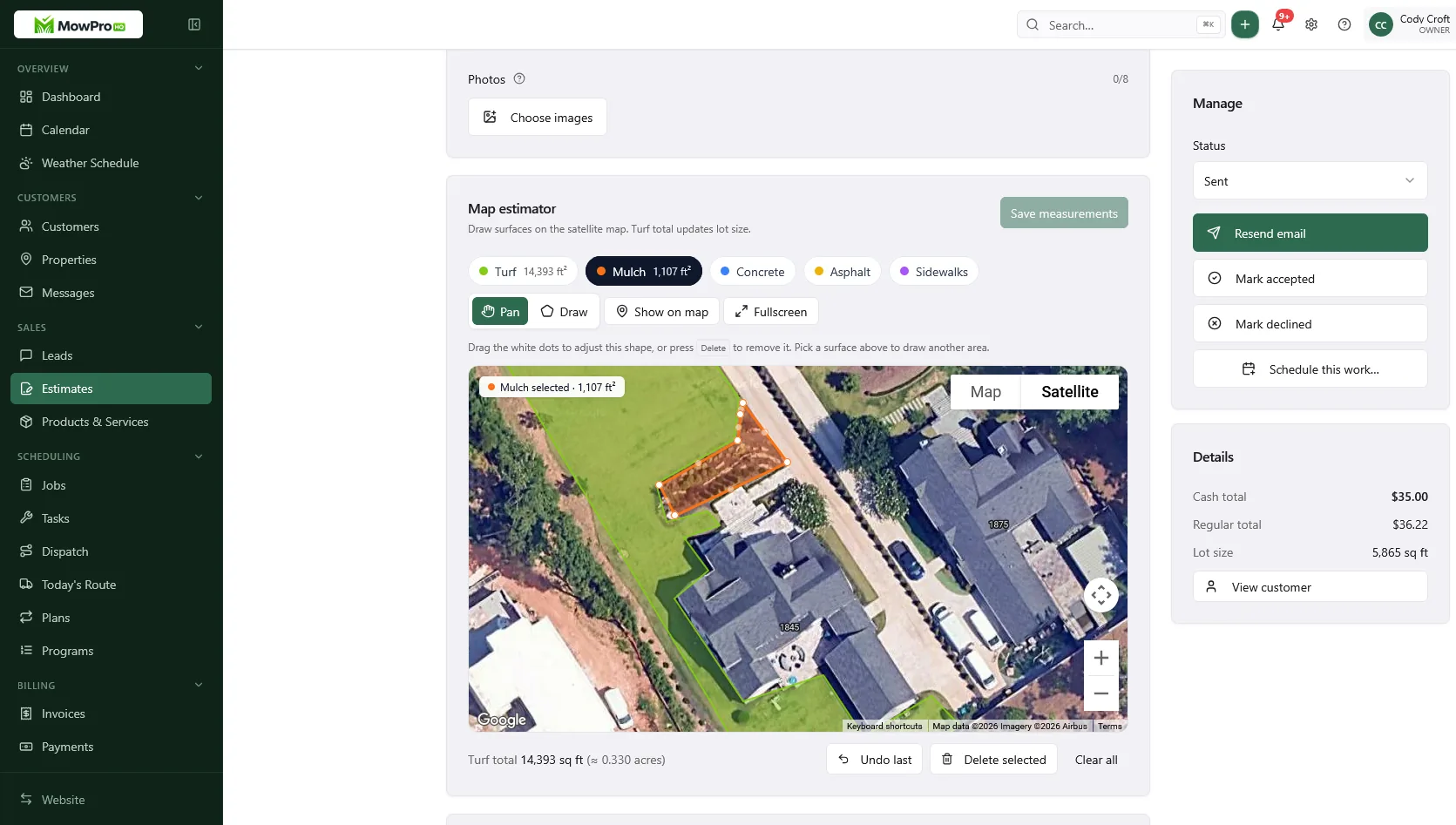
In MowProHQ
Who gets a different conversation
On-route accounts in good standing: notice, brief reason, effective date, and any package choice.
Below-cost distant stops: apply the current price and trip policy, move them to an efficient route day, or end service.
Commercial accounts: review the contract, renewal terms, purchase-order process, and scope before changing the price. Tie the increase to the defined service rather than an unexplained percentage.
After they say no
Do not create informal prices at the property. If the customer declines, follow the agreement’s end process and update the schedule and final invoice.
Update public pricing claims, the website, quote forms, and templates at the same time. Keep the calculator and rate-card assumptions with the review record.
Email, door, or both
Use a delivery method allowed by the agreement and likely to reach the customer, such as email, portal message, mail, or a combination. Keep proof of notice. Do not rely only on a verbal conversation at the property.
If you have a website quote form, change the numbers the same day. Inbound leads at last year’s price will undo the letter. Same for Nextdoor replies you typed in 2024 and never updated.
Track acceptance, cancellations, questions, and reasons. Compare the results by route, package, and account type rather than relying on a universal “normal” cancellation rate.
Use consistent factors such as lot, service time, frequency, scope, and travel. Document exceptions, and do not allow field crews to invent alternate prices.
How MowProHQ helps a raise stick
MowProHQ keeps package prices connected across quotes, recurring plans, scheduled work, and invoices. Use the calculator as one input, then verify the result against actual route time and financial records.
Review current plans and pricing, then create an account to test the update workflow. Make sure the notice, effective date, quote template, recurring plan, invoice, and payment authorization remain aligned.
Frequently asked questions
- How do I raise lawn mowing prices without losing customers?
- Some customers may leave after an increase. Reduce avoidable losses by using a documented cost basis, giving clear notice, keeping the scope understandable, and offering only alternatives the company can provide profitably.
- When should a lawn care company raise prices?
- Review prices when labor, fuel, equipment, insurance, or overhead changes materially; when properties take longer than estimated; and on a regular annual schedule. Compare actual route performance with the current cost floor.
- How much notice should I give for a mowing price increase?
- Use the notice period required by the agreement and applicable law. When no specific period applies, provide enough written notice for the customer to review the new price before the first affected service or automatic payment.
- Should I raise everyone the same percent?
- Not always. Recalculate properties whose service time, scope, or route position has changed. Use consistent pricing factors and document the reason for account-specific adjustments.
- What do I say when a customer asks why mowing costs more?
- Explain briefly that the new price reflects the cost and time required to maintain the agreed service standard. If appropriate, offer clearly priced frequency or scope alternatives.
- Is it better to raise prices or add fees?
- A clear package price is often easier to understand. Separate trip, disposal, or extra-work charges can still be appropriate when disclosed in the quote and tied to a distinct cost or service.
- How do I update software when I raise rates?
- Update recurring plans, quote templates, website prices, invoices, and authorized automatic-payment amounts. Preserve the notice and customer response, and follow applicable consent requirements before changing an automatic charge.