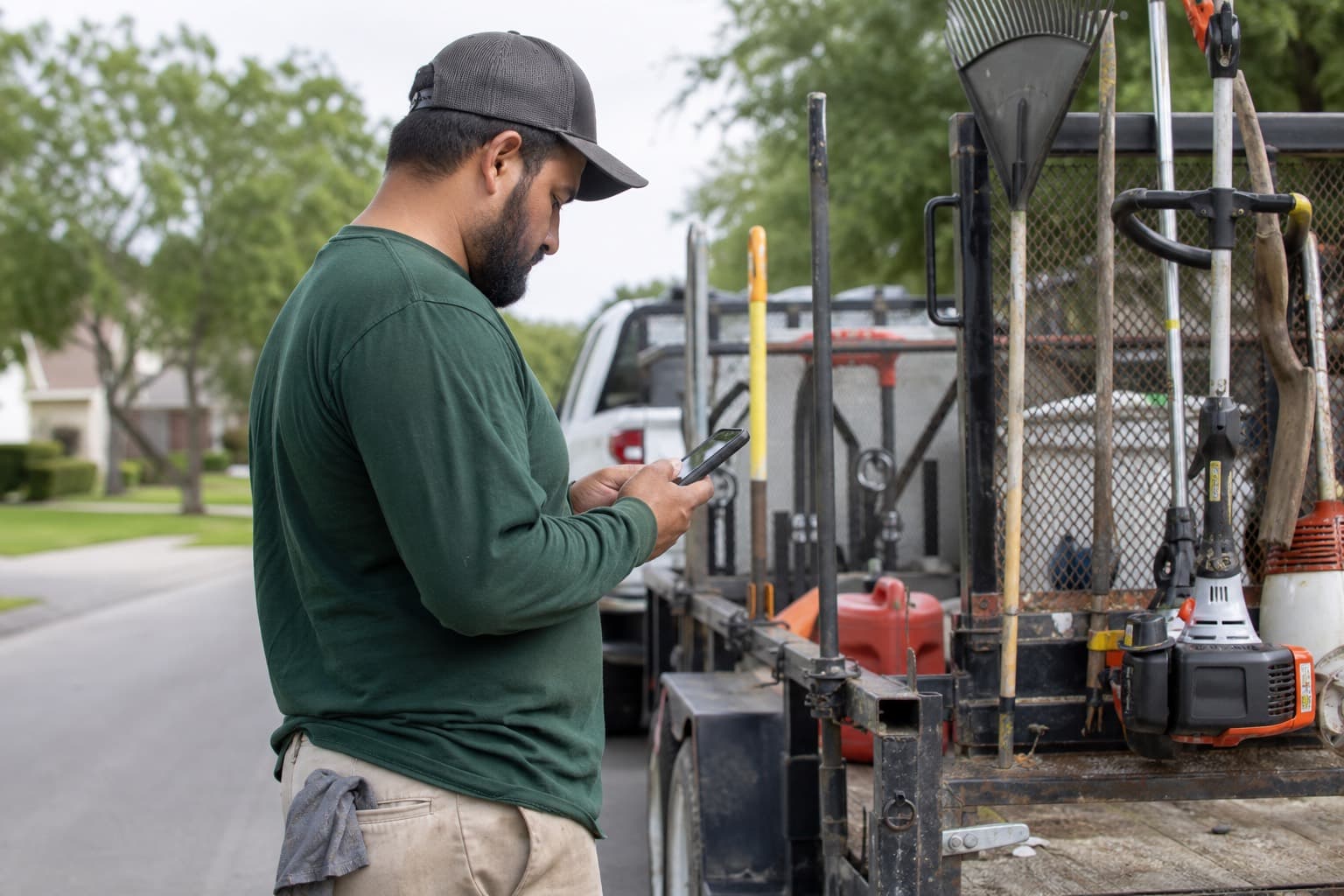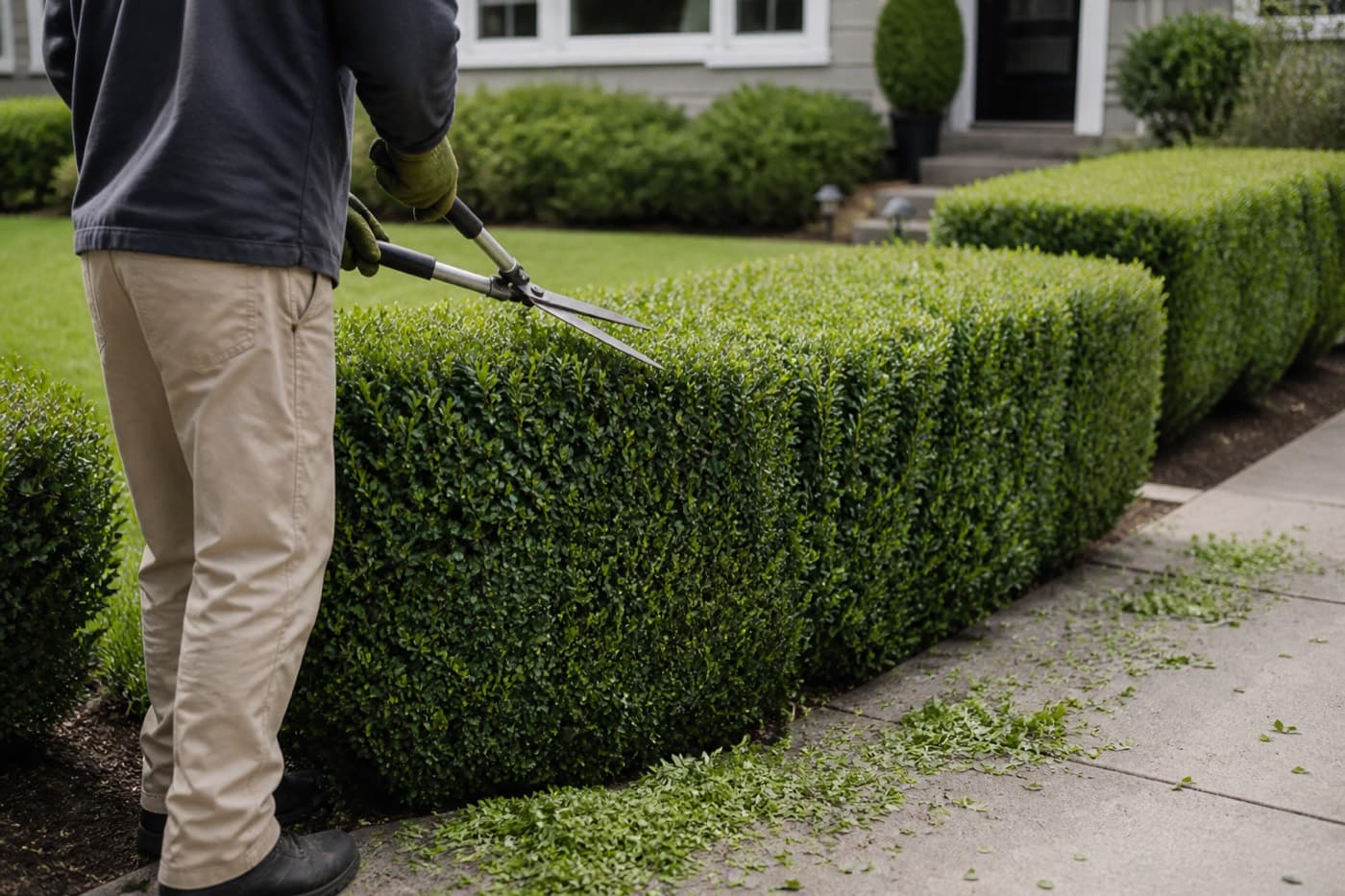
MowProHQ Blog/Crews
How to Train the Second Mower
A field training plan for a new lawn care employee using safety instruction, ride-alongs, checklists, property notes, and quality audits.
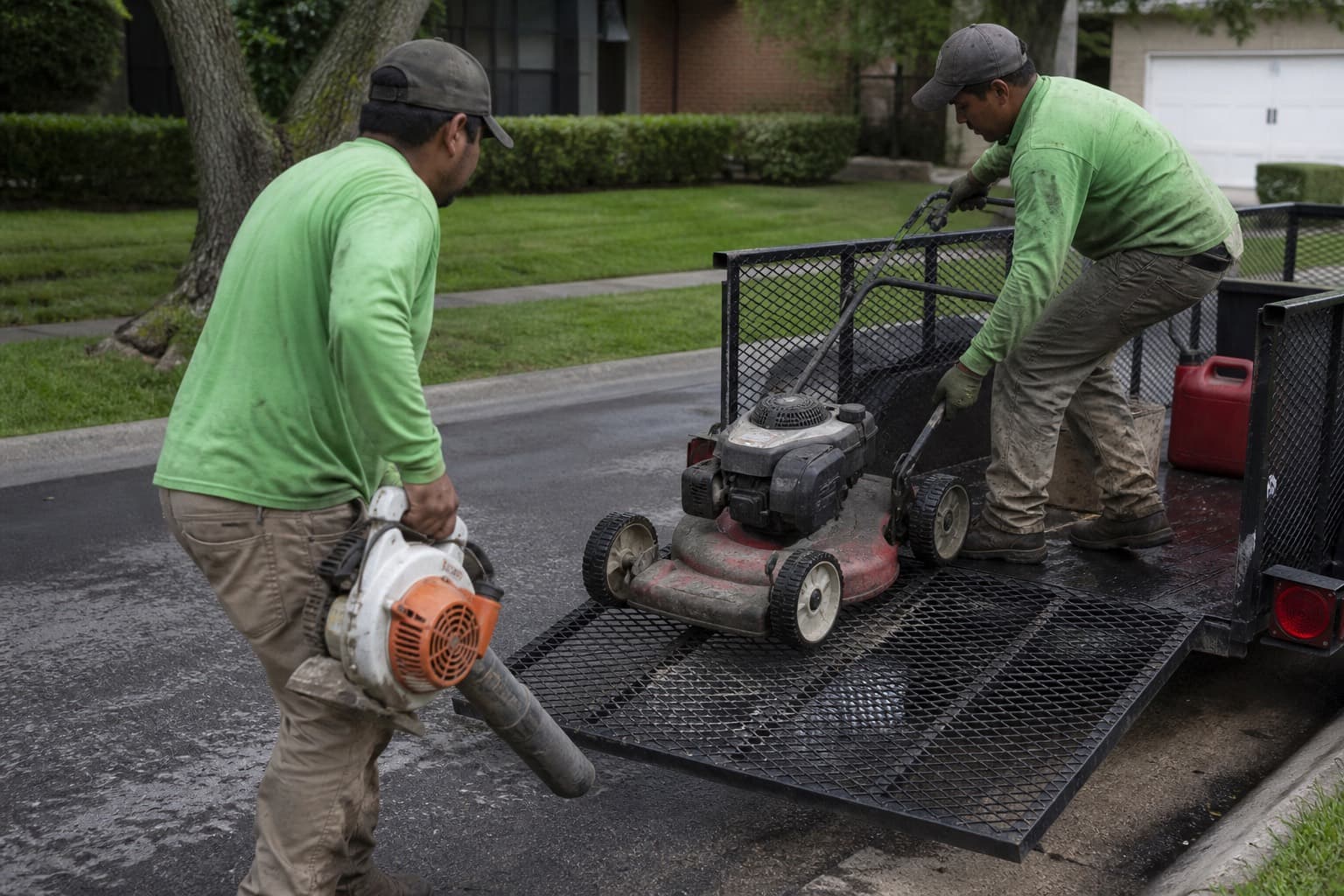
Hiring a second mower requires the service standard to work without the owner demonstrating every stop. Informal “watch me” training is difficult to repeat and leaves safety, quality, and exception handling open to interpretation.
This is a training playbook, not a hiring essay. Pair it with solo to crew, job checklists, property notes, and crew scheduling.
Prepare the training system before day one
Do not hire into a business that still lives in your head. Before day one you need:
- A published stop list
- Property notes a stranger can scan
- A finish checklist
- Quotes that match invoices
- Written access, skip, incident, and escalation rules
Complete required payroll, classification, tax, insurance, driving, safety, and onboarding steps before work begins. Crew scheduling software is useful only when assignments and instructions are accurate.
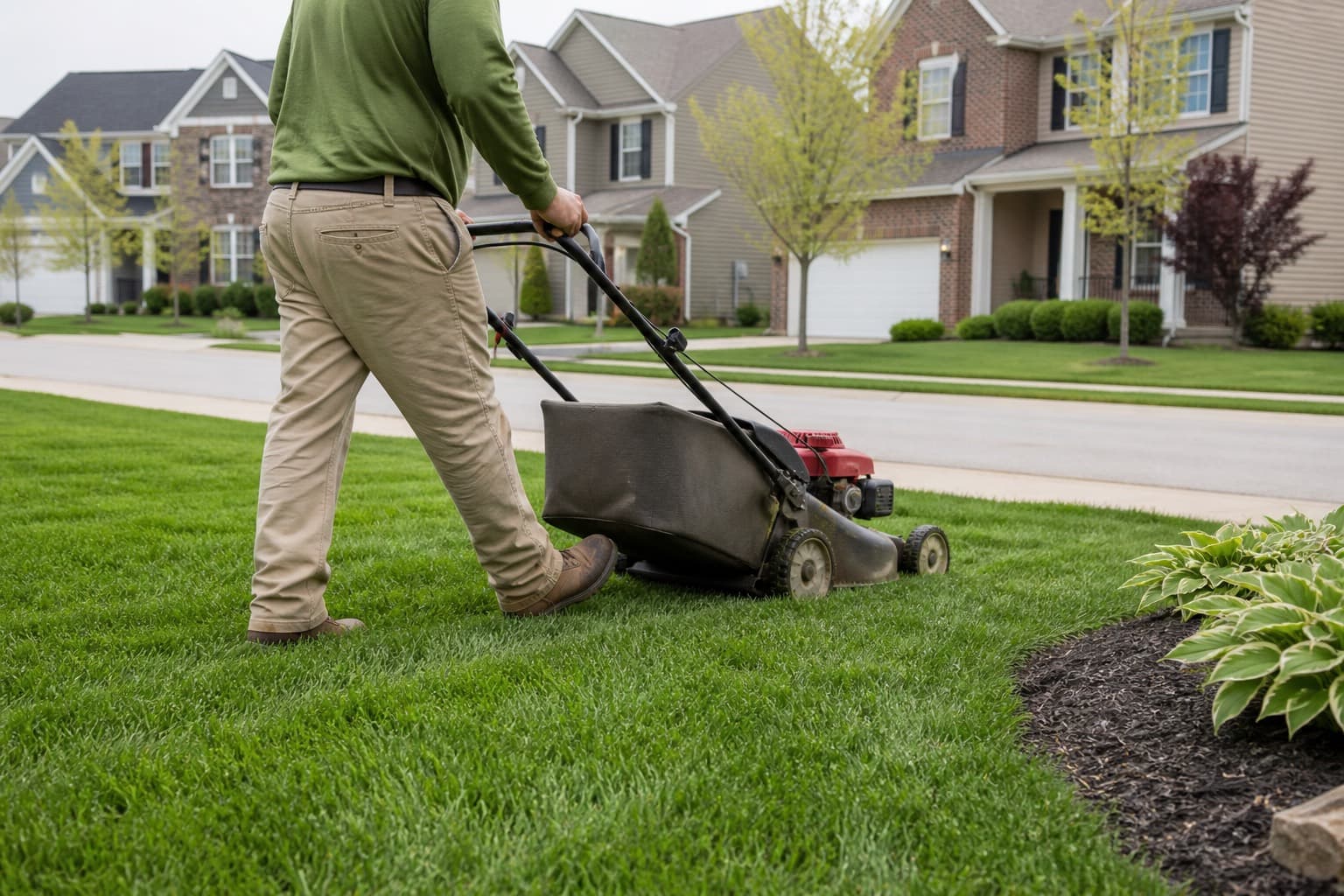
Teach five things before speed
Train in this order:
- Safety and trailer — ramps, straps, fuel, blades down, street parking
- The finish — what “done” looks like on a normal lot
- Property instructions — gates, animals, parking, and excluded areas
- Stop-work and skip rules — loose animals, locked access, hazards, and customer pauses
- Scope changes — who can approve extra work and how it is documented
Do not assign equipment solely because a new employee wants to use it. Confirm training, authorization, and competence for each machine.
Finish standard (write it)
| Area | Done | Not done |
|---|---|---|
| Turf | Even, no missed strips | Scalp tracks, islands of long grass |
| Edges | Walks and drive | “Mostly” along the street only |
| Hard surfaces | Blown, not into beds or the street storm drain if you forbid that | Windrows at the curb |
| Beds | Per the note | “I thought they wanted it” |
| Closeout | Gate closed, changes and incidents recorded | Important updates left unrecorded |
Put the standard on the job and use it during instruction and review. See what a mowing service includes.
A staged ride-along plan
Pay employees for required training and trial work as required by law. Adjust the sequence below to the worker’s experience, age, equipment authorization, and demonstrated competence.
| Stage | They do | Trainer does |
|---|---|---|
| Orientation | Review safety, PPE, equipment, trailer, and stop-work rules | Demonstrate and verify understanding |
| Guided tasks | Perform authorized parts of a normal stop | Observe and correct immediately |
| Supervised stop | Complete a representative property from notes | Audit before leaving |
| Small route segment | Run several approved properties | Remain available and inspect a sample |
| Independent work | Own a defined route segment | Continue periodic coaching and audits |
Use representative properties for evaluation. Do not use unusually difficult or hazardous work as an unsupervised test.
Notes and checklists are the training manual
After supervised training, the property record and job checklist should carry routine instructions.
Rules they must follow:
- Read the note before the gate
- Do not climb, do not enter on a loose dog, access policy
- If the note is wrong, update it through the approved process before the next visit
- Take photos only under the company’s job-photo policy
- Do not perform extra work without authorization
Keep field notes short and action-oriented, for example: “Use south gate. Confirm dog is inside. Park on street. Rose bed excluded.”
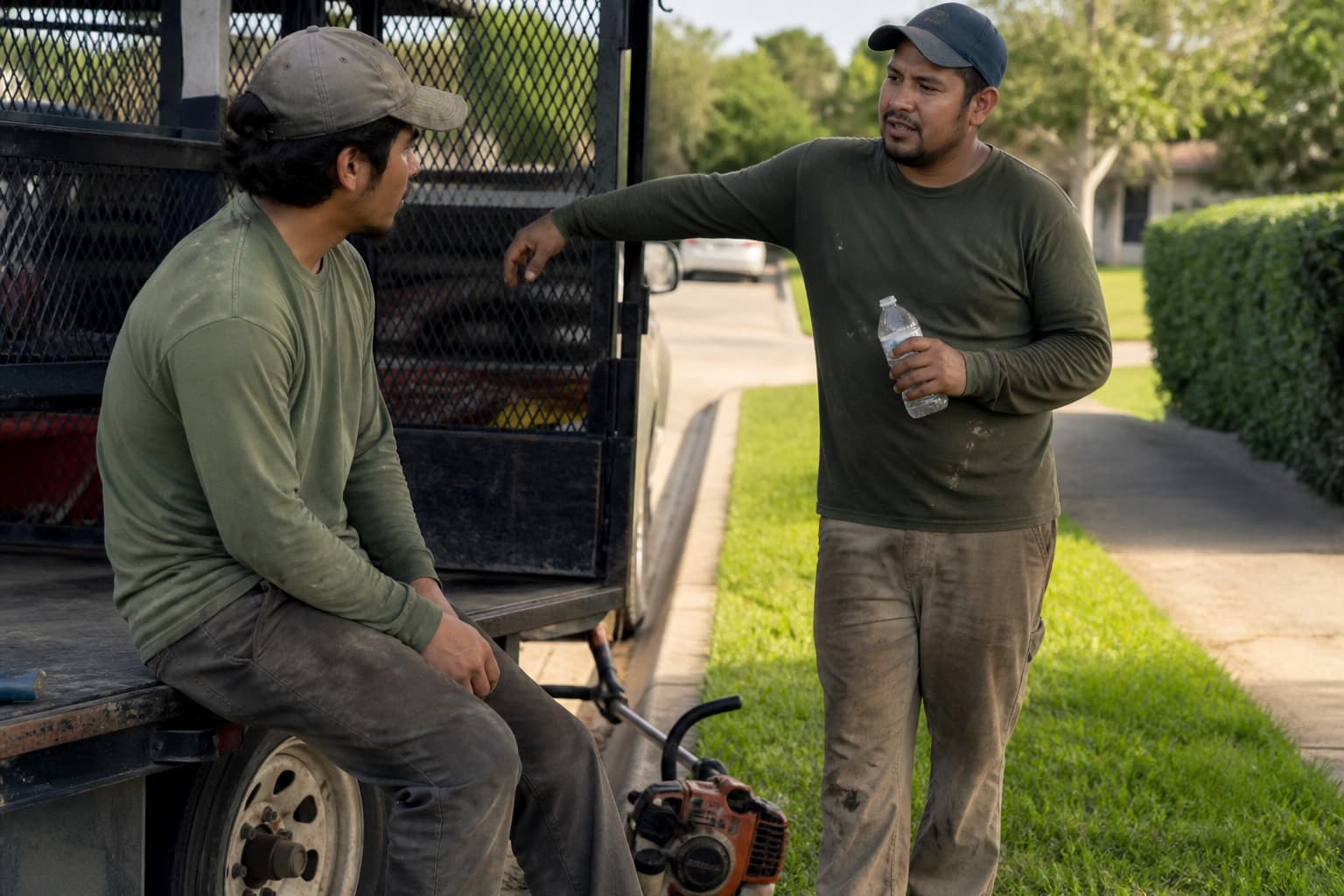
Pay, production, and what you measure
Explain pay, timekeeping, overtime, breaks, policies, and expectations before work begins. Hourly versus production pay is a separate decision; see production pay versus hourly. Follow applicable employment laws and obtain professional advice where needed.
- Callbacks per 50 stops
- Note updates after exceptions
- On-time finish of the pocket you gave them
- Safety misses (ramps, dogs, street)
Do not measure only lots per day. Balance productivity with quality, safety, customer complaints, and accurate time records.
Worked example: Eli, week two
After supervised training, Eli can run the Oak route segment: 11 straightforward weekly properties with current notes. The owner keeps the more complex animal-access property and walk-behind carry. A sample audit finds a missed strip behind an air-conditioning unit. The owner demonstrates the correction and adds “check behind AC pad” to the checklist before increasing Eli’s independence.
Assigning a truck and trailer before safety, route, and service procedures are demonstrated creates avoidable risk and callbacks. Review when to add a second truck after the employee can run a defined route segment consistently.
Scripts you should make them use
Loose dog
I’m at [address], and the dog is outside. I will not open the gate. Please contact the office when the area is secure. We will follow the access policy for today’s visit.
Unpriced extra
That’s outside the ticket. I can do it if the office prices it. Otherwise I’ll leave it.
Wrong note
Note said south gate. North was open, south was stuck. I updated the property. Next visit should use north.
Practice these messages during training so workers do not improvise access, safety, or pricing decisions in the field.
Audit instead of hovering
After the worker owns a route segment, inspect a risk-based sample and track callbacks, safety issues, and checklist compliance. Adjust the frequency based on experience and performance rather than relying on one universal audit count.
Scaling quality is the whole point of solo to crew. The second mower is step one. A second truck is a later step.
When to stop training and start deciding
When documented coaching does not resolve repeated safety, conduct, or performance issues, follow the company’s disciplinary process. Before changing employment status, comply with applicable law, agreements, final-pay rules, and documentation requirements.
When the worker is ready, document the route segment, excluded or higher-risk properties, equipment authorization, escalation rules, and ongoing review schedule.
How MowProHQ trains the second person without your memory
MowProHQ keeps stop lists, property notes, schedules, and service details available to authorized team members rather than only in the owner’s messages.
Review current plans and pricing for team access, dispatch, GPS, and time tracking. Then create an account and test the training workflow on a small supervised route segment.
Frequently asked questions
- How long should I train a second lawn mower before they run alone?
- Use demonstrated competence rather than a fixed number of days. Before working independently, the employee should complete required safety training and consistently perform a representative stop from the notes and checklist under supervision.
- What should a new lawn care hire learn first?
- Begin with required safety training, equipment and trailer procedures, personal protective equipment, the service standard, property notes, access rules, and the process for stopping unsafe work or reporting an exception.
- Should the second mower start on their own truck?
- Usually not immediately. Start with supervised work and verify driving eligibility, equipment competence, route procedures, and insurance requirements before assigning independent vehicle or trailer responsibility.
- How do I keep quality up when I am not on every lawn?
- Document the service standard, make property notes and checklists available in the field, inspect a representative sample, track callbacks, and coach specific misses. Increase independence only after performance is consistent.
- What is a good first-week schedule for a new mower?
- A reasonable first week moves from safety and observation to supervised tasks and then representative stops, based on demonstrated skill. Training and trial work generally must be paid; follow applicable wage, hour, youth-employment, driving, and safety rules.
- Should I use checklists or just show them?
- Use both demonstration and a written checklist. Demonstrate each task, observe the employee performing it, correct errors, and keep the checklist available with the job.
- When is a new hire not going to work?
- Repeated safety violations, refusal to follow access rules, hidden incidents, or failure to meet the documented standard after reasonable training require prompt action. Document facts and follow company policy, the employment agreement, and applicable law.