MowProHQ Blog/Growth
Starting a Lawn Care Business: Ops Checklist (Not Just a Mower)
A practical lawn care business checklist for registration, insurance, pricing, scheduling, contracts, safety, invoicing, and getting paid.
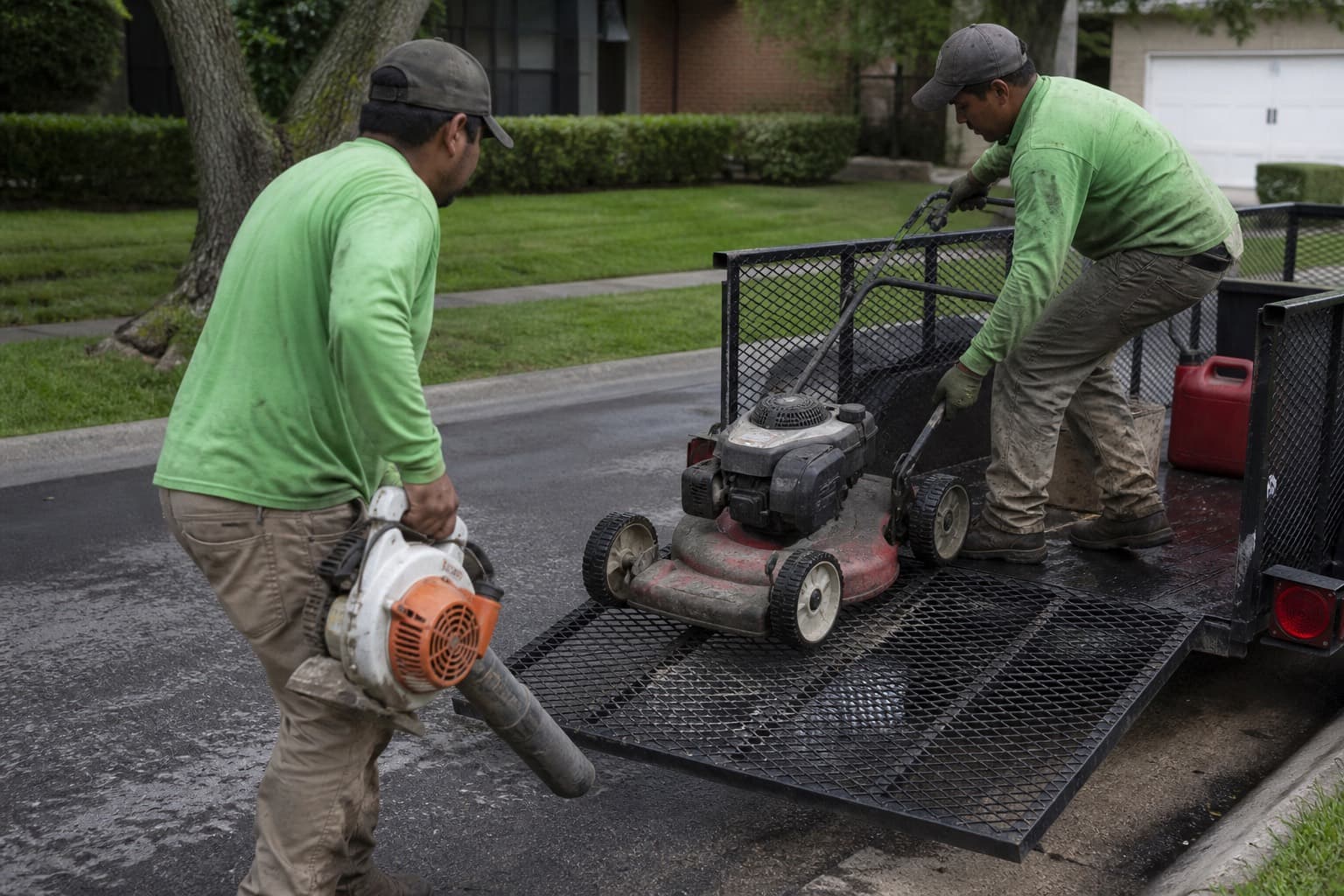
A mower can finish a lawn. It cannot remember a gate code, explain what a quote includes, reschedule a rain day, or follow up on an unpaid invoice.
That is the less visible part of starting a lawn care business: building a small operating system before work gets busy. You do not need a complicated office, but you do need a repeatable path from inquiry to payment.
This lawn care business checklist covers that path. It is general educational information, not legal, tax, insurance, employment, or safety advice. Rules vary by location and by service, so verify requirements with the relevant agencies and licensed local professionals.
If installations and bed work will be your main offer, see how to start a landscaping business. If you are still choosing a direction, compare lawn care and landscaping in year one. For equipment and other startup categories, review lawn care startup spending.
1. Confirm the business basics locally
Do not assume that advice from an owner in another state—or even the next county—applies to you. Make a short list of the agencies and professionals you need to contact, record what they tell you, and save copies of registrations, policies, and renewal dates.
Registration, structure, and taxes
- Check whether your state, county, or city requires a business registration, occupational license, assumed-name filing, or zoning approval for a home-based operation.
- Choose a business structure based on your circumstances. A sole proprietorship, LLC, corporation, or partnership can have different liability, filing, and tax consequences.
- Apply for tax identification numbers and tax accounts when required. Ask a qualified tax professional whether your services, products, tips, or other charges are subject to sales or other taxes in your jurisdiction.
- Open a separate business bank account and keep personal spending out of it. Separate records make bookkeeping easier and may help preserve legal separation where applicable.
- Set aside money for taxes based on advice tailored to your business. A percentage that works for someone else may be wrong for your income, entity, and location.
- Track income, expenses, receipts, mileage, equipment, and unpaid invoices from the beginning. These lawn care expense and reporting habits are easier to establish while the business is small.
An LLC is not a substitute for insurance, safe work, good contracts, or clean records. Before filing, consider a conversation with a local business attorney and a CPA, enrolled agent, or other qualified tax adviser.
Licensing and regulated services
Mowing and edging may have relatively light licensing requirements in some places. Pesticide application, fertilization, irrigation, tree work, excavation, hauling, and work near utilities or public rights-of-way can be regulated separately.
Before advertising any of those services, confirm:
- which agency regulates the work;
- whether the business and the person performing it need separate credentials;
- whether supervision, continuing education, notices, posting, or application records are required; and
- whether local disposal, noise, water-use, or environmental rules apply.
Do not work under another person’s license unless the law and that license actually allow the arrangement. For treatment work, start with chemical and fertilizer program operations and then verify every requirement locally.
Insurance to discuss with an agent
An independent or licensed commercial insurance agent can help match coverage to your actual work, vehicles, equipment, employees, and customers. Ask what is covered, what is excluded, and whether subcontractors must carry their own policies.
| Coverage or document | Question to ask |
|---|---|
| General liability | Does it cover the property damage and injury exposures created by my services? |
| Commercial auto | Are the truck, trailer, drivers, and business use properly covered? |
| Tools and equipment | Are theft, transport, and off-premises losses covered, and at what value? |
| Workers’ compensation | When is it required, and who must be covered in my jurisdiction? |
| Umbrella or excess liability | Does my customer mix or contract work justify higher limits? |
| Certificate of insurance (COI) | Can I provide one when a commercial customer requests it? |
Personal auto and homeowners policies may exclude business activity. Confirm coverage in writing rather than relying on an assumption. Commercial accounts often have additional insurance and vendor requirements; commercial and residential lawn care operations explains the practical differences.
2. Define work you can deliver consistently
“General yard work” sounds flexible, but it makes quoting and customer expectations difficult. Start with a short menu and describe what each service includes.
| Service | Define in writing | Common add-ons or exclusions |
|---|---|---|
| Recurring mowing | Mowing, edging, blowing, frequency, seasonal approach | Bagging, overgrowth, obstacles, pet waste |
| Initial or overgrowth visit | Height or condition assumptions, debris handling | Haul-away, hidden objects, repeated passes |
| Cleanup | Areas included, debris type, disposal method | Disposal fees, heavy material, hazardous waste |
| Beds and shrubs | Specific beds or plants and the work performed | Plant replacement, treatment, irrigation repair |
| One-time work | Exact scope, access, completion standard | Return visits or ongoing maintenance |
Recurring frequencies are not interchangeable. A less frequent property may take longer, produce more clippings, or require different equipment. See recurring mowing plans and how to price lawn care jobs before publishing a rate card.
Build a price from your costs
Your price needs to account for more than time behind the mower. Consider:
- labor, including your own working and administrative time;
- drive, loading, and unloading time;
- fuel, maintenance, and equipment replacement;
- insurance, software, bookkeeping, marketing, and other overhead;
- disposal, materials, and payment costs;
- applicable taxes; and
- a reasonable profit margin.
The lawn care hourly rate calculator can help organize those inputs. Lot size is useful, but access, slope, gates, obstacles, turf condition, parking, and travel also affect cost. A consistent lot-size quoting process should leave room for those conditions.
After completing a new property a few times, compare estimated and actual time. Change the price, scope, or route if the numbers do not work.
Decide what you will decline
Write your boundaries before you are standing in a driveway:
- work outside your service area;
- tasks outside your license, insurance, training, or equipment;
- vague extras without a price and scope;
- unsafe properties or conditions;
- payment terms your cash flow cannot support; and
- jobs that conflict with local noise, disposal, or operating rules.
Clear limits are part of professional service, not a lack of ambition.

3. Create a reliable intake and quoting process
The customer who calls may not own the property or pay the invoice. Keep a customer record for the person or organization and a separate property record for the service location. A lawn care CRM for customers and properties makes that distinction useful as the route grows.
Collect only information you genuinely need:
- customer and billing contact details;
- service address and lawful access instructions;
- requested service and preferred frequency;
- gate, parking, pet, irrigation, and hazard notes;
- billing method and invoice recipient; and
- photos or measurements relevant to the quote.
Avoid putting sensitive information in open notes or text threads. Restrict staff access to what each person needs, use unique logins and strong authentication, keep devices locked, and follow applicable privacy and data-breach laws. If you collect card details, use a reputable payment provider rather than writing or storing card numbers yourself.
Put every agreement in writing
A quote or service agreement should clearly state:
- the parties and service address;
- the work included and excluded;
- frequency or scheduling method;
- price, taxes, and approved additional charges;
- payment timing, accepted methods, and any lawful late or returned-payment terms;
- customer responsibilities, such as access, pets, toys, and irrigation;
- weather, delay, cancellation, and termination terms;
- how property damage or service concerns should be reported; and
- any other terms required by local law.
Electronic acceptance can be convenient, but enforceability and required disclosures vary. Have a local attorney review your standard agreement, especially for recurring service, automatic renewal, card-on-file billing, cancellation charges, deposits, warranties, or commercial work.
Writing lawn care quotes with a clear scope is less about sounding formal and more about making sure both sides expect the same job.
Walk the property when risk justifies it
Satellite measurements and customer photos are helpful, but they may not show a narrow gate, retaining wall, hidden debris, steep bank, locked yard, or difficult trailer access. When uncertainty could materially affect safety, scope, or price, inspect before committing.
Take only relevant photos and store them securely. Tell customers when site images are part of your records, and avoid capturing people or private areas unnecessarily.
4. Set up safety before the route gets busy
Lawn work can expose people to blades, thrown objects, noise, vibration, heat, traffic, chemicals, lifting injuries, and vehicle or trailer incidents. Buying personal protective equipment is only one part of the plan.
Create written procedures for:
- pre-use equipment and trailer inspections;
- guards, shields, safe shutdown, and maintenance;
- eye, hearing, foot, hand, and high-visibility protection as appropriate;
- heat, hydration, severe weather, and lightning;
- roadside loading, backing, and traffic exposure;
- fuel transport, storage, and spill response;
- chemical labels, safety data sheets, storage, application, and records where applicable;
- incident, injury, near-miss, and property-damage reporting; and
- emergency contacts and first-aid access.
Follow manufacturer instructions and the occupational safety rules that apply to your business. If you hire, training should be documented, understandable to the worker, and repeated when equipment or duties change. A qualified safety consultant, insurer, equipment dealer, or relevant government safety program can review risks specific to your operation.
5. Build the schedule around geography and weather
Every accepted quote should become a scheduled job or recurring service plan. Keep property notes attached to the job so the person doing the work does not have to search old messages.
Useful scheduling rules include:
- group work by area instead of filling the calendar in inquiry order;
- leave realistic room for travel, loading, disposal, and interruptions;
- avoid promising an exact arrival time unless you can reliably meet it;
- decide who monitors weather and who contacts customers;
- document how delayed work moves through the schedule; and
- review drive time before accepting an isolated job.
Route planning and dispatch becomes valuable as soon as travel starts shaping the day. A written weather rescheduling policy also keeps each rain event from becoming a new negotiation.
Use a dependable calendar, spreadsheet, or lawn care scheduling system. The right starting tool is the one your team will actually update and that preserves a clear history.
6. Make invoicing and payment routine
Choose the payment flow before the first completed job:
- Mark the work complete and record approved extras.
- Send an accurate invoice promptly under the agreed terms.
- Offer the payment methods you support and explain any lawful fees or discounts before the customer agrees.
- Record cash and checks when received.
- Reconcile deposits to invoices and the bank account.
- Follow a consistent reminder, pause, and collection policy.
Card surcharges, cash discounts, convenience fees, automatic payments, and stored payment credentials are regulated by card-network rules and laws that vary by jurisdiction. Review your approach with your payment processor and local counsel before using it. Cash and card pricing for lawn care outlines questions to consider.
Deposits may reduce risk on material-heavy or one-time work, but deposit limits, required notices, refund rights, and cancellation rules differ. Put the terms in writing and get local advice. For overdue accounts, use a documented process and follow applicable debt-collection and consumer-protection law; see lawn care invoice collection practices.
7. Handle hiring and subcontracting carefully
Do not call someone an independent contractor simply because payroll feels complicated. Worker classification depends on the actual relationship and applicable federal, state, and local tests. Misclassification can create wage, tax, insurance, and benefit liabilities.
Before bringing in help:
- confirm whether the role is an employee or a genuine independent business relationship;
- set up required payroll, tax withholding, new-hire reporting, and employment records;
- check wage, overtime, break, leave, youth-employment, and scheduling rules;
- verify workers’ compensation and unemployment requirements;
- complete any required work-authorization process;
- provide job-specific safety training and required protective equipment;
- use written policies for driving, equipment, customer information, timekeeping, and incident reporting; and
- confirm that any subcontractor is properly registered, licensed, and insured for the assigned work.
A local employment attorney, payroll professional, CPA, and insurance agent can help establish the process before the first shift. When operations are ready for another person, scaling from solo operator to crew covers the day-to-day handoff.
8. Use checkpoints instead of a universal startup timeline
There is no reliable promise that every lawn care startup should reach a certain customer count by a particular week. Season length, weather, route density, available capital, local demand, and whether you are part-time all change the pace.
Use readiness checkpoints instead:
| Checkpoint | Ready means |
|---|---|
| Before advertising | Registrations checked, services defined, quote path working |
| Before the first paid job | Insurance confirmed, agreement accepted, safety basics in place |
| Before adding recurring work | Calendar, weather policy, invoicing, and property notes are dependable |
| Before taking card payments | Processor configured, terms disclosed, no raw card data stored |
| Before hiring | Profitable demand, documented work, payroll and employment obligations addressed |
| Before commercial work | Contract reviewed, COI available, billing and vendor requirements understood |
| Before adding regulated services | Licensing, training, records, insurance, and equipment verified |
Review the business regularly:
- Which jobs took longer than estimated?
- Which areas create too much unpaid travel?
- Are completed jobs invoiced and reconciled?
- Are renewals, registrations, and policy dates on a calendar?
- Have services, staff, vehicles, or equipment changed enough to call the insurer?
- Are customer records accurate, access-controlled, and retained only as long as needed?
A software buyer’s checklist can help when the current process starts dropping information. Compare free and paid lawn care software based on the bottleneck you actually have, not features you might someday use.
Lawn care business startup checklist
- Confirm business registration, name, zoning, and local license requirements
- Choose a structure with legal and tax guidance appropriate to your situation
- Open separate banking and set up bookkeeping and tax records
- Verify licenses for every service you plan to offer
- Review insurance with a licensed commercial agent
- Define your service area, menu, exclusions, and pricing method
- Have locally appropriate customer terms reviewed
- Set up customer, property, quote, schedule, invoice, and payment records
- Create weather, cancellation, complaint, and collection procedures
- Document equipment, vehicle, heat, chemical, and incident safety practices
- Protect customer and payment information
- Address payroll, classification, safety, and insurance before anyone works for you
- Schedule renewal dates and periodic professional reviews
The goal is not to make a small lawn care business feel corporate. It is to make ordinary work predictable: the customer knows what is included, the crew knows where to go, and the invoice matches the agreement.
How MowProHQ can help
MowProHQ brings customer and property records, quotes, scheduling, invoices, payments, and other lawn care operations into one system. Review current plans and included features on pricing, or sign up when you are ready to set up your workflow.
Frequently asked questions
- What do I need to start a lawn care business besides a mower?
- You need a clearly defined service, a reliable way to quote and schedule work, written customer terms, bookkeeping and payment processes, appropriate safety practices, and any registrations, licenses, tax accounts, and insurance required for your location and work.
- Do I need an LLC to start a lawn care business?
- Not necessarily. Available structures and their legal and tax effects vary by jurisdiction and owner circumstances. An LLC can be useful, but it does not replace insurance or careful separation of business and personal finances. Ask a local attorney or qualified tax professional which structure fits your situation.
- What licenses does a lawn care business need?
- Requirements depend on your state, county, city, and services. Basic mowing may be treated differently from pesticide application, fertilization, irrigation, tree work, hauling, or work in public rights-of-way. Check the relevant state and local agencies before offering a service.
- How should I price my first lawn care jobs?
- Estimate labor, travel, fuel, equipment wear, disposal, overhead, taxes, and desired profit, then adjust for property conditions and scope. Use your own numbers rather than copying a competitor’s price, and review actual job time after the first visits.
- Should a lawn care startup use software?
- Use the simplest dependable system that keeps customer details, property notes, quotes, schedules, invoices, and payments together. That may be software from the start, especially if information would otherwise be split across texts, paper, and spreadsheets.
- When should I hire help?
- Consider hiring when demand is reliably profitable, your processes are documented, and cash flow can support the full cost of a worker. Before anyone starts, get local advice on employee classification, payroll, workers’ compensation, safety duties, and required records.