MowProHQ Blog/Quality
Irrigation Flags, Sprinkler Damage, and “You Hit My Sprinkler”
A field process for irrigation flags, sprinkler damage reports, photos, customer communication, and repair follow-up.
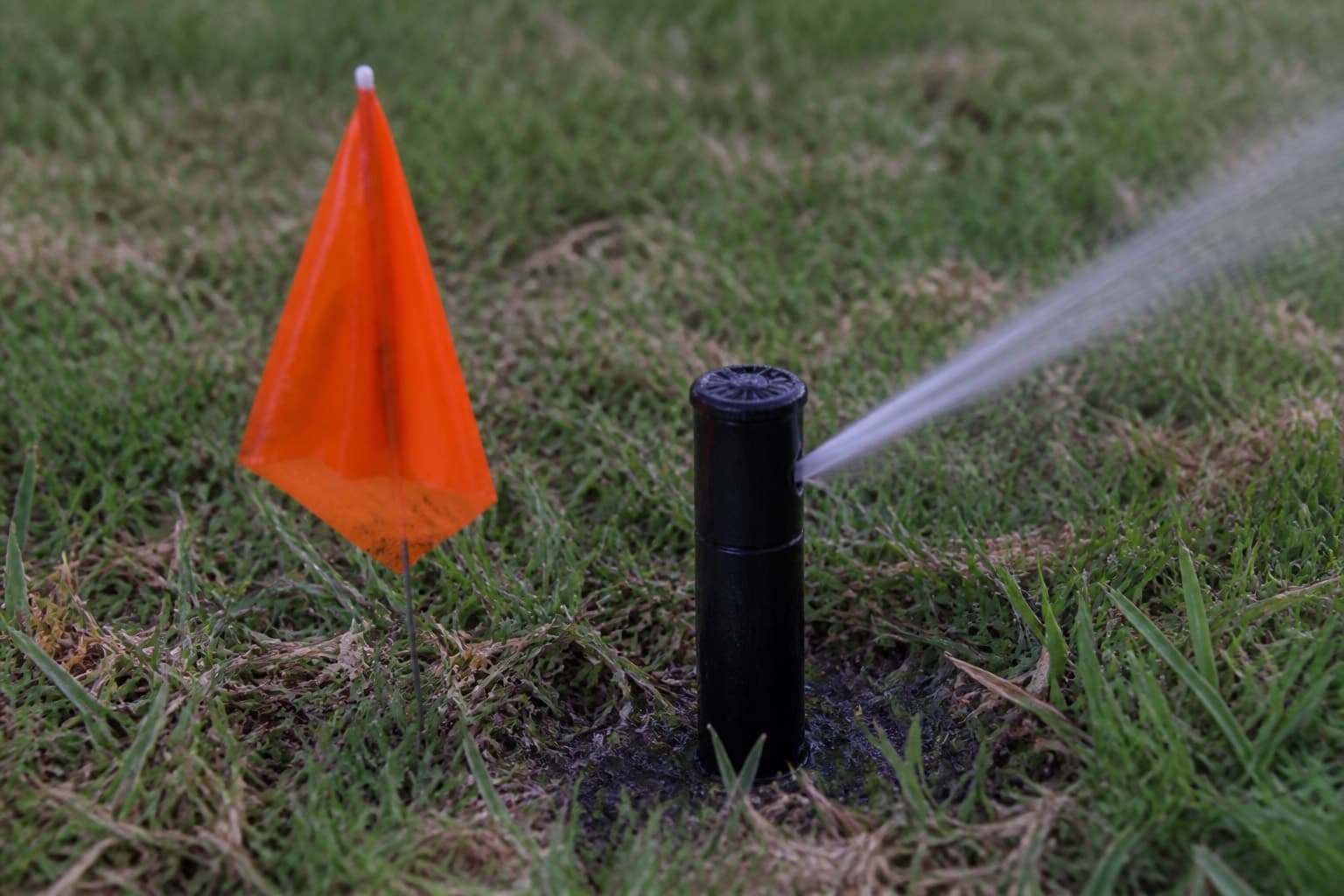
A sprinkler-damage report often arrives after the irrigation system runs. The break may be new, preexisting, concealed, or unrelated to mowing. A consistent reporting and review process helps the company respond without making an immediate unsupported conclusion.
This is an operational checklist, not legal advice or an irrigation-repair manual. Have counsel and your insurer review the policy, and use qualified repair professionals when needed.
Write the policy before the first claim
Write a short internal process that the office and crew can follow consistently.
A usable policy usually covers:
- Immediate response — stop work safely, prevent additional damage when qualified to do so, and notify the office
- Documentation — time, location, photos, equipment path, customer report, and prior property notes
- Decision authority — owner, manager, insurer, or other designated person rather than the field worker
- Inspection and repair — who may inspect, isolate, cap, or repair the system
- Escalation — when to contact the insurer, counsel, property manager, or emergency service
- Outcome — repair, reimbursement, settlement, denial, or courtesy adjustment documented in writing
Put the customer-facing reporting and flag request in the service terms or welcome information before the first visit.
Pair it with the job checklist: perform the required walkaround, complete the work, and record changed conditions. Do not promise a full irrigation inspection unless that service is actually provided.
| Situation | Default posture | What you store |
|---|---|---|
| Flagged head, visible fresh damage | Document and escalate promptly | Photo + incident note |
| Unmarked or below grade | Document condition without assuming fault | Photo of grade and surrounding area |
| Dry crack, staining, or corrosion | Preserve possible prior-condition evidence | Photo + prior notes |
| Zone or pipe leak | Refer for qualified diagnosis | Photo + customer report |
| Customer requests redesign | Quote only if qualified and insured | Separate referral or estimate |
Document courtesy adjustments clearly without using them as an admission of liability unless advised.
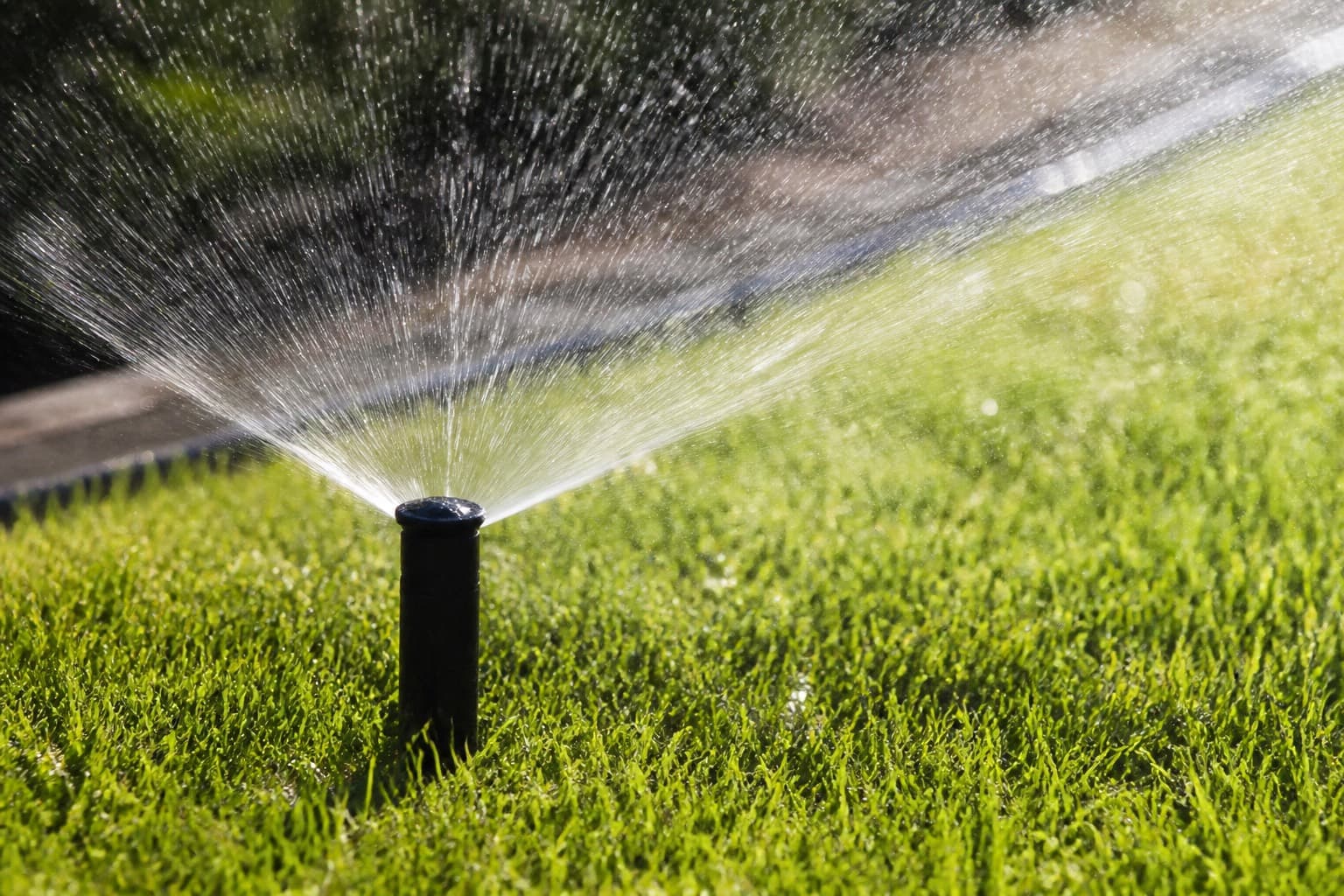
Use flags as one part of the walkaround
Ask customers to flag:
- New installs and winterized systems just turned back on
- Low-pop or damaged heads they already know about
- Heads in the mow path after a landscape crew moved things
The crew should still look for visible hazards and changed site conditions. A missing or present flag does not settle responsibility by itself.
On the property note, keep it short:
Irrigation: known low heads near driveway and west bed. Customer asked to flag. Crew: check before first pass and report changes.
Keep the property note brief enough to scan before work begins.
For commercial and HOA sites, record the authorized contact, emergency process, whether the crew may isolate a leak, who performs repairs, and any work-order requirements. Do not allow unqualified or unauthorized field repairs.
Build a useful incident record
The record should show what was observed, when it was observed, and what happened next.
Crew habit when something looks wrong, before or after the pass:
- Photo the head and the turf around it
- Photograph any visible flag or marker
- Photo a wide shot so you can see it was (or was not) in the mow path
- If it looks old: photo dirt in the crack, rust, a dry stain
- Attach to the visit the same day
Take a small number of clear images and store them in a company-controlled system rather than only on a personal phone.
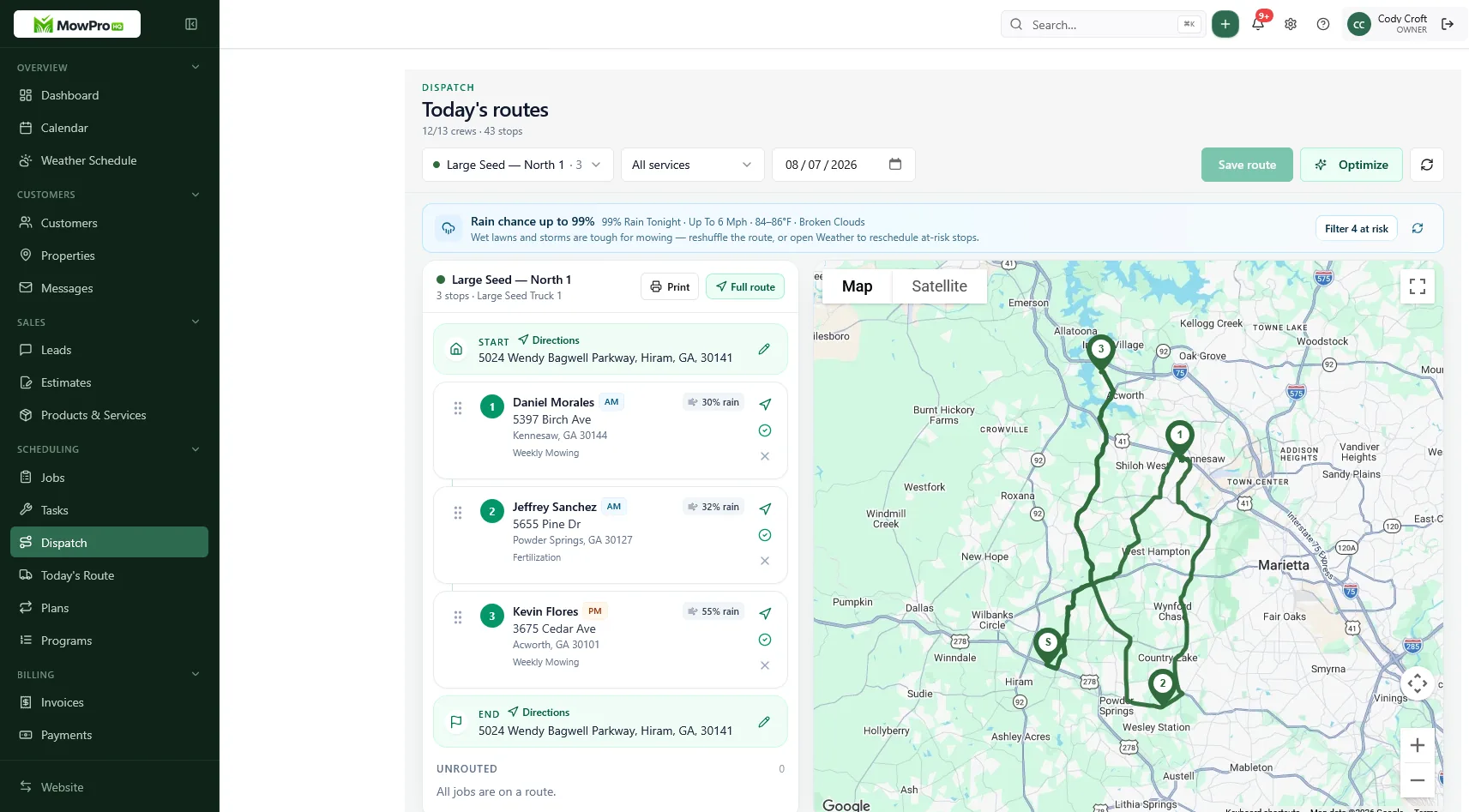
If you already use before and after photos for extras and damage, sprinkler claims are the same rule: sparse, attached, dated. Dispatch can answer the text without calling the crew off the next stop.
In MowProHQ
Review responsibility from evidence
Use the agreement, documented facts, qualified opinions, insurer guidance, and applicable law.
Evidence that may support service-related damage: a visible fresh break, equipment in the same path, a contemporaneous crew report, and photos showing the condition.
Evidence that may support another cause or prior condition: documented preexisting damage, corrosion or staining, prior service notes, a below-grade component, or a leak outside the work area. These facts may require professional diagnosis.
Any settlement or courtesy adjustment should be authorized and documented. Consult the insurer or counsel before resolving a larger or disputed claim.
Use texting to acknowledge the report and arrange follow-up, not to argue responsibility. Put the final decision in the company record.
Keep unrelated irrigation work outside the damage review. Provide a separate estimate or qualified referral for broader system issues.
Worked conversation (keep it short)
Customer: You hit my head. The whole side is soaked.
You: Thanks, send a photo of the head and the wet area. We’ll check today’s visit and call you this afternoon.
Then review the photos, property notes, crew report, agreement, and any qualified diagnosis. Respond with the documented next step and timeline.
One outcome. Written. Next week the crew sees “west head replaced 8/21, flag that row.”
Train the truck so the office is not the last to know
Train crews to report facts without concealing an incident or admitting responsibility before review:
- Stop and photo if you hear or see a head
- Do not bury a broken head and drive off
- Do not promise a new zone in the driveway
- Notify the lead or office under the incident process
- Write it before the next stop
The lead’s walkaround includes a glance at known irrigation trouble spots. That is enough. A twenty-item irrigation checklist will be skipped the first wet Tuesday.
Repeated incidents may indicate the wrong cutting height, unsuitable equipment, poor site conditions, or a system needing professional repair. Correct the operating issue, revise the scope, or end service under the agreement if the property cannot be maintained safely.
In MowProHQ
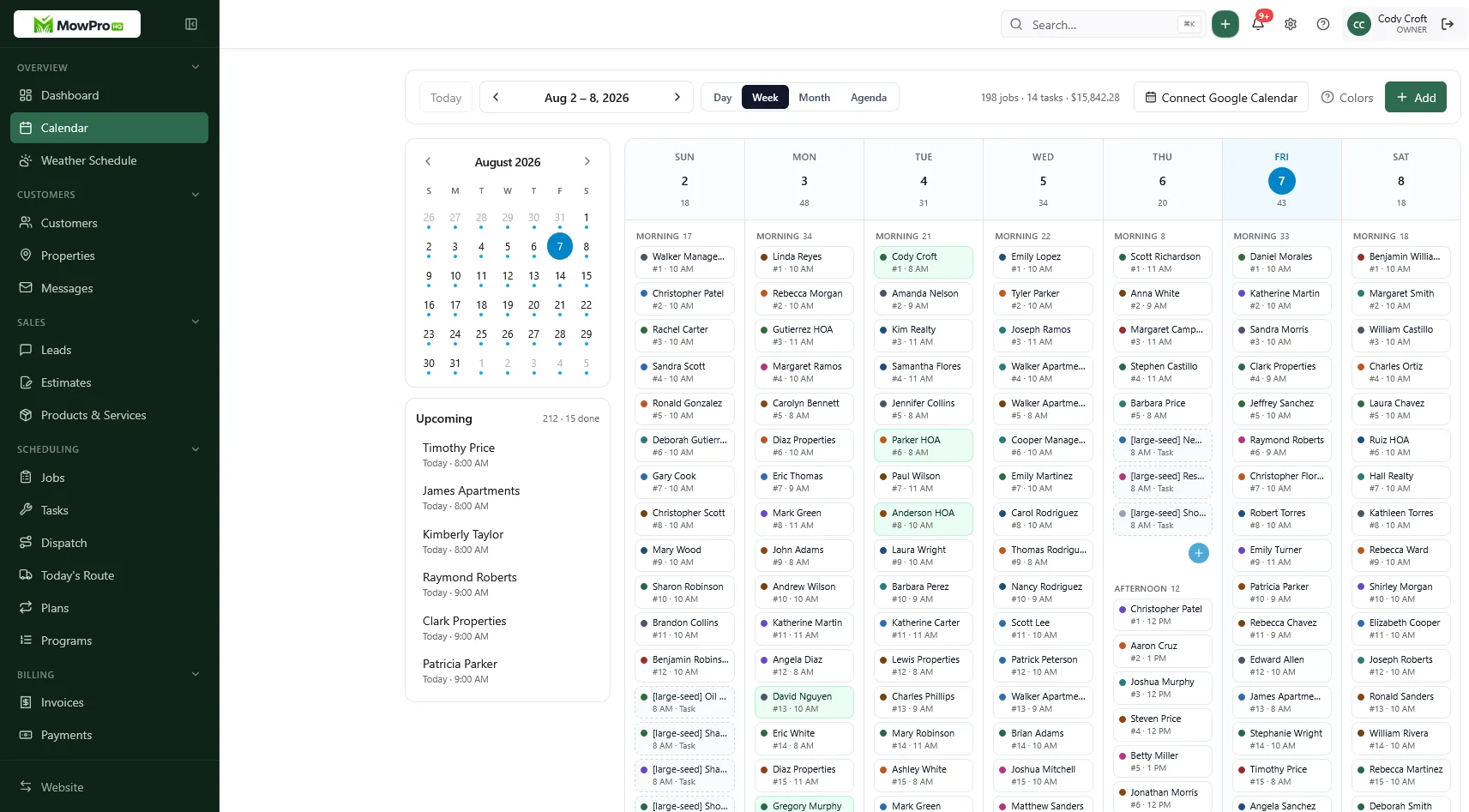
Escalate serious claims
The internal process supports qualified legal, insurance, and repair professionals; it does not replace them.
- Do not make unsupported admissions or promises in a text
- Do not ignore a claim that belongs with your insurance person
- Do not invent a waiver in the driveway and call it a contract
- If a situation is bigger than a head (injury, a flooded interior, a commercial site) stop and get the right people, not a blog post
The photo and the written policy still help those people. That is the whole point of the record.
How MowProHQ keeps the claim on the property
MowProHQ keeps property notes, scheduled visits, and follow-up work connected so authorized staff can review the same operational record.
Review current plans and pricing, then create an account and test the incident and follow-up workflow before a claim occurs.
Frequently asked questions
- Who pays if a lawn care crew hits a sprinkler head?
- Responsibility depends on the facts, agreement, local law, and insurance. Document the condition, inspect promptly, preserve photos and service records, and apply the company’s counsel-reviewed claim process consistently.
- Should customers flag irrigation heads before mowing?
- Ask customers to identify known low, damaged, or newly installed heads, especially after landscape or irrigation work. Crews should still perform the required walkaround. A flag helps visibility but does not determine legal responsibility by itself.
- What photos should crews take after sprinkler damage?
- Photograph the head, surrounding turf, relevant equipment path, visible flag, and any existing cracks or staining. Attach a small number of clear images to the visit in a company-controlled system.
- How do I tell a new break from a head that was already broken?
- Visible dirt, corrosion, staining, below-grade placement, or prior notes may provide context, but field appearance may not prove when a failure occurred. Preserve evidence and involve a qualified irrigation professional or insurer when the cause is uncertain.
- Should I just pay every sprinkler claim to keep the customer?
- Do not make automatic promises before reviewing the facts. Apply the written claim process, agreement, insurance guidance, and applicable law. Record any repair, settlement, courtesy credit, or denial and the reason for it.
- How do irrigation flags fit a quality checklist?
- For properties with known irrigation risk, add a brief pre-service check for flags, visible heads, and changed conditions. This supports the normal safety walkaround without turning mowing crews into irrigation inspectors.
- What should I say to a customer who texts “you hit my sprinkler”?
- Acknowledge the report, request photos and timing details, review the visit record, and give a realistic follow-up time. Avoid assigning blame in the first message. Document the final decision and any repair visit.