
MowProHQ Blog/Operations
How to Price and Schedule Fall Leaf Cleanup
Build a profitable fall leaf service with clear cleanup tiers, haul-away charges, return-visit terms, safer work practices, and realistic route planning.
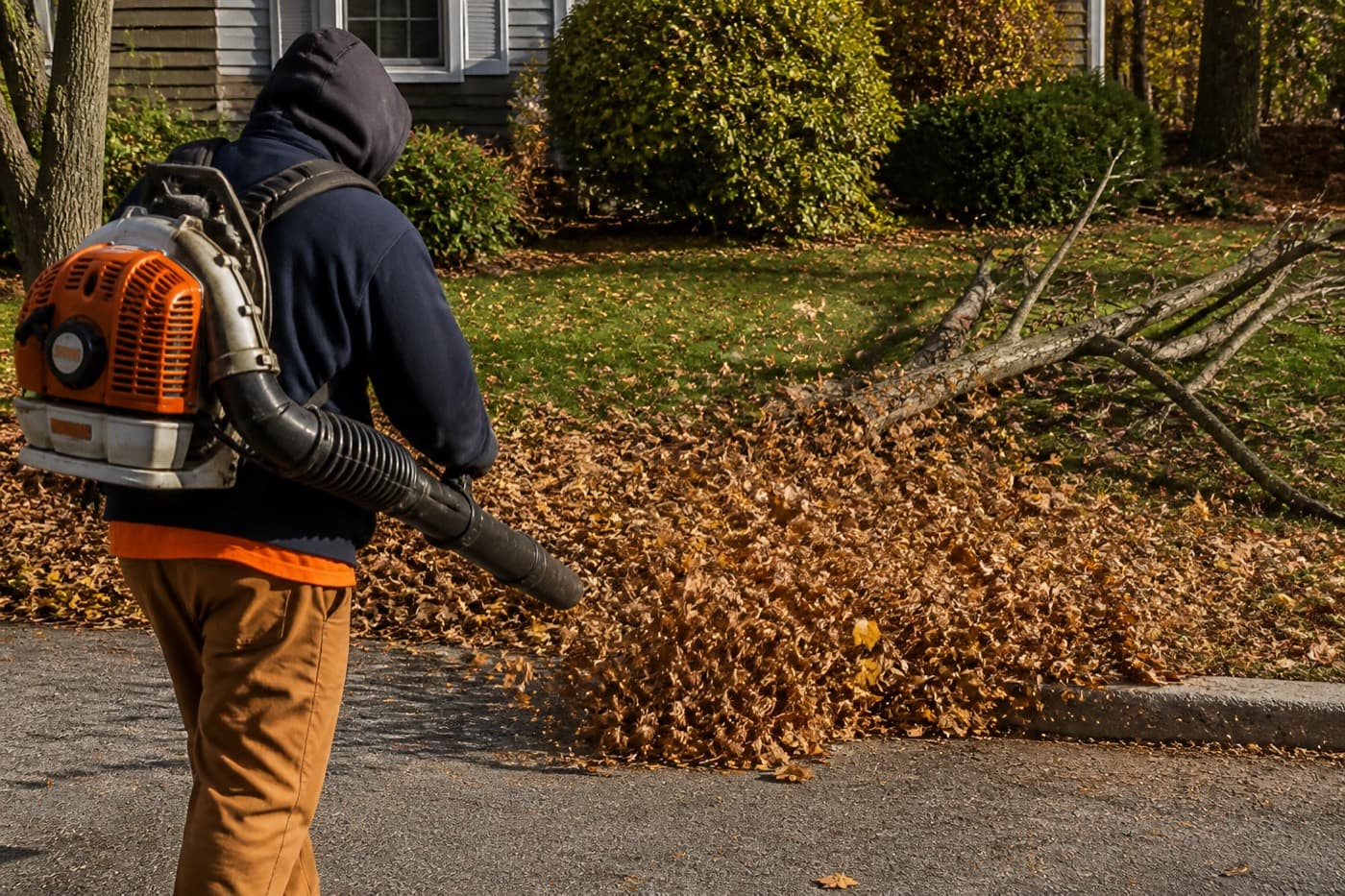
Fall leaf cleanup looks similar to mowing from a distance, but it behaves differently on the schedule. Leaf volume can change after one windy night. Wet material takes longer to move, trailers fill sooner, and a disposal run can pull a crew out of its route.
Treating fall leaf service as a defined product makes the work easier to quote and easier for customers to understand. The basic pieces are a measurable scope, a method for handling uncertain volume, clear disposal terms, and a written policy for leaves that fall after the visit.
This guide complements our articles on pricing lawn care add-ons, fuel and dump fees, and end-of-season lawn care operations.
Build a leaf cleanup service menu
A short service menu helps estimators and crew leads describe the same work in the same way. Prepare it before your local peak season, but use local tree and weather patterns rather than relying on a universal calendar.
Include:
- A minimum service charge based on your actual mobilization cost
- Volume or condition tiers, such as light, medium, and heavy
- The areas included: turf, beds, walkways, parking areas, or other agreed spaces
- The finish expected: mulched, collected, hauled away, or placed in an approved location
- A method for approving work that exceeds the estimate
- A return-visit policy for later leaf drop or storm debris
- Exclusions such as roofs, gutters, drainage structures, hazardous waste, and material from neighboring properties
- Access details, parking restrictions, gate information, and local or HOA rules
Do not assume leaf removal is part of recurring mowing. Review the customer's agreement and quote added work separately unless their existing package expressly includes it.
| Service level | Typical site condition | Estimating approach | Scope detail to confirm |
|---|---|---|---|
| Light | Scattered, dry leaves with limited bed buildup | Minimum charge or small fixed tier | Mulch in place or collect |
| Medium | Broad turf coverage or filled planting beds | Condition-based tier or estimated labor | Disposal method and included areas |
| Heavy | Deep, wet, compacted, or difficult-to-access material | Site review, range, or hourly work with approval limits | Equipment access, loads, and likely schedule impact |
| Return visit | New accumulation after completed work | Published return tier or a new estimate | Whether the original visit was one-time or part of a package |
These descriptions are starting points, not universal production standards. Calibrate them using completed-job records from your equipment, crew, disposal site, and service area.
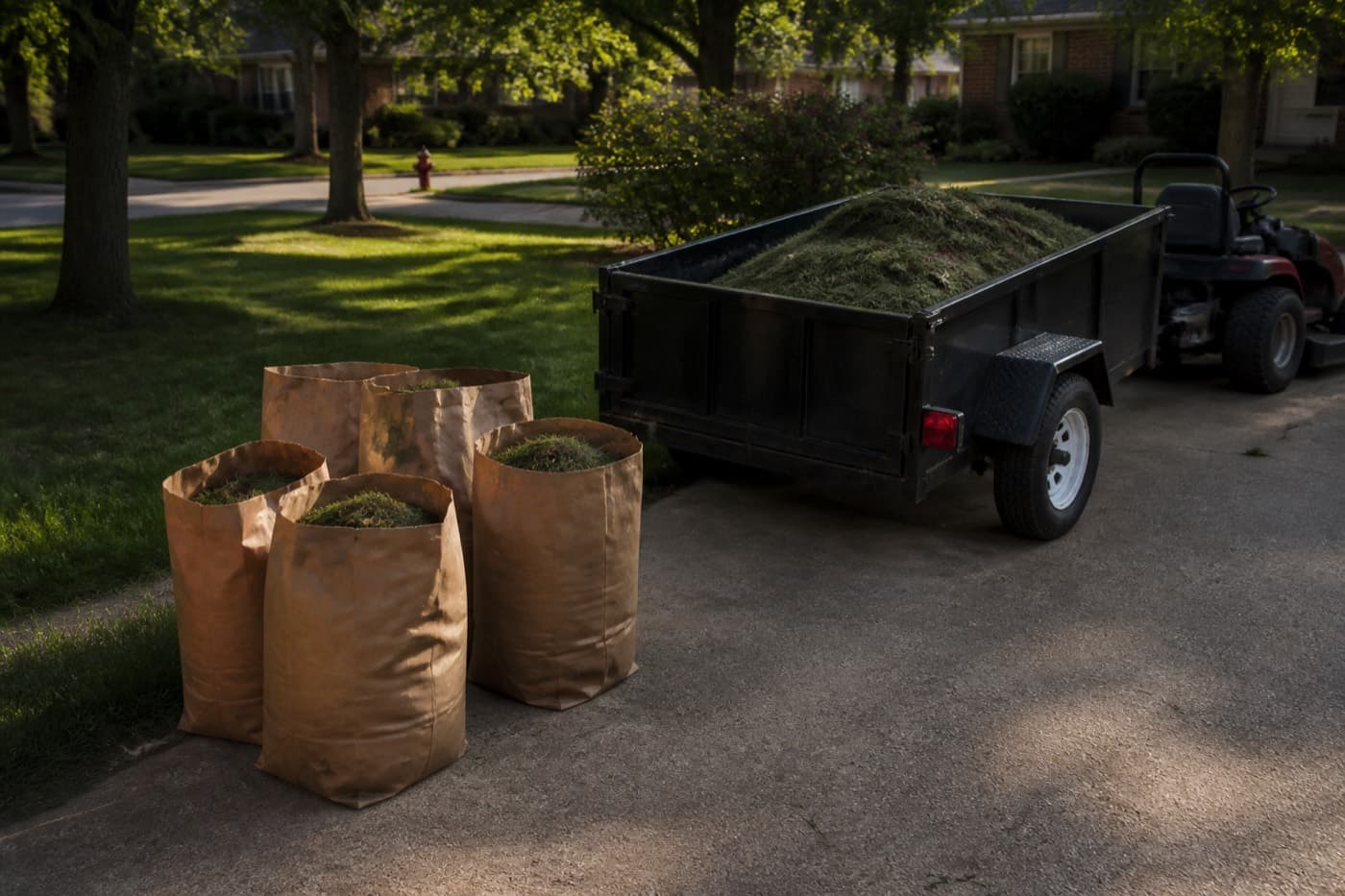
Inspect the property before quoting
A curbside view can miss fenced backyards, filled beds, steep grades, drainage areas, and long carries to the trailer. Ask the customer for current photos or inspect unfamiliar and larger properties in person.
Document:
- The areas to be cleaned and the expected finish
- Leaf depth, moisture, access, slopes, and obstacles
- Whether leaves will be mulched, bagged, hauled, or placed for municipal collection
- The estimate assumptions and any approval limit
- The policy for additional material or a later visit
For variable conditions, consider a price range or time-and-material estimate with a clear stop point. If the crew finds materially different conditions, pause and obtain the customer's documented approval before expanding the scope. Photos support the estimate, but get permission before photographing private areas and store images according to your privacy practices.
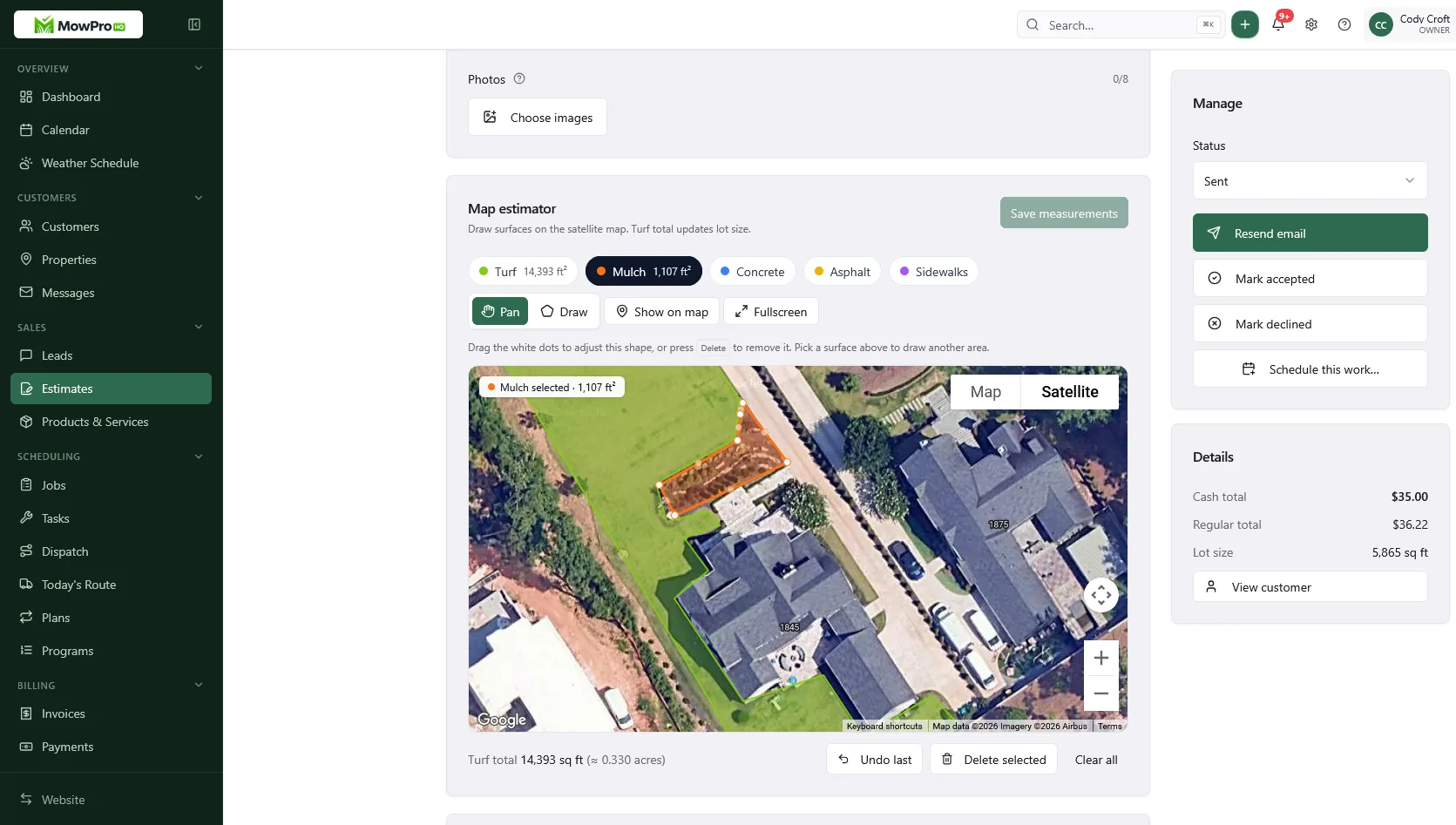
In MowProHQ
Price collection and disposal deliberately
Leaf cleanup pricing should account for more than time spent using a blower. Depending on the job, your cost may include collection supplies, loading, trailer capacity, disposal fees, travel to the facility, unloading, and time returning to the route.
Check disposal-site rules before quoting. Some facilities separate bagged material, loose yard waste, branches, or mixed debris, and requirements can change. Do not accept or transport material that your equipment, insurer, license, or disposal provider does not cover.
| Disposal option | Customer receives | Quote should clarify |
|---|---|---|
| Mulch in place | Leaves are reduced and left on suitable turf | Conditions where mulching is practical and the finish expected |
| Haul-away | Collected material leaves the property | Included quantity or loads, disposal basis, and overage approval |
| Customer containers | Material is placed in designated containers | Container type, available capacity, and who arranges collection |
| Municipal curb collection | Material is placed at an approved pickup point | Local dates, placement rules, and responsibility after placement |
Never assume leaves may be blown or placed in a street, storm drain, natural area, or neighboring property. Verify municipal, environmental, traffic, fire, and HOA requirements for each service area. Keep material away from vehicles, pedestrians, drains, and travel lanes while crews work.
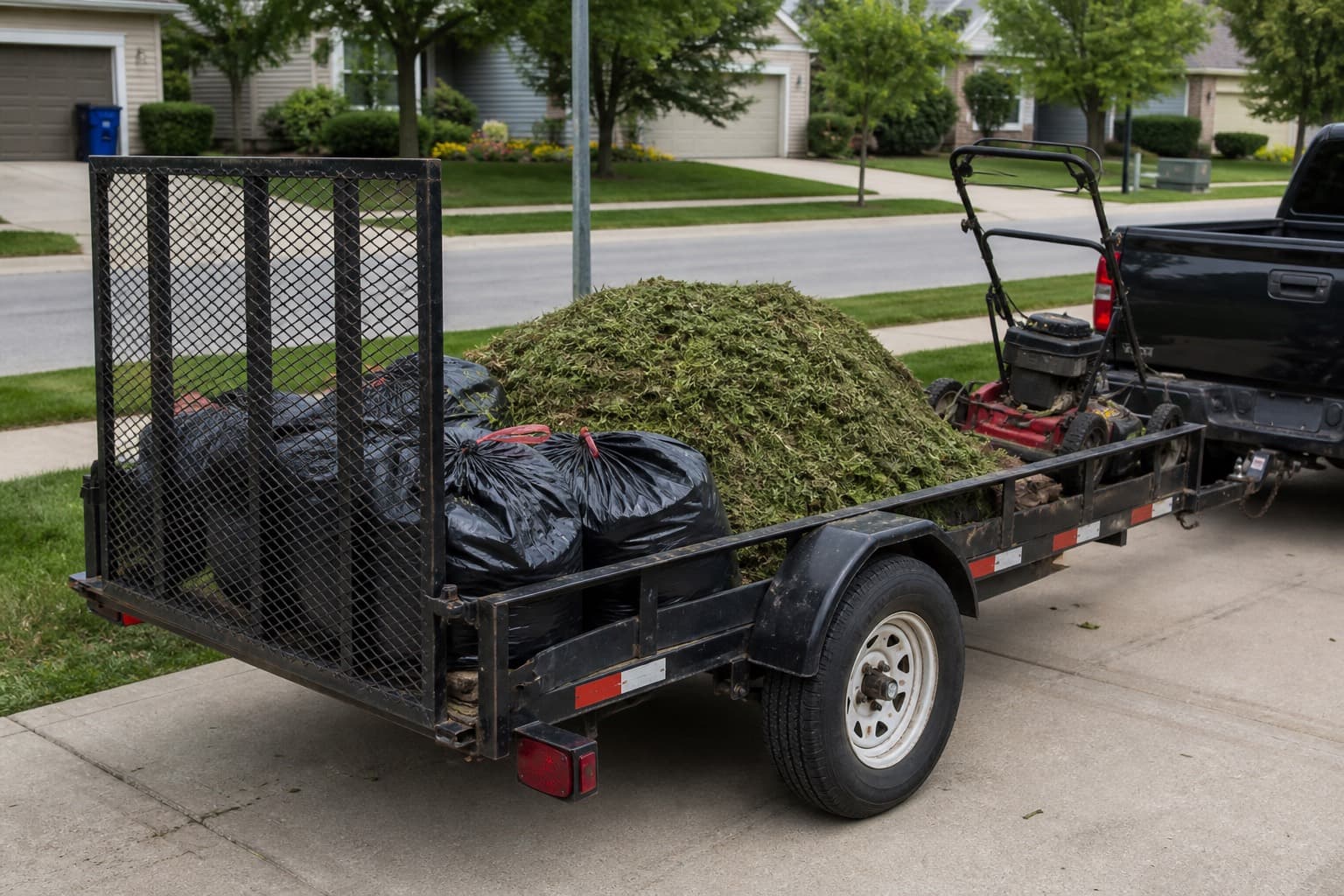
Protect the mowing route
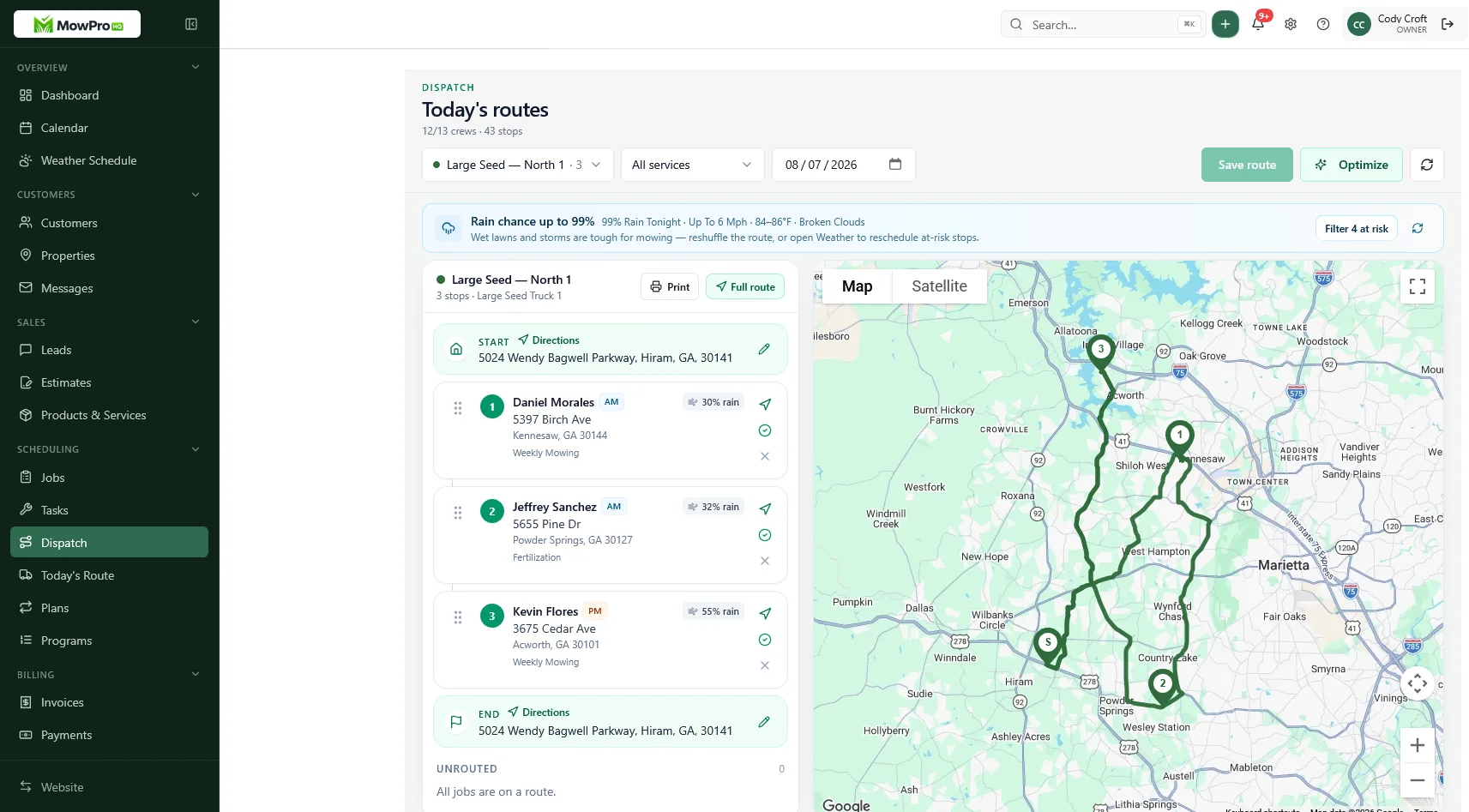
Leaf jobs create route problems when uncertain work is added to an already full mowing day. Use your own job history to estimate capacity, then reserve realistic blocks for larger cleanups.
Common scheduling options include:
- Dedicated cleanup blocks for larger or less predictable properties
- Mixed routes limited to smaller, well-documented leaf jobs near existing stops
- Geographic batches that reduce travel and allow planned disposal runs
- Weather buffers for wet material, high winds, or delayed municipal collection
Route planning still needs judgment. A forecast can change the amount of material on site, and wet leaves may affect traction, lifting demands, equipment performance, and disposal weight. Communicate delays instead of pressuring crews to recover an unrealistic schedule.
For more detail, see route planning and dispatch for lawn care crews.
In MowProHQ
Put the return-visit policy in writing
A clean property can be covered again after wind or continued leaf drop. Avoid promising that a one-time visit will keep the property clear for the rest of the season.
A plain-language estimate note might read:
This estimate covers one cleanup of the listed areas based on conditions observed on the estimate date. Leaves or storm debris that accumulate after completion are not included. We will provide or obtain approval for a new estimate before any additional visit.
If customers want ongoing service, offer a recurring plan with a defined cadence or number of visits. Explain that timing may shift with weather and site conditions, and avoid guaranteeing a leaf-free property between visits. State how cancellations, skipped visits, excess volume, and the final seasonal visit are handled.
Give the crew a clear scope and safe stop rules
The crew should be able to answer four questions before starting: Which areas are included? What finish was promised? Where does the material go? Who can approve a change?
Use a simple field checklist:
- Compare current conditions with the estimate and take authorized before photos
- Confirm equipment access and identify traffic, slope, overhead, and trip hazards
- Follow manufacturer instructions and applicable safety requirements for blowers, vacuums, loaders, and trailers
- Use appropriate hearing, eye, respiratory, visibility, and other protective equipment based on the task and applicable rules
- Stop for hidden debris, sharp objects, animal waste, hazardous material, unsafe access, or scope beyond the approved limit
- Secure loads and comply with vehicle, trailer, weight, and road requirements
- Record the disposal destination, receipts, or load details your business needs
- Perform a final walk-through without directing dust or debris toward people, vehicles, buildings, roads, or drains
Workers should be trained and assigned in line with applicable employment and workplace-safety requirements. Requirements vary by location and by the equipment used, so consult the relevant authority or a qualified adviser when setting policy.
Document completion and invoice the agreed work
Complete the job record while details are fresh. Note the service level, approved changes, disposal method, and any requested return visit. Send the invoice according to the terms the customer accepted.
If you offer different payment methods or add a card surcharge, convenience fee, or cash discount, make sure the wording and implementation comply with applicable law, card-network rules, processor terms, and advance-disclosure requirements. These rules vary, so do not copy another company's fee language without checking it.
At the end of the season, review completed but unbilled work, disposal costs, callbacks, and actual labor against estimates. That information should shape next year's tiers. Our end-of-season operations guide covers the broader closeout process.
Manage fall leaf service in MowProHQ
MowProHQ can keep estimates, scheduled cleanup work, property notes, photos, and invoice items connected so leaf service does not disappear inside a mowing visit. Review current plans and features on the pricing page, or sign up when you are ready to set up your fall workflow.
Frequently asked questions
- How should a lawn care company price leaf cleanup?
- Start with your labor, equipment, travel, disposal, and overhead costs, then add the margin your business needs. Many companies use a minimum charge plus light, medium, and heavy volume tiers. For uncertain jobs, an hourly estimate with a written cap or change-approval process may be safer than a fixed quote.
- Should leaf removal be included with weekly mowing?
- Only when the service agreement clearly includes it. A normal mow may include clearing light debris from hard surfaces, but deep leaf accumulation, bed cleanup, collection, and haul-away require different labor and disposal capacity. Define that boundary before leaf season.
- How can I keep fall leaf service from disrupting mowing routes?
- Estimate capacity from your own crew history, reserve blocks for larger cleanups, group nearby work, and leave room for weather delays. Avoid adding an unknown leaf job between tightly scheduled mowing stops. Update customers early when wind, rain, or disposal delays change the schedule.
- Should I charge separately for leaf disposal?
- If material leaves the property, include disposal fees, travel, loading, and handling in the quoted price or as a clearly disclosed line item. Confirm what the disposal site accepts and keep receipts when needed. Mulching in place or filling customer-provided containers should be described as different service options.
- What should a second-visit policy say?
- State that the quoted cleanup covers the conditions present and work approved for that visit. Explain how later leaf drop, storm debris, or customer-requested additions will be priced and approved. For seasonal packages, describe the number or frequency of visits without promising an exact result between visits.
- When should I market fall leaf cleanup?
- Send the service menu before your area's typical heavy leaf drop, based on local tree species and weather rather than a fixed national date. Existing customers should have enough time to choose a service level, and crews should review the scope and documentation process before the first booked jobs.
- Can the mowing crew also perform leaf cleanup?
- Often, yes, if the crew is trained for the equipment and task and the schedule allows enough time. Follow equipment instructions and applicable workplace-safety rules, provide appropriate protective equipment, and account for added fatigue, lifting, traffic exposure, noise, and dust.