
MowProHQ Blog/Growth
Selling a Lawn Care Book: What a Buyer Wants in the CRM
Prepare a lawn care CRM for a possible sale with clean customer, property, plan, billing, consent, and operating records. Includes practical due diligence cautions.

Selling a lawn care “book” can mean anything from transferring a customer list and selected equipment to selling an operating company. Those are different transactions with different risks. In either case, the CRM is often where a buyer tests whether the work, billing, and customer relationships can continue without the seller explaining every stop.
This guide covers operational preparation, not a valuation method or legal, tax, accounting, or investment advice. Deal terms and local law matter. Before disclosing customer information or signing anything, involve advisers who understand the proposed transaction.
What a buyer is likely to review first
A serious buyer will usually try to confirm four things:
- Which customers and properties are active? Status should be current and supported by recent service and billing history.
- What has each customer agreed to buy? The CRM should show scope, frequency, current price, and important terms.
- What has been billed, paid, prepaid, or left outstanding? CRM records should reconcile to accounting and payment records.
- Can another team deliver the service? Schedules and notes should explain the work without relying on the owner's memory.
| CRM area | Useful evidence | Issues to resolve or disclose |
|---|---|---|
| Properties | One record per service location; billing contact identified | Duplicates, incomplete addresses, ambiguous common areas |
| Plans | Current scope, frequency, price, season, and status | Informal exceptions, stale prices, undocumented pauses |
| Invoices | Reconciled balances and exportable aging | Unbilled work, disputed balances, off-system payments |
| Notes | Concise access, hazard, and service instructions | Stale codes, subjective comments, unnecessary personal data |
| Schedule | A typical week that agrees with active plans | Routes or recurring work that only the owner understands |
Correct errors, but do not rewrite history to improve the presentation. Keep reasonable records of merges, write-offs, cancellations, and price changes so a buyer can understand what changed and why.

Make property and plan records consistent
Use one record per service address and identify the responsible billing customer when that differs from the property. This property-centered CRM structure makes it easier to compare the customer list with routes, invoices, and contracts.
Useful cleanup includes:
- Merge confirmed duplicates without losing billing or service history.
- Mark moved, cancelled, paused, and inactive accounts accurately.
- Separate multiple service locations owned by the same customer.
- Give HOA and commercial locations unambiguous names.
- Correct addresses and route information.
- Reconcile each recurring plan with recent visits and invoices.
Do not count old leads, one-time jobs, or inactive customers as recurring accounts. Segment them honestly. If you need to switch lawn care software, allow enough time to back up the source, test the import, reconcile totals, and preserve an export that can be audited later.
In MowProHQ
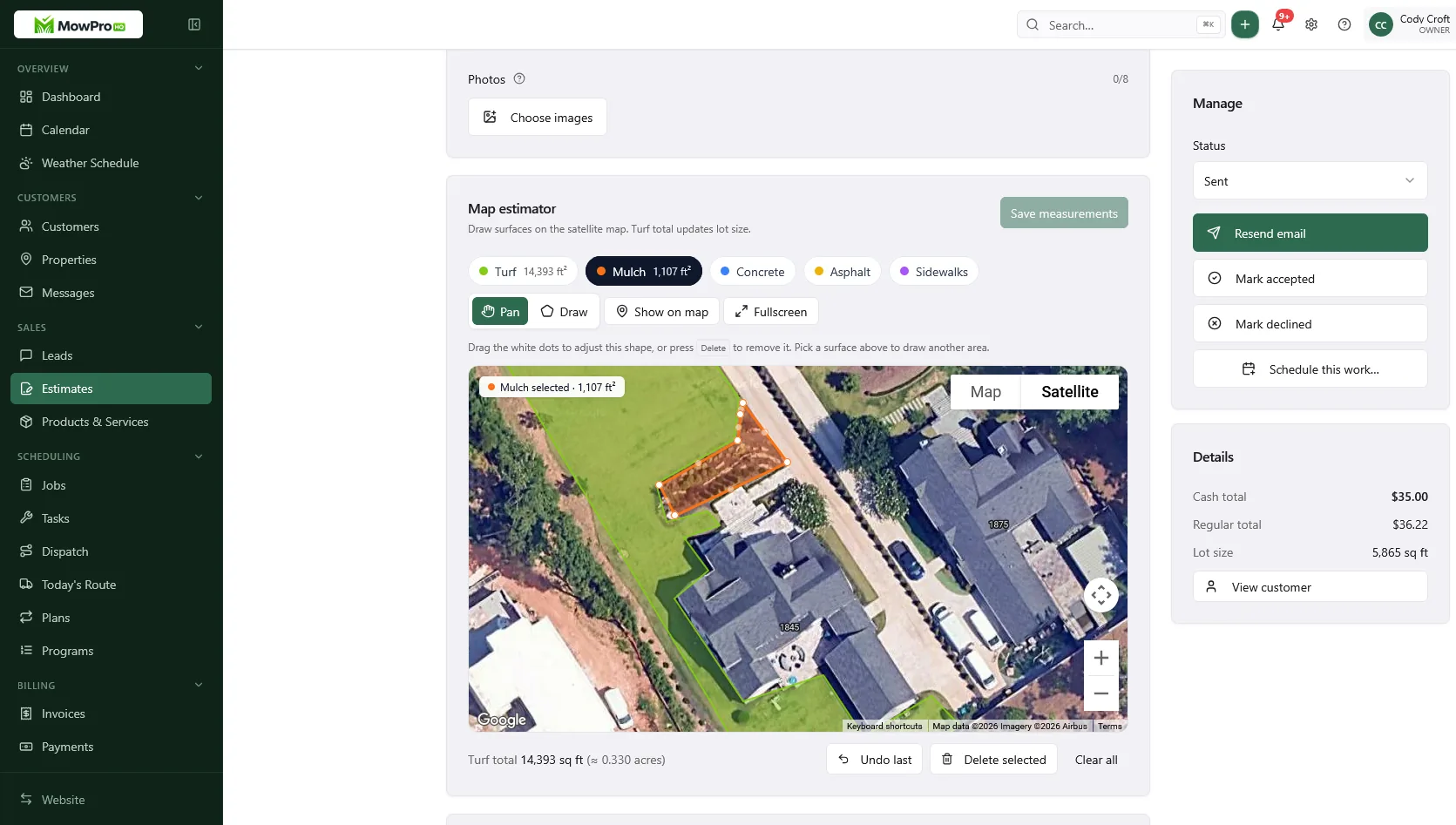
Document what the customer actually agreed to
For each active account, capture the current scope, frequency, price, service period, and any material exception. Then compare a sample against contracts, estimates, invoices, payment records, and completed visits.
Written contracts deserve separate review. Check their term, renewal and cancellation language, price-change provisions, assignment restrictions, and any change-of-control or notice requirements. A customer relationship may not be transferable merely because its record exists in the CRM. Counsel can help determine whether an asset sale, equity sale, assignment, consent, or new customer agreement is appropriate.
If an arrangement is informal, label it as such. Avoid turning an assumption about future renewals into a representation that every customer will stay. Customer concentration, seasonal pauses, cancellation history, and unusually discounted accounts may all affect risk, but their effect on value is deal-specific.
Treat valuation as uncertain
There is no reliable universal multiple for a lawn care book. The result can depend on what is being sold, the quality and durability of revenue, margins, route density, customer concentration, contracts, labor, equipment, working capital, liabilities, local competition, and the transition the seller will provide. Even well-organized CRM data is only one input.
Define the valuation basis in writing. For example, clarify whether a proposal covers customer relationships only, selected assets, accounts receivable, prepaid obligations, equipment, a legal entity, or some combination. A qualified valuation professional or transaction adviser can help analyze the specific business; counsel and a tax adviser can evaluate the proposed structure.
Reconcile billing, receivables, and prepayments
A buyer may review:
- Accounts-receivable aging and subsequent collections
- Unbilled completed work and customer credits
- Disputed, delinquent, or written-off balances
- Deposits, gift certificates, and prepaid service not yet delivered
- Payment methods and recurring-payment status
- Whether invoices, accounting records, bank deposits, and tax filings reconcile
The purchase agreement should say which receivables, credits, refunds, chargebacks, and prepayments belong to each party after closing. Prepaid service may create a future performance obligation rather than additional value. The tax treatment and purchase-price allocation can differ by transaction structure and jurisdiction, so obtain tax advice before agreeing to numbers or issuing final invoices.
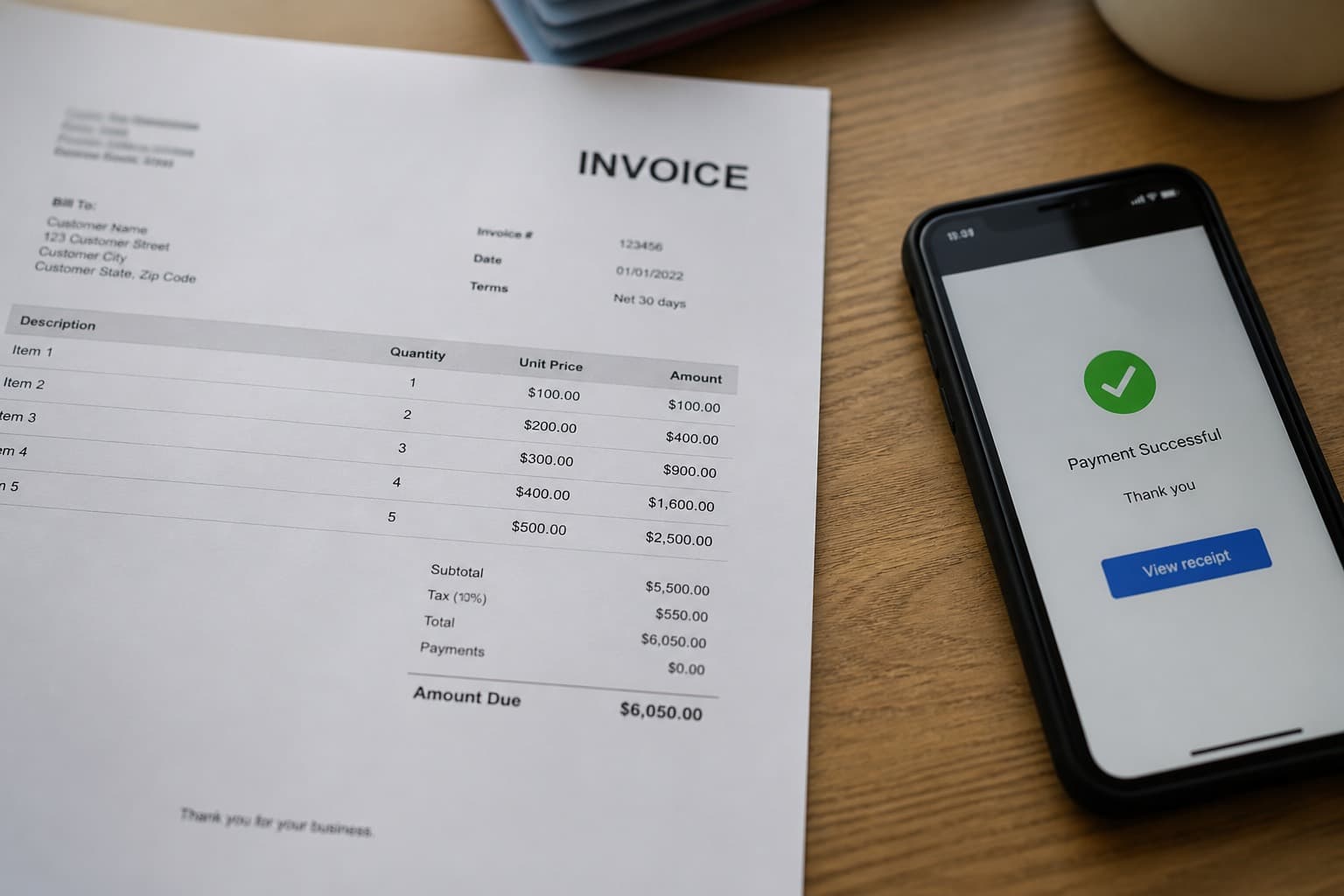
If you offer prepay or monthly billing, identify each arrangement clearly and reconcile the remaining service obligation.
Protect customer privacy and obtain required consent
Customer names, addresses, contact details, service history, access instructions, photos, payment information, and communications may be protected by privacy laws, contracts, or your own privacy notice. The ability to export data does not necessarily create the right to disclose or transfer it.
Before sharing identifiable records:
- Ask counsel what disclosure, notice, or consent is required for this deal and location.
- Review customer agreements, privacy notices, marketing consents, and vendor terms.
- Start diligence with aggregated or redacted data where practical.
- Use a confidentiality agreement and a controlled data room with limited access.
- Share only what is necessary for the current diligence stage.
- Keep a record of what was disclosed, to whom, when, and for what purpose.
- Establish retention and deletion duties if the deal does not close.
Clean up property notes before diligence. Keep objective instructions about access, hazards, equipment constraints, and site rules. Remove irrelevant opinions and stale sensitive details. Gate codes, alarm instructions, and similar credentials may warrant a separate secure transfer or replacement after closing.
Do not send card numbers, bank credentials, account passwords, API keys, or raw payment credentials in an export. Ask the payment processor whether an approved account transition or token migration is available, what customer notice or consent is required, and how recurring authorizations should be handled. Never assume autopay authority transfers automatically.
In MowProHQ
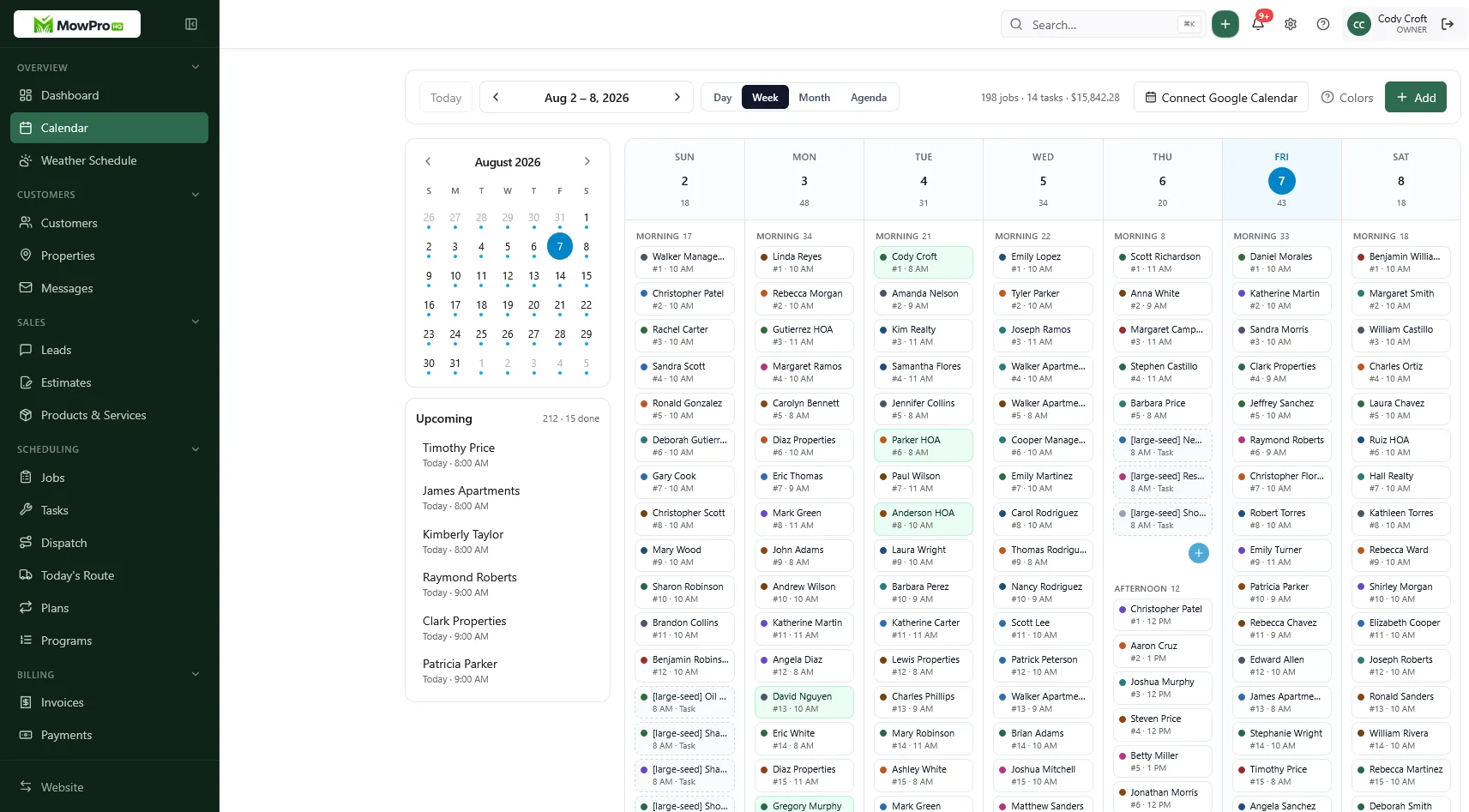
Prepare a staged due diligence package
A useful package can include CRM summary reports, plan and customer cohorts, route maps with sensitive details removed, billing reconciliations, sample contracts, cancellation history, equipment records, permits, insurance, employee or contractor information, and documented operating procedures. Disclosure should become more detailed only as the buyer is qualified and legal protections are in place.
Expect the buyer to test samples and compare systems. Material inconsistencies should be corrected or explained, not concealed. Preserve source exports and document the date range, filters, and definitions behind every report.
Operational diligence is only part of the review. Depending on the transaction, advisers may also examine financial statements, tax returns, payroll, worker classification, licenses, liens, claims, insurance, vendor contracts, vehicles, environmental or chemical records, and ownership of names, domains, phone numbers, and software accounts.
Put transition, legal restrictions, and payment terms in writing
Define the handoff: customer communications, introductions, training, route shadowing, complaints, collections, refunds, and support after closing. Make clear who is responsible at each stage and what happens if the transaction is delayed or cancelled.
Noncompete, nonsolicitation, and confidentiality provisions require local legal review. Their enforceability and permitted scope vary substantially by jurisdiction and circumstance, and the rules can change. Do not rely on a template or assume that broad restrictions will be enforceable.
For the purchase payment itself:
- Use a signed agreement that states the price, assets or equity transferred, closing conditions, and payment schedule.
- Have advisers explain any deposit, escrow, holdback, earnout, seller financing, setoff, or adjustment before accepting it.
- Define objective calculations, reporting access, dispute procedures, security, default remedies, and deadlines for contingent payments.
- Verify wiring instructions through a known channel and follow counsel or escrow instructions; email-only changes are a common fraud risk.
- Do not release control of customer data, domains, phone numbers, keys, equipment, or accounts until the agreed closing conditions are satisfied.
- Record the transaction properly and retain closing documents according to legal and tax advice.
CRM readiness checklist
Use this as an operations list, not a closing checklist:
- Every active stop has a service address and a bill-to
- Every recurring account has a plan with frequency and price
- Plans, schedules, completed work, and invoices reconcile
- Aging, credits, prepayments, disputes, and write-offs are documented
- Paused, seasonal, cancelled, and one-time accounts are labeled accurately
- Duplicates are resolved with history preserved
- Contracts and informal arrangements are distinguishable
- Property notes are concise, current, and limited to necessary information
- Privacy notices, consents, and transfer restrictions have been reviewed
- Payment data and account credentials have a secure transition plan
- Source exports, report definitions, and reconciliation dates are preserved
- Legal, tax, valuation, and financial advisers have reviewed the proposed deal
The goal is not to make the business look perfect. It is to give both parties an accurate, appropriately protected record from which they can evaluate risk and plan a lawful transition.
Organize the operating record with MowProHQ
MowProHQ connects customers, properties, plans, schedules, quotes, invoices, and notes so operating records are easier to maintain and export. Review current options on the pricing page, or sign up to organize your lawn care operation. Software can improve recordkeeping, but it does not determine value or replace professional deal advice.
Frequently asked questions
- What does a buyer want to see in a lawn care CRM?
- A buyer will usually want reliable records for active customers, service properties, current plans and prices, scheduling, invoice aging, and operating notes. The exact request depends on the deal, and sensitive customer information should be shared only through an appropriate, legally reviewed diligence process.
- How do I clean a lawn care CRM before a sale?
- Resolve duplicates, archive inactive accounts, distinguish billing and service addresses, connect plans to the correct properties, and reconcile plans with invoices and schedules. Keep an audit trail rather than deleting records merely to make the business look cleaner.
- Do old lawn care jobs need to stay in the CRM for a buyer?
- Retention needs vary with applicable law, tax requirements, contracts, disputes, and the deal. Preserve records that support current service, balances, and representations, and follow a written retention policy. Ask legal and tax advisers before deleting or transferring historical customer data.
- How does invoice aging affect lawn care book value?
- Invoice aging can affect a buyer's view of cash collection, working capital, and risk, but it does not determine value by itself. Buyers may treat current, disputed, and old receivables differently. Reconcile the report and let the purchase agreement state which receivables transfer and who collects them.
- Should I switch lawn care software right before I sell?
- Usually not solely to improve appearances. A rushed migration can lose history or create reconciliation problems. If a change is necessary, allow time for backups, testing, parallel checks, and documented exports.
- What property notes matter to a lawn care buyer?
- Useful notes cover access, hazards, equipment constraints, site rules, and service exceptions. Remove irrelevant opinions and review whether security codes, personal details, or other sensitive information may lawfully be disclosed or should be transferred later through a secure process.
- Is a CRM enough to sell a lawn care business?
- No. A CRM supports operations and due diligence, but a sale may also involve valuation, contracts, privacy obligations, licenses, employees, taxes, insurance, payment accounts, and transition terms. Use qualified legal, tax, valuation, and financial advisers for your circumstances.