MowProHQ Blog/Scheduling
How to Have the Snow Route Ready Before the Storm
How to prepare snow-removal properties, priorities, triggers, stack zones, and route assignments before the first storm.
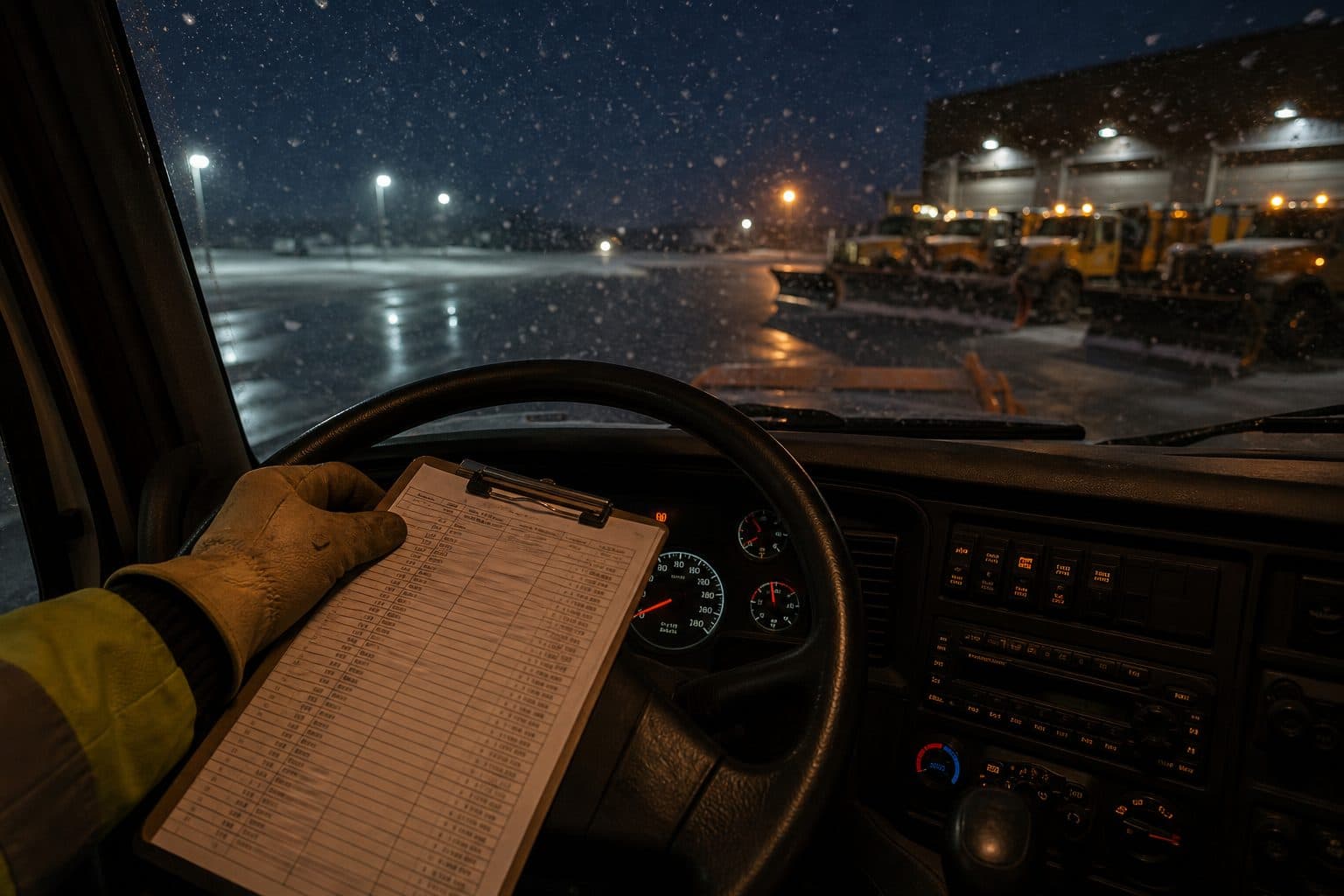
A snow route should be prepared before the first storm. Every property needs a clear service scope, depth trigger, stack zone, access note, hazard record, and priority. Crews should receive assignments before conditions make last-minute planning difficult.
This guide focuses on route readiness. Related guides cover per-push and seasonal pricing, snow dispatch, and prompt invoicing.
4 a.m. is too late to make a list
Snow does not give you a Tuesday morning to sequence the day. The commute window is the product. Miss it and the customer is already digging, already late, already writing the review while you are still deciding who has the corner lot.
What fails at 4 a.m.:
- A laminated sheet with last year’s names still on it
- A PDF email from October that nobody opened
- Addresses in the owner’s head and nowhere else
- “Just take the north side” with no order
- Gate codes in a thread from 2024
Every stop should already exist as a property with current notes and a published assignment. If the forecast changes, update the shared board rather than rebuilding the route from memory.
Lawn shops already know this rhythm in May. The difference is the clock. A rain-moved mow can wait until Thursday. A 5:15 a.m. school run cannot. Treat the snow list like a route you will run in the dark, because that is what it is. More on the decision to sell snow at all: when to add or refuse. If you already said yes, the first-season size of the book is in how a lawn shop adds snow.
What belongs on every snow property
Store the specific service agreement and property instructions, not only a generic “snow customer” label.
| Field | Why it matters at 4 a.m. | Fail looks like |
|---|---|---|
| Address and unit | Driver does not guess the cul-de-sac | “The brick one on the left” |
| Access | Gate, code, parked cars, HOA hours | A locked arm and a wasted pass |
| Surfaces | Drive, apron, walk, lot, dock | Walks sold, only a blade on the truck |
| Stack zone | Where snow is allowed to live | Pile on the neighbor, mailbox buried |
| Trigger | Inch mark that starts the visit | Group text debate at 3:40 a.m. |
| Ice | Yes, no, or extra only | Melt promised, nobody carrying it |
| Priority | Commute, commercial window, or last | Two trucks on the same street |
| Daylight photo | Proof of edges, hydrant, obstacles | January claim with no picture |
Write stack instructions precisely. State whether clearing a city-plow refill is included or separately billed, and photograph fixed or seasonal obstacles before snow covers the property.
Ice is its own line. If you do not carry melt on that truck, the property says no ice. Selling “we’ll take care of it” is how someone slips and your night becomes a file.
Build from the book you already mow
The fastest honest snow list is the mow book inside your service radius. Same streets. Same notes. Same people who already pay you. The same properties you mow in May can be the snow route in January. That is density you do not have to invent at 4 a.m.
October pass:
- Export or walk the residential properties you still want in March
- Knock off the far commercial lot that will steal every storm
- Walk or drive the list in daylight once — stack, slope, mailbox, hydrant
- Write the trigger and surfaces on each record
- Sequence for the commute window, not alphabetically
- Cap the count at what two trucks (or one) can finish before 7 a.m.
- Publish the list on a schedule you can actually open in the cab
Do not add a stranger from Facebook the night of the first squall unless you have leftover capacity after the book is done. First-storm hero work is how the paying list waits.
A waitlist is better than accepting more stops than the crews can complete within the promised windows.
Worked example: 22-drive residential loop
One truck, one helper on a shovel, 22 drives in two neighborhoods that already sit on the mow route.
Weak October: Names in a Notes app. No stack. No trigger. Owner will “figure order on the way.” First storm: 48 minutes of pin-dropping in the dark, two callbacks for buried trash cans, the school-run drive done at 8:10.
Strong October:
- All 22 on the board with stack and trigger (2 inches).
- Sequence: far pocket of early leavers, then the tight loop, then work-from-home.
- Three walks sold — helper on those only, not wandering.
- Two “do not go” notes: cars packed in, boat on the apron.
- List published the night the forecast firms up, not when the first flake hits the windshield.
Same iron. Same people. The difference is the list existed before the storm.
In MowProHQ
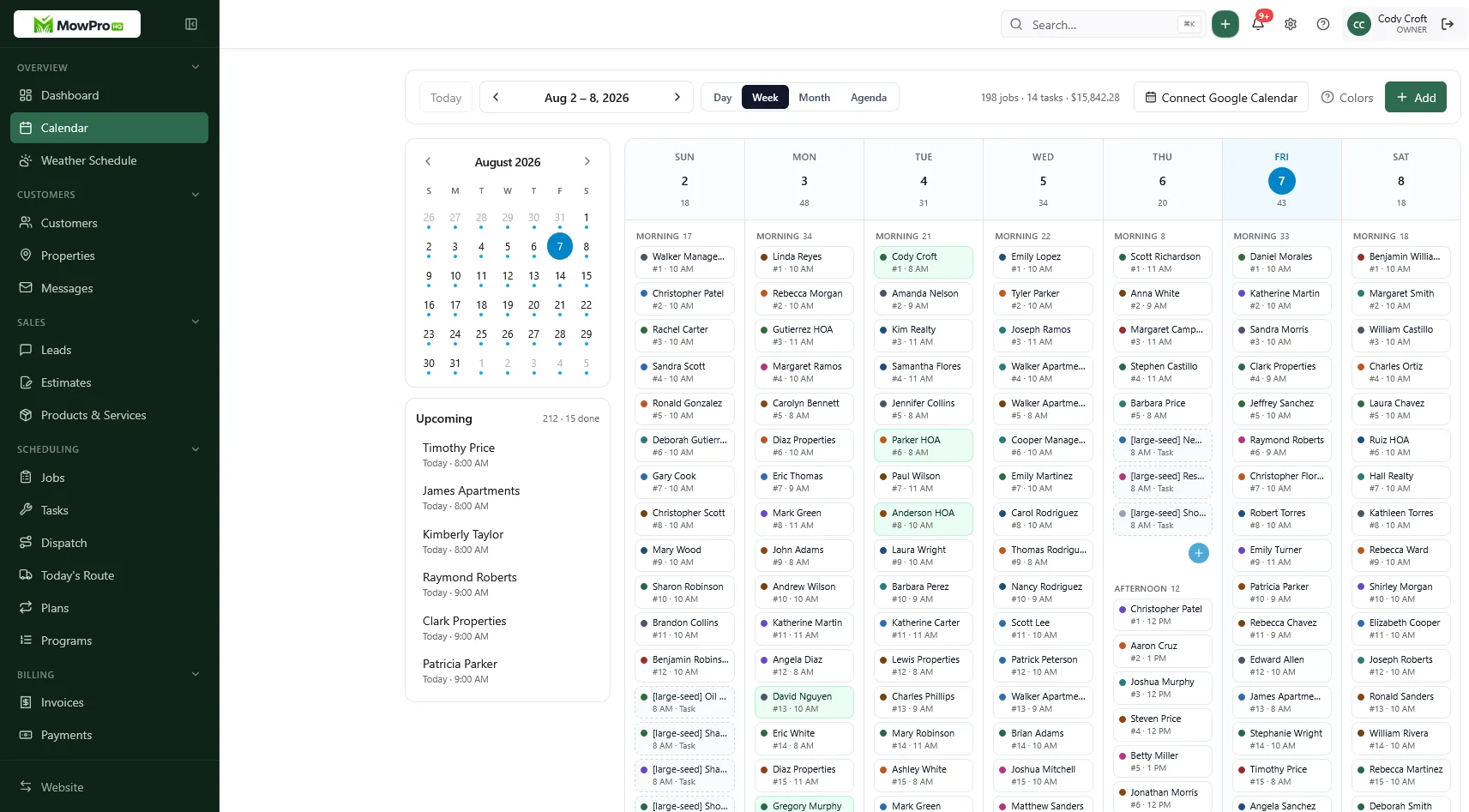
Sequence for the commute, not the map’s vanity
Consumer maps will order pins. They will not know who leaves at 5:40, which lot is a contract window, or that the HOA tows at 7. You will.
Rules that survive contact with a squall:
- Early leavers first in each pocket, even if it is a slightly longer first drive
- Commercial windows only if you sold them as first, and only if the residential book still finishes
- Walks and shovels assigned to the person who has a shovel, not the plow that cannot do stairs
- Second pass as a named extra or a written rule after drifting, not a free encore
- Overflow sits on a waitlist, not on the live board
When two storms stack in three days, the sequence does not change. Tired drivers invent new orders. That is how you double-hit a street and miss the one customer who already paid standby. Hold the October order unless a road is closed.
Empty miles at 4 a.m. still cost a missed neighborhood. If a stop sits outside the pocket, it needed a travel price in October or it needed a no. Snow does not make a far lot closer.
Triggers, “do not go,” and the night-before publish
A trigger is a number. Two inches. Three. Lot-specific if you sold it that way. “We’ll see how bad it is” is how half the book thinks you are coming and half thinks you are not.
Write the exceptions on the property:
- Do not go if cars fill the drive (text, do not invent a path through bumpers)
- Do not pile on the gas meter or the neighbor’s hedge
- Do not salt if you did not sell ice
- Abort if the street is not plowed and the truck cannot legally sit there
Publish the night before when the forecast is honest enough to staff. Crews sleep better. Equipment gets staged. The owner is not the only memory. Day-of scrambling is a symptom that October never happened.
If the band dies at 1 a.m., cancel as a block and tell people once. If it shifts south, move the board — do not start a new group text titled “new list.” Customer updates belong in Conversations, not in a thread the driver cannot search with gloves on.
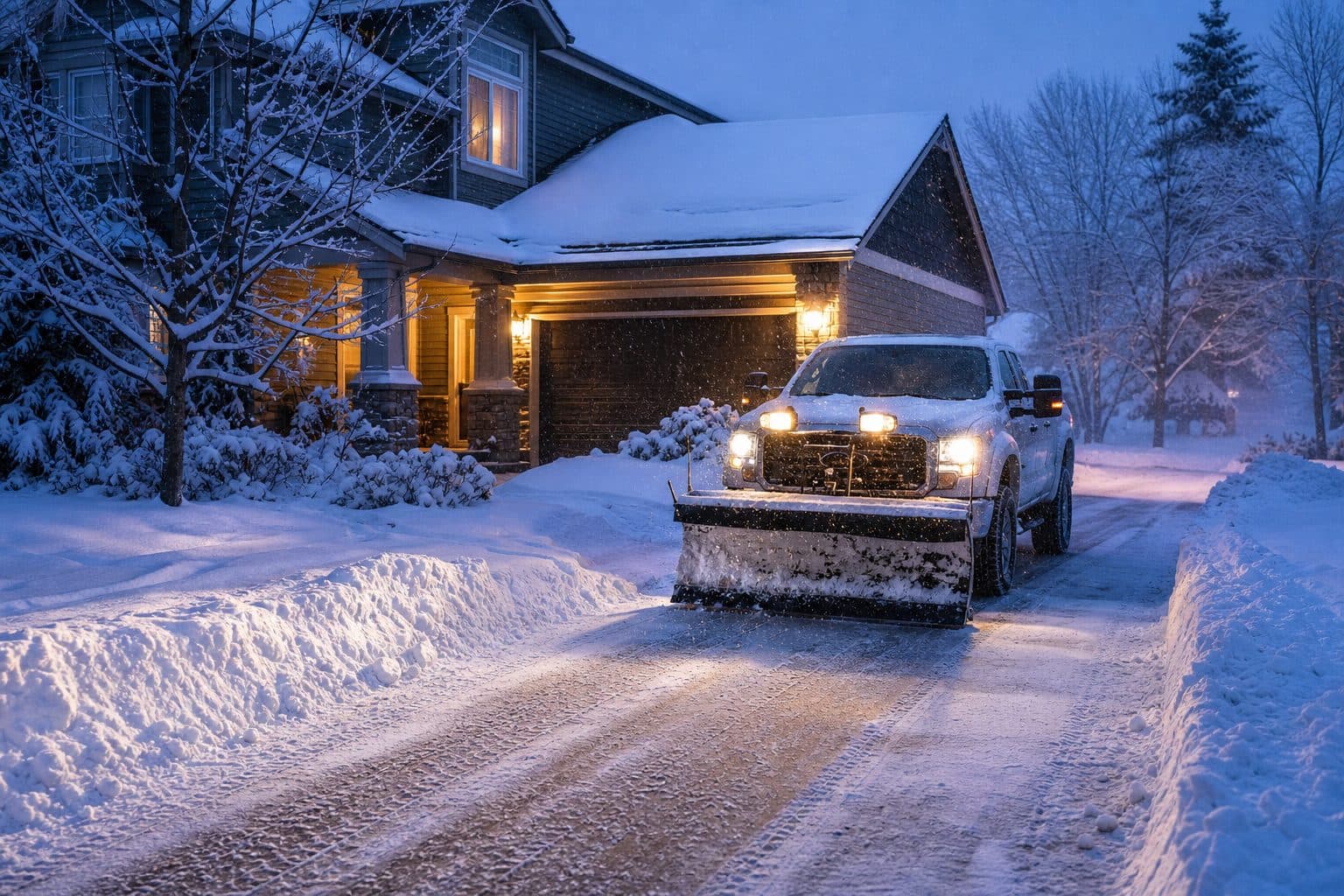
Paper, PDFs, and other ways to miss a drive
Paper is a backup. It is not dispatch. Failures we see every first storm:
| Tool | What it does | What it cannot do |
|---|---|---|
| Cab clipboard | Survive a dead phone | Reassign, timestamp, invoice |
| Email PDF | Feel prepared in October | Open with gloves, stay current |
| Group text | Make noise | Say who has which driveway |
| Owner’s memory | Work for 8 stops | Survive a second truck |
When the list is a property record on a schedule, a completion can become an invoice while the storm is still on the news. That loop is invoicing before the thaw. The list is the first domino. Miss it and everything downstream is a scramble.
How MowProHQ holds the list before the forecast
MowProHQ keeps snow customers, property notes, schedules, quotes, completions, invoices, and customer conversations connected. Complex per-storm salt and material agreements may require additional setup.
Compare current plans and pricing or create an account to test the route before the first storm.
Frequently asked questions
- When should I build the snow route?
- Build and review the route well before the first forecast. Each property should already have its address, service scope, stack zones, depth trigger, hazards, access, and priority documented.
- What belongs on every snow property record?
- Include the address, access, included surfaces, approved stack zones, depth trigger, ice service, priority, hazards, and a daylight photo showing property edges and obstacles.
- Should the snow route match my mow book?
- Existing mowing customers can provide a useful starting point because their properties and access are already known. Only accept snow stops the available crews can complete within the promised service windows.
- How do I prioritize residential snow stops?
- Sequence stops around contractual windows, early departures, road access, and compact neighborhood groups rather than alphabetically. Publish assignments before the storm and change them only through the shared board.
- What is a snow depth trigger?
- A depth trigger is the measured accumulation that activates service under the agreement. Put the exact trigger on the property and contract rather than relying on phrases such as “when needed.”
- Can I keep the snow list on paper?
- Paper can serve as an emergency backup, but a current shared schedule is better for reassignments, customer updates, completion tracking, and invoicing.
- How does MowProHQ help before the storm?
- MowProHQ keeps snow properties, notes, quotes, schedules, completions, and invoices connected. Compare current plan features when you need multi-truck dispatch, location, time tracking, or additional users.