MowProHQ Blog/Pricing
How Much Should a Lawn Mowing Business Make per Hour?
How to calculate a lawn care revenue-per-crew-hour target from labor, equipment, overhead, route time, and desired operating margin.
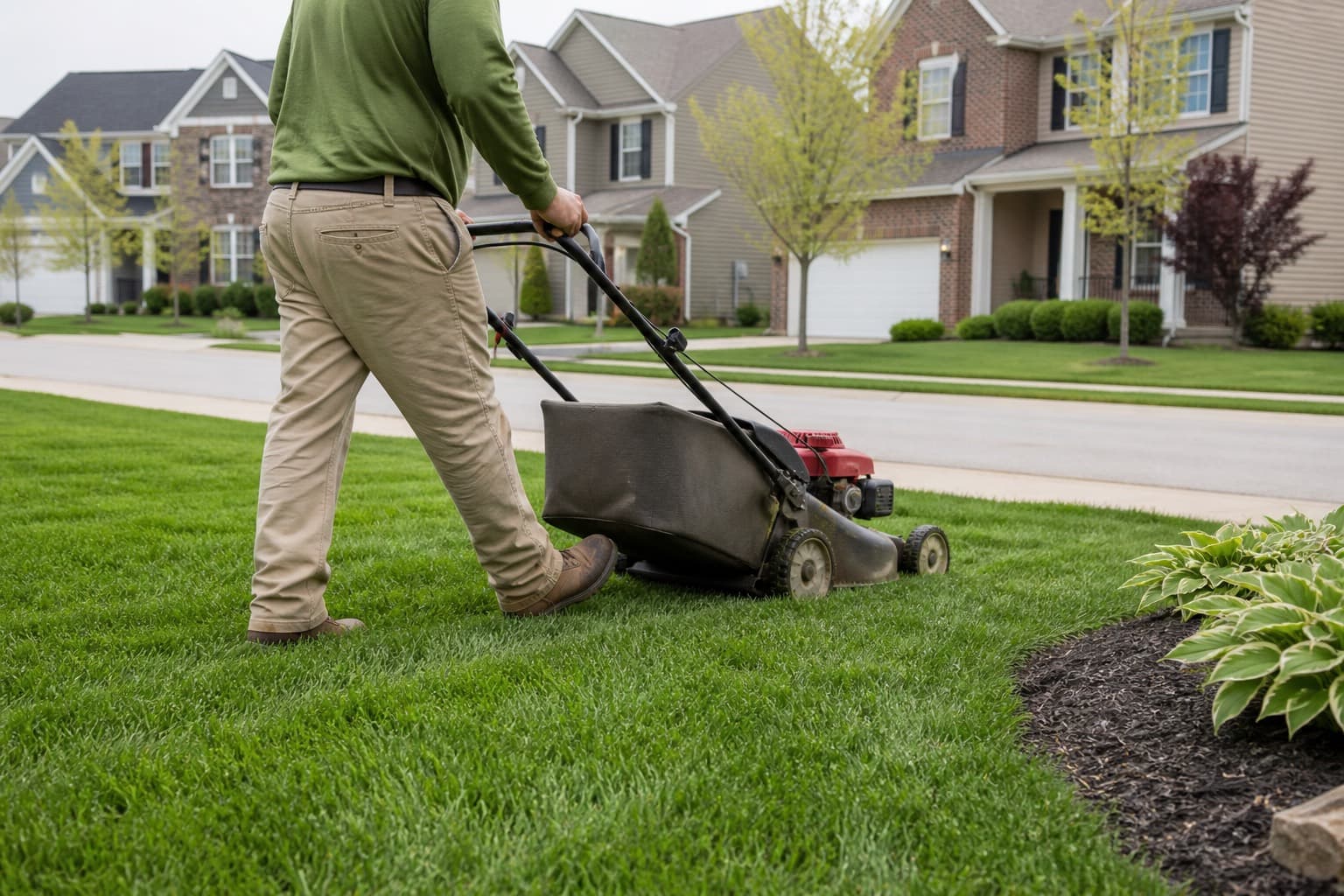
Revenue per crew hour is a useful internal measure, even when customers pay a fixed visit price. It connects labor, travel, equipment, overhead, and margin to the prices placed on quotes.
This is the companion to the hourly rate calculator and how to price lawn care jobs. Related: raise prices, minimums, expenses.
Floor, then target
Cost floor = loaded labor + fuel/truck + equipment reserve + overhead slice.
Target revenue = floor ÷ (1 − margin).
Illustrative example only:
| Line | Per crew hour |
|---|---|
| Loaded labor (2 people) | $48 |
| Fuel and truck | $10 |
| Equipment reserve | $8 |
| Overhead | $9 |
| Floor | $75 |
| 30% margin | |
| Target | ~$107 |
A 35-minute service plus 10 minutes of allocated travel uses 45 crew minutes. At the example target, that is about $80 before add-ons. The customer can still receive a fixed visit price.

Use industry averages cautiously
Published hourly figures may use different wages, crew sizes, regions, service scopes, and overhead assumptions. Calculate your own target and track actual revenue divided by actual crew hours for a meaningful period. Include fuel and disposal.
Worked week
- 4 days × 8 crew-clock hours = 32 hours
- Revenue $2,800 → $87.50/hour
- Target $107
- Gap: two far $45 stops, one unpaid dump, one callback
Review the two distant low-priced stops, disposal process, and callback before making staffing decisions.
Visit prices, not hourly invoices
Customers compare service packages. Weekly and biweekly mowing have different time and pricing characteristics, while overgrown first cuts should not automatically use the recurring rate. Include payment costs in the price and make required disclosures.
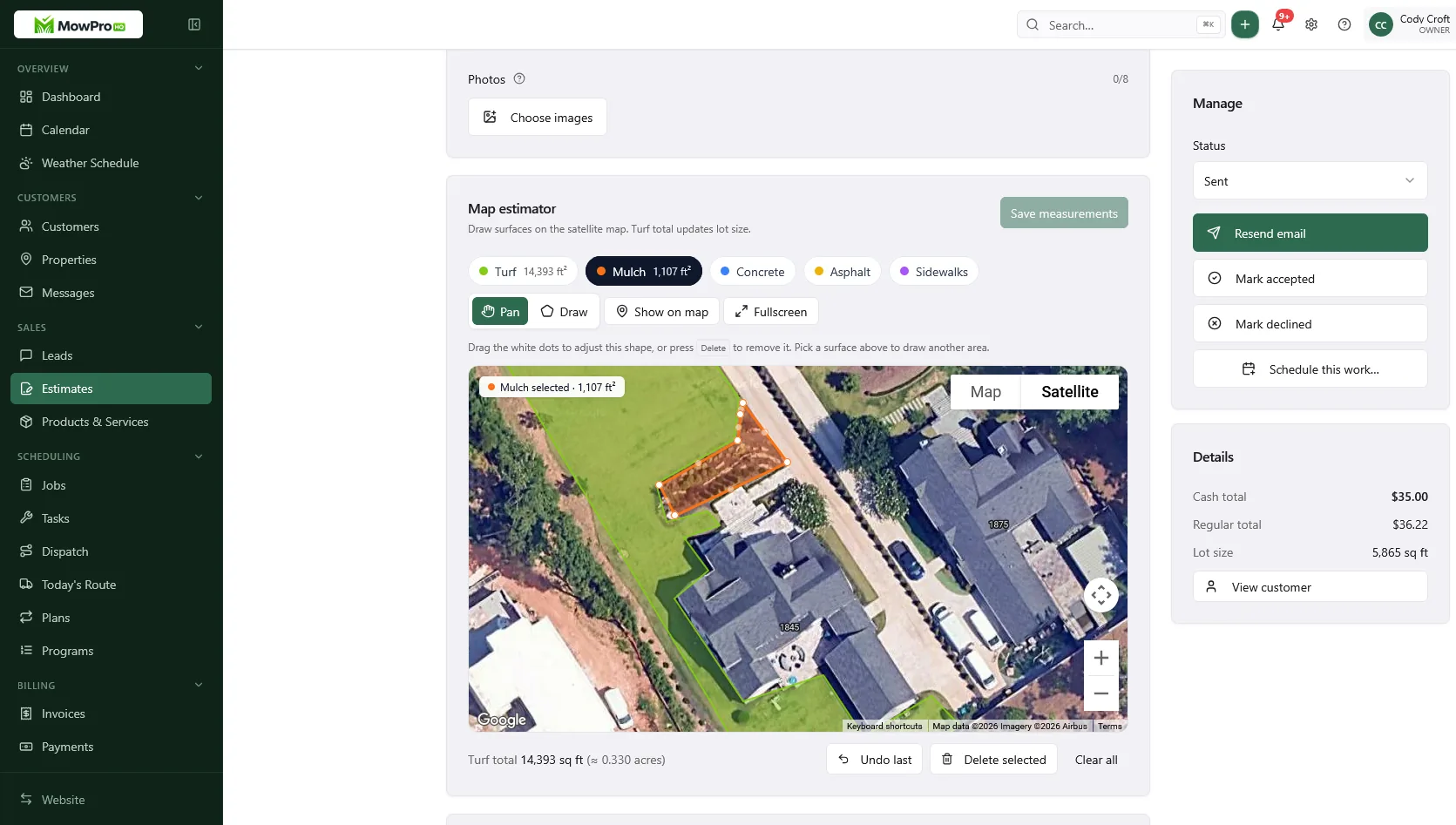
In MowProHQ
Owner hours versus crew hours
If the owner still performs fieldwork, separate service time from office and sales time. Quotes, collections, travel, disposal, and required shop work still affect company profitability even when they are not assigned to one visit.
After hiring, compare revenue with total crew hours rather than only owner hours. A lower number may result from training, route density, service scope, equipment, or price. Investigate the cause before evaluating employee performance.
A monthly ritual (30 minutes)
- Revenue for the month
- Crew hours including travel and dump
- Revenue per hour versus target
- Three causes to review, such as distant stops, unbilled extras, or delayed invoices
- One change, such as repricing, improving a process, or adjusting the service radius
Record the result and compare it with the calculator. Use several periods before making major price, staffing, or service-area decisions.
Reconcile the target with financial records
Payment processing, refunds, discounts, and uncollected invoices affect the amount the business actually retains. Include those costs consistently. If using different payment prices, follow current card-network requirements and applicable law.
Owner draws are not the same as labor expense or profit. Include reasonable owner compensation in the cost model and work with a qualified accountant on classification, taxes, and financial statements.
Compare longer periods rather than reacting to one weather-affected day. A month that includes rain, disposal, and callbacks provides a more representative result.
If two crews produce different results, review their route density, service mix, equipment, training, and quality before averaging them together. A blended number can hide a specific operational problem.
How MowProHQ and the calculator fit
Run the lawn care hourly-rate calculator, then use the result to build visit prices in MowProHQ quotes and recurring plans. Confirm those prices against actual time and financial records.
Review current plans and pricing, then create an account to test the workflow. Treat the calculator as a planning tool rather than accounting, tax, or financial advice.
Frequently asked questions
- How much should a lawn mowing business make per hour?
- There is no reliable national target for every business. Add loaded labor, vehicle and fuel cost, equipment reserve, overhead, and other route costs per crew hour, then divide by one minus the desired operating margin.
- Should I bill lawn mowing by the hour?
- Recurring mowing is usually easier to sell as a defined visit price. Use the hourly target internally to price expected service and travel time. Hourly billing may still make sense for uncertain or open-ended work when the terms are clear.
- What is a good profit margin for lawn care?
- The appropriate operating margin depends on the market, risk, service mix, and accounting method. Set a target that supports equipment replacement, weather disruption, taxes, and owner compensation, then compare it with actual financial statements.
- How do I calculate revenue per crew hour?
- Divide collected or recognized route revenue for the period by total crew hours used to produce it, including service, travel, disposal, and required shop time. Use one consistent accounting basis when comparing periods.
- Why is my hourly number lower than my visit prices suggest?
- Common causes include travel, disposal, callbacks, unbilled extras, and underpriced first cuts. Compare planned and actual time by service and route before changing wages or prices.
- Does card processing change the hourly target?
- Yes. Payment processing is a cost and should be included in pricing or overhead. If you use different payment prices, follow card-network rules and local law, disclose them before payment, and confirm current processor terms.
- Where can I run my own numbers?
- Use the lawn care hourly-rate calculator as a starting point, then validate the result against bookkeeping records and actual route performance. The job-pricing guide includes a worked example.